Wilting on Monstera Dubia: Causes, Checks & Fixes
Quick answer
First check the base potting mix 2–3 cm below the surface; do not water just because a Monstera Dubia leaf is limp. If the mix is dry and the pot feels light, water the mix thoroughly and let it drain. If it is still wet, withhold water and look for root trouble if wilt continues. A dry climbing board and a wet root ball are different conditions.
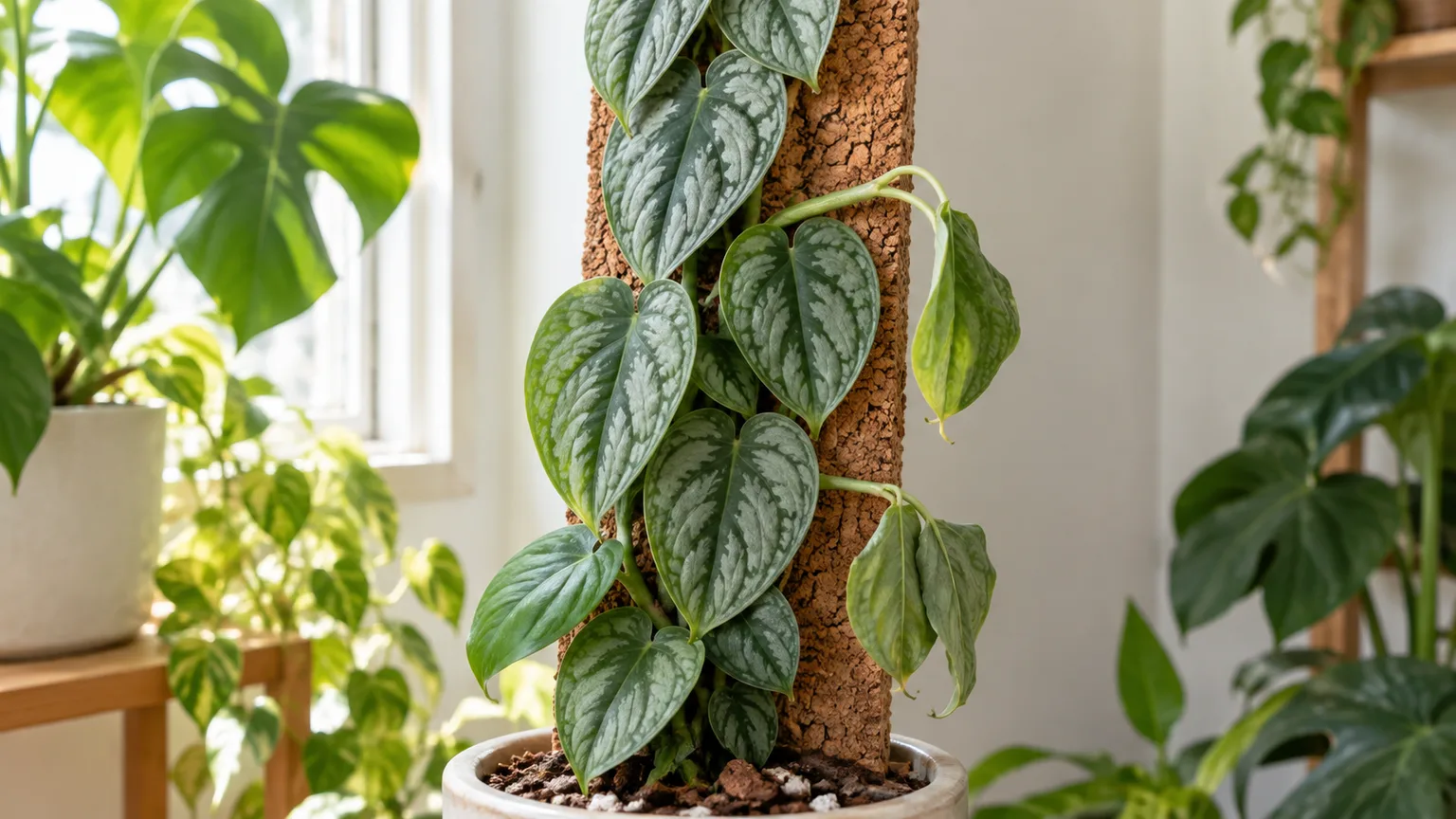
Wilting on Monstera Dubia: Causes, Checks & Fixes
This guide covers wilting on Monstera Dubia. See also the general Wilting guide, watering, and light pages for this plant.
Wilting on Monstera Dubia: Causes, Checks & Fixes
Quick answer
Check the potting mix 2–3 cm below the surface before you water a wilting Monstera Dubia. If the mix is dry and the pot feels light, water the root zone thoroughly, then let excess water drain. If the mix is still moist or the pot is heavy, do not add more water; persistent wilt in wet mix calls for a drainage and root check.
This is especially important for a plant grown flat against a board. The juvenile vine climbs by attaching aerial roots to a support, while its main root system sits in the pot. The board can feel dry when the pot is still wet, or remain damp when the pot has dried. Treat those as two separate readings, not one watering signal. Cafe Planta describes Monstera Dubia as a climbing plant whose aerial roots attach to support, a habit that makes this split-zone check useful for indoor plants. Its Monstera Dubia support guide discusses that climbing and attachment habit.
For general wilt mechanics, see our wilting guide. This page applies that check to Dubia’s shingling growth: how to read limp leaves against the board, how to test the pot without disturbing the vine, and when wet soil is a reason to inspect roots rather than water again.
If you need the full setup around the symptom, start with the Monstera Dubia overview and its watering guide.
What wilting looks like on a shingling Monstera Dubia
A wilted Dubia leaf loses its usual firmness. Its petiole bends more than the neighboring petioles, the heart-shaped blade hangs at an angle, or the leaf no longer lies close to the board. When several leaves on the same vine soften together, the change is more concerning than one older leaf gradually relaxing. The silver-green shingle pattern may still be clear; color alone does not tell you whether the pot is dry or wet.
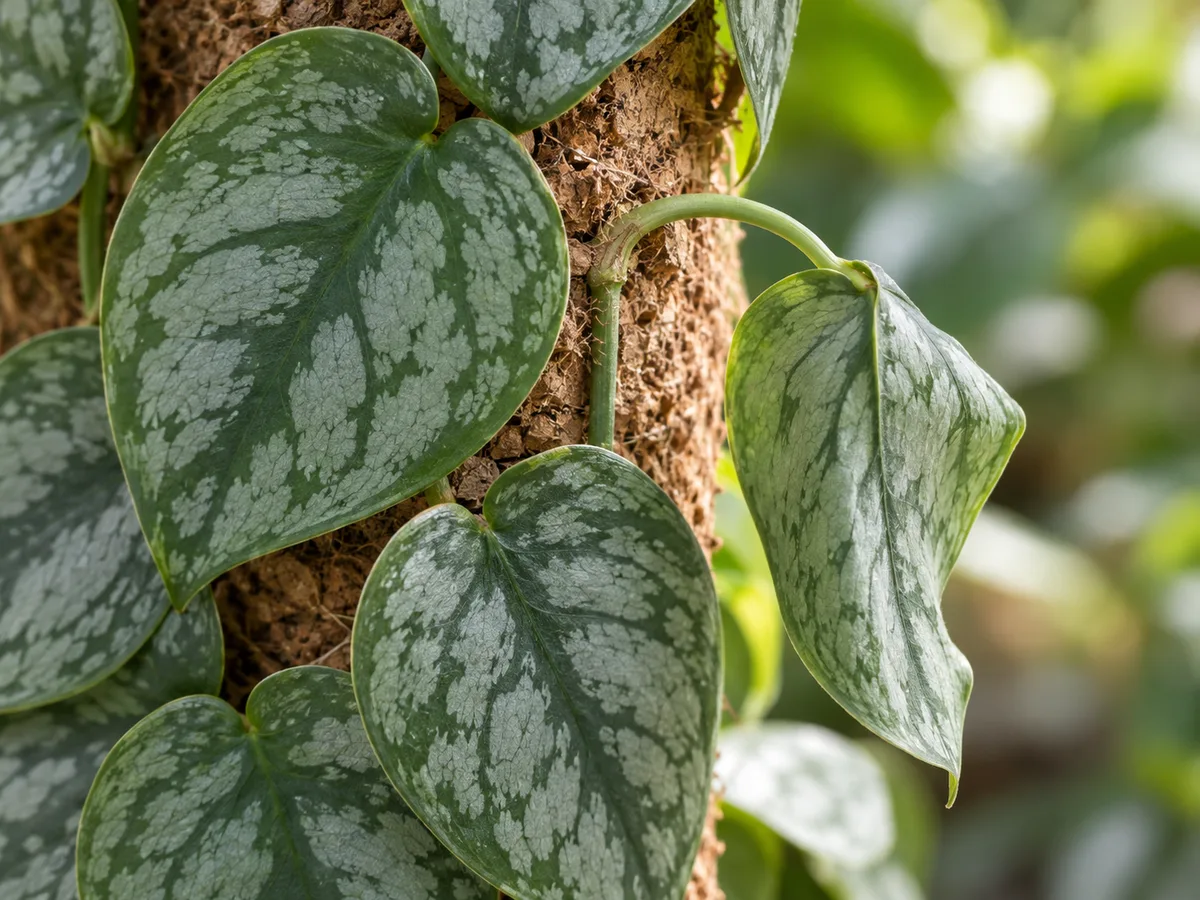
One limp leaf can be compared with the firmer shingles around it; check the base pot before deciding whether the plant is thirsty.
A climbing Dubia naturally changes as it grows. Its juvenile leaves overlap against a surface, and new leaves may sit at a slightly different angle while they extend and settle. A leaf that has lifted from the board is therefore not automatically wilted. Look for loss of firmness across the blade and petiole, not just a gap between leaf and support. Cafe Planta’s Dubia problem guide lists both excess and insufficient water, root damage, and sudden environmental change among possible wilt triggers, which is a useful reminder that appearance alone cannot identify the cause. The guide’s wilt discussion is specific to this plant, but the diagnosis still needs to match your pot and recent care.
A useful first distinction is the pattern. A single bent leaf after handling may have a damaged petiole or may be an older leaf nearing replacement. A whole vine that suddenly loses firmness points more strongly toward the root zone, a major temperature change, or recent disturbance. A slow decline that starts with one leaf and advances over several days deserves a close look at the soil and stem rather than an assumption that every limp leaf needs water.
Two moisture zones on a board-climbing Dubia
Monstera Dubia asks you to think about moisture in two places: the potting mix and the climbing surface. The base pot supports the main root system. The board, cork slab, or other support gives the aerial roots a surface to grip as the vine climbs. These zones can dry at different rates because air moves around them differently and the board is not the same volume of material as the pot.
Do not water the pot to compensate for a dry-looking board. First test the mix. If it is already damp, adding water to the base will not repair poor contact between the vine and its support; it only keeps the root zone wet longer. If the pot is dry, the board’s appearance does not change the need to rehydrate the roots. This separation is one of the most useful Dubia-specific checks because its shingling display puts the support surface directly in view, where it can distract from the actual root condition.
Likewise, do not read a wet board as proof that the pot is adequately watered. Feel the mix itself at the plant’s root depth, then consider the pot’s weight. A light nursery pot with dry mix points toward a missed watering. A heavy pot with moist mix is not a reason to water again, even if one exposed aerial root or the cork face feels dry. Monstera Dubia’s routine care uses a top 2–3 cm dry check as the signal; use that same check during troubleshooting rather than relying on a calendar.
If the board is loose, the vine has been recently moved, or a support was changed, the leaves may sit differently without a root-zone emergency. Cafe Planta’s support guide explains that Dubia climbs with aerial roots and needs a structure to attach to; that is the reason to secure a slipping vine gently, not to pull the entire plant off the board while it is wilted. Keep the support stable while you diagnose the pot.
How to confirm the cause without unmounting the vine
Start with the root zone and the recent history, in that order. Do not begin by cutting leaves, changing soil, adding fertilizer, and increasing humidity at the same time. That combination makes it impossible to know which condition you corrected and can add new stress to a plant that only needed a thorough drink.
- Test the mix. Insert a clean finger or wooden skewer about 2–3 cm into the potting mix near the root ball, away from the board’s surface. A dry, crumbly result plus a noticeably light pot supports underwatering. A cool, damp mix and a heavy pot rule out “just thirsty” as the safest assumption.
- Check drainage. If the nursery pot has drainage holes, see whether water can leave freely and whether the inner pot is sitting in collected water. A cachepot full of runoff can keep the base wet even when the top looks dry. Empty standing water before doing anything else.
- Recall the last week. Note the last watering, whether the plant was repotted or moved, whether the room became much hotter or cooler, and whether a window or vent now affects the vine. A new location can change the rate at which the pot dries, so a previous interval may no longer fit.
- Compare leaves and stems. Check whether the whole vine has softened or one leaf only. Feel the lower stem near the soil surface gently. A firm stem with a single limp leaf is different from several soft leaves and a soft stem base.
- Look at the potting mix, not just the board. A chunky, airy aroid mix normally dries differently from fine, compacted soil. If water runs down the sides without wetting the root ball, the center may still be dry; if the mix stays dense and wet, the root zone may be short of air.
A practical Monstera watering discussion from Ohio Tropics makes the same diagnostic point for Monstera deliciosa: wilt may occur when the mix is very dry or very wet, and the drying interval changes with pot size, mix, light, and temperature. That is a genus-level comparison, not proof about Dubia, but it supports checking actual moisture before reacting to a limp leaf. The Monstera watering discussion also cautions against treating “how often” as a fixed calendar question.
Read the root zone before choosing a fix
Dry mix and a light pot
If the mix is dry through the top check and the pot is light, underwatering is the leading explanation. This fits a Dubia that has gone longer between waterings than usual, sits in brighter light than before, or has a small pot that dries quickly. A dry root ball cannot maintain leaf firmness even if the board still looks damp.
Water the mix slowly and evenly until water drains from the nursery pot. Let it finish draining before returning it to a decorative planter. If the mix has pulled away from the sides or water immediately races through while the center remains dry, apply water in a few passes, allowing it to absorb between passes. Do not leave the pot standing in runoff. The goal is to rewet the root zone, not to keep the plant submerged or saturate the support board.
After watering, leave the plant in its usual bright, filtered spot and avoid a second corrective change. If the leaves remain limp, wait until the root zone has had time to absorb water, then check whether the mix is evenly moist. Do not repeat watering simply because the first leaf has not perked up instantly. Severe dehydration can damage fine roots, and badly crisp tissue may not regain its former shape even after the soil is corrected.
Moist mix and a heavy pot
If the mix is still wet, do not water. Check that runoff can escape, remove any standing water, and keep the pot where it receives suitable indirect light and gentle air movement. When potting mix stays waterlogged, root rot can make a plant wilt even though the pot feels wet. Penn State Extension describes indoor-plant root rot as wilting together with blackened, mushy roots in its indoor-plant disease guide.
A heavy pot alone does not prove rot. If the plant has only been watered recently and the stem is firm, allow the mix to dry toward the normal Dubia watering threshold while watching for new decline. If it remains soggy, smells sour, or the wilt spreads, inspect the roots. The Monstera Dubia overwatering guide covers the wider pattern; this page focuses on the limp-leaf decision that should happen before you add water or repot.
Recent move, repot, or temperature swing
If the mix is neither bone dry nor saturated, ask what changed. A recent repot can temporarily reduce root uptake because the fine roots were disturbed. A move from a stable room to a hot window, cold draft, heater stream, or air-conditioning vent can also increase stress. If the wilt followed a move, repot, or abrupt room change, note the timing as a clue, then still measure the pot before treating. Restore a stable bright-filtered position and avoid another major change until the moisture check is clear.
For a plant that became limp after a move, restore a stable position with bright, filtered light and keep the support from rocking. For a recently repotted Dubia, maintain the correct moisture range and avoid another transplant unless the mix is failing or roots are decaying. Do not place a wilted plant into direct midday sun to “dry it out”; heat can raise water demand while roots are already struggling to supply the leaves.
When a root inspection is justified
You do not need to unpot every wilted Monstera Dubia. Root inspection is appropriate when the mix stays wet and the plant continues to decline, when water cannot drain, when the lower stem softens, or when a sour smell accompanies worsening leaves. If the mix was just dry and the plant has firm stems, a root teardown is more disturbance than the evidence calls for.
If inspection is warranted, take the nursery pot out of its cachepot and slide the root ball out without pulling the vine off its board. Support the stem at the base and keep the board steady. Look for roots that are blackened or mushy, especially when the pot is heavy and the plant is still declining. Wilt by itself is not confirmation of rot; connect root appearance with the moisture and drainage pattern.
When only a few roots are damaged, remove only tissue that is clearly mushy with a clean cutting tool and return the plant to an airy, well-draining aroid mix in a pot that fits the remaining roots. Do not choose a much larger pot “to give it room”; a large volume of unused wet mix can prolong drying. If nearly all roots are soft and the vine base is also collapsing, recovery is uncertain. Keep any healthy node and firm stem sections intact while deciding whether the plant has enough viable tissue to continue. Do not make multiple large cuts before identifying where healthy tissue ends.
Lookalikes: wilt, lifted shingles, and ordinary leaf aging
| What you see | More likely explanation | What to check next |
|---|---|---|
| Several leaves lose firmness while the pot is light and the mix is dry | Underwatering | Rehydrate the root zone once; use the underwatering guide if the dry pattern repeats. |
| Leaves wilt while the pot is heavy and the mix stays wet | Root stress or root rot | Stop adding water; check drainage and inspect roots if decline continues. See root rot on Monstera Dubia. |
| One or two leaves sit farther from the board but remain firm | Aerial-root contact or support position, not necessarily wilt | Stabilize the board and check whether the petiole and blade are actually soft. |
| Leaf edges turn crisp while the rest of the vine remains firm | Dry air or an uneven watering pattern may be involved | Check the pot first, then review the low-humidity guide and the care setup. |
| One oldest leaf slowly yellows while new growth and the vine stay firm | Normal aging or a localized issue is more plausible than whole-plant wilt | Compare with yellow leaves on Monstera Dubia; do not soak the whole pot based on one aging leaf. |
| A single leaf bends sharply after handling or tying | Local petiole damage may be more likely than a root-wide water problem | Check the stem and node at that leaf without pulling the vine off the support. |
Wilting usually changes the firmness of tissue, while a lifted shingle can be a position change. Do not call a plant wilted just because a new leaf is not pressed flat against the board. Conversely, do not dismiss a limp leaf as a support issue when several leaves have softened and the pot has a clear dry or waterlogged signal.
Pests are a less likely explanation for sudden whole-vine collapse, but inspect the undersides of leaves and the nodes if symptoms are localized, stippled, sticky, or accompanied by webbing. Penn State Extension lists spider mites and mealybugs among houseplant pests and describes the kinds of leaf damage and visible signs they can leave; treat a visible pest as a separate diagnosis rather than spraying the plant because it wilted. Do not apply a pesticide or oil without confirming the pest and following its label.
What to do while the Dubia recovers
After one targeted correction, keep the plant’s position steady for several days. Record whether the pot is light or heavy and whether each affected leaf becomes firmer, stays unchanged, or worsens. A thirsty plant may regain some firmness after the mix is rehydrated, but a leaf with dead, crispy, yellow, or mushy tissue will not return to a perfect shingle. Do not prune merely to make the board look tidy; remove a leaf only if it is fully dead or decaying.
For wet-soil wilt, improvement depends on whether roots remain functional. Let excess water drain, keep the mix from staying saturated, and avoid forcing the plant through a major repot unless the root inspection supports it. New growth can take longer to appear than a change in leaf firmness, so use two signals: the existing vine stops declining, and the next leaf develops without the same collapse. If no new growth is expected soon, stable stems and no spread are still useful signs.
Avoid fertilizer while the roots are acutely stressed. Fertilizer does not repair damaged roots, and it adds another variable before you know whether the mix was too dry or too wet. Avoid repeated misting as a wilt treatment. Penn State Extension notes that the humidity increase from misting lasts only until the water evaporates, which can happen within minutes; a humidifier changes room humidity more reliably. Penn State’s humidity guidance supports using room conditions, not a quick leaf spray, as the relevant measure.
Prevent another wilt cycle on a mounted Monstera Dubia
Keep a simple log of watering date, pot weight, and the top 2–3 cm check for a few weeks. The goal is not to follow a 6–10 day timer blindly; it is to learn how quickly this particular pot and mix dry in its current light and season. Reduce watering during slower winter growth if the mix takes longer to dry, and shorten the interval only when the actual root zone dries sooner. This is more reliable than watering because the support looks dry or because a calendar reminder fired.
Use a pot with open drainage and an airy aroid mix that does not collapse into a dense, wet mass. If the mix has broken down or the pot is much larger than the root ball, correct that as a planned care change after the immediate wilt is understood. Use your watering notes to align routine checks; the Monstera Dubia soil guide is the next stop if the mix stays wet far longer than expected.
Keep the board secure and the vine supported so nodes and aerial roots are not tugged every time the plant is moved. If you relocate the plant, do it gradually and observe the drying rate in the new position. A brighter or warmer place may dry the pot faster; a cooler, lower-light corner may leave it wet longer. Penn State’s indoor humidity guidance also points out that humidity targets vary by plant and that misting and pebble trays have limited effect on room humidity. If the room is consistently dry and the board-mounted roots are exposed, a small humidifier can be considered for the growing area, but do not use humidity adjustments to excuse a soggy pot or missed root-zone checks.
When to act quickly
Treat the situation as urgent if the Dubia wilts in wet mix and the stem at soil level becomes soft, the roots are black and mushy, several leaves collapse together, or the condition advances rapidly after a careful watering correction. Remove standing water immediately and inspect the root ball if wetness persists. If the vine is firm and only one leaf is affected, monitor it before dismantling the support or pruning.
If rot has reached the main stem and no firm node remains, the plant may not be salvageable. If one healthy section remains, preserve that node and keep it separate from decaying tissue. This is a recovery decision, not a reason to keep the plant in wet soil while hoping the symptoms reverse. The distinction between “one damaged leaf” and “a failing stem base” is more useful than the severity label alone.
When to use this page vs other Monstera Dubia guides
Use this page when a Dubia vine or several shingles have suddenly lost firmness and you need to decide whether to water, wait, or check roots. If the leaves are mainly limp because the mix is dry, start with underwatering on Monstera Dubia. If the pot stays wet or smells sour, read overwatering on Monstera Dubia and root rot on Monstera Dubia. If the leaves are mostly upright but hang lower in a gradual way, compare the pattern with drooping leaves on Monstera Dubia.
Related Monstera Dubia guides
- Monstera Dubia overview — use for the full board-mount and care setup.
- Monstera Dubia watering guide — use for the routine dry-down check after the immediate wilt is diagnosed.
- Monstera Dubia problems hub — use to browse other symptoms when the plant has more than limp leaves.
- Root rot guide — use when the pot remains wet and roots or the stem base are soft.
Related tool
Use the Plant Watering Calculator to think through a moisture check for this plant. The result is a planning aid; confirm the potting mix directly before watering.