Low Humidity on Monstera Dubia: Signs & Fixes
Quick answer
If a Monstera dubia’s shingling leaves lift from the board or develop crisp edges, measure humidity beside the vine first. The RHS gives Monstera dubia a 60–80% humidity range; if readings stay below it, raise humidity locally with a humidifier while keeping the pot on its usual dry-down routine.
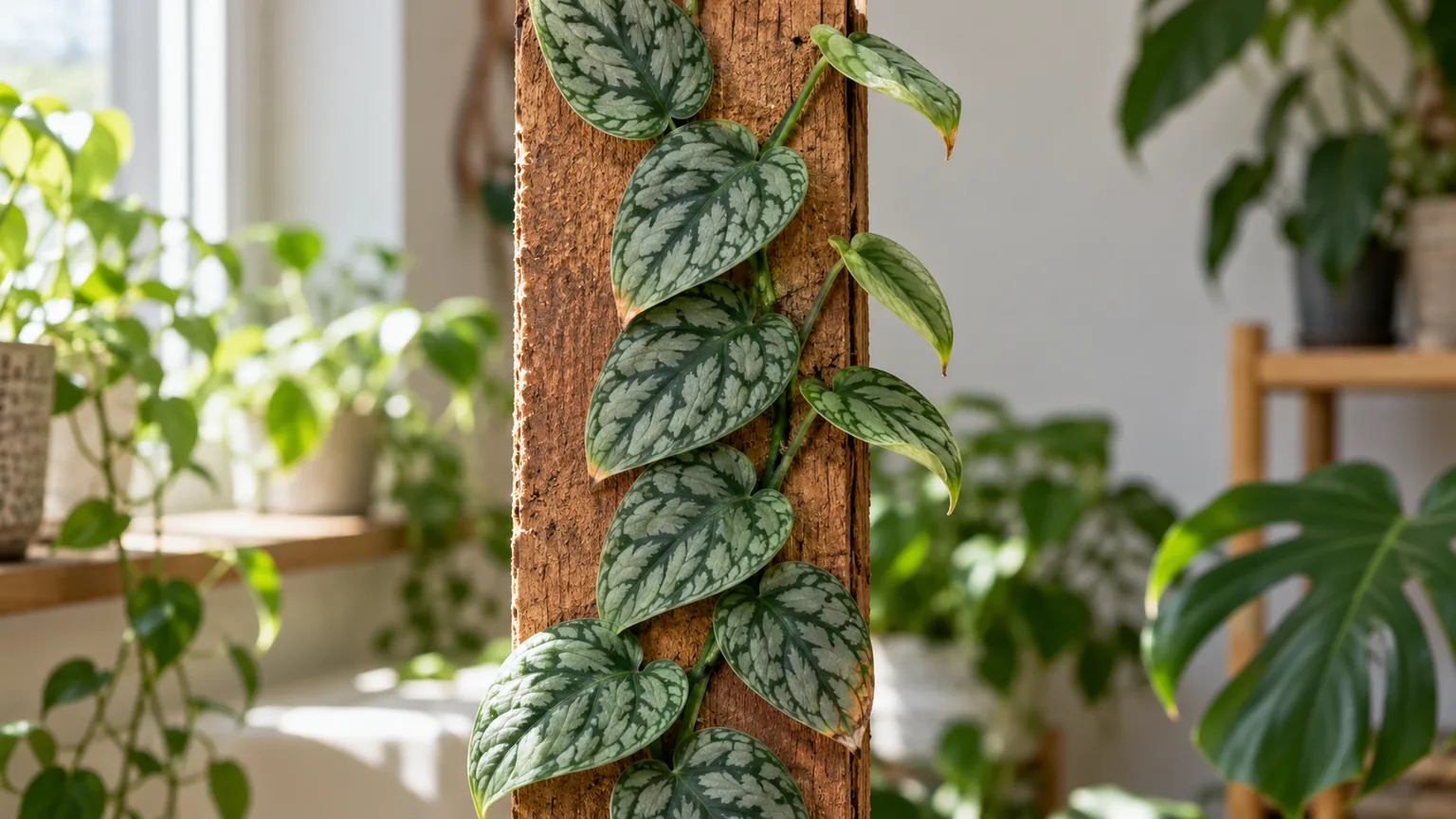
Low Humidity on Monstera Dubia: Signs, Checks & Fixes
This guide covers low humidity on Monstera Dubia. See also the general Low Humidity guide, watering, and light pages for this plant.
Low Humidity on Monstera Dubia: Signs, Checks & Fixes
Quick answer
If a Monstera dubia’s shingling leaves are starting to lift from their board or develop crisp edges, measure humidity beside the vine before changing the watering routine. The Royal Horticultural Society profile gives Monstera dubia a 60–80% relative-humidity range. If a hygrometer repeatedly reads below that range at the leaves, raise humidity around the climbing surface with a small humidifier. Keep the base pot on its own dry-down schedule; watering more will not make the air around the board reliably humid.
Monstera dubia is usually grown for its juvenile leaves, which form a close, overlapping panel against a support. This means dry-air symptoms can appear first along exposed margins or where new leaves are trying to attach, rather than as a dramatic whole-plant collapse. Start with the plant’s actual setup and compare it with the Monstera dubia overview. Low humidity is one possible cause of a lifting shingle, but it is not a diagnosis from appearance alone.
What low humidity looks like on Monstera dubia
On a juvenile Monstera dubia, look for a pattern rather than one imperfect leaf. The outer edges may become dry and tan, and newly expanding leaves may curl or stay slightly separated from the board instead of settling into the overlapping shingle pattern. A care guide for the species also describes leaves lifting from the board and crisp edges as possible dry-air signs, though those symptoms can have other causes. (Houseplant101’s Dubia guide)
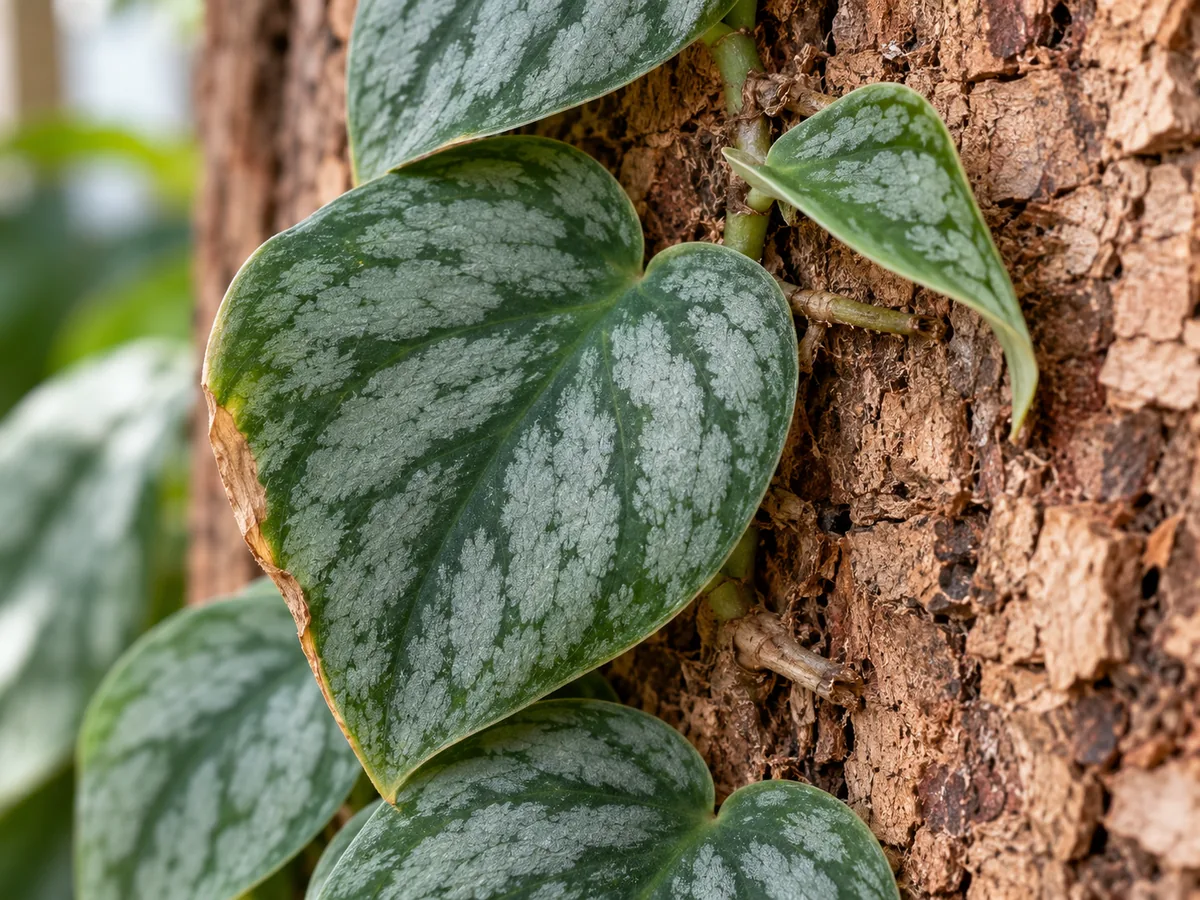
On Monstera dubia, compare the newest shingle and its contact with the board; a crisp margin is a clue to check humidity, not proof by itself.
A few older leaves with small dry marks do not necessarily mean the room is too dry. Look at where the damage begins and whether it is moving. Low humidity becomes more plausible when several recent leaves show crisp margins, the newest growth is less willing to lie flat, and measurements beside the vine are consistently below the species’ recommended range. If only one old leaf is affected while new leaves are firm and attached, the mark may be old damage that will remain visible even after conditions improve.
The same visual pattern can also come from a board that is too narrow, a node that never made contact, or a leaf that was pulled loose during moving or cleaning. A Monstera dubia should not be peeled off the support to investigate; its juvenile leaves and attachment points can be damaged by repeated handling. Instead, inspect the front and edges of the panel, the newest leaf, and the air reading around the plant.
Why the shingle habit changes the diagnosis
Monstera dubia’s juvenile growth is built around a climbing surface. Each small, silver-marked leaf sits close to the next, so the support creates a sheltered plane behind the foliage and a more exposed edge in front. If the room air stays dry, the fragile-looking outer margins and new growth can show stress before the vine as a whole looks wilted. The RHS describes this species as thriving in high humidity and recommends 60–80% relative humidity; treat that as a useful growing range, not a promise that every leaf will fail below one exact number. (RHS profile for the shingle plant)
The board and the pot do different jobs. Aerial roots along the vine can make contact with the support while the roots in the pot still need an airy, draining mix. Dubia care guidance commonly recommends keeping the board or climbing surface lightly moist so those contact points do not dry immediately; a commercial care guide likewise distinguishes the climbing surface from the pot’s watering needs. (Soltech’s Monstera dubia care guide) That detail matters because a dry board can make the plant look unhappy even while the potting mix is damp.
Do not interpret “humid plant” as “keep every part wet.” The leaves benefit from humid air around the vine, but the potting mix should not stay waterlogged. If the air is dry and the pot is wet, adding more water increases risk without correcting the measured humidity. If the support is dry but the pot is still holding moisture, address the support or room air separately.
This distinction also explains why a climbing Dubia mounted on a board in a heated room may need a different humidity solution than a trailing plant sitting on a shelf. The goal is to improve the air around the leaves and attachment zone while keeping enough airflow to dry surfaces between wetting. If the plant has no stable, flat surface to climb, humidity alone cannot recreate the shingling habit; secure the vine gently and use the Monstera dubia problems hub to choose a more specific guide when another symptom dominates.
Confirm the air is dry before changing care
Measure beside the board
Use a digital hygrometer positioned near the leaves, not across the room or directly in the humidifier’s plume. Give it time to settle, then check at different points in the day, especially when indoor heating or air conditioning is running. One reading can be distorted by a nearby window, vent, or humidifier, so repeat the measurement before changing the plant’s routine. The room’s central reading may be higher or lower than the narrow space where the vine is attached.
Compare repeated readings with the RHS range of 60–80%. If the plant has crisping margins and several readings near the board remain below 60%, low humidity deserves attention. If readings are already in or near the range, do not keep raising humidity just because one older leaf has a brown edge. Recheck the board, recent handling, light exposure, and pot moisture instead.
Separate a dry board from a dry pot
Touch the potting mix near the root zone and compare its weight with how it feels just after watering. The Monstera dubia care record uses a top 2–3 cm dry check before watering; follow the plant’s own dry-down pattern rather than a fixed weekly schedule. Clemson Extension similarly recommends checking indoor potting mix rather than watering houseplants by calendar. (Clemson HGIC on indoor-plant watering)
Then look at the climbing surface. Is the board bone dry at the newest nodes? Are the leaves still pressed flat lower down but lifting only at the top, where the support dries fastest? If so, the board’s condition may be part of the problem. A board that is wet to the touch all day, however, can signal too much direct wetting or poor airflow; the answer is not to soak it repeatedly.
Check new growth and attachment
The newest leaf is more informative than the oldest damaged one. A leaf still unfurling may naturally sit away from the board before it hardens, so do not press it flat or tie it tightly. Once it has opened, see whether the petiole and blade settle into the same close arrangement as older leaves. The vine should remain firm, and the nodes should sit against the support without being crushed.
If a loose section is simply hanging away from the board, check whether it has an intact node and a safe contact point before assuming humidity is the only issue. Do not peel attached leaves back to expose aerial roots. A loose, damaged contact point may need gentle support, while a vine with several consecutive dry-air symptoms and low measured humidity needs an environmental correction. These checks separate a persistent pattern from one leaf that is still developing.
First fix: raise humidity around the climbing surface
If repeated readings beside the vine are below the Dubia’s target range, first run a room humidifier near the board and adjust it to lift the local reading gradually. Aim for the plant’s recommended range rather than making the area wet. A plant-care blogger also recommends placing a small humidifier near Monstera dubia, but that is practical grower guidance rather than a measured threshold. (Mod & Mint’s Dubia care guide)
Keep the humidifier near enough to affect the vine but not so close that mist blows directly onto the leaves or saturates the board. Check the hygrometer where the leaves sit, not beside the device. Follow the humidifier’s cleaning instructions so that the appliance itself does not become a source of stale water or mineral residue. If the reading rises into range and stays there through the day, leave the watering and light routines stable for now; changing several conditions at once makes it harder to tell what helped.
A cabinet or enclosed growing space can hold humidity more steadily for a small Dubia, but enclosure changes also reduce airflow and can trap condensation. Do not seal a large, established vine in a cramped container simply to chase a high number. If using a cabinet, keep some air exchange, observe the board and foliage for persistent wetness, and confirm that light remains suitable. Grouping plants can help modestly in a small area, but measure the result; a grouping that does not change the reading is not a reliable treatment.
Misting is not a substitute for that first fix. The RHS profile lists misting and pebble trays among its options, while Penn State Extension notes that the humidity increase after misting lasts only until the water evaporates, which can be a matter of minutes, and that wet-pebble trays have little effect on room humidity. (Penn State Extension on humidity and houseplants; compare the RHS profile) For a stable reading around a mounted Dubia, rely on a measured humidifier or cabinet rather than repeated quick fixes. A hygrometer lets you verify the result.
Keep board moisture separate from pot watering
Once the local humidity is being corrected, inspect the support without changing the pot schedule. A lightly damp board can help keep the aerial-root contact area from drying quickly, but it should not be saturated continuously. If you moisten a board, do so sparingly and check how quickly it dries. The base pot should still be watered only when its own mix reaches the dry point that has worked for this plant.
This two-zone routine prevents the most common overreaction: seeing a lifted shingle and pouring water into the pot even though the mix is wet. Monstera dubia has a relatively airy aroid mix and a shallow top-layer check in the plant record; extra water can keep the root zone wet for longer without increasing room humidity. When you are unsure whether the pot is drying normally, use the Monstera dubia watering guide to reassess the mix and pot weight.
Do not replace the potting mix just to solve dry air. Repot only if the mix has broken down, drains poorly, smells sour, or the roots are clearly compromised. A chunky blend with bark, perlite, and coco coir is intended to drain; a dry room does not mean that the roots need a wetter substrate. If water is sitting in the cachepot or saucer, empty it and let the mix dry to the normal point before the next watering.
Tell low humidity from lookalike problems
| What you see | More likely explanation | What to check next |
|---|---|---|
| Several new leaf margins crisping, shingling loosening, and low RH beside the board | Low humidity is plausible | Raise local humidity and track new growth |
| Pot is light and the top 2–3 cm is dry; leaf edges are crisp or the vine looks limp | Underwatering may contribute | Check the underwatering guide and water by mix dryness |
| Pot stays wet, leaves yellow, or stems soften | Root-zone stress or overwatering is more likely | Check drainage and follow the root-rot guide if roots are soft or foul-smelling |
| Pale or stretched newest leaves turn away from the board | Light or support placement may be limiting growth | Compare with the not-enough-light guide |
| Only leaf tips or margins are brown, but RH is adequate | Water quality, salts, old damage, or root stress may fit better | Use the brown-tips guide and check recent changes |
Treat the table as a sorting aid, not a set of diagnoses based on one symptom. Low humidity is most convincing when a direct humidity reading and the pattern on the newest leaves point the same way. Crisp margins by themselves can also occur when the pot dries too far, after a move, or when roots are struggling in a persistently wet mix. A fast change from healthy growth to widespread yellowing or softness is a stronger reason to inspect the root zone than to keep raising humidity.
Light and humidity can shift together. A board next to a sunny window may warm and dry more quickly than a shaded wall, while a dark corner may slow the plant enough that old damage persists without new leaves to judge. Keep the growing position bright and indirect, and use the Monstera dubia light guide if the new leaves are pale, stretched, or turning away from the support.
Recovery: judge the next shingle, not old damage
A crisp brown edge will not become green again, and a fully hardened leaf may remain slightly lifted even after humidity improves. Leave it attached if most of the blade is green and healthy; removing leaves simply because their edges are imperfect reduces the plant’s remaining foliage. Trim only tissue that is dead, catching, or spreading, and use clean scissors without cutting into the vine or node.
The first sign of success is not a repaired old leaf. It is a stable humidity reading beside the board and a new leaf that opens without progressively drier margins. After the leaf has opened and firmed, compare its contact with the support to the previous growth. A short pause in growth is not enough to prove that the plant is failing, especially after a move or during a slower season, but ongoing damage to successive leaves means the environment or root zone still needs attention.
Give the plant time to produce a new leaf before making another major adjustment. The interval depends on growth conditions and season, so use the plant’s own pace rather than a fixed recovery deadline. Keep a brief note of humidity readings, watering dates, and which leaf is newest. If the margins stop worsening while new growth remains firm, the change is working even if the old damage stays visible.
If leaves continue to crisp while the humidity is within range, revisit the board and check the pot moisture and light. If the whole vine becomes limp, stems soften, or yellowing spreads, treat that as a broader care failure rather than a humidity-only issue. Use the Monstera dubia soil guide if the mix remains wet, drains slowly, or has begun to break down.
Mistakes that make a Dubia harder to read
Do not respond to dry-looking leaves by increasing the watering frequency automatically. The aerial roots climbing the board and the roots in the pot occupy different moisture zones, and a humidifier changes the air while watering changes the mix. Measure first, then alter one condition that matches the evidence. If the pot is dry at its normal check point, water it; if the pot is moist and the board area is dry, adjust humidity or support moisture instead.
Do not mist several times a day and assume that the whole room stays humid. Penn State Extension’s review of common humidity methods explains that misting is short-lived and pebble trays have little impact on room humidity. Instead of repeating those actions, verify a stable reading at the leaf level and use a humidifier or a suitable growing cabinet if the air is genuinely too dry.
Avoid pressing a newly unfurling shingle flat against the board, pulling attached leaves away to inspect behind them, or wrapping the vine tightly with tape. The leaf may still be opening, and force can injure the blade or node. Support a loose section at the stem or node only when needed, without pinching the petiole or obscuring the newest leaf.
Finally, do not combine repotting, pruning, moving the plant, changing the support, and raising humidity in one day unless there is an urgent root problem. A stable baseline lets you see whether the new environment improves the next leaf. If the plant is in a suitable place but its new growth is pale or elongated, solve the light or support issue separately instead of raising humidity beyond the recommended range.
Prevent the next dry-air episode
Keep a small hygrometer near the climbing panel during the driest part of the year and whenever heating, air conditioning, or a room move changes the local conditions. If the reading often falls below the RHS range, decide on a steady approach before the next leaf begins to open. A portable humidifier or a well-ventilated cabinet is easier to evaluate than a rotation of misting, pebble trays, and extra watering. The target is a stable environment around the vine, not a wet film on every leaf.
Place the board away from heating vents and strong drafts that make readings fluctuate. If you move the plant to a more humid room, confirm that it still receives bright indirect light and that the potting mix dries at a safe pace. A bathroom may be humid after showers but too dark or inconsistent for this climbing plant; measure both the humidity and the light before moving it permanently. Use a humidifier to correct the air while preserving the Dubia’s usual light and watering pattern.
At each weekly look-over, compare the newest leaf with the last one and check whether the board and pot are drying at different speeds. A short note of RH, leaf condition, and pot moisture helps show whether damage began after a heater started, the board dried, or watering changed. Clean dust gently from the leaves so the silver pattern remains visible, but do not pull a shingle away from its attachment to reach behind it. The Monstera dubia problems hub can help route symptoms that point to another cause.
When to use this page vs other Monstera Dubia guides
Use this page when repeated low readings beside the support coincide with crisp margins or new leaves that do not settle into the shingle panel. If the room is already within the species’ range and the plant has just one damaged old leaf, begin with the specific lookalike rather than trying to raise humidity. That distinction matters because the same curled or brown edge can arise from different conditions.
If the mix is too dry or the plant droops after watering has been delayed, the watering and underwatering guides are the better next step. If the pot remains wet and the vine yellows or softens, follow the root-rot guidance. If new leaves stretch or turn away from the support, focus on light and positioning. When only the margins are brown and humidity is adequate, compare the pattern with the brown-tips guide. The global low-humidity guide explains the general symptom; this page applies the checks to Monstera dubia’s board-mounted, juvenile growth.
Related Monstera Dubia guides
Use the Monstera dubia overview for the plant’s full board, light, and pot setup. Use the Monstera dubia problems hub when the signs are mixed and you need to choose among problem pages.
Choose the watering guide if pot moisture and weight do not match the plant’s needs, and the soil guide if the mix is staying wet or breaking down. The light guide is more useful for stretched, pale growth. For dry or browned margins that remain after humidity readings are corrected, the brown-tips guide narrows the alternate causes.
Related tool
Use the Humidity Calculator to compare your room reading with a plant-focused target before adjusting the setup.