Leggy Growth on Monstera Dubia: What to Check First
Quick answer
On Monstera Dubia, leggy growth means the newest vine sections are stretching between smaller, more widely spaced leaves instead of making a compact shingle run. First move the mounted plant to brighter filtered light, then judge the next few nodes; old gaps will not close.
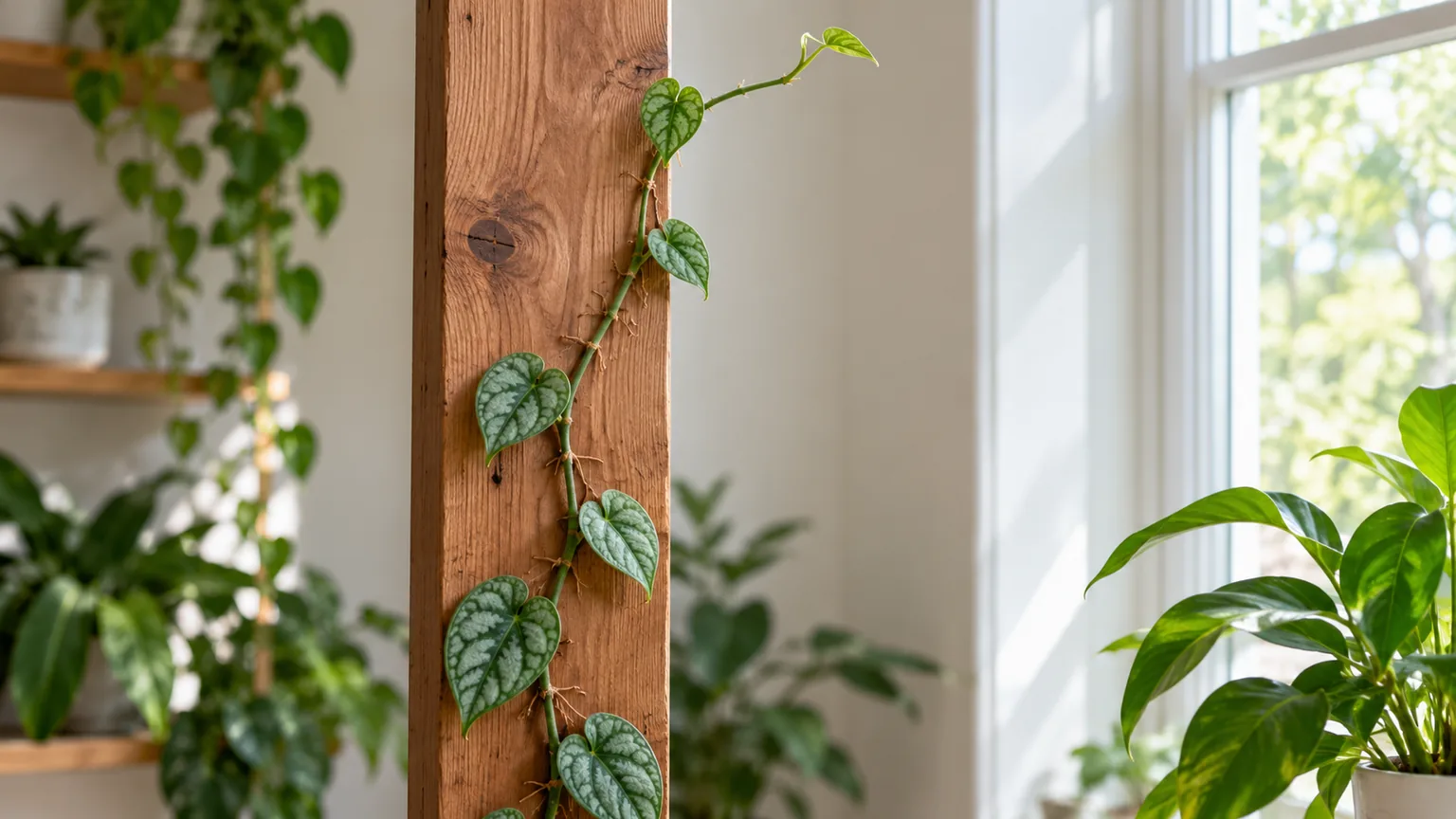
Leggy Growth on Monstera Dubia: Causes, Checks & Fixes
This guide covers leggy growth on Monstera Dubia. See also the general Leggy Growth guide, watering, and light pages for this plant.
Leggy Growth on Monstera Dubia: Causes, Checks & Fixes
Quick answer
On Monstera Dubia, leggy growth means the newest vine sections are stretching between smaller, more widely spaced leaves instead of making a compact shingle run. The first correction is to give the mounted vine brighter filtered light. Keep the board in place, leave the potting mix on its normal watering rhythm, and wait for new growth before deciding whether to prune.
The gaps already formed will remain. A useful recovery is a firm tip that continues climbing with new leaves closer together, more typical in size, and able to lie against the board. A longer vine by itself is not proof of a problem: Dubia is a climbing plant, so check the last few nodes and their leaves rather than judging the whole panel by its height.
What leggy growth looks like on Monstera Dubia
Inspect the newest section of stem, especially the three or four most recent nodes. A leggy run has visibly longer bare stem between leaf attachments than the older, compact part of the vine. New leaves may be smaller than the previous healthy leaves, and the growing tip may angle toward the strongest window rather than continuing up the board. Compare that pattern with Dubia’s own shingling habit instead of diagnosing from the plant’s overall height.
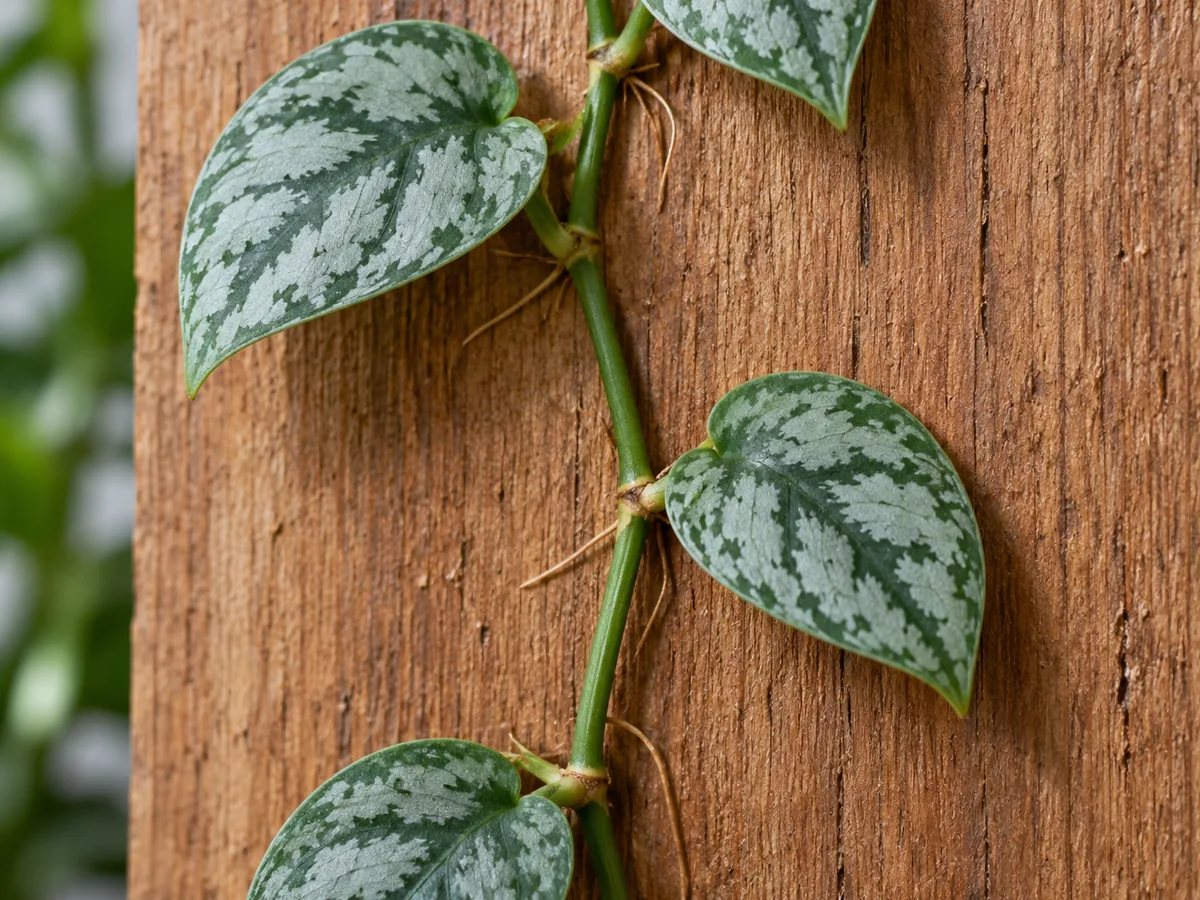
On a Dubia board, compare the most recent nodes: repeated long bare gaps and smaller leaves are more informative than the total vine length.
In its juvenile indoor form, Monstera Dubia makes overlapping silver-green leaves pressed against a vertical surface. The Royal Horticultural Society’s Dubia profile describes the species as climbing and trailing, with aerial roots, and recommends bright indirect light. If the stem is advancing while each new leaf still lands close to the next, the plant may simply be climbing. If the distance between nodes is opening up and the leaf blades are shrinking, the new growth is telling you that its growing point is not receiving enough useful light. A Dubia care guide from Plant Blueprint gives the same practical pattern: low light is associated with smaller leaves, stretched stems, and slower climbing.
Normal shingling versus a stretched Dubia vine
Do not expect every Monstera Dubia to look like a perfectly tiled wall. Leaves emerge one at a time, and the vine has to extend enough for each new node and aerial root to meet the support. A short irregular gap can be normal, particularly after a move or while the tip finds a new section of board. The better comparison is whether the newest run is changing: progressively longer internodes, smaller leaves, and a tip leaning toward the light together make a stronger case for low-light stretch than any one feature alone.
Also separate a long stem from a support problem. If the nodes are reasonably close but several leaves face away from the board, the vine may not be sitting against a broad, stable surface, or the attachment points may be loose. If the newest leaves are held off the board but the stem spacing is ordinary, investigate contact and support before calling it leggy. The shingle habit is the visual goal for most indoor Dubia, not a requirement that every leaf remain perfectly flat under all conditions.
Why Monstera Dubia develops sparse, stretched growth
The leading cause is inadequate light at the growing tip. A bright room can still leave the front of a board-mounted plant in shade if the board faces away from the window, sits behind furniture, or is several feet into a deep room. The useful question is not whether the room looks bright to you; it is whether the newest leaves receive brighter, indirect light for much of the day. Penn State Extension notes that Monstera may become leggy in lower light. NC State Extension describes dappled sunlight or partial shade for Monstera deliciosa; that is useful genus context, not a measured threshold for Dubia.
Dubia’s climbing shape makes the light pattern especially visible. The growing tip and newest leaf are farther from the base pot than the older foliage, and a flat mount can face one fixed direction. When the tip receives weak light, it may extend toward a brighter side while making a looser-looking line of leaves. That is a reasonable diagnosis when the internodes and leaf size are both changing in the same direction, but a single gap is not enough to identify the cause.
A support that ends at the current tip can create a different problem. The plant may keep extending beyond the board or reach sideways for another surface; this can make the upper section look untidy without proving that the plant needs more fertilizer or water. Aerial roots help Dubia attach as it climbs, so a vine with healthy, close-set nodes but no surface to grip needs more support length or gentle redirection. Do not pull established roots away from a board to make the front look neater.
Season and recent disturbance also matter. RHS describes Monstera Dubia as slow-growing, and indoor growth can pause when days shorten or a plant has recently been moved, shipped, or repotted. A pause is not the same as legginess: low light is more convincing when the vine is actively producing new nodes that are farther apart and smaller. If no new node has appeared, consider the separate question of slow growth instead of repeatedly moving the plant or feeding it to force a response.
Confirm the cause before changing care
Start with the latest growth, not the oldest damaged or missing leaves. Compare the last several node-to-node distances with the older part of the same vine. Note whether the newest leaves are smaller, whether their petioles turn toward a window, and whether the stem is firm. Old leaves can fall for many reasons; a leaf scar alone does not show that light caused the gap.
Next, trace the light path from window or grow lamp to the front of the board. Check whether a curtain, wall, shelving, or the plant’s own mount blocks the tip for most of the day. If the plant has been in the same place for months, note seasonal changes: a spot that felt bright in summer may receive much less usable light during shorter winter days. A simple photo of the newest nodes beside a ruler or a dated photo from the same angle can make comparison easier without handling the vine.
Then check support contact. Is the top still within the board’s height? Are there points where the stem has pulled away, or are aerial roots reaching for a wall or stake beside the board? Close node spacing with leaves lifting from the surface suggests an attachment or humidity issue more than etiolation. Penn State Extension’s humidity guidance notes that misting raises humidity only until the water evaporates, often within minutes; occasional misting is therefore not a dependable way to change room humidity, and it will not repair stretched internodes.
Finally, check the base pot only if the plant is also yellowing, soft, or declining. Feel the mix a few centimeters below the surface and confirm that the pot drains; Monstera Dubia’s care record calls for a chunky, well-drained aroid mix and a top-layer dry check before watering. A healthy, firm vine with spaced nodes does not need to be unpotted just because it looks leggy. If the stem near the pot becomes soft or several leaves yellow while the mix stays wet, switch to the Monstera Dubia watering guide and assess the root zone before pruning.
For general plant-leggy-growth mechanics, the leggy growth guide explains the broad symptom. This page applies that pattern to a shingling climber: node spacing, leaf size, the direction of the vine, and the board’s position all matter together.
First fix: give the growing tip brighter filtered light
If the newest nodes are stretching and the tip is leaning toward a window, make one change first: move the whole board-mounted plant to a brighter position with filtered light. Keep it out of harsh direct sun, especially midday sun through glass, and keep the vine facing the light as it was before. The RHS Dubia profile recommends bright indirect light; do not move it into a sunny window simply because the current spot is dim.
If the mount is too large or fixed in place, add a grow light aimed toward the front of the board rather than detaching the vine. Follow the lamp manufacturer’s distance guidance and use a consistent day-night schedule; there is no single home light number that can be promised for every fixture, room, or plant. Make this light adjustment before adding fertilizer, changing the pot, or cutting the stem. Those extra interventions make it harder to tell whether the new nodes respond to the change that addresses the likely cause.
Recover a Dubia panel without loosening its roots
Photograph the top of the vine before the move and mark the date. Then change the light position and leave watering, feeding, and pruning alone for the next growth check. That gives you a baseline: if the stem continues to extend, compare new leaf size and spacing rather than expecting the old section to become compact. Keep the base mix on its normal dry-down rhythm; do not water more often because the brighter location feels warmer, and do not let a damp board become a reason to keep the pot saturated.
When you cannot move the board, improve the light reaching the tip. A grow light can be positioned in front of the upper vine so the new leaf is not hidden behind the support. Keep the light source far enough away to avoid hot spots and follow its stated operating instructions. If you use a lamp timer, keep the lighting period stable across days rather than extending the day late into the night. The goal is consistent, useful light, not a sudden jump in intensity.
If you move the plant closer to a window, make the transition gradual. A previously shaded leaf can be damaged by a sudden shift into hot direct sun, so keep the new position filtered and watch the first leaves for pale, dry patches. If the growing point is still oriented toward the window, leave the board’s face where it is rather than twisting the whole plant repeatedly. Turning a mounted Dubia can pull attached aerial roots or alter which surface its shingling leaves touch.
After the light correction, check the next one or two leaves as they unfold. The first leaf may still be smaller or more widely spaced because it began developing under the earlier conditions. A better sign is the following node forming closer to its neighbor, with a blade that is not progressively shrinking. Keep the adjustment if the plant remains firm and the new growth improves. If it keeps stretching after a few new nodes, reassess how much light actually reaches the tip and whether another object is shading the board.
Extend the flat support when the vine reaches its top
Monstera Dubia is a climbing species, so a growing tip needs a vertical path. The RHS lists the plant as climbing and trailing and notes its aerial roots. When the tip reaches the top of its board, add a taller board or a securely joined extension that gives the next nodes a surface to meet. A longer stem beyond the board can look sparse simply because it is no longer climbing against a plane; adding support addresses that mismatch but does not replace adequate light.
Keep the stem in contact with the board using a loose plant tie or clip only where needed. The tie should hold the stem near the surface without pinching it as it thickens. Do not bind each petiole or press a new leaf flat before it has opened. Dubia’s leaves are meant to shingle against the support, but a young leaf should be allowed to unfurl without being trapped under a clip.
If the plant has pulled away from the support, guide the growing tip back toward the board without forcing old aerial roots to release. Secure a free section near a node, then allow new roots to attach. If a stem section is already woody or rooted tightly to the board, leave it in place and redirect only the flexible tip. For a broader care check on the mount and potting mix, use the Monstera Dubia soil guide; it helps separate a support issue from a base-pot drainage problem.
What to do with the long section that is already there
Long internodes cannot contract after a plant receives better light, and old leaf scars do not shift closer together. If the vine is healthy, it is reasonable to keep the old section and let new growth improve the top of the panel. That is usually the least disruptive choice for a mounted Dubia because pruning removes foliage and may leave a visible gap in the display.
Prune only if the sparse section is damaged, has reached an awkward position, or you want to restart a shorter display after light has been corrected. Make a clean cut just above a sound node and keep a healthy cutting only if it contains a viable node; Plant Blueprint’s Dubia propagation steps use a stem section with a node and aerial root. Penn State’s Monstera propagation guidance describes stem cuttings and air layering for the genus generally. Because rooting results vary with node condition and setup, treat a cutting as a second chance rather than a guaranteed replacement.
For deliberate shaping, compare this page with the Monstera Dubia pruning guide. It covers where to cut and how to keep a mount manageable; this leggy-growth guide focuses on correcting the conditions that produced loose new nodes. If you propagate the top, the Monstera Dubia propagation guide explains how to root a node and establish the next shingle run.
Lookalike patterns to separate from legginess
| What you see | More likely explanation | Next step |
|---|---|---|
| New nodes are farther apart, new leaves are smaller, and the tip points toward a window | Low light is the leading explanation for a stretching vine | Improve filtered light and compare the next nodes; see the Monstera Dubia light guide. |
| Leaves lift away from the board but node spacing stays similar | Weak contact, a dry or unsuitable support, or a vine that has outgrown its board | Extend or reattach the support gently; check mount conditions before pruning. |
| The vine is firm but produces almost no new leaves for a long period | Slow growth rather than active stretching may be the main issue | Use the Monstera Dubia slow-growth guide to assess light, season, and root space. |
| The base is soft, mix stays wet, or leaves yellow rapidly | A root-zone problem is more urgent than the shape of the vine | Check drainage and watering first; do not treat the yellowing as a light-only issue. |
| One old leaf drops while the new run is close-set and steady | Normal leaf turnover or a local disturbance is possible | Track the active tip; a single leaf scar does not diagnose etiolation. |
Dry air can make leaf edges crisp and a dry support can make leaves sit away from it, but those signs are not the same as a run of increasingly long internodes. The Monstera Dubia overview covers its board-mounted growth form, while the Monstera Dubia problems hub helps route symptoms that are not limited to spacing.
Recovery timeline: judge the next nodes, not the old gaps
Expect the improvement to appear in new growth only. The existing vine remains stretched, and a leaf that developed small under low light will not enlarge after the plant is moved. The first leaf produced after the change may still reflect the old conditions because it was already developing. Compare at least two or three subsequent nodes when possible, noting whether their gaps are shorter, their blades are no longer shrinking, and the tip keeps contact with the board.
The RHS describes Monstera Dubia as slow-growing, so a lack of an instant response is not a reason to keep moving or repotting it. Time to the next leaf varies with season, warmth, plant maturity, root condition, and how much light reaches the board. During a cool or darker period, a healthy plant may take longer to resume visible extension. Use the condition of the vine and the direction of change, not an exact date, as the recovery measure.
Progress looks like a firm growing tip, a stable base, and new leaves that are at least maintaining their usual size and landing closer to the support. Continued smaller leaves and wider spacing mean the light may still be inadequate or the tip remains shaded. If there is no new growth at all, reassess the problem as possible slow growth rather than continuing to diagnose active legginess.
Prevent another stretched run on a Dubia board
Choose a position for the whole panel, not just the base pot. Before fixing the board in place, check that the upper half will receive bright filtered light and will not be hidden by curtains, a shelf, or a neighboring plant. As the vine climbs, revisit the light path at its new height. The growing tip can end up closer to a ceiling or deeper under a shelf than it was when the plant was shorter.
Keep a flat, stable support available as new nodes form. Dubia’s juvenile leaves press against the climbing surface, and its aerial roots help it attach; a board that stops too early can leave a loose top even when light is suitable. Add an extension before the tip has to search sideways. Attach only the stem, loosely, and leave room for each new leaf to unfold.
Use the light guide when you are uncertain where the board should sit, and use the Monstera Dubia watering guide if the pot remains wet or dries unusually fast after a move. Do not water on a calendar just to make a stressed plant grow faster. The species’ care notes specify a chunky, well-drained mix and a shallow dry-down check, so keep the base-pot decision separate from whether the board surface feels dry.
Avoid feeding as a substitute for light. Fertilizer may support active growth when roots and light are already adequate, but it cannot make a shaded growing point produce compact nodes. If the plant is declining, diagnose the stress first instead of adding a product.
Related tool
If the node spacing, leaf size, and pot condition point in different directions, use the Plant Problem Diagnosis Tool with Monstera Dubia selected. Enter the visible pattern first, then use its result as a checklist for what to inspect; do not apply several suggested fixes at once.
Related Monstera Dubia guides
- Monstera Dubia overview — use for the shingling growth habit, board setup, and whole-plant care context.
- Monstera Dubia light — use to tune the window or grow-light position when new nodes stretch.
- Monstera Dubia pruning — use after correcting light if the existing vine still needs shaping.
- Monstera Dubia propagation — use when restarting a vine from a healthy node.
- Monstera Dubia slow growth — use when growth has stopped rather than becoming stretched.