Slow Growth on Monstera Dubia: Causes, Checks & Fixes
Quick answer
First decide whether your Monstera dubia has truly stopped growing: count new leaves and nodes over several weeks, because its juvenile shingles stay small. If the plant is in dim light, move its board to a brighter filtered position and hold other care steady while you watch for the next leaf.
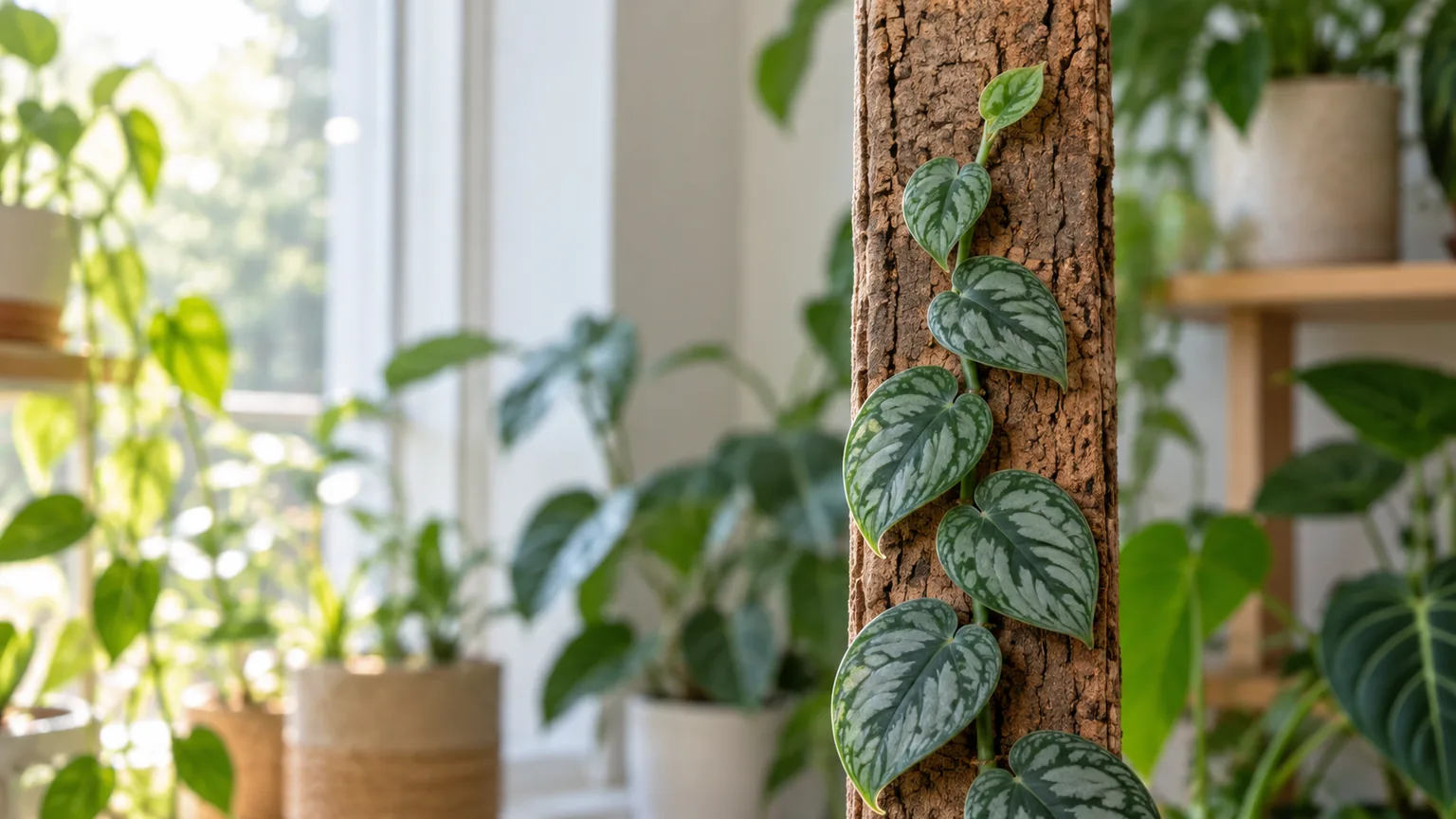
Slow Growth on Monstera Dubia: Causes, Checks & Fixes
This guide covers slow growth on Monstera Dubia. See also the general Slow Growth guide, watering, and light pages for this plant.
Slow Growth on Monstera Dubia: Causes, Checks & Fixes
Quick answer
First decide whether your Monstera dubia has truly stopped growing: count new leaves and nodes over several weeks, because its juvenile shingles stay small. If the board sits in a dim spot, move the plant to brighter filtered light as the first correction, then keep watering and feeding steady while you watch for a response. Do not start by fertilizing or repotting. On this species, small leaves pressed close to the support can be normal; an actual stall is a lack of new nodes or leaves over time, especially when that pause continues through the brighter part of the year.
What slow growth looks like on a shingling Monstera dubia
A healthy juvenile Monstera dubia makes a climbing vine whose small, heart-shaped leaves overlap against a flat surface. That compact pattern is part of the plant’s appeal, so a new leaf that is not much larger than the last one does not prove the plant is failing. The useful baseline is the vine: note where the newest node sits, how many leaves have appeared, whether the stem is extending, and whether the leaves stay attached to the board. The species profile from The Spruce describes this juvenile shingling habit, which is why leaf size alone is a poor growth test.
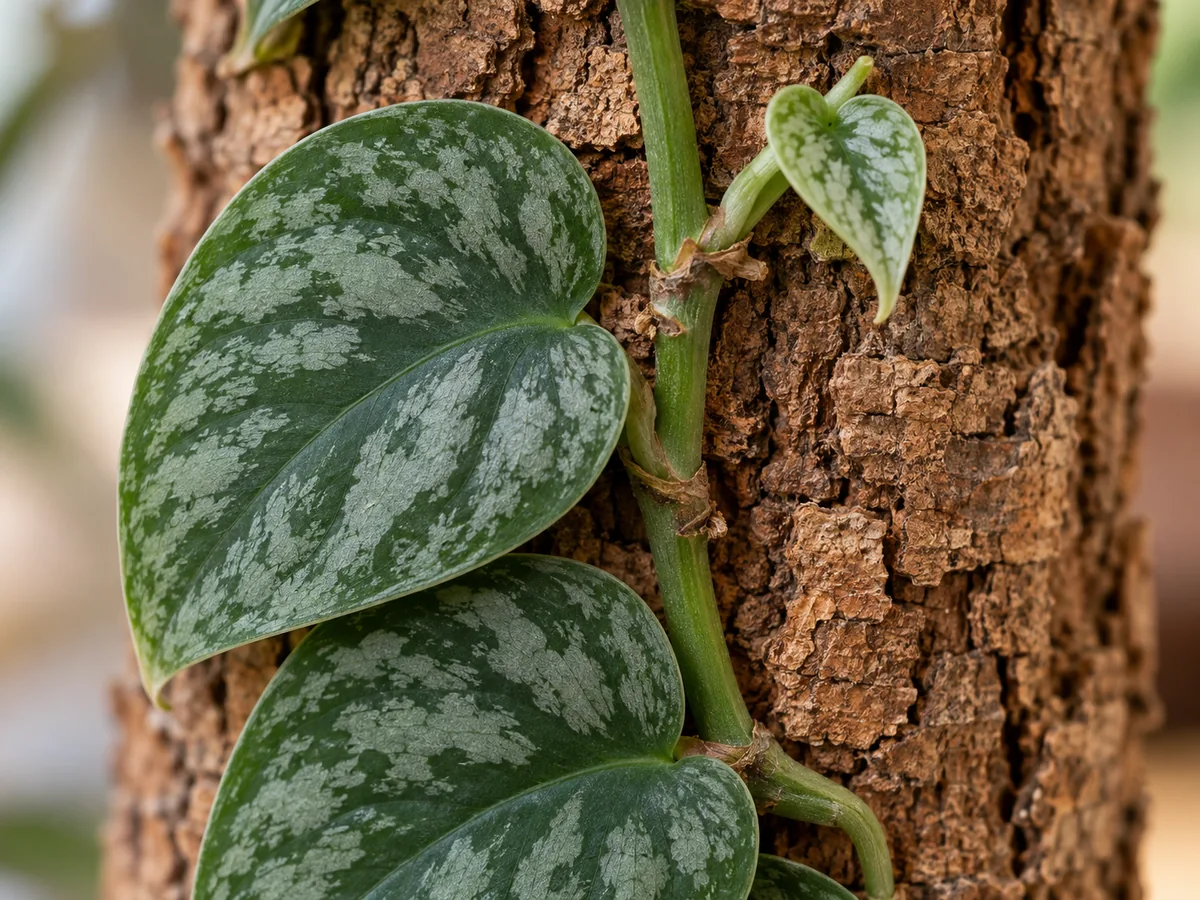
On Monstera dubia, compare node and leaf progression over time rather than expecting each juvenile shingle to become large.
Take a clear photo from the same angle every two or three weeks and mark the newest node with a removable piece of tape on the board. Record when a leaf begins to emerge and when it opens. A single unchanged week means little because an individual leaf can take time to form and unfurl; several weeks with no new node, combined with weak or worsening foliage, gives you a more useful reason to investigate. Measure the plant against its own recent pattern rather than comparing it with a faster Monstera species or an online photo taken in a greenhouse.
Slow growth becomes more concerning when the vine is not extending during a period when light and warmth are stable, new leaves emerge progressively smaller, or the plant also develops yellowing, soft tissue, or crispy edges. Those accompanying signs point toward a specific bottleneck. A stable vine that simply pauses after arriving home, being remounted, or entering winter may be acclimating or responding to a seasonal change instead of declining.
Separate a real stall from the Dubia’s normal growth habit
Monstera dubia is a climbing aroid, not a floor-forming rosette. It advances along a support by extending a stem through nodes, with aerial roots helping it attach. Because the leaves lie flat, the visible panel can look static even while a node is slowly moving forward. Check the newest growth point and the back of the vine, not just the front face of the board. A firm node with a developing leaf is evidence of continued growth even before the new shingle is large enough to stand out in a room-wide view.
The indoor goal is usually a close, juvenile shingle pattern, not a sudden change to large fenestrated leaves. A Dubia that keeps producing modest, overlapping leaves can be healthy. Longer gaps between leaves, a vine reaching away from the panel, or a plant that has not made a new node through a full active stretch are stronger signals to check conditions. The support matters because this vine is built to climb, but a board by itself does not create growth: light, functioning roots, and steady moisture still supply the energy and water for new tissue.
Do not repeatedly pull the vine away from its board to check whether it is attached. Doing so can damage the small roots at its nodes and restart the settling process. Instead, inspect accessible nodes at the edges and gently confirm that the newest stem is firm. If the plant was recently shipped or remounted, secure one loose node with a soft plant tie and let the vine settle before making other structural changes.
Check the light reaching the board first
Low light is a practical first suspect when the plant is alive but produces few leaves, especially if its newest internodes are long and the stem is stretching toward a window. The foliage can remain green in a dim room while the plant has too little energy for steady extension. Penn State Extension’s general Monstera guidance recommends bright light without direct sun and notes that lower light can make a Monstera leggy; use that as a starting point, then judge the Dubia by its own node pattern and leaf condition.
If the board is on a shaded shelf or several feet from the only window, move the whole mount closer to a bright window with filtered light. An east-facing exposure or a brighter window softened by a sheer curtain can be a sensible first trial. Do not put a plant accustomed to dim light directly into harsh midday sun; increase exposure gradually so thin juvenile leaves do not scorch. Keep the board in one position while you track the next growth point, rather than moving it back and forth each week.
Low light can be confused with a feeding problem because both may leave a plant with little new growth. Look at the pattern before adding fertilizer. A long, sparse vine with large gaps between nodes and a clear reach toward the brightest side favors a light problem. A plant with close-set leaves but a wet, sour-smelling root zone needs a different check. For the species-specific exposure and shingling context, see the Monstera dubia light guide; for the broader mechanics of stalled growth, use the general slow-growth guide rather than applying a general remedy list to every plant.
Cafe Planta’s Dubia troubleshooting guide also lists insufficient light among its first practical checks for a plant that has stopped extending. Treat that as a useful prompt to inspect exposure, not as proof that light is the cause in every home. If the window position already provides bright filtered light and the leaves are not stretching, leave the plant there and move to the root-zone checks below instead of chasing brighter and brighter conditions.
Check the pot and climbing surface as two moisture zones
A Monstera dubia can have a moist climbing surface and a much drier potting mix at the same time. The board or panel supports aerial-root contact, while the base pot supplies most of the water and mineral nutrition. If the support dries out, new aerial roots may not grip well and the newest shingles can lift away. That does not automatically mean the root ball needs another drink. Conversely, a heavy pot with persistently wet mix can have unhealthy roots even while the board looks dry.
Check the top 2–3 cm of mix and the weight of the pot before watering. If the upper mix is still cool and damp and the pot feels heavy, wait and check again rather than watering to a calendar. When the surface has dried and the pot is lighter, water thoroughly enough to wet the root ball, then let excess drain freely. Penn State Extension recommends checking upper soil dryness before watering Monstera and warns that overwatering can contribute to root rot; its advice is for Monstera care generally, so keep the Dubia’s smaller pot and chunky mix in view.
The support can be kept lightly moist if its material dries quickly, but do not soak the base of the board or keep the potting mix wet just to make the aerial roots feel damp. Check a wooden board with a fingertip, and check the pot separately with a finger or moisture meter. If you use a moss or coco support, observe how fast it dries in your room; there is no universal schedule that fits every panel, window, and season. A dry surface with a firm, advancing vine calls for a small support adjustment, not a full repot.
If you are unsure how the root ball should dry, compare your routine with the Monstera dubia watering guide. A wet pot with yellow leaves, a limp stem, or a sour smell is a different problem from a dry board. In that case, review the plant’s overwatering signs and inspect drainage before adding water. The central diagnostic point is to identify which zone is dry or wet; watering the wrong one can prolong the stall.
When the roots or potting mix are limiting new growth
Root trouble is more likely when slow growth comes with other signs: the mix remains wet for an unusually long time, the pot has lost its airy structure, leaves yellow while the soil is damp, or lower stem tissue softens. A pot that smells sour is another reason to check drainage. These clues make a root inspection more useful than unpotting a plant solely because it has not produced a leaf this week. A loose, chunky aroid mix and a pot with open drainage help the base of a climbing Dubia stay aerated.
Slide the root ball out only when the wetness, smell, mushiness, or repeated yellowing points to a real root-zone problem. Healthy roots are generally firm; dark, soft roots that break apart are concerning, and Cafe Planta describes brown, mushy roots as a warning sign of rot. The Spruce’s Monstera dubia profile identifies root rot as a common issue when watering is poorly managed, and Cafe Planta’s practical troubleshooting likewise uses root condition to distinguish a stalled plant from a simple seasonal pause. If inspection confirms rot, trim only tissue that is clearly soft or dead with clean scissors, replace degraded mix, and use a clean pot with drainage. Do not fertilize damaged roots.
Root congestion can also slow extension, but crowded roots are not diagnosed by the plant being large above the pot. Look for a dense coil at the outside of the root ball, roots emerging from several drainage holes, or a mix that dries much faster than it used to despite the same conditions. If those clues are present and the roots are otherwise firm, repot in spring or early summer into a pot only one size larger. A container that is far too large holds more wet mix around a small root system and can worsen the problem you are trying to solve.
If the current mix is compacted or broken down, choose an airy aroid blend with coarse components such as bark and perlite rather than a fine, dense soil. You do not need to reproduce one exact recipe. The aim is a mix that stays slightly moist long enough for roots to take up water but drains and re-aerates between waterings. Use the Monstera dubia soil guide if the potting mix is the suspected bottleneck. If roots remain firm and the mix drains normally, leave the plant undisturbed and investigate light or season first.
Read the season, temperature, and humidity without overcorrecting
A slower winter is not automatically a failure. Day length and window intensity drop in many homes, and growth can pause while the plant uses less water. The Spruce notes that Monstera dubia growth slows in winter; its profile also advises keeping the vine away from drafts and sudden temperature drops. If the plant is stable but quiet in winter, reduce the expectation of new leaves and let the pot dry more between waterings rather than keeping summer watering frequency.
Place the board away from cold glass, a door that opens to cold air, or a heating or cooling vent that blows directly on the leaves. Focus on steady room conditions instead of chasing a precise number. A plant can respond poorly to a sudden cold shift even if the room is comfortable at other times of day. If you can, check the temperature where the leaves and board sit, not just the thermostat across the room. When the season improves, compare the new node against the winter baseline before deciding that the plant still needs intervention.
Humidity can matter to this species, but it should be interpreted through visible symptoms. Leaves lifting from the support or crisping at the edge suggest the growing tip and mount may be too dry; they do not by themselves prove the pot needs water. The Monstera dubia low-humidity guide covers that leaf pattern. Penn State Extension notes that misting raises humidity only briefly and that pebble trays do little to change room humidity. If the air is consistently dry and the plant shows those symptoms, a small humidifier near the board is a more measurable trial than frequent misting.
Do not let a humidity adjustment turn into a wet-pot problem. Keep enough air moving around the board, avoid leaving water pooled at the support’s base, and continue to check the nursery pot separately. A humidifier is most useful when it produces a stable change that you can measure with a hygrometer. If the plant is in an ordinary room and its new leaves stay flat and healthy, do not add humidity equipment solely because growth is slower in winter.
Keep fertilizer as a later check
Fertilizer is not the first fix for a Dubia that is growing slowly. First make sure it is receiving usable light and that the roots are not sitting in stale, wet mix. Feeding cannot replace the energy that a plant needs from light, and roots that are damaged or persistently wet may not use nutrients normally. Extra fertilizer can also leave soluble salts behind, especially when the pot is small and water does not drain freely.
Consider nutrition only when the plant is in active growth, its light and root conditions are reasonable, and it has spent a long time in depleted or compacted mix. If you choose to feed, use a balanced houseplant fertilizer at the label rate or a conservative dilution intended for indoor plants. Apply it to already-moist mix, not to a bone-dry root ball, and do not increase concentration to force faster leaves. Pause feeding during a winter slowdown or while you are treating root rot. The species-specific Monstera dubia care overview gives the broader care context; the problem hub for this plant helps you compare other symptoms without mixing diagnoses.
If new leaves are pale, unusually small, or repeatedly fail to open while the plant remains in bright filtered light, nutrient shortage is one possibility, but it is not the only one. Check whether the roots are healthy, whether the potting mix has become dense, and whether the leaves show pest damage. A young cutting can also use its stored reserves while establishing roots, so feeding an unsettled cutting will not necessarily make it produce a new leaf sooner. Change only one variable at a time so you can tell whether the correction helped.
Inspect nodes and leaves for pests or weak support contact
A stalled growing tip deserves a close look before treatment. Use a bright light to inspect leaf undersides, the petiole bases, the newest leaf, and the stem where it passes behind the board. Look for fine webbing or cottony clusters associated with spider mites and mealybugs at leaf and stem joints. Sap-feeding pests can weaken new growth, but their presence should be confirmed before spraying. The Spruce profile also lists spider mites and scale among Monstera dubia’s common pests. If you find a pest, use the plant’s Dubia problems hub to route to the matching diagnosis.
Also check whether the most recent node is actually touching the support. A vine that has pulled away may keep extending outward rather than making the tight shingled panel you expect. If the node is firm and roots are visible, gently secure it with a soft tie so the node rests against the board. Do not cinch the tie over a petiole or emerging leaf. This improves contact without forcing the stem flat or tearing the roots that are already trying to attach.
If no pests are visible, do not apply insecticidal soap or oil as a precaution. Sprays can mark tender leaves and will not solve low light, a dry root ball, or a seasonal pause. Recheck the same inspection points after several days if the symptom pattern changes, but avoid repeatedly handling the new leaf while it is unfolding. A clear diagnosis is more useful than layering treatments onto a plant whose only issue may be the wrong light position.
A staged recovery plan for a stalled Dubia
Use the following order so each action answers a specific question. Keep a short care note with the date, the pot’s moisture, and any new node or leaf; that record is more reliable than trying to remember whether the plant looked different two weeks ago.
- Record the baseline. Photograph the vine and mark the newest node. Note whether a leaf is forming, whether the stem is firm, and whether the newest growth point is attached to the board.
- Correct confirmed dim light. If the plant sits in a low-light position or the vine is visibly reaching, move it to bright filtered light. Keep the rest of the setup stable while the next leaf develops.
- Check moisture by zone. Feel the upper mix and lift the pot, then check the board separately. Water the root ball only when its mix has dried enough; moisten the support only if the climbing surface itself is dry.
- Escalate only on root clues. If the pot stays wet, smells sour, or is paired with soft stems and yellow leaves, inspect the roots and mix. If those signs are absent, avoid repotting just to stimulate growth.
- Wait for a meaningful signal. Look for a swelling bud, a new node, or a leaf that opens normally. Do not judge recovery by whether older leaves enlarge or by whether the plant catches up with a faster-growing Monstera.
- Feed only after stability returns. Once the plant is actively extending and the roots are sound, resume a modest fertilizer routine according to the product label. Feeding is maintenance, not the first rescue step.
If the plant was recently shipped or moved, treat the first stage as acclimation: keep the same light and watering conditions for a short observation period before changing another factor. If you repotted it, give the roots time to re-establish unless waterlogging or decay requires immediate action. The goal is not to leave a clearly declining plant untouched; it is to avoid adding three new stresses to a Dubia that is otherwise stable. Use the symptom pattern to decide whether to progress to the next check.
Tell slow growth apart from lookalike problems
| What you see | What it suggests on Monstera dubia | Next check |
|---|---|---|
| Small but firm juvenile leaves that stay flat to the board | May be normal shingling rather than a growth problem | Count new nodes over time |
| Long gaps between leaves and a vine reaching toward a window | Light may be too weak for steady extension | Check exposure and the not-enough-light guide |
| Yellow leaves while the pot remains wet | Root oxygen or drainage may be limiting growth | Check mix, drainage holes, and root firmness |
| Crispy margins or leaves lifting away from the board | Dry air, a dry support, or inconsistent root moisture may be involved | Check the board and root ball as separate zones |
| A pause limited to winter with otherwise firm tissue | Seasonal slowdown is more likely than a sudden disease | Maintain stable care and reassess with brighter days |
| Fine stippling, webbing, cottony clusters, or fixed bumps | A pest may be weakening new growth | Confirm the insect before choosing a treatment |
The global slow-growth guide explains the general symptom, but Dubia-specific diagnosis depends on its small juvenile leaves, climbing nodes, and two moisture zones. For yellowing or soft stems, compare the Monstera dubia overwatering guide before treating the issue as a simple lack of fertilizer. For a vine with long gaps but firm roots and no yellowing, the light route is more useful than unpotting it.
What recovery should look like
Recovery is usually gradual and easiest to see at the growing tip. A healthy next sign may be a firm bud swelling at the newest node, a leaf beginning to unroll, or the stem adding another node that sits against the support. The new leaf may still be small; that is not a failure if it is normally shaped, stays firm, and is followed by continued extension. The older leaves will not grow larger to compensate for the stall, and leaves that have already scorched or yellowed may not regain their original appearance.
Give the plant time to show a new response after you correct a confirmed issue. A slow-growing vine can take longer than a few days to make visible progress, particularly when the correction happens as the indoor growing season is ending. Check weekly, but compare photos over several weeks rather than making a second adjustment after every quiet week. If the plant remains firm and the existing leaves are stable, patience is reasonable; if it continues to decline, return to the root, light, and pest checks instead of assuming it only needs more time.
A recovery is not established by one new leaf if the next node then stalls and the root zone stays wet or damaged. Continue to watch for a pattern: the new growth should open without worsening discoloration, the stem should remain firm, and the pot should dry at a predictable pace. Once those signs are stable, return to ordinary Dubia care rather than continuing emergency changes. If a full growing period passes with no new node despite corrected light, sound roots, and stable conditions, reassess whether the plant is actually receiving enough light at its leaves and whether the growing point is viable.
Prevent another slow-growth cycle
Give the Dubia a permanent bright, filtered position where the whole board receives useful light. Avoid rotating the board sharply or moving it among different rooms, because changes in exposure make it hard to know which condition helped. Keep the climbing surface tall enough for the active vine and attach nodes as they advance, while leaving the pot small enough to dry at a reasonable rate. A support that is too short or a loose vine may create a messy panel, but the remedy is careful node contact, not repeated repotting.
Use the pot’s dry-down, not a fixed calendar, to decide when to water. In winter, when growth and evaporation slow, check the mix more often before each watering and expect the interval to stretch. Keep the board and pot in their separate moisture roles, and do not rely on repeated misting as a substitute for room humidity. If the room is unusually dry and the leaves lift or crisp, monitor humidity and use a humidifier only if it creates a stable improvement.
Feed modestly when the plant is growing and the basics are working. Inspect the stem, leaf undersides, root tips at drainage holes, and the back of the board every few weeks so that pests, a loose node, or mix breakdown is caught before the vine appears completely stalled. For a full baseline of the shingle plant’s setup, use the Monstera dubia overview; if the leaves are stretching, check exposure before changing fertilizer or pot size.
When to worry or rescue a viable node
Treat the situation as urgent if the stem softens, several leaves yellow quickly, the potting mix stays wet and sour, or roots are dark and mushy. Those are signs of a failing root zone rather than a normal slow season, and the plant may need immediate inspection and removal of clearly rotted tissue. If the whole stem and growing point are soft and there are no firm nodes or roots, recovery may not be realistic. Do not keep a failing plant in wet mix simply to avoid disturbing it.
A healthy node can sometimes preserve a plant whose base roots have failed, but taking a cutting is a last resort, not a way to speed up a stable Dubia. The section must include a firm node and a viable growth point; a leaf without a node cannot restart the vine. If you use a cutting, work with a clean blade and provide bright filtered light while it roots. If the original plant still has a firm growing point and roots, correcting the cause in place is less disruptive than cutting it apart.
Related tool
Use the Plant Problem Diagnosis Tool to compare the observed symptoms with likely causes before changing more than one part of the setup.
Related Monstera Dubia guides
- Start with the Monstera dubia overview for the whole plant’s care baseline; use this page when the main issue is a lack of new nodes or leaves.
- Use the light guide when the vine has long internodes, reaches toward a window, or grows more slowly on the shaded side.
- Use the watering guide when the pot stays wet too long or dries before the support does.
- Use the soil guide when the mix is compacted, stale, or slow to drain.
- Use the not-enough-light guide for a clear light-shortage pattern; this page covers the broader growth pause and how to separate it from roots, season, and support.
- Use the overwatering guide when yellowing or soft tissue accompanies a wet root ball.
- Use the low-humidity guide when leaves lift from the board or develop dry edges despite normal pot moisture.