Wilting Monstera Siltepecana: Diagnose Wet vs. Dry Wilt &
Quick answer
Wilting in Monstera siltepecana is caused by two opposite physiological crises: bone-dry soil or suffocating root rot. Before adding a drop of water, lift the pot to test its weight and probe 3–5 cm deep into the root zone. If the container feels feather-light and the mix is parched, rehydrate thoroughly; if the container is heavy and waterlogged, halt watering immediately and inspect the roots for decay.
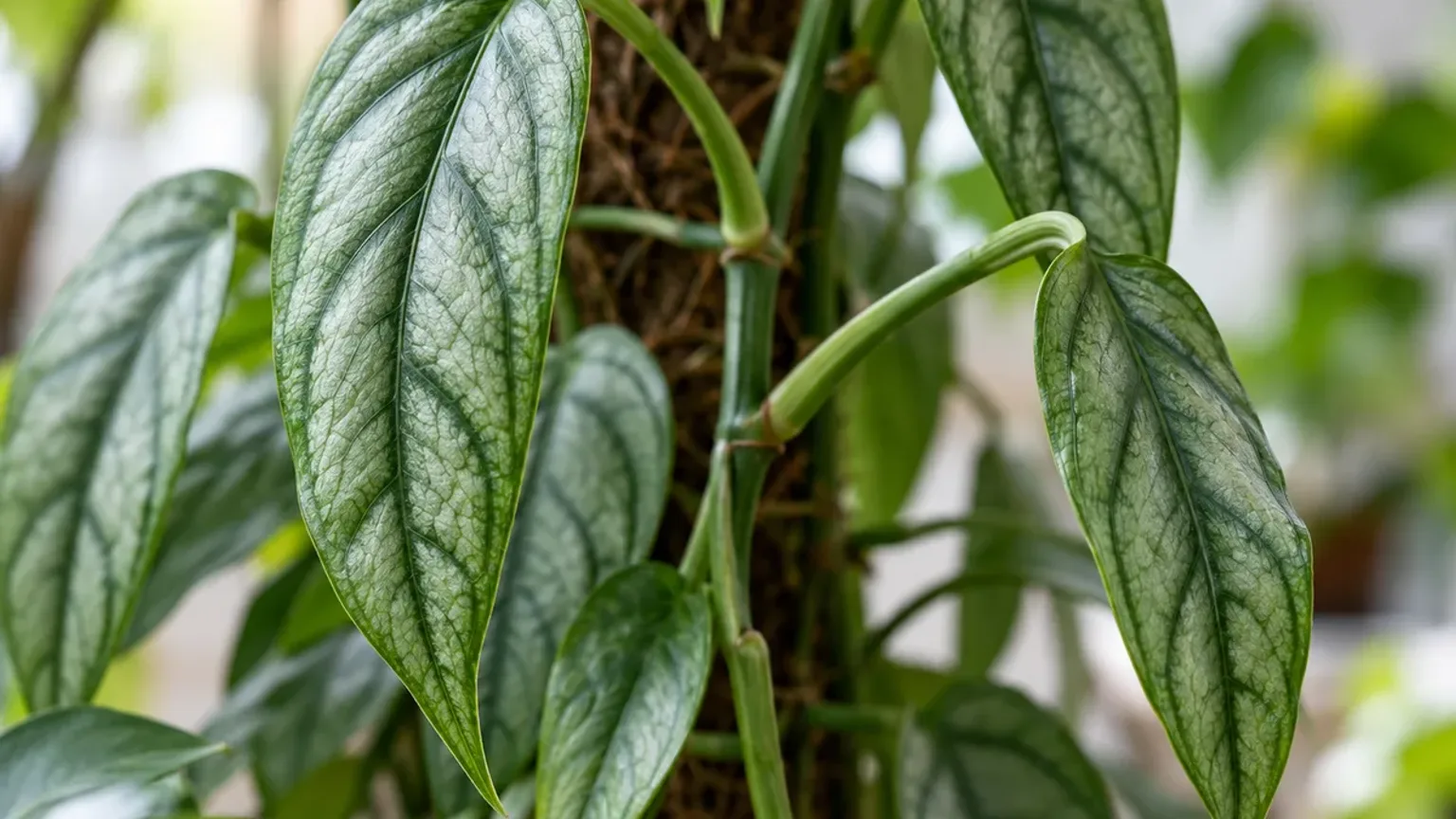
Wilting Monstera Siltepecana: How to Diagnose Wet vs. Dry Wilt & Fix It
This guide covers wilting on Monstera Siltepecana. See also the general Wilting guide, watering, and light pages for this plant.
Wilting Monstera Siltepecana: How to Diagnose Wet vs. Dry Wilt & Fix It
Quick answer
Wilting in Monstera siltepecana is a critical symptom of vascular stress: the foliage has lost cellular turgor because water is no longer reaching the leaves. However, wilting is not an automatic instruction to pour water into the pot. In indoor cultivation, wilting is triggered by two diametrically opposed conditions: dry wilt (severe underwatering where the substrate lacks moisture) and wet wilt (overwatering and root rot where suffocated, dying roots cannot absorb water despite saturated soil).
Before taking any corrective action, conduct an immediate physical triage: lift the pot to evaluate its weight and probe deeply with a wooden skewer down into the lower third of the substrate. If the container feels feather-light and the potting medium is desiccated throughout, your plant is experiencing dry wilt and needs a measured, thorough soaking. If the pot feels dense and waterlogged, or smells stale and the skewer emerges wet from the bottom third, the plant is suffering from wet wilt. Adding water to a wet-wilted specimen will accelerate pathogen decay and quickly kill the plant. For broader context on how vascular collapse occurs across houseplants, explore the comprehensive wilting symptom hub.
What wilting looks like on Monstera siltepecana
Under healthy growing conditions, Monstera siltepecana displays firm, lanceolate juvenile leaves with a distinctive silvery sheen between dark green veins. The petioles hold each leaf blade outward and upward toward the light source. When wilting strikes, this structural integrity disintegrates. The internal hydrostatic pressure within plant cells—known as turgor pressure—drops, causing the petioles to soften, bend downward, and hang limply against the vine or over the container rim.
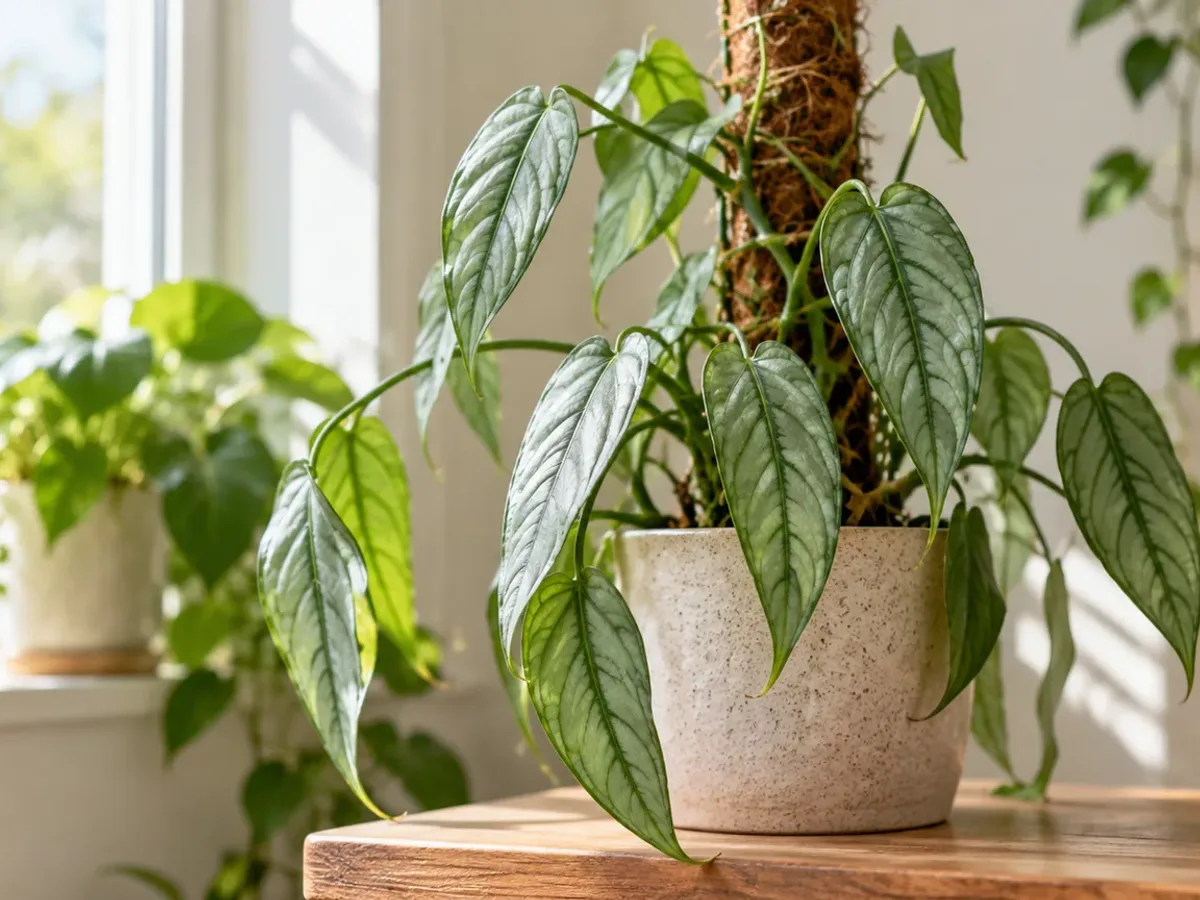
Loss of cell turgor in Monstera siltepecana causes the silver-green leaf blades to cup inward and the petioles to lose tension; checking soil moisture before treating is vital.
As turgor diminishes, the leaf blades lose their smooth, taut planar surface. The edges of the silver leaves often cup or curl inward along the central midrib as the plant attempts to minimize surface area and reduce transpirational water loss. In early stages, the leaves feel thin, papery, and soft like cloth rather than crisp and firm. If the condition is ignored, prolonged vascular starvation leads to yellowing (chlorosis) or dry, papery brown margins (necrosis). On climbing specimens attached to a cedar board or moss pole, aerial roots that normally anchor tightly may shrivel or pull free from the support.
It is critical to distinguish wilting from normal vegetative trailing. A healthy trailing vine hangs downward due to gravity, but each individual petiole maintains an alert angle and the leaf blade remains completely rigid. In contrast, true wilting involves systemic flaccidity where petioles and leaf blades sag lifelessly at the nodes.
The physiological paradox: Why wilting means both thirst and drowning
To accurately diagnose and treat wilting in Monstera siltepecana, you must understand the biophysical mechanism of plant hydration. Terrestrial and epiphytic aroids transport water through their vascular xylem via a continuous transpirational pull. Water evaporates through microscopic leaf pores (stomata), creating negative pressure that pulls moisture and dissolved minerals from the root hairs through the stem cortex and into the foliage.
For this hydraulic system to function, two conditions are mandatory:
- Moisture must be present in the root zone.
- The roots must be biologically active, healthy, and supplied with oxygen to perform respiration and active water uptake.
In dry wilt, the plant wilts simply because the substrate has run out of available capillary water. The roots are healthy and capable of absorption, but the reservoir is dry. Transpiration continues to deplete internal cellular water reserves until the cell vacuoles deflate, causing cell walls to lose rigidity and the leaf to collapse.
In wet wilt, the mechanism is far more dangerous. When potting soil remains saturated for extended periods, water fills the macro- and micro-pores within the substrate, displacing atmospheric oxygen. Root tissues require continuous gaseous exchange to stay alive. In anoxic conditions, root cells asphyxiate and die within 48 to 72 hours. Opportunistic soilborne oomycetes (water molds such as Pythium and Phytophthora spp.) and pathogenic fungi (Rhizoctonia solani and Fusarium spp.) rapidly colonize the necrotic tissue, turning roots into soft, black, rotted sludge.
According to research documented by the University of Wisconsin Extension, wilting in persistently wet soil is one of the classic indicators of advanced root rot, as the destroyed root cortex can no longer take up moisture or transmit it up the stems. The University of Florida IFAS (HS311) highlights that Monstera species are exceptionally intolerant of poorly drained, waterlogged conditions, which swiftly trigger root death. The plant literally dies of dehydration in a sea of water because it no longer possesses functional roots to absorb it.
The pot-lift and soil core test: Immediate diagnostic triage
Do not guess whether your plant needs water. Perform this step-by-step physical diagnosis before making any adjustments:
| Diagnostic Check | Dry Wilt (Underwatering) | Wet Wilt (Overwatering / Root Rot) |
|---|---|---|
| Pot Weight | Extremely light; lifts effortlessly like dry balsa wood | Heavy, dense, and waterlogged |
| Top 3–5 cm Soil | Bone dry, dusty, crusty, or pulled away from pot walls | Wet, damp, spongy, or muddy |
| Deep Root-Zone Moisture | Parched throughout the entire root column | Saturated, cold, and soggy at drainage holes |
| Foliage Appearance | Dull silver, curled inward, uniform limpness across vines | Drooping leaves accompanied by dull yellow patches |
| Lower Stem Texture | Wrinkled, thin, but firm to the pinch | Spongy, water-soaked, slippery, or blackened |
| Substrate Odor | Neutral, earthy, or completely scentless | Stale, sour, musty, or swamp-like |
Step 1: The Lift Test
Gently pick up the container. If you have been growing this plant for several months, you will know its heft when thoroughly watered. If the pot feels weightless, the substrate has completely dried out. If the pot feels heavy and retains substantial inertia, the root zone is saturated.
Step 2: The Core Soil Probe
Push a clean wooden skewer 8 to 12 cm deep into the potting mix, reaching into the lower third of the root mass to check for a perched water table. If the skewer comes out completely clean and pale with zero clinging particles, moisture is depleted. If the bottom half of the skewer comes out dark, cool to the touch, and damp with clinging wet soil, moisture is trapped at the base even if the upper layer feels dry.
Step 3: Base and Root Inspection
Examine the base of the stems right where they emerge from the soil line. If the stems are firm and green or silvery, the vascular bundles are intact. If the stem base is translucent, soft, or easily mashed between your fingers, wet rot has traveled upward from the root system into the vascular core. The Royal Horticultural Society notes that inspecting the root zone and basal stems is the most dependable method to determine whether plant distress originates from underwatering or root failure.
Treating dry wilt: The step-by-step rehydration protocol
If your diagnostic triage confirms that the container is feather-light and the substrate is parched, your plant is suffering from acute water deficit. However, desiccated potting soil that contains peat moss or coco coir often becomes hydrophobic—meaning it repels water. Pouring a cup of water onto hydrophobic soil simply causes the water to channel down the sides of the pot and exit through the drainage holes without wetting the root ball.
To properly rehydrate a dry-wilted plant, follow this methodical protocol:
- Prepare a Lukewarm Water Basin: Fill a sink, basin, or decorative tray with 5–8 cm of room-temperature or lukewarm water (around 20–22°C). Never use freezing cold tap water, which shocks tropical aroid root systems.
- Bottom-Watering Immersion: Place the nursery pot into the water basin. Water will enter through the bottom drainage holes and rise through capillary action directly into the root core. Let the plant soak for 30 to 45 minutes until the top surface of the soil feels slightly cool and damp.
- Gentle Top Rinse: If the upper soil layer remains dry, gently trickle water over the soil surface until the entire root ball is uniformly moist.
- Complete Drainage: Lift the pot out of the water and tilt it slightly. Allow all excess water to drain freely from the bottom holes for 15 to 20 minutes. Empty the saucer or cachepot completely; never allow the plant to sit in runoff water.
- Re-establish Stable Microclimate: Return your plant to bright, indirect light away from hot drafts or intense afternoon direct sun, which exacerbates leaf transpirational demand. Review our detailed Monstera siltepecana watering guide to calibrate your future dry-down routine.
Treating wet wilt: Emergency rescue from root rot
If your diagnostic check reveals a heavy, sodden container, wilting leaves, and a sour smell, your plant is in critical danger of complete root collapse. Adding water will seal its fate. You must intervene surgically to save the viable root and vine tissue.
1. Unpot and Inspect Nursery Plugs
Gently slide the plant out of its pot. Carefully loosen the potting mix around the root ball to expose the roots. Check the central root core for hidden commercial propagation plugs—such as non-biodegradable mesh netting or compressed peat plugs (“death plugs”). These dense nursery plugs stay permanently saturated like wet sponges, rotting the central crown and stem bases while the outer bark appears dry. Carefully snip away any mesh fabric and tease out saturated nursery peat.
Healthy roots are firm, pale cream, tan, or light yellow, with fibrous lateral branches. Decayed roots affected by root rot are dark brown, black, slippery, and mushy. Often, the outer root sheath (the cortex) easily slides off like a wet thread, leaving behind only a thin, wiry vascular stele.
2. Debride Necrotic Tissue
Using stainless steel pruning shears or razor blades sterilized with 70% isopropyl alcohol, prune away all soft, discolored, and dead roots back into firm, healthy white or cream tissue. If root rot has extended into the lower nodes of a vine, snip the healthy section above the decay. Stem cuttings containing healthy nodes and silver foliage can easily be propagated in water, perlite, or moist sphagnum moss.
3. Antifungal Rinse and Blotting
Rinse the remaining healthy roots gently with tepid water to wash away residual spores. Submerge the remaining root mass in a mild solution of 3% hydrogen peroxide diluted 1:4 with water for 30 to 60 seconds to sanitize wound margins and oxygenate root surfaces, then blot damp-dry with clean paper towels.
4. Downsize and Repot into Fresh Aroid Mix
Never reuse contaminated potting soil or an unwashed pot. Thoroughly scrub the container or select a clean pot with generous drainage holes. Crucial rule: If more than 40% of the root system was excised during debridement, downsize the container diameter by 2 to 5 cm (1 to 2 inches). Placing a severely reduced root system back into an oversized container leaves excess wet soil uncolonized, quickly recreating anoxic conditions.
As emphasized by Penn State Extension, proper container drainage and an aerated growing medium are critical for preventing houseplant failure. Replant into an airy, porous aroid substrate:
- 40% high-grade potting soil or coco coir base
- 30% coarse horticultural perlite or pumice
- 30% medium orchid bark chips (such as fir or pine bark)
This coarse, breathable structure ensures that water drains rapidly while leaving extensive micro-pockets of air for root respiration. For precise recipe proportions and texture recommendations, refer to the Monstera siltepecana soil guide and our step-by-step Monstera siltepecana repotting guide.
5. Post-Surgical Aftercare
Do not immediately soak the freshly repotted plant. Lightly moisten the fresh mix so it is barely damp, then allow root wounds to suberize by withholding heavy watering for 48 hours. Place the plant in a warm, sheltered location with bright, filtered light and moderate to high humidity. Resume measured watering only after the top 3–5 cm dries out completely and new growth resumes.
Substrate compaction and poor aeration: The silent culprit
Wilting does not always stem from careless watering habits; frequently, it is driven by physical soil degradation. Over time, standard peat-based potting mixes decompose and break down into fine, silty particles. As organic matter decomposes, the soil settles, compacts, and forms an impermeable mass that suffocates roots.
NC State Extension specifies that Monstera siltepecana requires a moist, well-drained, aerated potting mix. In its native habitat throughout southern Mexico and Central America, this hemiepiphytic aroid scrambles across forest floors and ascends tree trunks, anchoring its root system in loose leaf litter, bark crevices, and highly aerated organic debris. When confined indoors to dense, clay-heavy, or decomposing soil, root respiration ceases every time water is applied, leading directly to chronic wet wilt.
If your plant wilts repeatedly despite a careful watering schedule, inspect the soil structure. If water ponds on the surface for more than 15 seconds before soaking in, or if the soil dries into a rock-hard block, the substrate has broken down. Refreshing the soil with coarse orchid bark and perlite restores oxygen diffusion and halts chronic wilt cycles.
Environmental triggers: Temperature, humidity, and light stress
Wilting can be sharply accelerated by atmospheric and environmental stresses:
- Thermal Shock and Cold Drafts: Monstera siltepecana thrives in warm indoor temperatures between 18°C and 27°C (65°F to 80°F). If placed directly in the path of an air conditioner vent, drafty winter window, or unheated entryway where temperatures drop below 13°C (55°F), the roots experience physiological chilling. Cold roots lose the enzymatic ability to absorb water, triggering cold-induced wilt even if the soil is damp.
- Extreme Heat and Intense Sunlight: NC State Extension warns that direct sunlight scorches Monstera siltepecana foliage. In addition to leaf burn, strong direct sun and radiant heat cause leaf transpiration to exceed the rate at which roots can pump moisture upward. The result is rapid afternoon wilting. Move the plant into bright, indirect illumination where light is plentiful but diffused.
- Low Humidity and Dry Air: While low humidity rarely causes complete vine collapse on its own, ambient relative humidity below 35% in winter heating environments increases transpirational pull. Maintain indoor humidity between 50% and 70% to support leaf turgor and reduce stress on the root system.
Recovery timeline: What to expect after treatment
Healing times differ dramatically depending on whether your Monstera siltepecana suffered from dry wilt or wet wilt:
Underwatering Recovery (Fast: 4 to 24 Hours)
If the root system was healthy and the wilting was caused strictly by dry soil, recovery is rapid. Within 4 to 6 hours after thorough bottom-watering, capillary tension pulls water into the petioles. Leaf blades uncurl, the silver sheen brightens, and petioles rise back into their natural postures. By the next morning, the plant should be completely turgid. Older leaves that developed crispy brown edges will retain those cosmetic blemishes, but all living tissue will stabilize.
Root Rot Recovery (Slow: 3 to 6 Weeks)
If your plant underwent surgical root debridement and repotting for wet wilt, do not expect the existing foliage to perk up overnight. With a reduced root mass, the plant cannot support its full previous leaf volume. Some older or badly damaged leaves may turn yellow and naturally drop over the next 10 to 14 days.
Success is measured not by instant leaf recovery, but by the cessation of rot:
- Week 1–2: Stems stabilize at the base; remaining leaves cease active yellowing.
- Week 3–4: Root hairs begin branching into the fresh, aerated mix; leaf wilting stabilizes.
- Week 5–8: The terminal vine node activates, pushing forth a crisp, firm, silver new leaf that holds its angle naturally.
What not to do: Critical missteps that kill wilting aroids
When facing a wilting Monstera siltepecana, plant owners often make well-intentioned errors that compound the damage:
- Never Water on an Unchecked Assumption: Never dump water into a wilting plant without physically testing the pot weight and soil depth. If root rot is the culprit, this single mistake can cause complete root death.
- Do Not Apply Fertilizer to a Wilted Plant: Fertilizing a stressed, wilted plant causes chemical fertilizer burn. If roots are dry, fertilizer salts draw residual moisture out of the root cells via reverse osmosis. If roots are rotted, damaged cells cannot absorb nitrogen and phosphorus, leaving mineral salts to accumulate toxically. Never fertilize until the plant has fully recovered and resumed active growth.
- Do Not Repot a Bone-Dry Plant Without Rehydrating First: If your plant has dry wilt, do not immediately rip it out of its pot to repot it. Unpotting brittle, dehydrated roots causes severe mechanical breakage. Bottom-water the plant, let it regain full turgor over 24 to 48 hours, and only repot once the tissues are fully hydrated.
- Avoid Moving the Plant into Hot Direct Sun to “Dry Out”: Placing a waterlogged, wilting plant into harsh sunlight to dry the soil will scorch the limp leaves and dramatically accelerate transpirational collapse. Keep the plant in gentle, warm, indirect light with good air circulation.
- Never Mist Wilted Leaves to Substitute for Watering: Misting adds a brief layer of water droplets to the cuticle, but leaves cannot absorb significant moisture through their stomata. Furthermore, wet foliage combined with poor airflow invites fungal leaf spot infections (Cercospora and Colletotrichum).
Long-term prevention for climbing and trailing vines
Preventing future wilting episodes requires aligning your care routine with the natural growth rhythm of Monstera siltepecana:
- Establish Moisture-Based Checking: Water only when the top 3–5 cm of potting mix is completely dry to the touch. Do not adhere to a rigid calendar schedule. In warm summer months with rapid growth, the plant may dry down every 6–8 days; in winter dormancy with diminished light, drying may take 12–16 days.
- Use Free-Draining Containers: Always use pots with substantial drainage apertures. Terracotta pots offer porous walls that facilitate evaporative gas exchange, making them ideal for growers prone to heavy watering, while plastic nursery pots inside decorative cachepots must be drained after every watering.
- Provide Vertical Moss Pole Support: Monstera siltepecana is a climbing aroid that naturally develops larger, robust foliage when attached to vertical support. Aerial roots that penetrate a moist sphagnum moss pole absorb supplemental water and oxygen, providing an auxiliary vascular pipeline that safeguards the plant against transient root-zone drying. To explore broader species traits, read the comprehensive Monstera siltepecana overview.
Lookalikes and differential diagnosis
Review this comparative guide to confirm whether your Monstera siltepecana is experiencing true wilting or an overlapping symptom:
| Symptom Observation | Primary Cause | Distinguishing Features | Corrective Action |
|---|---|---|---|
| Limp leaves, light pot, dry soil | Acute Underwatering (Dry Wilt) | Uniform drooping, curled margins, rapid bounce-back after watering | Bottom-soak container for 30–45 min; let drain fully |
| Limp leaves, heavy pot, wet soil | Root Rot / Overwatering (Wet Wilt) | Soft petioles, lower leaf yellowing, black mushy roots, sour smell | Unpot, prune rotted roots, repot in fresh chunky aroid mix |
| Vines hanging downwards, firm leaves | Normal Trailing Habit | Petioles hold firm angle; leaves are completely rigid and glossy | No treatment needed; attach to a moss pole if climbing growth is desired |
| Leaf tips dry and curling, soil damp | Low Humidity or Salt Buildup | Only tips and margins are crispy; main petiole retains full turgor | Increase relative humidity to 50%+; flush soil with distilled water |
| Sudden collapse of single vine section | Mechanical Stem Crease or Rot | Leaves wilt only beyond a specific node; rest of plant is healthy | Inspect node for stem breakage or fungal lesion; take stem cuttings |
To troubleshoot other common health issues on this plant, visit our Monstera siltepecana plant problems index.
Related Monstera Siltepecana guides
Continue refining your plant care practices with our dedicated species resources:
- Monstera Siltepecana Plant Overview – Comprehensive guide to juvenile shingling vs. adult fenestration.
- Monstera Siltepecana Watering Guide – Exact dry-down metrics and seasonal watering adjustments.
- Monstera Siltepecana Soil Guide – Optimal aroid mix blends, bark ratios, and pH balance.
- Monstera Siltepecana Repotting Guide – Step-by-step pot transitions, root inspection, and container selection.
- Monstera Siltepecana Problems Index – Complete troubleshooting directory for pests, light stress, and diseases.
Related tool
To calculate the precise watering schedule and volume tailored to your pot volume, container material, and ambient indoor conditions, use the Plant Watering Calculator before adjusting multiple care variables simultaneously.