Brown Tips on Monstera Siltepecana: What to Check First
Quick answer
If Monstera siltepecana has crisp brown tips while its leaves and vine remain firm, check humidity and potting-mix moisture before changing care. Low humidity is a documented cause on this species. If the mix is at its normal dry-down and the plant is otherwise stable, raise local humidity toward 40–60% with a humidifier; do not water more to compensate for dry air.
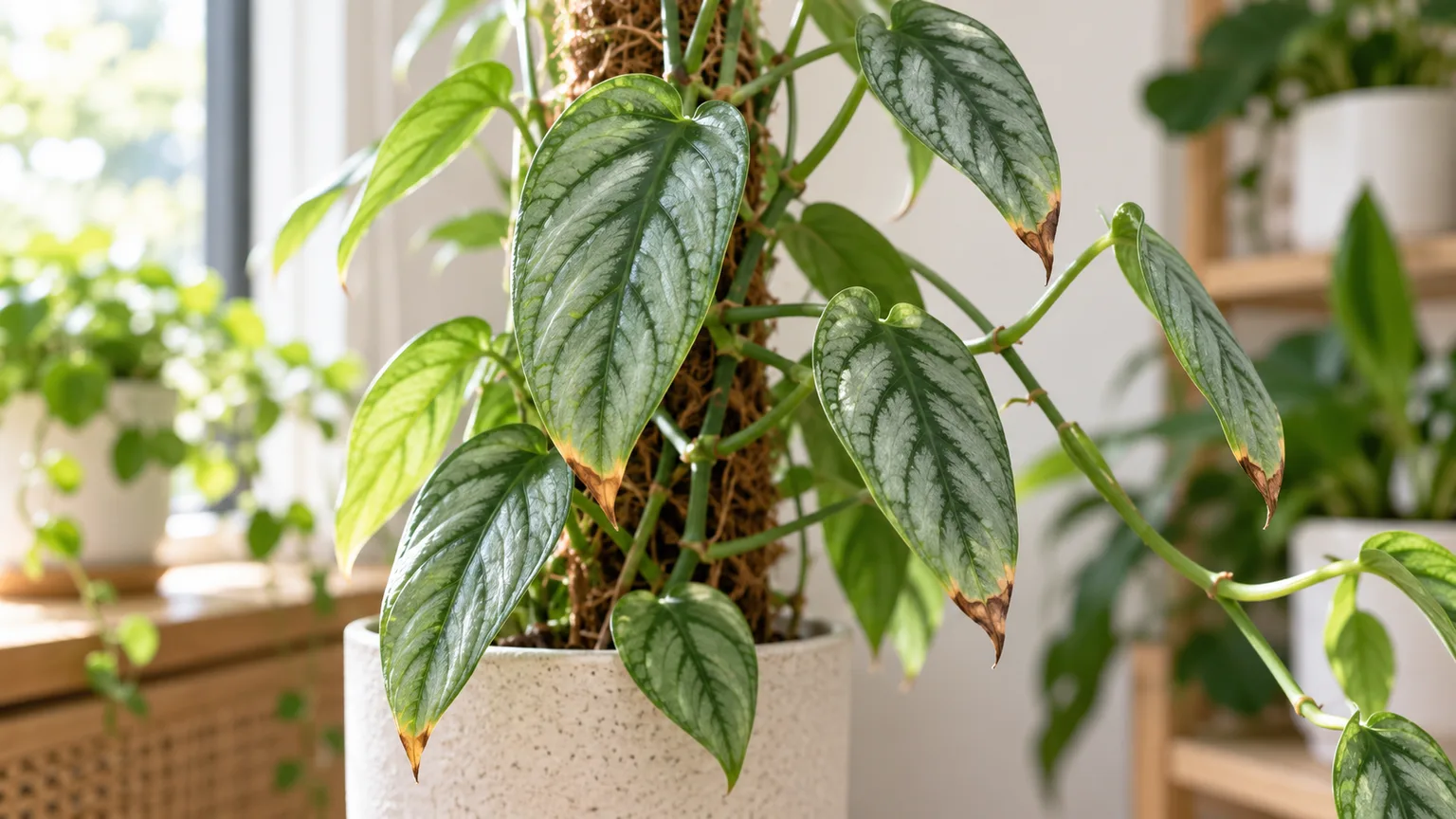
Brown Tips on Monstera Siltepecana: Causes, Checks & Fixes
This guide covers brown tips on Monstera Siltepecana. See also the general Brown Tips guide, watering, and light pages for this plant.
Brown Tips on Monstera Siltepecana: Causes, Checks & Fixes
Quick answer
If Monstera siltepecana has crisp brown tips while the rest of each leaf and the vine remain firm, first compare the room’s humidity with the moisture in the pot. NC State identifies low humidity as a cause of browning tips on this species. When the top layer of mix is dry in the plant’s normal pattern and there are no signs of root trouble, raise the air humidity gradually toward the species’ 40–60% range with a humidifier. Do not water again just because the leaf tip looks dry; dry air and dry potting mix are different problems.
A few brown points do not automatically mean the whole Monstera is failing. The silver-green markings on its juvenile leaves are natural, while true tip damage is brown, dry, and papery. If the discoloration is spreading across several leaves, or the stems are soft and the mix stays wet, use the checks below before trimming or repotting. For broader causes shared with other houseplants, see the brown tips guide; the plant overview explains this climber’s silver juvenile foliage and growth habit.
What brown tips look like on Monstera siltepecana
Juvenile leaves on this climbing Monstera are narrow and lance-shaped, with silvery-green panels and dark green veins; mature climbing growth may develop larger, greener, fenestrated leaves, as shown in the species description. Those silver markings should look integrated into the leaf surface, not like dry tissue. Brown-tip damage is usually a tan-to-brown patch beginning at the pointed end, with a crisp boundary between the dead tissue and the green leaf. It may extend a short way along one or both edges, but it should not be confused with the plant’s normal silver pattern.
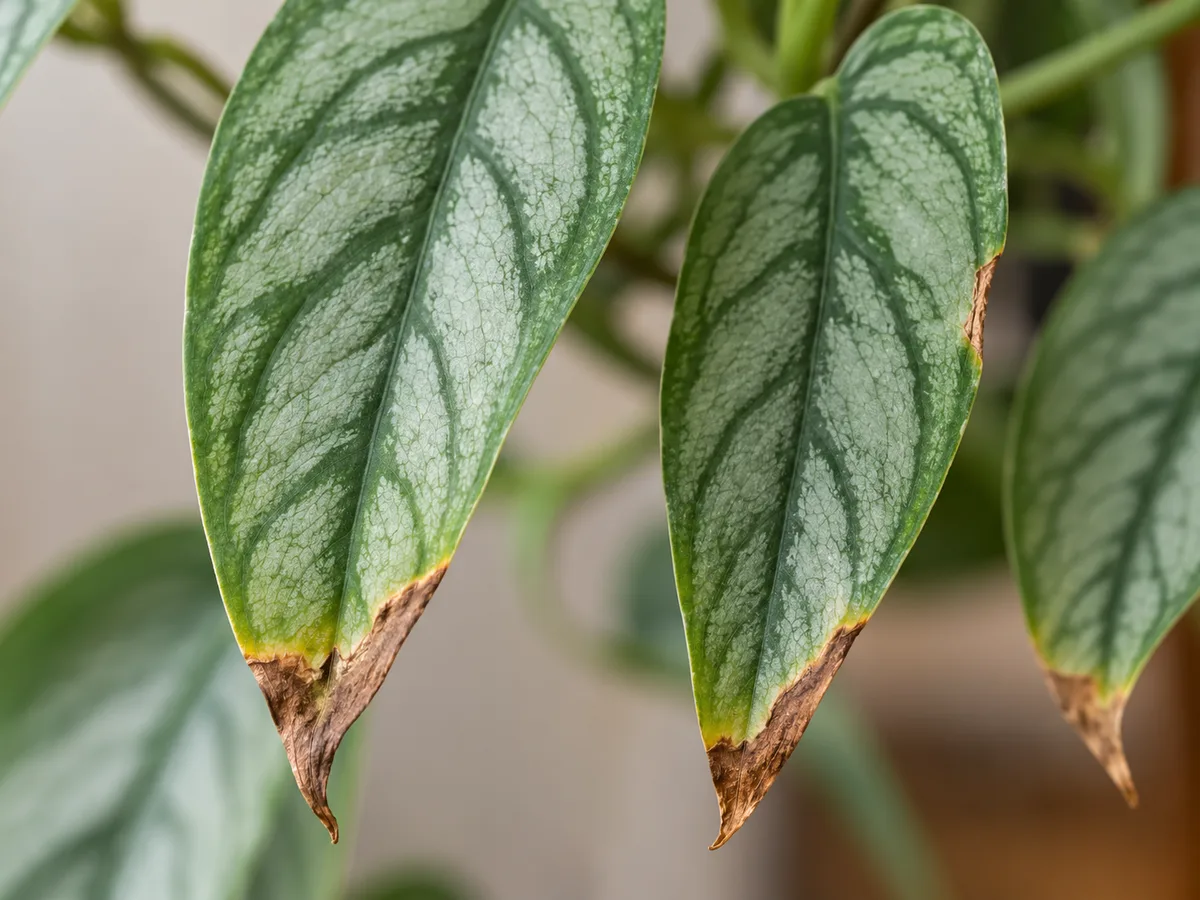
Dry, papery tissue begins at the pointed ends of the silver-green leaves; the unaffected leaf surface remains firm.
Note which leaves are affected. One old, lowest leaf with a small dry edge may be aging out; the RHS notes that older leaves naturally die back on healthy houseplants. Repeated brown tips on several recent leaves suggest the growing conditions are repeatedly stressing the vine. On a climbing siltepecana, inspect the newer leaves near the growing tip as well as the shingling leaves lower on its support.
Why this species develops brown tips
Dry air is the first cause to check
NC State’s species profile names lack of humidity as a cause of brown tips on Monstera siltepecana. The Homey Space also names dry air as a frequent reason for this symptom. This is a plausible first check when the damage is limited to the very ends, the leaves remain otherwise firm, and the problem began after a seasonal change such as indoor heating or moving the plant away from a humid room.
Use a small hygrometer near the vine, around leaf height, for a day or two. NC State gives 40–60% relative humidity for this species. Penn State Extension notes that winter indoor humidity can fall below 30%, and that misting raises humidity briefly until water evaporates. A humidifier near the plant is a more reliable adjustment than repeated misting or a pebble tray; leave enough air movement around the foliage so leaves are not kept wet.
Watering extremes can look similar at the leaf tip
A dry root ball can leave siltepecana short of water, particularly when a fast-growing vine is in bright light and the pot dries more quickly than it used to. Check the mix below the surface and lift the pot: very dry mix and a noticeably light pot support underwatering. Plantophiles recommends watering this species when the upper two inches dry; NC State’s species guidance calls for a moist, well-drained, aerated mix and a top 1–2 inch dry-down check.
The opposite pattern needs a different response. If the mix remains wet for many days, the pot has poor drainage, or the lower leaves yellow while the stem base softens, do not add water to treat brown tips. NC State lists yellowing with either overwatering or underwatering and identifies root rot and stem rot among problems to monitor. In a climbing aroid, roots need both moisture and air; a compact, waterlogged mix can leave the roots unable to supply the leaves normally. Use the Monstera siltepecana watering guide to reset watering around dry-down rather than a weekly calendar.
Direct sun or a hot window can scorch exposed leaves
Monstera siltepecana grows best in bright, indirect light. NC State warns that direct sunlight can scorch its leaves. Sun injury is more likely when the brown area is accompanied by a pale, bleached, or crisp patch on the window-facing surface, or when the damage appeared after a sudden move into direct midday sun. A brown point alone is less specific. Check whether the vine sits against hot glass, above a radiator, or in a cold draft, and compare newer leaves after moving it into filtered light. See the plant’s light guide before changing its position substantially.
Fertilizer and water chemistry are secondary possibilities
If you recently fed more strongly or more often than the label recommends, fertilizer salts are another possibility; a Monstera siltepecana problem guide identifies fertilizer salts as a possible cause of browning. Treat that as a secondary hypothesis, especially if there is no matching humidity, watering, or light pattern. Do not flush or repot solely because one tip is brown. Pause feeding while you diagnose the symptom, and use the siltepecana soil guide to check that the mix drains freely before deciding whether the root zone needs attention.
How to confirm the cause without disturbing the vine
Make one pass through these checks before changing care. The aim is to find a pattern that matches the damage, not to repot, fertilize, move, and prune all at once.
- Check how much leaf tissue is affected. Mark or photograph the brown edge. Tip-only damage on otherwise green, firm leaves fits a mild water-balance issue better than a spreading lesion. If damage appears on one side of several leaves, compare that side with the window, heater, or draft.
- Measure humidity where the leaves are. A room reading across the house may not match the dry air around a high shelf or sunny window. If the reading stays below the species’ 40–60% range while the root zone is behaving normally, low humidity becomes a stronger explanation.
- Test the mix at depth and feel the pot. The surface alone can dry while the middle remains wet. Check whether the upper inch or two is dry, then note whether the pot feels light or remains heavy. Water thoroughly only when the mix has reached the plant’s normal dry-down point; empty the saucer after excess drains.
- Inspect the stem base and roots only if other signs point below the soil. Isolated brown tips do not justify unpotting. If the mix stays wet, several leaves yellow, or the stem base feels soft, slide the root ball out gently and look for firm roots versus dark, soft roots, which indicate poor root health. Stop if the roots are firm and the plant is otherwise stable; unnecessary disturbance adds stress.
- Look beneath the silver leaves for pests. NC State also lists common indoor pests on this species, including aphids, mealybugs, spider mites, and scale. Check undersides, petioles, and the growing tip for live insects, fine webbing, sticky residue, or mottled feeding marks. A uniform dry point with no pest evidence is not a reason to spray.
The first fix for a stable plant
If the vine is firm, the mix is neither waterlogged nor severely dry, the leaves are not sun-scorched, and the humidity reading is low, raise local humidity gradually. Set a humidifier near the plant and work toward 40–60% relative humidity. Keep the leaves out of direct mist from the humidifier and maintain normal room airflow; the goal is more moisture in the air, not wet foliage or a permanently damp pot.
Do not combine this correction with extra watering, fertilizer, or a repot on the same day. A humidifier lets you test the leading species-specific cause without changing the root zone. Keep the plant in the same bright, indirect position during the observation period unless you have clear evidence of direct sun or heat damage. If the soil is extremely dry, water thoroughly and let it drain; if it is staying wet, solve that root-zone issue instead of raising watering frequency.
If a hygrometer shows suitable humidity, use the moisture and exposure checks to choose the next single correction. A very light pot with dry mix calls for a thorough watering; a heavy pot that stays wet calls for better dry-down and drainage, not more water. A sharply defined burn on the window-facing side calls for filtered light. Reassess after one new leaf or several weeks of stable care rather than changing several conditions at once.
What can recover, and how to trim the brown tissue
Brown, papery tissue is dead and will not become green again. The useful recovery sign is that the damaged area stops advancing and the next leaf unfurls with a clean tip. Because this is a climbing vine, keep enough healthy leaves along the stem to support continued growth; removing every leaf with a small cosmetic mark can reduce the plant’s working foliage without fixing the cause.
If the brown section bothers you, trim only the dead tip with sharp garden scissors. Follow the natural point of the narrow leaf and leave a very thin brown margin rather than cutting into healthy green tissue. Wipe the blades before moving to another plant. Do not remove a whole leaf unless most of it is damaged or it is yellowing and declining; a leaf with a small brown point can continue to function.
Expect old damage to remain visible even after care improves. A single clean new leaf is more informative than a trimmed older one. If the next several leaves still brown at the tip, revisit the humidity measurement and the mix’s dry-down; if the damage spreads with yellowing or soft stems, inspect the roots and review the plant’s other problem guides.
Lookalikes that need a different response
| Pattern | What it suggests | Next check |
|---|---|---|
| Crisp brown point, green leaf surface, firm stem | Low humidity is plausible on this species | Measure humidity and check the pot’s dry-down |
| Brown areas on the sun-facing surface, sometimes pale or bleached first | Direct-light scorch or heat at the window | Filter the light; compare with the brown leaves guide |
| Yellowing leaves with mix that stays wet or a soft stem base | Root-zone stress; root rot is possible | Check drainage and compare with the overwatering guide |
| Whole leaf declines while newer growth stays healthy | Ageing of an older leaf may be involved | Watch the growing tip before changing the routine |
| Mottling, webbing, sticky residue, or insects as well as browning | A pest may be contributing | Inspect leaf undersides and nodes; compare with the spider mite guide or route through the Monstera problems hub if you find webbing |
Brown tips are a symptom, not a diagnosis by themselves. The Royal Horticultural Society notes that brown tips or margins can reflect over- or underwatering, dry air, or poor ventilation; the accompanying signs help separate them. The distinction matters on siltepecana because the same care adjustment can make a wet, poorly aerated root zone worse while doing nothing for genuinely dry room air.
Preventing repeat damage on a climbing siltepecana
Keep the vine in bright, indirect light and water according to the mix rather than the calendar. This species has narrow juvenile leaves and a climbing growth habit, so inspect the full length of the vine: lower leaves can sit in a different pocket of air from newer growth near a pole, shelf, or window. Turn the pot occasionally so you can compare both sides, but avoid frequent relocations that make it harder to interpret new damage.
Use a breathable, well-drained aroid mix and a pot with open drainage. The mix should retain enough moisture for the roots without staying saturated. Check the upper layer before watering and learn how quickly the pot dries in the current season; a fast-growing supported vine in warm light may use water more quickly than a trailing plant in cool winter conditions. The soil and watering guides cover mix structure and dry-down in more detail.
During winter heating or after moving the plant, measure humidity again rather than assuming the old room conditions still apply. If the air is dry, use a humidifier and keep the vine away from a radiator or draft. Avoid relying on daily misting as a lasting humidity fix: the added moisture dissipates quickly, and wet leaves do not replace a stable root-zone routine. Do not fertilize to repair brown tips; feeding cannot reverse dead tissue and can add another variable while you are identifying the cause.
A brief weekly inspection is enough for most stable plants: look at the newest leaf, feel the stem near the soil, check the pot’s weight, and note whether the mix is drying at a predictable pace. If a new tip browns, record recent changes in humidity, watering, and light. That short history is more useful than changing several care habits after every mark.
When to use this page vs other Monstera Siltepecana guides
Use this page when the damage starts at the pointed ends of otherwise firm leaves. Use the watering guide if the mix is repeatedly too dry or stays wet for too long, the light guide if damage follows sun exposure, and the soil guide if drainage or compaction is the concern. The plant overview explains the juvenile silver foliage and climbing habit, while the problems hub helps route symptoms that do not fit tip-only browning.
Related Monstera Siltepecana guides
- Monstera Siltepecana overview — use for species identity, juvenile leaves, and climbing growth.
- Monstera Siltepecana problems hub — use when more than brown tips are changing or the diagnosis remains unclear.
- Monstera Siltepecana watering guide — use when the pot dries too quickly or stays wet.
- Monstera Siltepecana light guide — use when browning appears on the sun-facing side.
- Monstera Siltepecana soil guide — use when mix structure or drainage may be limiting roots.