Mealybugs on Papaya: Axil Colonies, Alcohol vs Systemic
Quick answer
Mealybugs on Papaya (Carica papaya) pack into petiole axils, the crown where leaves meet the stem, underside veins of lobed leaves, and developing fruit as white cottony colonies with sticky honeydew and sooty mold. First step: isolate the plant, then dab every visible colony with a cotton swab dipped in 70% isopropyl alcohol, working deep into axils before considering soap or oil sprays.
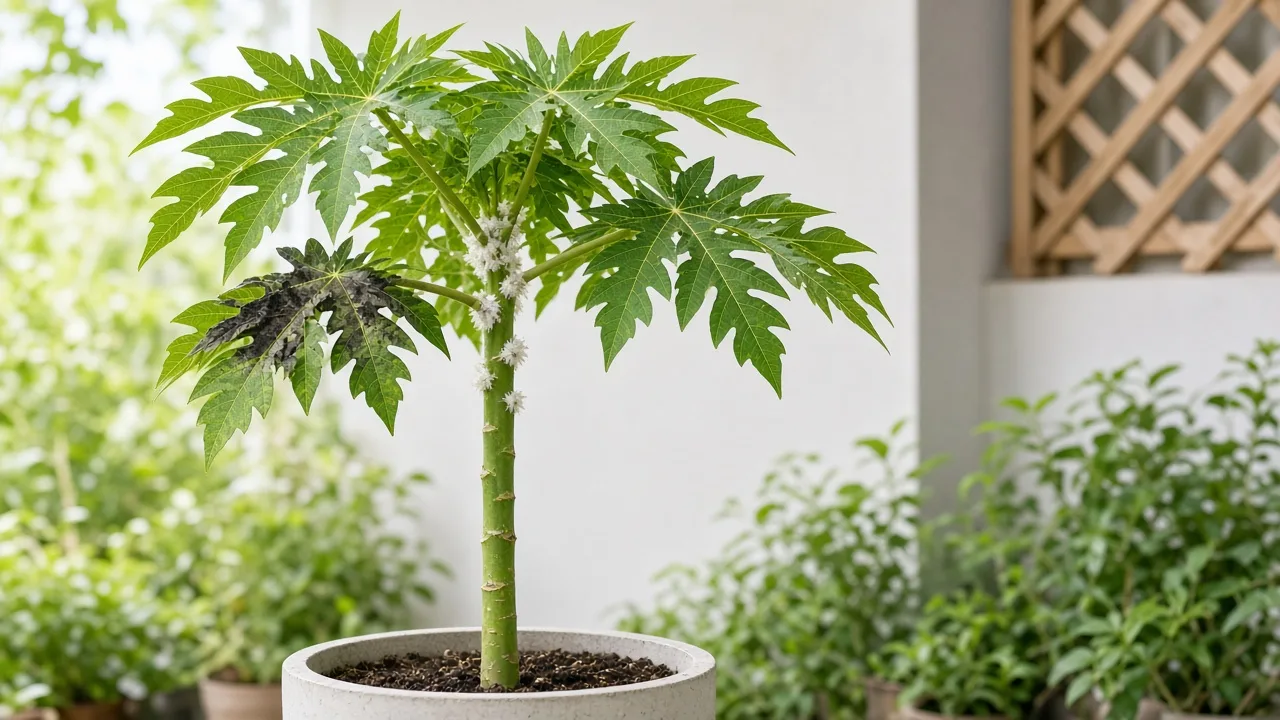
Mealybugs on Papaya: Petiole Axils, Alcohol Swabs & Safe Fruit Control
This guide covers mealybugs on Papaya. See also the general Mealybugs guide, watering, and light pages for this plant.
Mealybugs on Papaya: Petiole Axils, Alcohol Swabs & Safe Fruit Control
Quick answer
Mealybugs on Papaya (Carica papaya) hide where this giant herb folds soft tissue against itself: petiole axils at the crown, the junctions where long leaf stalks meet the hollow stem, the primary veins on the undersides of palmately lobed leaves, and the creases around developing fruit. Colonies look like wet cotton or sticky white wax; they suck phloem sap, inject toxins that deform leaves, and dump honeydew that grows black sooty mold. For general mealybug biology shared across hosts, see our mealybugs guide. On papaya, the pattern almost always starts in the crown axils and underside veins before it crusts the fruit.
First fix: isolate the plant, then alcohol-swab every colony you can see. Dip a cotton swab in 70% (or less) isopropyl alcohol and dab deep into each petiole axil, along underside veins, and around fruit peduncles until the white masses dissolve. Do this before stacking soap sprays, oils, or any systemic product — especially on a plant you intend to harvest.
What mealybugs look like on Papaya
Papaya’s architecture hands mealybugs perfect shelter. Each lobed leaf sits on a long petiole that creates a humid pocket against the stem; young fruit hang in clusters near the same crown. That is where papaya mealybug (Paracoccus marginatus) and related soft mealybugs settle first.
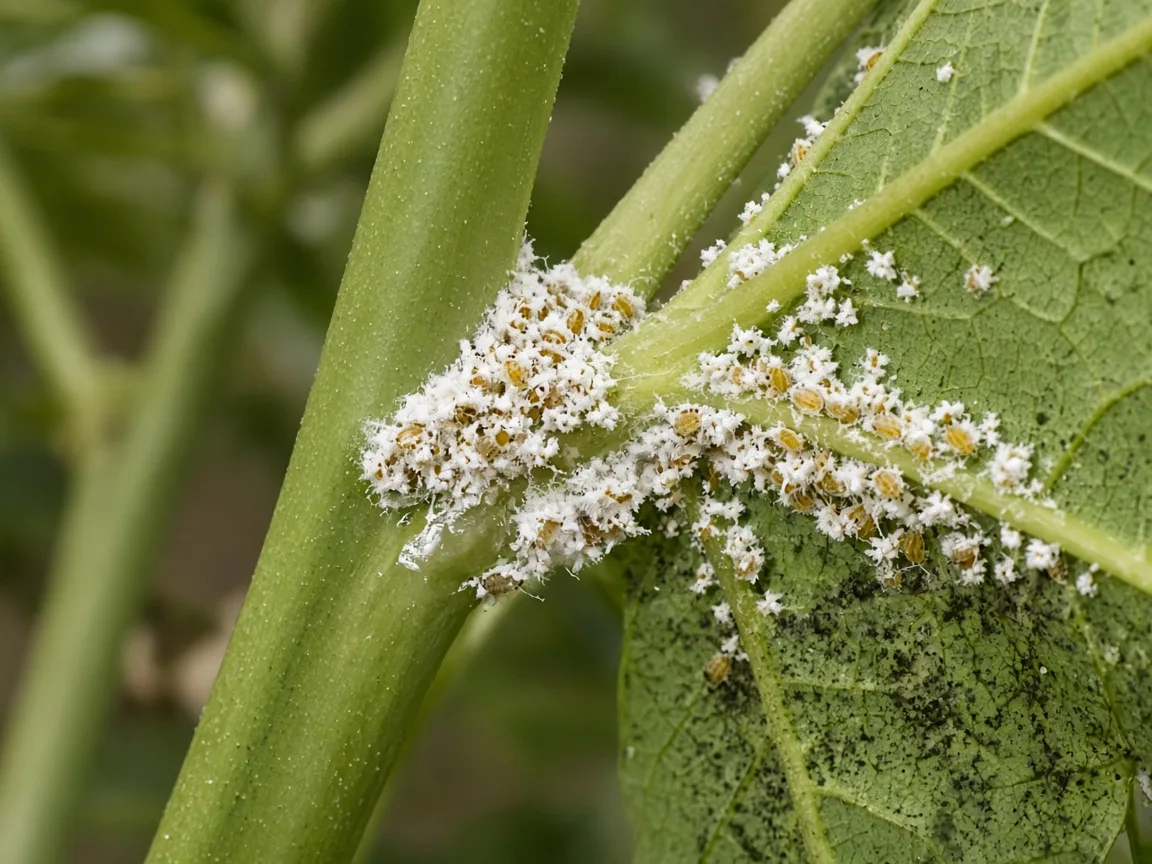
Cottony mealybug masses in Papaya petiole axils and along underside veins — look for yellow bodies under white wax, sticky honeydew, and dark sooty mold below the colony.
Expect these plant-specific signs:
- Insects: Soft, oval females about 2–3.5 mm long with a yellow body under white powdery wax and short marginal filaments. Egg sacs trail as cottony white fluff under or behind the female.
- Primary hideouts: Petiole axils at the crown, leaf undersides along the main palmate veins, stem surface among flower and fruit stalks, and the skin of developing fruit.
- Plant damage: Chlorosis, crinkled or deformed lobed leaves, stunted new crown growth, premature leaf drop, and early flower or fruit drop when feeding is heavy.
- Secondary mess: Sticky honeydew coating lower leaves and fruit, followed by black sooty mold that blocks light and makes fruit look dirty or unsellable. Pacific pest guides note that heavy wax crusts on fruit can render the crop inedible.
Ant trails climbing the stem toward the crown are an early alarm. Ants farm honeydew and defend colonies from predators, so an ant highway on papaya almost always points to a hidden axil or fruit-stem colony.
Why Papaya gets mealybugs
Papaya is a fast-growing, soft-tissued tropical herb, not a woody tree. New crown leaves and expanding fruit stay tender for weeks, which is exactly the sap-rich tissue mealybugs prefer. Warm, dry spells and greenhouse or balcony shelter accelerate reproduction — females can lay hundreds of eggs into cottony ovisacs, and a generation can finish in roughly a month in warm conditions.
Three papaya-specific drivers matter most:
Crown and fruit geometry. The overlapping petiole bases and fruit peduncles create shaded, humid crevices contact sprays miss unless you part the canopy by hand. Colonies along underside veins and in axils rebuild between sloppy spray passes.
Nursery and trade introductions. Crawlers move poorly on their own but travel easily on new plants, fruit, and clothing. Quarantine every arrival away from clean papayas for two to three weeks and inspect axils before it joins the patio or greenhouse, as Missouri Botanical Garden and the RHS both emphasize for mealybugs.
Ant partnerships and soft flush. Ants protect colonies; excess nitrogen from aggressive papaya fertilizing pushes watery new growth that mealybugs colonize faster. Keep feeding aligned with actual growth, not calendar overfeeding.
How to confirm the diagnosis
Work through these checks before spraying the whole plant:
- Part every petiole axil. Lift each leaf stalk at the stem and look into the crease with a phone flashlight. White cotton that smears waxy is mealybug; dry fungal fluff or mineral dust does not smear the same way.
- Flip young lobed leaves. Colonies line the primary veins on the underside. Press a suspect mass: mealybugs leave a yellowish smear (papaya mealybug squashes yellow; pink hibiscus mealybug squashes pink).
- Check fruit and peduncles. Look for cottony crusts between touching fruit and at the stem attachment — the same zones UF/IFAS documents for heavy infestations.
- Feel for honeydew. Lower leaves and fruit under a colony feel tacky; black powder that smudges is sooty mold growing on that residue.
- Follow the ants. A steady ant column up the stem toward one crown sector usually marks the primary colony.
| Sign | Most likely | How it differs | Next step |
|---|---|---|---|
| Cottony white masses in axils / underside veins; sticky honeydew | Mealybugs | Stationary; waxy smear; yellow body under wax | Alcohol swab → soap/oil if needed |
| Pear-shaped green/yellow bugs that scatter when touched | Aphids | Cornicles; drop when disturbed | See aphids on papaya |
| Fine webbing and yellow stippling on leaf undersides | Spider mites | Tiny moving dots; silk between lobes | See spider mites on papaya |
| Soft white mold on the potting mix surface only | Mold on soil | On soil, not on axils or fruit | See mold on soil |
| Yellow lower leaves with wet soil, no cottony insects | Overwatering stress | No honeydew or wax colonies | See overwatering on papaya |
If you are unsure which white pest you have, use the Pest Identifier Tool with a clear axil photo before changing multiple treatments.
First fix for Papaya
Isolate, then alcohol-swab the axils. Move a container plant away from other tropicals. On an in-ground tree, still treat the crown carefully so crawlers are not brushed onto neighbors. Dip a cotton swab in 70% or less isopropyl alcohol and dab every visible colony until the wax dissolves and the insects lift off, following the UC IPM spot-treatment protocol. Test a small patch of leaf first and wait a day if you have never used alcohol on that plant — papaya’s thin, broad blades can scorch if the mix is too strong or applied in hot sun.
Push the swab into petiole axils, fruit-stem creases, and underside vein junctions. Those pockets are where survivors restart the infestation after a casual hose-down. Rinse honeydew off lower leaves with lukewarm water afterward so sooty mold loses its food source. Repeat the swab weekly until two consecutive inspections find no new cotton.
Alcohol swab vs systemic risk on edible Papaya
Papaya is grown for fruit. That changes the treatment ladder.
Alcohol swabs and contact soaps stay on the surface. Used carefully, isopropyl alcohol, insecticidal soap, and horticultural oil kill mealybugs by contact or by dissolving wax. They do not move systemically into fruit flesh the way neonicotinoid soil products do. Always follow label rates, spray or swab in cool shade (early morning or late afternoon), and wash harvestable fruit thoroughly after any spray residue dries and the pre-harvest interval on the product label has passed.
Systemics are a last resort on fruiting plants — and often a poor fit. UC IPM notes that products containing dinotefuran or imidacloprid are less reliable against mealybugs than against many other piercing-sucking insects, and they can harm pollinators and the predators you need for long-term control. Many home systemic products are labeled for ornamentals only. Do not apply a systemic to a fruiting papaya unless the exact product label lists papaya or edible fruit trees and you can meet the pre-harvest interval. Prefer mechanical removal, alcohol, soap or oil, and predators on any plant whose fruit you will eat.
Step-by-step recovery for fruit-bearing Papaya
1. Quarantine and clean the crown
Keep the plant isolated. Remove only leaves that are already yellowed and heavily crusted after you have swabbed them — UF/IFAS home landscape guidance notes that removing spent leaves reduces pest harborage around the fruiting crown. Bag and discard heavily waxed, inedible fruit rather than leaving crusted fruit as a nursery for crawlers.
2. Follow with soap or oil if colonies remain
If axils still show survivors after two swab sessions, apply insecticidal soap or horticultural oil thoroughly to undersides, axils, stems, and fruit surfaces in the evening, as Pacific pest management recommends. Never spray oils or soaps in midday heat above about 85°F (29°C) on papaya’s thin leaves. Plan two to three applications five to seven days apart to catch newly hatched crawlers.
3. Break the ant alliance
Bait or exclude ants at the pot rim or trunk base so predators can work. Ants that continue farming honeydew will undo weeks of swabbing.
4. Use predatory options on outdoor or greenhouse papayas
UF/IFAS and Northern Territory biosecurity guidance both highlight the mealybug destroyer beetle (Cryptolaemus montrouzieri), lacewings, hover fly larvae, and — where established — parasitoid wasps such as Acerophagus papayae. Release predators after you stop broad-spectrum insecticides; chemical sprays that wipe out natural enemies often make papaya mealybug worse. Focus releases when egg sacs are present so Cryptolaemus has the food that stimulates reproduction.
Recovery timeline
- Days 1–3: Alcohol swabs and washing remove the bulk of visible colonies. Honeydew lessens; ants disperse if the food source is gone.
- Days 4–14: Spot-treat survivors weekly. Watch new crown leaves and fruit peduncles — that is where crawlers reappear first.
- Weeks 3–6: Clean new palmate leaves from the apical crown are the real recovery signal. Old puckered leaves rarely flatten; leave green ones on to feed the plant.
- Tissue reality: Heavily wax-crusted fruit and severely deformed leaves will not become marketable. Measure success by stopped spread and clean new growth, not by restoring scarred tissue.
Mistakes to avoid on Papaya
- Skipping the axils and only spraying the easy upper leaf surfaces.
- Applying systemic neonicotinoids to a fruiting plant without a matching edible label and harvest interval.
- Spraying soap or oil in hot midday sun on thin papaya blades.
- Leaving ant colonies undisturbed so they re-shelter survivors.
- Stacking alcohol, heavy pruning, repotting, and a systemic on the same day — make one primary change, then read the plant’s response.
- Ignoring quarantine on a new nursery papaya that already carries cotton in its crown.
How to prevent mealybugs next time
Inspect petiole axils and underside veins weekly during warm weather, especially after buying plants or bringing patio papayas indoors. Quarantine newcomers for two to three weeks. Keep watering even without chronic wet soil that stresses roots while pests build, give the crown strong light so growth stays sturdy rather than soft and shaded, and avoid nitrogen excess. On outdoor trees, preserve or release predators and keep ants off the stem. A clean crown check takes under five minutes and catches colonies before they crust the fruit.
When to worry
Act the same week if cottony masses already coat multiple fruit, new crown leaves emerge deformed and sticky, or sooty mold is blackening a large share of the canopy. A seedling or young container plant can be set back hard by a dense crown infestation. A large landscape papaya usually recovers canopy once colonies and ants are controlled, but the current fruit set may be lost. If every leaf axil and fruit is buried under wax after repeated contact treatments, consider replacing a small container plant rather than cycling ineffective systemics.
When to use this page vs other Papaya guides
Use this page when you see white cottony insects in axils, on underside veins, or on fruit. Use aphids on papaya for pear-shaped green or yellow bugs that scatter and raise Papaya Ringspot Virus concerns. Use spider mites on papaya for stippling and webbing without cottony wax. Use yellow leaves or drooping leaves when foliage declines without pests. Start from the papaya overview or problems hub if you are still sorting the symptom.
Related Papaya guides
- Papaya overview — species profile and when this plant’s soft crown makes pest pockets likely
- Papaya watering — keep moisture even so stress does not compound sap loss from mealybugs
- Papaya light — strong light supports sturdy growth less favored by soft flushes
- Papaya fertilizer — avoid excess nitrogen that fuels mealybug-friendly tissue
- Aphids on papaya — lookalike sap feeders and PRSV risk
- Spider mites on papaya — stippling and webbing without cottony wax
- Mold on soil on papaya — white growth on mix, not on axils or fruit
Related tool
Use the Pest Identifier Tool to narrow white cottony pests on this plant before changing multiple treatments at once.
Conclusion
On papaya, mealybugs win by hiding in petiole axils and underside veins long enough to crust the fruit. Isolate early, alcohol-swab those crevices weekly, reserve soaps and oils for survivors, protect predators, and skip unlabeled systemics on anything you plan to eat. Clean new crown leaves — not perfect old ones — tell you the plant is winning.