Low Humidity on Pencil Cactus: When Dry Air Matters & Fixes
Quick answer
Pencil cactus (Euphorbia tirucalli) is an arid-adapted succulent that tolerates ordinary dry indoor air, so low humidity alone rarely harms it. Act only when the plant sits in a hot dry blast from a heater vent or shows crisping plus spider mites. First step: move the pot out of the direct heat stream and confirm the soil is not fully dry before changing anything else.
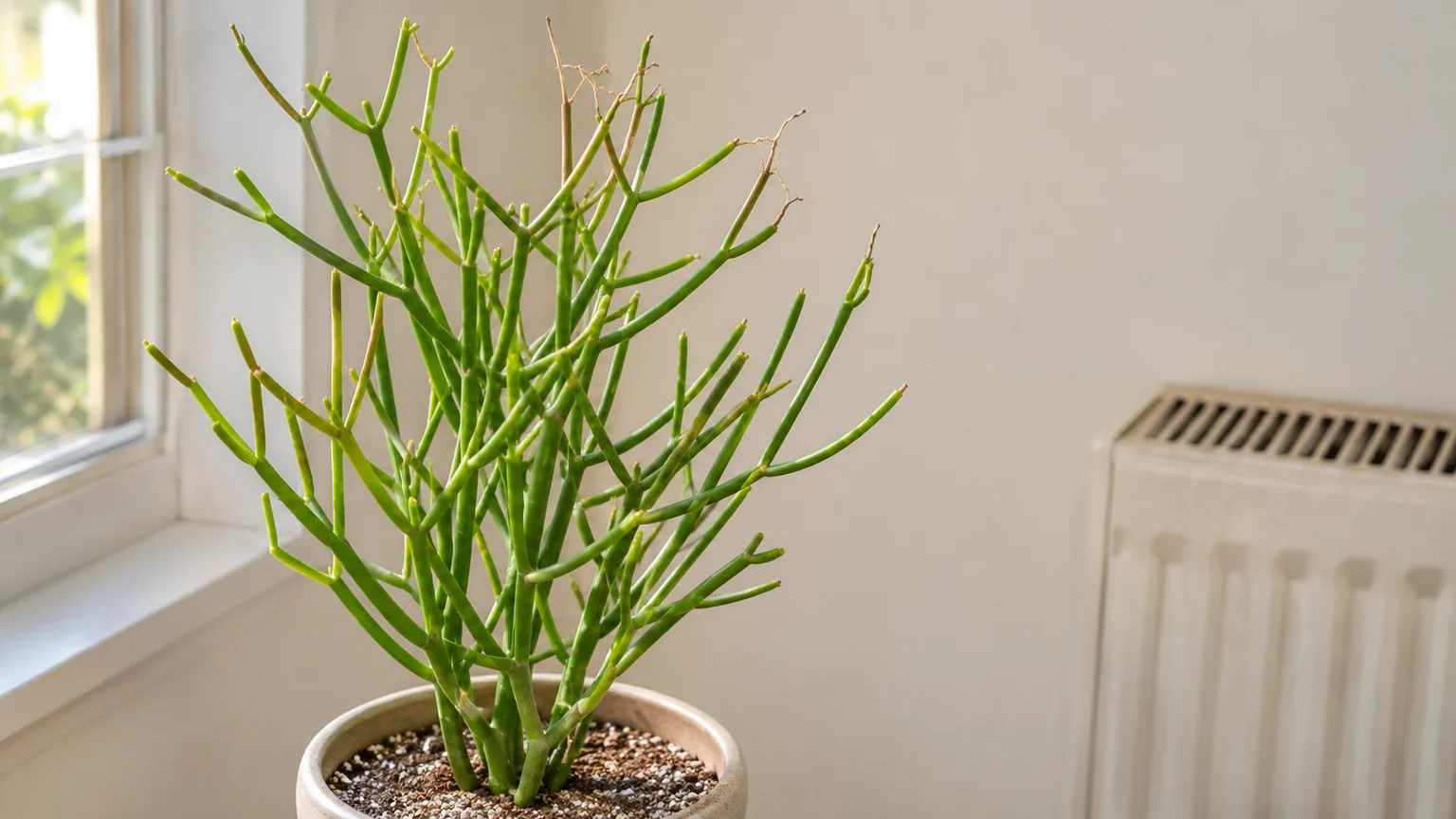
Low Humidity on Pencil Cactus: When Dry Air Matters & Fixes
This guide covers low humidity on Pencil Cactus. See also the general Low Humidity guide, watering, and light pages for this plant.
Low Humidity on Pencil Cactus: When Dry Air Matters & Fixes
Quick answer
Pencil cactus (Euphorbia tirucalli) is an arid-adapted succulent, so ordinary dry indoor air is its comfort zone rather than a threat. Low humidity alone almost never damages a healthy plant; it matters only in two situations: the pot sits in a hot dry blast from a heater vent or sun-baked glass, or dry air teams up with spider mites. First step: move the pot out of the direct heat stream, then confirm the soil is not fully dry before changing anything else.
For how dry air affects houseplants in general, see our low humidity guide. On pencil cactus specifically, the pattern below tells you when to act and when to leave the plant alone.
What low humidity looks like on pencil cactus
Because pencil cactus stores water in its pencil-thick green stems and sheds its tiny leaves early, it shows dry air differently from leafy tropicals. There are no broad leaves to crisp, so look at the branch tips instead. Genuine dry-air stress appears as shriveled or papery thinning at the newest tip growth, sometimes with the tiny ephemeral leaves dropping faster than usual, while older stems stay firm and green.
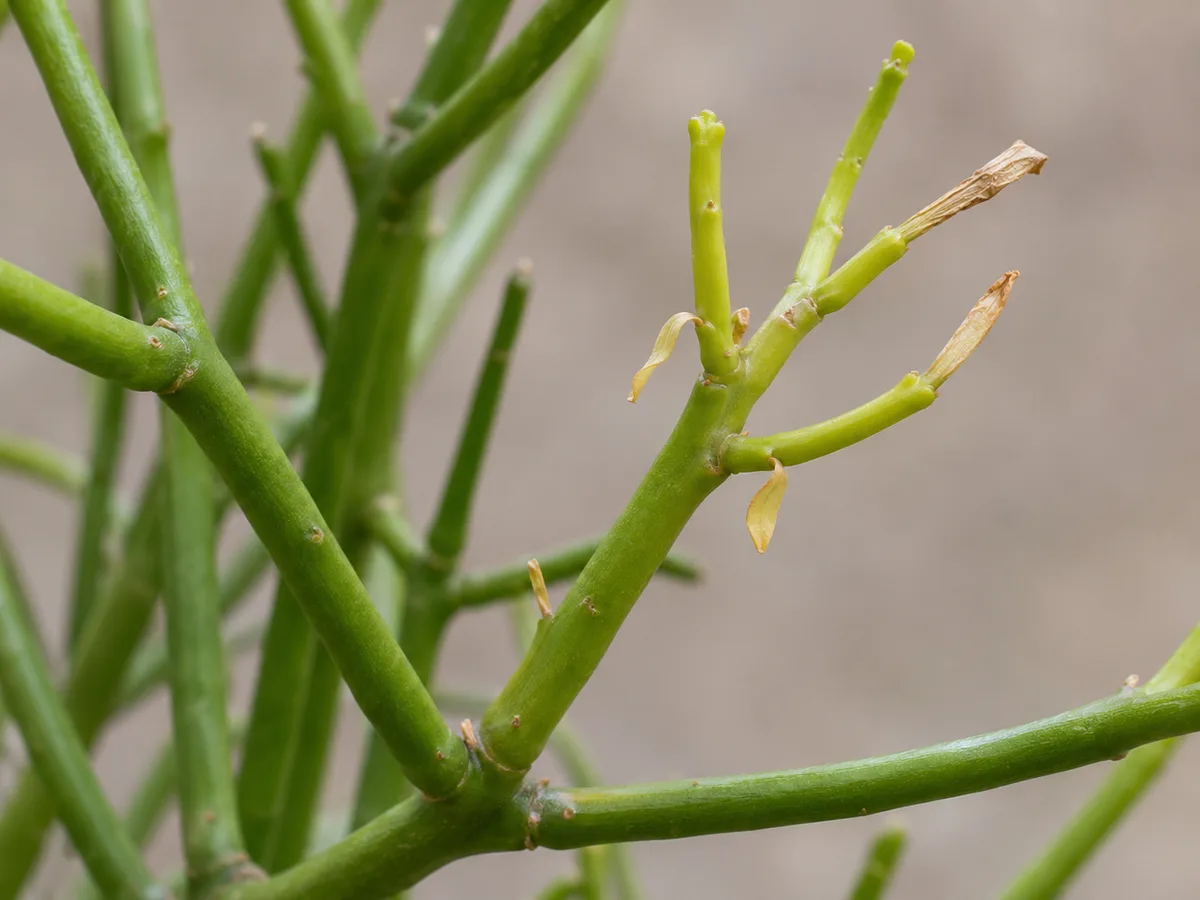
Localized thinning at new tips can signal extreme dry air; firm older stems are typical for this drought-adapted succulent.
A plant merely sitting in 30 percent winter humidity typically looks unchanged. That is expected: this species is drought tolerant and suited to dry climates, and UF/IFAS Extension describes it as well adapted to drought conditions that enjoys full sun. If your pencil cactus looks dull or wrinkled all over rather than just at exposed tips, suspect watering or light before humidity.
Why pencil cactus rarely minds dry air
In nature, pencil cactus grows as a leafless tree in tropical parts of Africa and India, where its green branches carry out photosynthesis in place of leaves, as described by the Arkansas Extension plant profile. Leafless, water-storing stems lose far less moisture to dry air than thin tropical foliage, which is the whole reason the plant survives arid scrub.
In cultivation the same logic holds: pencil cactus grows in dry areas with low humidity, and average household air suits it without humidifiers or pebble trays. Dry air becomes relevant only when it is extreme and directional, such as a constant 100°F stream from a heating vent, or when it accelerates a pest outbreak. Heating-season mite flare-ups are the classic case, since spider mite reproduction is favored by hot, dry conditions.
When dry air actually matters
Act on humidity when one of these narrow situations fits:
- Heater-vent placement. The pot sits above a radiator, beside a forced-air vent, or against sun-baked glass. Exposed branch tips shrivel on the vent side while the sheltered side looks fine.
- Spider mite partnership. Hot dry air plus stippled, dusty-looking stems and fine webbing at branch joints means mites are exploiting the conditions. Dry air did not cause the mites, but it speeds them up.
- Fresh cuttings. Unrooted pencil cuttings have no root system to replace moisture loss, so a hot draft can stall callusing. Rooted, established plants in the same room will be unbothered.
- Firesticks color stress. Red-orange sun coloring is normal in bright light, not humidity damage. Do not confuse seasonal color with crisping.
If none of these fit, the plant does not have a humidity problem even if your hygrometer reads low.
How to confirm the cause
Work through these checks before treating:
- Map the damage. Tip-only shriveling on the vent-facing side points to a dry heat blast. Whole-plant wrinkling points to underwatering instead.
- Squeeze-test a stem. Firm stems with papery tips mean surface drying. Soft, bendy, or translucent stems mean overwatering and possible root trouble, not dry air.
- Test soil to the bottom. Pencil cactus wants a full dry-down between waterings, and K-State Extension advises watering sparingly and letting soil dry out between waterings. If the pot is bone dry and light, water thoroughly rather than humidifying.
- Tap-test for mites. Hold white paper under a suspect branch, tap sharply, and watch for moving specks. Stippling plus webbing redirects the diagnosis to pests.
- Read the room. A hygrometer below 20 percent directly beside a heat source is actionable. A room reading of 30 to 40 percent with the plant across the room is normal for this species.
First fix for pencil cactus
Move the pot out of the direct hot-air stream.
Shift it several feet from the vent, radiator, or blasting glass, keeping the same bright light if possible. Do not mist, do not set up a humidifier, and do not water yet. Wait three to five days and check whether tip shriveling stops advancing. That single move separates a placement problem from a watering or pest problem without stacking treatments.
Step-by-step recovery
After relocating the plant:
- Water only on dryness. If the full pot is dry, soak deeply until water drains freely, then leave it alone. NC State Extension recommends watering about every 1 to 2 weeks while allowing the soil to dry out between waterings.
- Trim only dead tips. Snip fully papery tip sections back to firm green tissue. Leave partially shriveled but living tips; they seal themselves.
- Knock down mites if present. If the tap test confirmed mites, spray branch joints with a strong stream of water, since Missouri Botanical Garden notes that knocking mites off plants with water provides control. Wear gloves and eye protection first, because any snapped stem releases irritating latex sap.
- Hold fertilizer. A stressed pencil cactus needs stable light and watering, not nutrients. Resume light feeding only when new tip growth looks firm.
- Judge by new tips. Recovery shows as plump new branchlets extending from cut or stalled tips over the following weeks, not as old papery tissue healing.
Lookalike symptoms
| What you see | More likely cause | Separator |
|---|---|---|
| Whole-plant wrinkling, light pot | Underwatering | Improves within days of a deep soak |
| Soft translucent stems, wet mix | Overwatering / root rot | Stems feel mushy, base darkens near soil |
| Dusty stippling plus fine webbing | Spider mites | Moving specks on the tap test |
| Brown crisping on thin leaves of nearby tropicals | True low-humidity damage on other species | Pencil cactus beside them looks fine |
| Red-orange stem color in strong sun | Normal Firesticks sun stress | Firm tissue, no shriveling |
What not to do
- Do not mist the branches. Repeated wetting invites fungal spotting on pencil stems while barely changing room humidity.
- Do not run a humidifier for this plant. Raising whole-room humidity for an arid succulent adds rot risk to the soil without helping the stems.
- Do not overwater to compensate. A dry-air scare that ends in soggy mix trades a harmless condition for root rot, the actual killer of this species.
- Do not handle or prune barehanded. The milky latex severely irritates skin and eyes, so gloves and eye protection matter even for a small tip trim.
- Do not fertilize stressed stems. Feeding a plant with shriveled tips and possible mites pushes weak growth the pests prefer.
Pencil cactus care cross-check
While diagnosing, confirm the basics in our pencil cactus overview, watering guide, light guide, and soil guide:
- Light: brightest window available with several hours of direct sun; weak light causes pale stretched growth that dries faster.
- Water: full dry-down between deep soaks; every 2 to 3 weeks in summer, monthly or less in winter.
- Soil and pot: gritty cactus mix in a pot with drainage holes; terracotta helps in humid homes.
- Air: normal room air with gentle circulation; no misting, no pebble tray.
How to prevent it next time
Keep the pot permanently out of vent streams and off heat-source shelves, and recheck placement each autumn when heating starts. Water on full dryness rather than a calendar, inspect branch tips monthly through winter, and tap-test at the first sign of dusty stippling so mites never get a hot dry head start. Normal indoor humidity needs no equipment for this plant.
When to worry
Escalate when tip dieback spreads inward past several inches despite relocation, when stems soften or darken at the base (a rot emergency, not humidity), or when webbing and stippling jump between branches within days. Rapid softening from the soil line upward means unpot and inspect roots immediately.
When to use this page vs other pencil cactus guides
- Pencil cactus watering - Use when whole stems wrinkle and the pot is light; the likelier diagnosis.
- Pencil cactus light - Use when growth stretches pale and weak alongside tip drying.
- Pencil cactus soil - Use when the mix stays wet for weeks and stems soften.
- Pencil cactus problems - Browse all common issues on this species.
Related pencil cactus guides
- Pencil cactus overview
- Pencil cactus watering
- Pencil cactus light
- Pencil cactus soil
- Underwatering - whole-plant wrinkling differential
- Spider mites - hot dry-air pest differential
- Brown tips - tip-damage differential across species
- Pencil cactus problems