Underwatering on Philodendron Florida Beauty: Causes
Quick answer
Underwatering on Philodendron Florida Beauty shows as limp lobed leaves on a light pot with dry mix at 3–5 cm depth — and the leaves perk up within hours of a thorough soak. First step: give one slow, deep soak until water drains freely, empty the saucer, then return to checking the top 3–5 cm before every watering.
Underwatering on Philodendron Florida Beauty: Causes, Checks & Fixes
This guide covers underwatering on Philodendron Florida Beauty. See also the general Underwatering guide, watering, and light pages for this plant.
Underwatering on Philodendron Florida Beauty: Causes, Checks & Fixes
Quick answer
Underwatering on Philodendron Florida Beauty shows as limp, soft-feeling lobed leaves on a noticeably light pot, with mix that feels dry and crumbly 3–5 cm down — and the plant perks up within a few hours of a real soak. First step: water slowly and deeply once until excess flows from the drainage holes, empty the saucer within thirty minutes, then leave the plant alone until the top 3–5 cm dry again. One full drink followed by a genuine dry-down beats a week of worried sips.
For the general mechanics of drought stress in houseplants, see our underwatering guide. Everything below is about how thirst shows up specifically on this variegated climbing philodendron.
What underwatering looks like on Florida Beauty
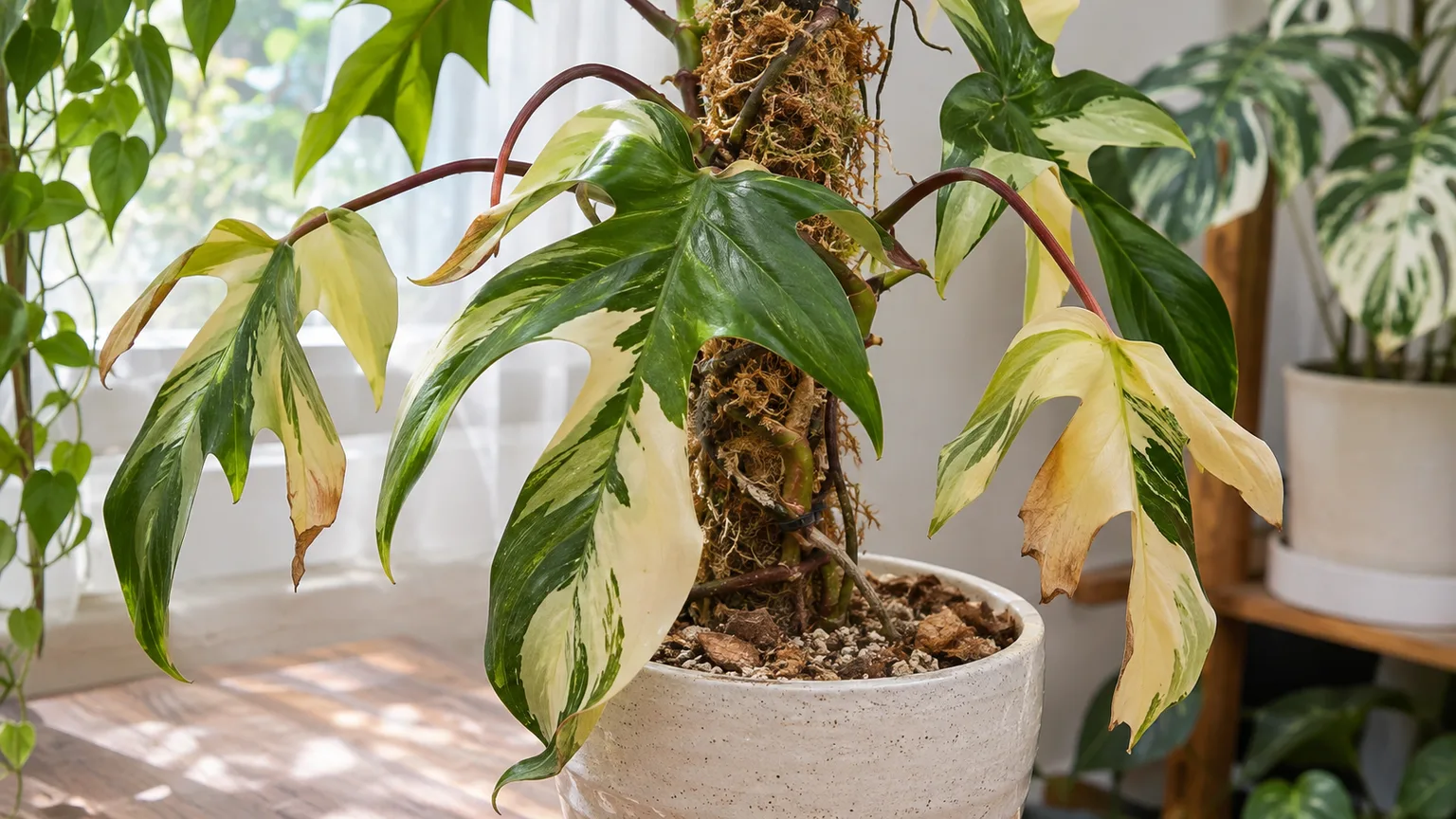
A thirsty Florida Beauty wilts from the leaf blade inward: the broad lobes lose their stiffness and feel soft and papery rather than firm, often with the whole vine looking tired at once instead of one yellow leaf at a time. Because this hybrid carries large cream and yellow sectors, repeated mild drought usually crisps the pale edges first — thin brown margins on the cream zones while the green centers still look acceptable. Those browned edges are dead tissue; they will not re-green, so judge the problem by the living tissue around them.
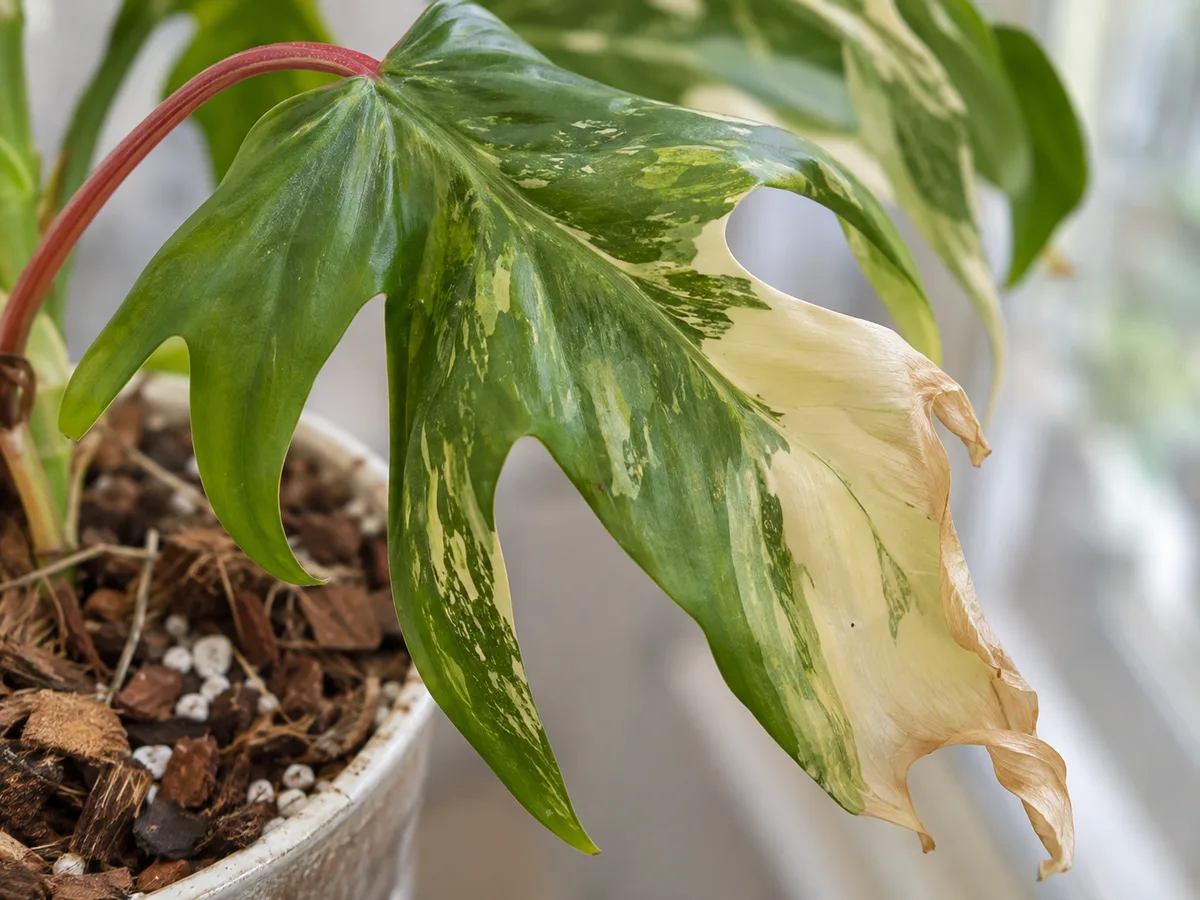
Thirst can soften the lobes and crisp pale margins while much of the green tissue remains alive.
Two signs are especially characteristic of this plant. New leaves may stall halfway out of their sheaths, unfurling slowly or emerging smaller than the last leaf, because the plant lacks the turgor pressure to expand fresh growth. And the red petioles — normally plump and rigid enough to hold the lobed blades out flat — go slightly wrinkled and bendy, so the leaves fold downward along the stem. If the plant is climbing a moss pole, the aerial roots gripping the pole shrivel and turn silvery-brown instead of staying plump and pale.
Why Florida Beauty dries out faster than you expect
Three features of this plant conspire to empty the pot sooner than a calendar predicts. First, it grows in a chunky aroid mix of bark, perlite, and potting soil that drains fast by design — free-draining compost keeps roots breathing, but it also means a small nursery pot in bright filtered light can go from soaked to dry at depth in under a week of active summer growth. Second, Florida Beauty wants brighter light than solid-green philodendrons to hold its cream variegation, and that brighter position accelerates evaporation from both the mix and the moss pole. Third, climbing growth is thirsty work: an actively extending vine with new leaves unfurling draws far more water than the same plant sitting still in winter.
The most common trigger is seasonal lag. Growers who found a comfortable winter rhythm — watering every two weeks — carry it into spring, when longer days and fresh growth quietly double the plant’s water use. Forced-air heating in winter causes the reverse surprise: the pot dries faster than expected while the plant is barely growing, and a missed check turns into a full wilt. Clemson HGIC notes that too much or too little water are the main problems on indoor philodendrons, and on Florida Beauty the “too little” side usually arrives through inattention rather than deliberate neglect.
How to confirm it is thirst, not root damage
Wilting alone proves nothing — Florida Beauty also droops in soggy soil when damaged roots cannot move water. Work through these checks in order before you pour:
- Lift the pot. A thirsty plant feels strikingly light compared with its freshly watered weight. A heavy pot days after watering argues against underwatering no matter how sad the leaves look.
- Finger test at depth. Push your index finger 3–5 cm into the mix. Dry and crumbly at the second knuckle supports thirst; cool soil that clings to your skin means moisture remains and watering now would push toward rot.
- Skewer probe. Slide a dry wooden skewer toward the pot bottom, wait thirty seconds, and feel it. A clean dry shaft through the whole column confirms the root zone is dry, not just the surface crust.
- Mix and pole check. Look for mix pulling away from the pot walls — a sign of genuinely dry soil — and feel the moss pole. A bone-dry pole plus dry mix means both moisture zones are empty.
- The soak test. If the checks above read dry, water thoroughly and watch. Leaves that firm up within a few hours confirm underwatering. Leaves that stay limp in now-moist soil signal root or stem trouble instead.
Clemson HGIC advises keeping philodendron soil evenly moist but never soggy or standing in water — the goal of this diagnosis is to confirm which side of that line you are on, not to guess from the foliage.
First fix: one slow, deep soak
Do exactly one thing first: rehydrate the entire root column. Set the nursery pot in a sink, apply room-temperature water slowly across the surface in a circle, pause to let it absorb, then repeat until water runs freely from the drainage holes. The RHS recommends room-temperature rainwater or filtered water where possible and letting compost dry slightly between waterings — this soak resets the cycle from a known-wet starting point. If the mix has shrunk and water channels down the inside wall without wetting the center, poke a few holes with a chopstick and water in two or three short passes, or bottom-water for fifteen minutes and then top-water once to flush the column.
Empty the saucer or cachepot within thirty minutes. Then stop. Do not fertilize, do not repot, do not mist the leaves as a substitute drink — foliar misting does not rehydrate roots. Check back in a few hours: firming leaves confirm the diagnosis, and you can return to the normal check-first routine described in our watering guide.
Step-by-step recovery after the soak
- Confirm the perk-up. Within 2–6 hours, leaves should feel firm again and petioles should stiffen. If nothing changes by the next morning despite moist soil, unpot and inspect roots — firm white-to-tan roots are healthy, while brown mush signals rot that no amount of watering fixes.
- Rewet the moss pole. Soak the pole separately so aerial roots can rehydrate; a dry pole wicks moisture away from the stem just when the plant needs stability. Keep the pole lightly moist afterward, not dripping.
- Tidy only dead tissue. Snip fully brown, papery edges with clean scissors, leaving a thin brown margin rather than cutting into green tissue. Leave partly damaged leaves attached — they still photosynthesize for the recovering plant.
- Resume the dry-down cycle. Wait until the top 3–5 cm dry again before the next soak. Florida Beauty in active growth often lands near every 7–10 days in summer and 10–14 days in winter, but let the finger test and pot weight decide rather than the calendar.
- Hold fertilizer. A drought-stressed plant with a compromised root zone cannot use feed, and salts in dry mix burn root tips. Resume half-strength feeding only once new growth unfurls cleanly.
Recovery timeline
Mild cases — one wilt, quick soak — look normal by evening and need no further intervention beyond resuming checks. Moderate cases with crisped cream edges and a stalled new leaf stabilize over one to two weeks: existing leaves firm up within a day, while the stuck leaf may take a week or more to finish unfurling, sometimes with a small blemish where growth paused. Judge progress by new growth and halted spread — no fresh crisping, firm petioles, and the next leaf emerging at full size. Severely repeated drought, where several leaves browned and the vine shed lower foliage, needs a full growth cycle of consistent wet-dry rhythm before the plant looks itself again, and heavily damaged lower leaves will not recover their shape.
Lookalike symptoms: what else mimics thirst
| What you see | More likely thirst | More likely something else |
|---|---|---|
| Limp leaves | Light pot, dry at 3–5 cm, perks after soak | Heavy pot, wet mix, stays limp — root damage from overwatering |
| Yellow lower leaves | Rare with pure thirst; check watering history | Classic overwatering signal on philodendrons when light is also low |
| Crispy leaf edges, soil still moist | — | Low humidity or fertilizer salts; thirst crisping comes with dry soil |
| Fine stippling plus webbing on undersides | — | Spider mites, which also cause dull, drooping foliage |
| Pale new growth, long gaps between leaves | — | Too little light pushing green reversion, not drought |
When several patterns overlap — for instance, crisp edges plus yellow lower leaves — suspect a watering swing: drought followed by compensating overwatering. Stabilize on the check-first cycle and read the newest growth, which reflects current conditions more honestly than older leaves. Our light guide helps separate dim-placement symptoms from water problems, since weak light slows dry-down and confuses the picture.
Mistakes to avoid
Daily sips. Small frequent pours keep the surface damp while the lower root ball stays dry, training roots upward into a shallow zone and swinging the plant between drought and surface rot within a week. Always soak fully or not at all.
Waiting for the wilt as a schedule. Epic Gardening warns that letting philodendrons wilt before watering stresses them — each wilt costs the plant energy and weakens the roots supporting variegated growth. Water at the dry-top-3–5-cm signal, before leaves fold.
Compensating with a flood. After a scare, growers often overcorrect into permanently wet soil. Most philodendrons prefer soil that dries slightly between waterings — returning to that rhythm matters more than any rescue gesture.
Misting instead of watering. Mist raises humidity for minutes and does nothing for an empty root zone. If household air is dry, address humidity separately; see our soil guide for mix choices that buffer dry-down without staying soggy.
Fertilizing a wilted plant. Salts in dry mix concentrate around root tips and burn them. Rehydrate first, wait for clean new growth, then feed.
How to prevent it next time
Anchor prevention to checks, not dates. Before every watering, confirm the top 3–5 cm are dry and the pot feels light; the calendar only reminds you to look. Size the pot to the root mass — an oversized pot holds wet compost around small roots while the surface looks dry, which is the opposite trap, but a tiny nursery pot in bright light may need checking twice a week in summer. Keep the moss pole lightly moist so it stops competing with the pot, and recheck your interval whenever you move the plant closer to a window, since brighter light for variegation speeds dry-down. In winter, stretch intervals as growth slows but keep checking — heated rooms dry pots faster than dormant roots suggest. NC State Extension notes this philodendron lineage prefers moist, well-drained soil at 65–85°F with water applied at the base, which keeps foliage dry and the root zone evenly hydrated.
When to worry
Treat it as urgent if the vine wilts and does not respond to a proper soak within 24 hours, if petioles shrivel rather than just soften, or if several leaves yellow and drop right after rewatering — that pattern suggests roots died during the drought and cannot take up the water now surrounding them. Unpot promptly: trim mushy roots to firm tissue, repot into fresh chunky mix sized to what remains, and consider a node cutting as backup if the stem base has softened. Cream sectors with large variegated areas show damage first and recover slowest, so a heavily variegated specimen deserves earlier intervention than a mostly green one.
Related tool
Use the Plant Watering Calculator to estimate a starting interval for underwatering recovery on this plant, then confirm every date with the finger test and pot weight before watering.