Brown Tips on Philodendron Florida Beauty: Causes, Checks &
Quick answer
Brown tips on Philodendron Florida Beauty almost always start in the cream-white variegated sectors, which scorch and dry out before the green tissue. Check soil moisture 3–5 cm down, recent fertilizer, humidity, and direct sun exposure. First step: flush the pot thoroughly once with room-temperature water, empty the saucer, then change nothing else for a week while you watch the newest leaf.
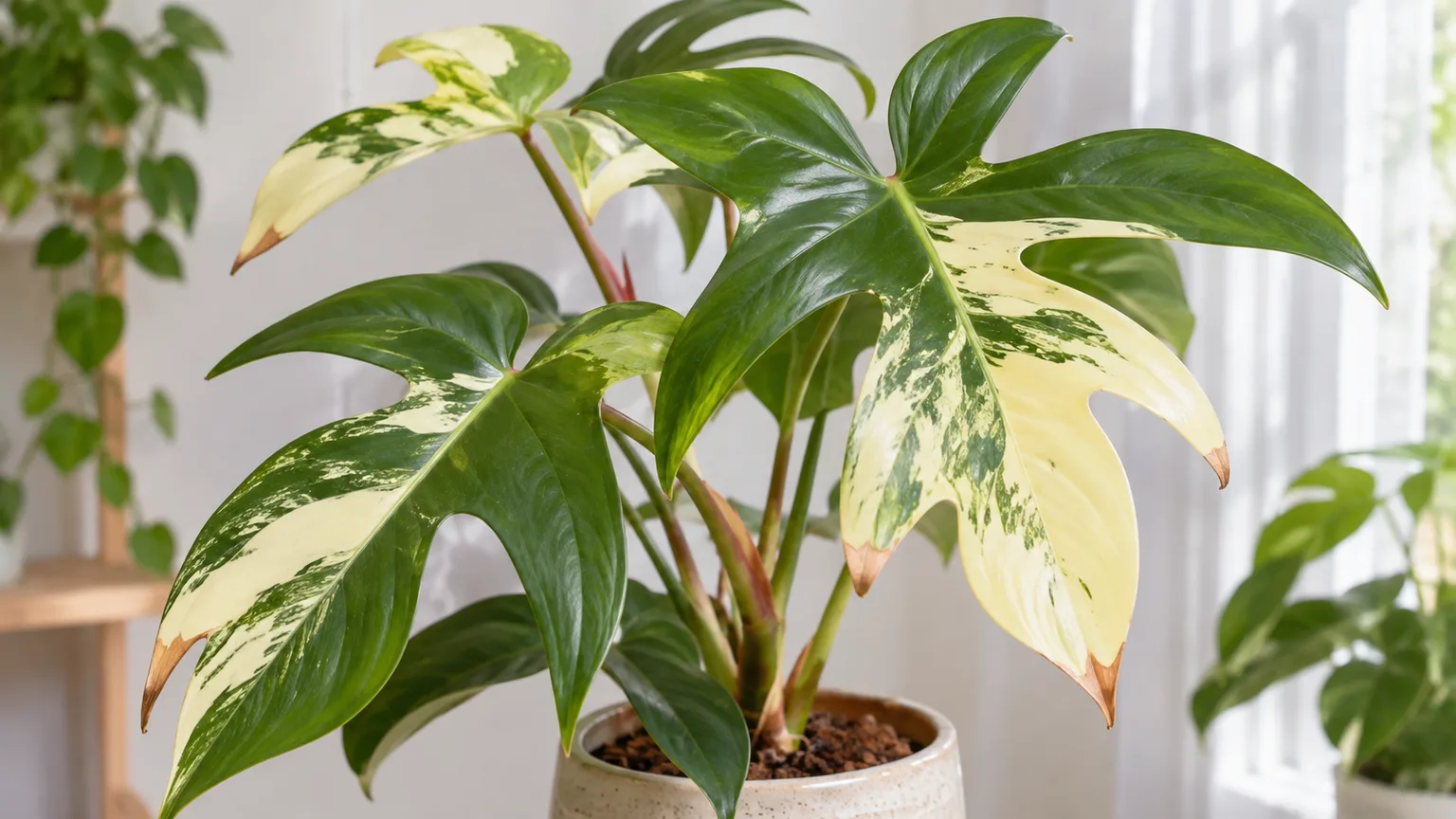
Brown Tips on Philodendron Florida Beauty: Causes, Checks & Fixes
This guide covers brown tips on Philodendron Florida Beauty. See also the general Brown Tips guide, watering, and light pages for this plant.
Brown Tips on Philodendron Florida Beauty: Causes, Checks & Fixes
Quick answer
Brown tips on Philodendron Florida Beauty almost always start in the cream-white variegated sectors. Those pale patches carry little chlorophyll and lose water faster than the green tissue, so they crisp first from dry air, a missed watering, accumulated fertilizer salts, or a blast of direct sun — while the green parts still look fine.
Check the mix 3–5 cm down with your finger, review the last month of feeding, note the humidity around the plant, and check whether afternoon sun lands directly on the leaves. First step: flush the pot thoroughly once with room-temperature water until it runs freely from the drainage holes, empty the saucer, then change nothing else for a week while you watch the newest leaf.
What brown tips look like on Florida Beauty
On this plant, tip burn has a signature: narrow tan-to-brown crisping that begins at the very tip or outer edge of the cream-white sectors and creeps inward, sometimes with a thin yellow band where dying tissue meets living tissue. Green sectors on the same leaf often stay supple for weeks after the white areas have crisped, which is the clearest sign you are dealing with environmental stress rather than infection.
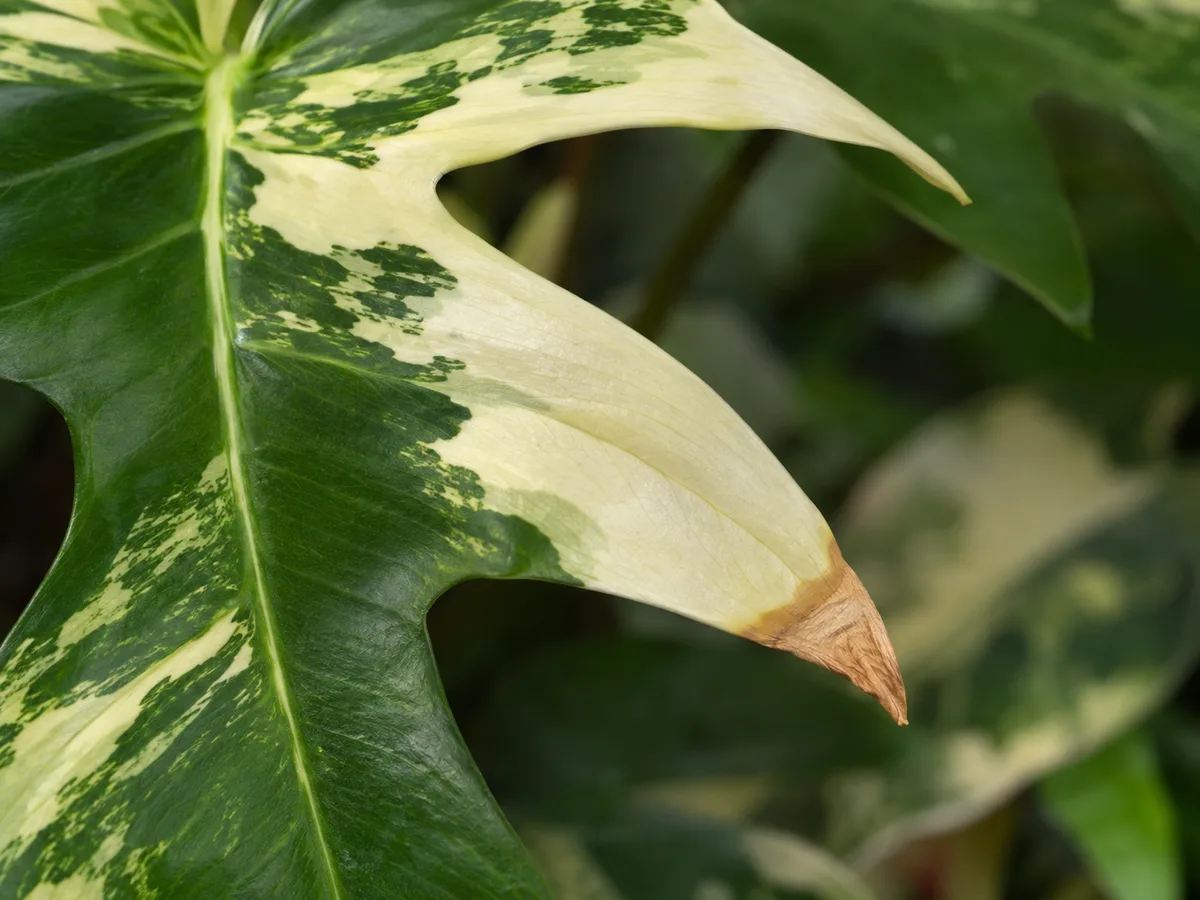
Brown tip burn often starts in the pale variegated tissue while nearby green tissue stays supple.
Florida Beauty is a hybrid of Philodendron pedatum and Philodendron squamiferum, and it keeps its yellow-and-cream splashes on mature lobed foliage when light is adequate. Because those variegated sectors photosynthesize poorly, the plant needs brighter filtered light than a solid-green philodendron — yet that same pale tissue is the first to scorch. When browning appears as bleached patches in the middle of white areas after you moved the plant closer to a window, suspect sun scorch; when it starts exactly at the tips and edges during a dry spell or heating season, suspect water or humidity stress.
For the general mechanics of why leaf tips crisp on any houseplant, see our brown tips guide. On Florida Beauty, the pattern usually shows up as white-sector-first crisping on an otherwise healthy vine.
Why Florida Beauty gets brown tips
Four causes explain nearly every case, and the variegation decides which leaves show damage first.
Inconsistent or shallow watering. This hybrid grows in a chunky aroid mix that drains fast by design. If waterings run late or each drink is a small sip that never wets the whole root ball, the finest root hairs in the driest pockets die back and the leaf margins — white sectors first — crisp. Letting the compost dry slightly between waterings is correct for philodendrons generally (RHS growing advice), but on Florida Beauty “slightly” means the top 3–5 cm, not the entire pot.
Fertilizer salt buildup. Philodendrons do not tolerate salt buildup, and a collector plant that gets fed enthusiastically “for more variegation” accumulates salts in the mix. Salts draw moisture away from root tips and leaf margins, so tips brown even though you are watering on schedule. A white or tan crust on the mix surface or around drainage holes is the tell. Flushing the soil regularly with plain water, or irrigating with distilled water, is the extension-recommended countermeasure for salt-sensitive philodendrons (NC State Extension).
Low humidity. Florida Beauty prefers moderate to high humidity around 55–70%, and dry indoor air pulls moisture from leaf edges faster than the roots can replace it. Winter heating is the classic trigger: tips turn papery and may curl, worst on the thin white tissue. This matches the general houseplant pattern where low humidity browns leaf edges that the plant cannot rehydrate fast enough.
Direct sun on pale tissue. Philodendrons belong in bright but indirect light, and direct summer sun scorches their leaves. On Florida Beauty the scorch lands on the cream sectors first — a grower chasing stronger variegation with more light can accidentally burn exactly the tissue they wanted to encourage. An east window or a sheer-filtered south or west window is the balancing point; see the Florida Beauty light guide for positioning detail.
Tap water quality is a lesser but real contributor: dissolved fluoride and chlorine accumulate in leaf tissue over time and show up as tip browning that creeps inward in a narrow band. It rarely acts alone, but in homes with heavily treated water it stacks on top of the other four.
How to confirm the cause
Work through these checks in order before changing anything. Each one rules a suspect in or out.
- Read the tissue pattern. Browning confined to white sectors with firm green tissue and firm stems points to environment (water, salts, humidity, light). Browning with yellow halos spreading through green tissue, soft stems, or a sour-smelling mix points toward root trouble instead.
- Check the mix at depth. Push a finger 3–5 cm into the chunky bark mix. Powder-dry means underwatering; soggy and heavy days after watering means the root zone is staying wet. Adjust using the Florida Beauty watering guide as your baseline.
- Look for salt crust. White or tan deposits on the mix surface, the pot rim, or around drainage holes mean fertilizer salts have accumulated — a known trigger for tip burn that calls for leaching with plain water.
- Audit light and placement. Did the plant move closer to a window, lose its sheer curtain, or start catching afternoon sun in the last few weeks? Bleached patches centered on white sectors after a move mean scorch.
- Review feeding history. Monthly half-strength feeding in active growth is plenty; full-strength doses, winter feeding, or “extra for variegation” all push salts up. Compare against the Florida Beauty fertilizer guide.
- Gauge humidity and season. If browning started when heating or air conditioning kicked in and the air feels dry, low humidity is at least a co-conspirator.
The first fix to try
Flush the pot thoroughly once. Take the plant to a sink, pour room-temperature plain water slowly through the mix for two to three minutes until it runs freely from the drainage holes, then empty the saucer completely so the pot never sits in runoff. This single action rehydrates dry pockets in the chunky mix and leaches accumulated fertilizer salts — the two most common culprits — without adding any new stress.
Then stop. Make no other change for a week: no fertilizer, no repot, no move across the room, no pruning beyond what is fully dead. Florida Beauty tells you whether the flush worked through its newest leaf — one targeted correction first is how you read the response.
Step-by-step recovery
If the newest growth still emerges with crisping after the flush week, work down this sequence, one step at a time.
- Stabilize humidity. Group the plant with other humidity lovers, set it on a pebble tray, or run a small humidifier to hold 55–70%. Do not rely on misting — it raises humidity around the leaf for minutes only and is largely useless as a humidity strategy.
- Fix the water source if needed. If your tap water is heavily chlorinated or fluoridated and tip browning creeps inward in a narrow band, switch to filtered, rainwater, or water left out overnight, since tap-water chemicals accumulate in leaf tissue over time.
- Pause feeding. Skip fertilizer for four to six weeks while the plant stabilizes, then resume at half strength only during active growth. Never fertilize a stressed vine to “push” new leaves.
- Trim only what is fully dead. Leave partly green leaves attached — they still photosynthesize and feed the vine. Snip fully brown margins with clean scissors just inside the dead tissue, wash your hands after handling cuttings, and keep trimmings away from pets, since philodendron contains insoluble calcium oxalates toxic to cats and dogs.
- Correct light placement. If scorch is confirmed, pull the plant a meter back from the glass or restore the sheer curtain. Review the Florida Beauty soil guide too — a broken-down, compacted mix holds water unevenly and makes every other fix less effective.
Recovery timeline
Damaged tips never turn green again, so measure progress by new growth, not old damage. Expect the spread of browning to halt within one to two weeks of the correct fix, and expect one or two clean new leaves within three to six weeks in the growing season. Winter recovery is slower — a stabilized plant that simply stops getting worse until spring is succeeding.
Lookalike symptoms
- Sun scorch vs tip burn: scorch makes bleached, papery patches in the middle of pale sectors facing the window; tip burn starts at margins and creeps inward. Scorch follows a move; tip burn follows dryness, salts, or dry air.
- Overwatering and root rot vs underwatering: overwatered leaves yellow first with soft stems and a heavy, sour mix; underwatered leaves crisp first with a light, dry pot. If stems soften or several leaves fail at once, treat it as urgent root trouble, not tip burn.
- Spider mites: stippled, dusty-looking leaves with fine webbing underneath, worst in dry air — the same dry air that causes tip burn, so check leaf undersides whenever tips crisp in winter.
- Natural aging: the lowest, oldest leaf yellowing and dropping occasionally while the vine keeps climbing is normal turnover, not a tip-burn outbreak.
- Cold damage: a plant left near a drafty window or in a cold shipment develops dark, water-soaked patches rather than dry tan tips.
Mistakes to avoid
- Misting instead of real humidity control. It feels proactive and does almost nothing lasting for the plant.
- Feeding a stressed plant. Fertilizer on damaged roots deepens salt burn; food comes after recovery, not before.
- Repotting on day one. A stressed climbing aroid does not need root disturbance unless the mix has collapsed or roots are rotting — repotting adds shock on top of stress.
- Cutting into living tissue. Trimming back to green “for looks” opens wounds and removes leaf area the vine needs; stay inside fully dead margins.
- Stacking every fix at once. Flush, move, mist, feed, and repot in one weekend and you will never know what worked — or what harmed.
How to prevent it next time
Water by the pot, not the calendar: soak thoroughly when the top 3–5 cm of chunky mix dries, always drain the saucer, and leach the pot with plain water every couple of months to keep salts from building up. Hold bright filtered light, 55–70% humidity, and half-strength feeding only in active growth. A moss pole kept lightly moist supports the climbing habit without waterlogging the pot, and stable conditions grow cleaner variegation than any amount of extra fertilizer.
When to worry
Treat tip burn as urgent if browning spreads visibly day to day, stems or the base of petioles feel soft, the mix smells sour, or multiple leaves yellow and collapse together. Those signs mean the root zone is failing. Unpot, inspect roots, and prune rot before returning to the routine above. Crisp tips on an otherwise firm, climbing vine can wait for the flush-and-observe approach.
Related tool
Use the Brown Tips Diagnosis Tool to rank the likely causes for brown tips on this plant before changing multiple variables at once.