Yellow Leaves on Philodendron Florida Beauty: Causes
Quick answer
Yellow leaves on Philodendron Florida Beauty most often mean overwatering or too little light — but first confirm the yellow is true chlorosis, not the plant's normal cream variegation. First step: probe the top 3–5 cm of mix and lift the pot; if it is still damp, hold all water until it dries before changing anything else.
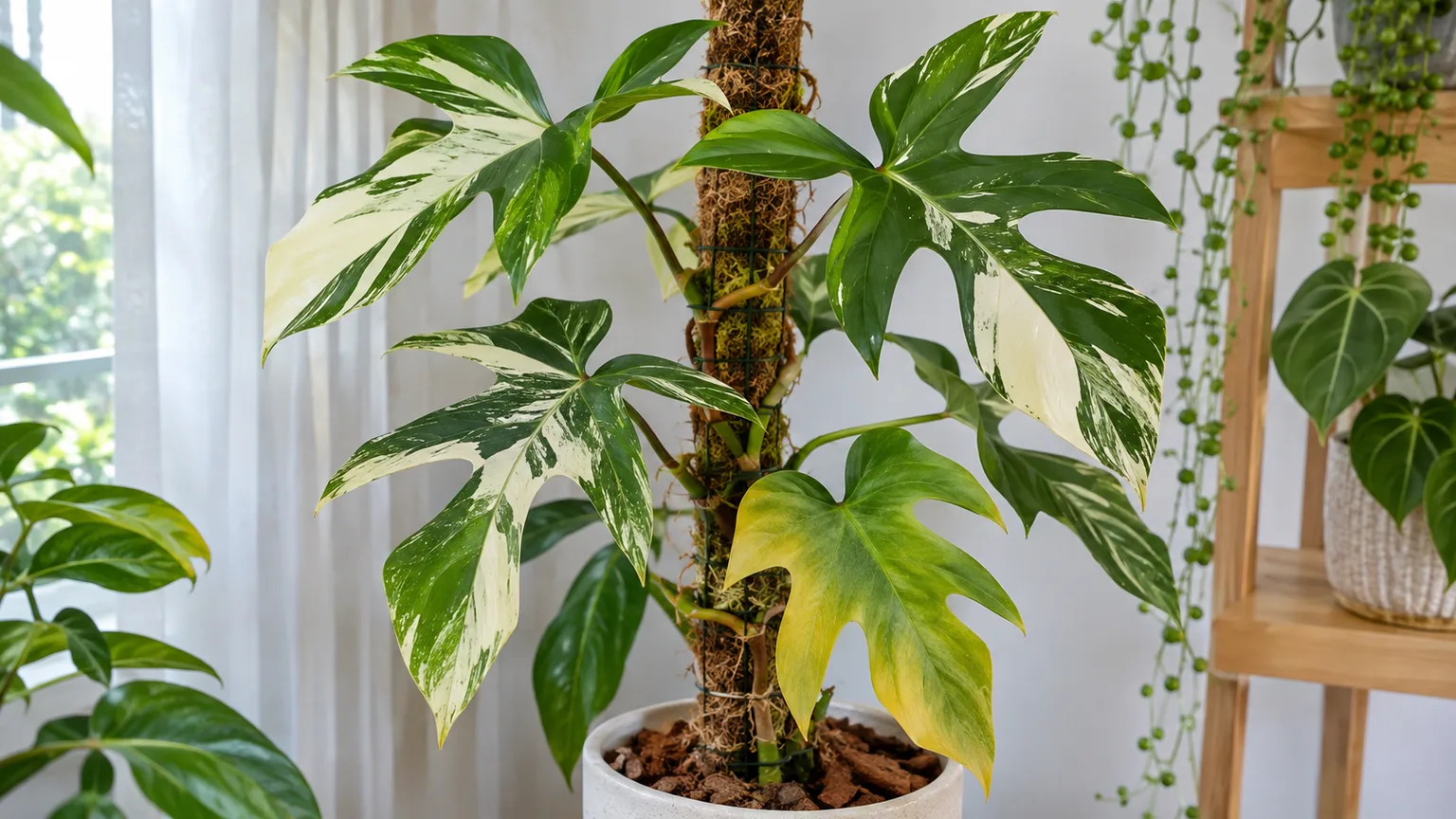
Yellow Leaves on Philodendron Florida Beauty: Causes, Checks & Fixes
This guide covers yellow leaves on Philodendron Florida Beauty. See also the general Yellow Leaves guide, watering, and light pages for this plant.
Yellow Leaves on Philodendron Florida Beauty: Causes, Checks & Fixes
Quick answer
Yellow leaves on Philodendron Florida Beauty most often trace to overwatering, too little light, or plain old-leaf aging — but this plant complicates the read because its normal foliage already carries cream and yellow splashes. Before treating anything, confirm you are looking at true chlorosis (soft, spreading fade of green tissue) rather than stable variegation. For how yellowing works in houseplants generally, see our yellow leaves guide; on Florida Beauty, the pattern usually shows up as lower-leaf yellowing on a vine that is also losing variegation contrast and stretching between nodes.
First fix: probe the top 3–5 cm of mix and lift the pot. If it is still damp days after watering, hold all water until it dries — nothing else yet. No fertilizer, no repot, no leaf sprays this week.
Variegation or chlorosis: read the leaf correctly
Florida Beauty is a climbing hybrid of Philodendron pedatum and Philodendron squamiferum, grown specifically for yellow-and-cream splashes on mature lobed foliage. Those pale sectors photosynthesize poorly, which is why this plant demands brighter filtered light than a solid-green philodendron — and why owners frequently mistake normal pattern for sickness, or miss real yellowing hiding among the cream.
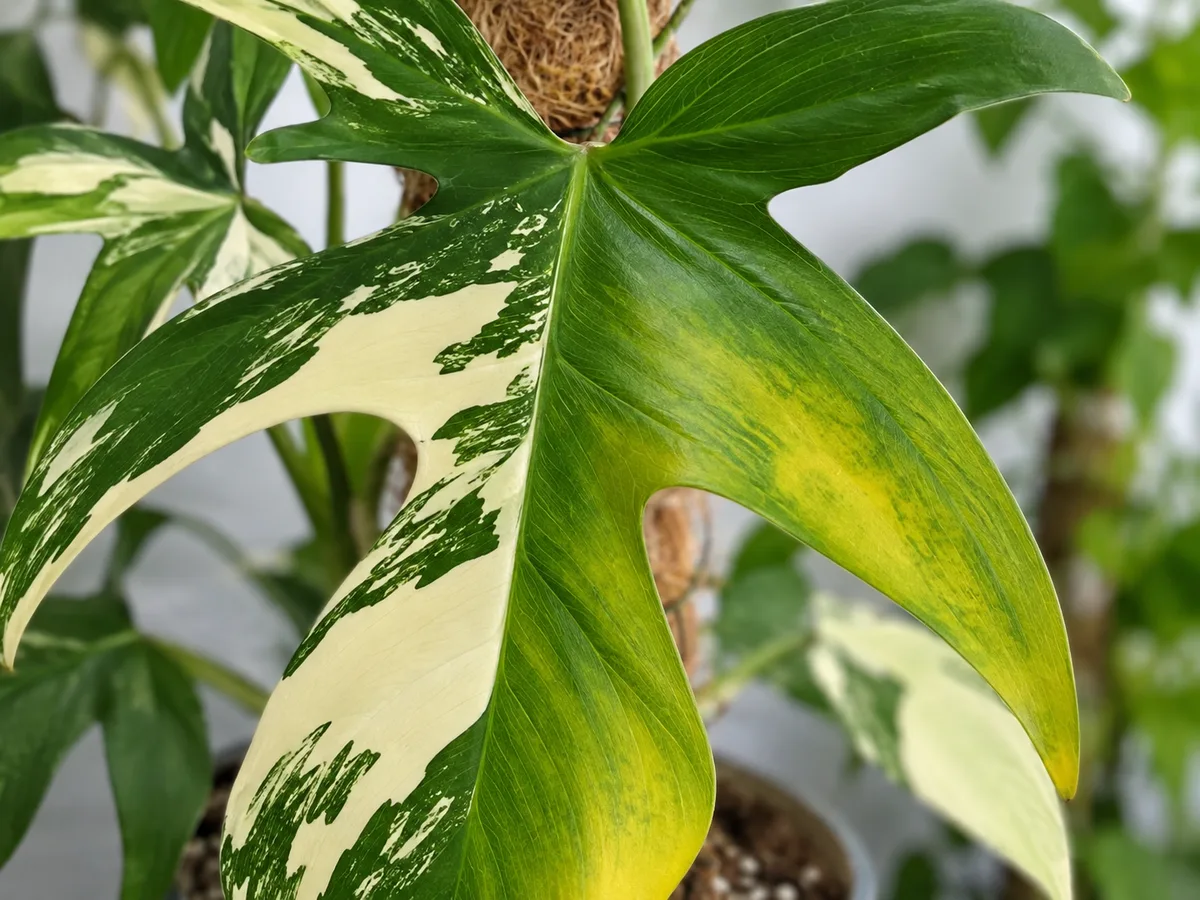
Sharp cream sectors are normal variegation; a soft fade across previously green tissue is more consistent with chlorosis.
Tell them apart this way. Variegation is crisp: defined cream splashes, streaks, or half-leaf sectors visible from the day the leaf unfurls, with firm texture and matching pale striping on the stem at that node. Chlorosis is soft: green areas wash out to an even sickly yellow, often starting at leaf margins or between veins on previously solid-green tissue, and the leaf feels limp or papery rather than firm. If new leaves emerge mostly green where older ones were splashed, that is reversion from dim light — a light problem wearing a variegation costume — not a nutrient emergency.
This distinction matters because the fixes pull in opposite directions. Faded variegation with long internodes wants brighter placement; true spreading chlorosis on wet mix wants a watering correction first.
Why Florida Beauty gets yellow leaves
Chronic wet mix on a climbing aroid root system. Philodendrons want soil kept evenly moist but never soggy, and they must never stand in water (Clemson HGIC). Florida Beauty grows in a chunky aroid mix that should drain fast; when it stays heavy — oversized pot, sealed cachepot holding runoff, or calendar watering through winter — fine roots suffocate and lower leaves yellow first. Root rot follows the same path: a mix that drains slowly plus too-frequent watering (Clemson HGIC).
Too little light for a variegated climber. Most philodendrons prefer indirect or curtain-filtered sunlight (Clemson HGIC), and the RHS places them in bright but indirect light, out of direct summer sun that scorches leaves. Florida Beauty feels dim light sooner than green philos because its pale sectors contribute little energy: growth stalls, internodes stretch, new leaves arrive smaller and greener, and older leaves yellow as the plant abandons what it cannot power. Clemson notes directly that yellowing of lower leaves can be caused by too little light or overwatering (Clemson HGIC) — the two causes most owners need to separate.
Underwatering during active growth. A Florida Beauty pushing new lobed leaves up a moss pole drinks steadily in warm months. If the top 3–5 cm stays bone dry and the pot feels feather-light, leaves yellow thin and papery from the edges inward rather than turning soft and translucent the way overwatered leaves do.
Nutrient depletion in old mix. A plant that has sat in the same mix for two or more seasons without feeding can fade uniformly from the oldest leaves as mobile nutrients relocate to new growth. This is a slow, even pale — not a sudden multi-leaf collapse — and it never justifies fertilizing a plant that is currently stressed, wet, or freshly repotted.
Pests and leaf-spot pressure. Indoors, watch for spider mites, mealybugs, aphids, and scale on philodendrons, with overwatering behind most root failures (NC State Extension). Sap-sucking pests stipple and yellow individual leaves, usually newest growth first, and leaf-spot diseases gain a foothold when water sits on foliage — preventable by watering at the base and keeping water off the leaves (NC State Extension).
Natural aging. The occasional yellow lower leaf on an otherwise firm, climbing plant is normal senescence: the vine retires its oldest leaf while the crown keeps producing (The Spruce). One leaf every month or two needs no treatment.
How to confirm the cause
Work in this order, and change nothing until you have an answer:
- Moisture at 3–5 cm plus pot weight. Damp and heavy days after watering with soft yellowing lower leaves means overwatering. Dry to the bottom with a light pot and crisp-edged yellowing means underwatering.
- Which leaves, and what the variegation is doing. Lower-leaf-only yellowing with firm new growth fits water stress or aging. Fading variegation plus stretched internodes and smaller new leaves fits low light. Random stippled yellowing on new growth fits pests — inspect leaf undersides and stem joints with a loupe.
- Light history over two weeks. Note window direction, sheer cover, and any recent move. An east or sheer-filtered south-west window suits this plant; a dim corner or a sudden shift to harsh afternoon sun both yellow leaves for opposite reasons.
- Drainage path. Confirm the nursery pot drains freely, the saucer is emptied after each drink, and no sealed cachepot is holding standing water against the roots.
- Stem and root-zone clues. Press stem bases near the mix: firm means the core is intact; soft or sour-smelling means damage has progressed past a watering pause and needs the root inspection below.
- Feeding and repot history. If the mix is over two years old with no feeding and yellowing is slow and uniform on the oldest leaves only, nutrition belongs on the suspect list — after water and light check out.
The first fix to try
If the mix is damp: stop watering until the top 3–5 cm dries, and do nothing else this week. Move the plant to its normal bright filtered spot if it has been sitting dim, but hold fertilizer, repotting, pruning, and sprays. Philodendron compost should be allowed to dry out slightly between waterings with care never to overwater — one disciplined dry-down tells you within days whether wet roots were the problem, because the spread of yellowing stalls.
If the mix is bone dry: water once, thoroughly. Drench until excess flows from the drainage hole, empty the saucer within 30 minutes, then wait for the same 3–5 cm dry-down before the next drink.
Do not repot on day one unless stems are softening or the mix smells sour. Do not fertilize a yellowing plant to “green it back up” — excess fertilizer burns leaf tips and adds salt stress while roots are already struggling.
Moss-pole vines yellow differently: support, nodes, and lower-leaf shed
Because Florida Beauty is a true climber, its yellowing pattern is tied to vertical growth in a way rosette philos never show. Without a moss pole or trellis, internodes stretch, leaves stay small, and the lowest leaves on a long bare stem yellow and drop while the tip keeps reaching — a support problem that looks like a watering problem. If your vine is leggy with sparse lower foliage, add support before assuming the roots have failed; leaves mature into deep lobes only as the vine climbs.
Read the nodes, not just the leaves. Variegation rides through nodes: a stem section with cream striping can still produce patterned leaves, while a fully green reverted section rarely throws variegation again. When pruning back past yellowed or reverted sections, cut to a node that still shows cream on the stem or leaf, using stem-tip cuttings with at least one node for any propagation attempt. Keep the moss pole lightly moist rather than soaked — a sopping pole against the stem keeps the crown damp and invites the fungal issues that good airflow would otherwise prevent.
Step-by-step recovery
Once the first fix is in place, follow the branch you confirmed:
Overwatering branch. Keep the dry-down going until the pot feels noticeably lighter. Open drainage holes, remove the cachepot, and empty saucers after every drink. If yellowing keeps spreading past two weeks of corrected watering, unpot: shake away wet mix, trim only roots that are brown, black, hollow, or slimy with sterilized scissors, and repot into fresh chunky mix (potting mix plus perlite plus orchid bark) in a pot sized to the trimmed roots — loose, free-draining compost that stays slightly acidic suits philodendrons. Wait until the top layer approaches dry before the first thorough watering.
Low-light branch. Move to bright filtered light — east window or sheer-diffused south-west exposure — without landing pale sectors in harsh midday sun, which scorches them. Expect variegation contrast to stabilize on new leaves over the next month; old yellowed leaves will not recover, so judge by fresh unfurlings.
Underwatering branch. Return to a moisture-based rhythm: roughly every 7–10 days in summer once the top 3–5 cm dries, stretching to 10–14 days in winter. One deep soak revives mildly wilted plants; chronically droughted vines need two or three steady cycles before new growth normalizes.
Pest branch. Isolate the plant, rinse leaf undersides thoroughly, confirm live pests under magnification, then treat the confirmed pest — not a blind cocktail. Recheck weekly for two more cycles before declaring it clean.
Nutrition branch. Only after water, light, and pests check out and new growth is stable: resume monthly balanced liquid feed at half strength during active growth, and plan a repot with fresh mix if the plant has been in the same pot beyond two to three seasons.
Recovery timeline
Yellowing should stop spreading within one to two weeks of the correct fix. New leaves with firm texture and stable cream patterning typically appear over the following three to six weeks in the growing season; winter recovery runs slower. Fully yellow leaves will not re-green — remove them only once they are mostly yellow and detach easily, since partially green tissue still feeds the plant.
Signs you are winning: fewer leaves yellowing each week, firm stems, new unfurlings holding size and pattern, and a pot that gains and loses weight on a predictable rhythm. Signs of worsening: multiple leaves yellowing at once on wet mix, stem bases softening, sour odor from the pot, or new growth emerging already pale and undersized — escalate to root inspection rather than waiting out another cycle.
Lookalike symptoms
| Pattern | Leaf look | Pot and stems | Likely cause | Next step |
|---|---|---|---|---|
| Soft yellow lower leaves, heavy pot | Limp, translucent yellowing from the base up | Damp mix days after watering; stems firm | Overwatering | Hold water until 3–5 cm dries |
| Crisp-edged yellowing, light pot | Thin, papery edges browning after yellowing | Bone-dry mix; stems firm | Underwatering | One deep soak, then moisture rhythm |
| Faded pattern, stretched vine | Greener new leaves, long gaps between nodes | Any moisture; stems firm but leggy | Low light with reversion | Brighter filtered placement |
| Scorched pale patches | Dry bleached blotches on cream sectors | Often after a sun move | Direct-sun scorch | Diffuse the light; scorched tissue stays |
| Stippled yellowing on new growth | Speckled, distorted young leaves | Variable; pests visible under leaves | Spider mites, mealybugs, or aphids | Isolate, rinse, confirm, treat |
| Single oldest leaf yellowing | One bottom leaf fades while crown thrives | Stable moisture, firm stems | Natural senescence | No action |
| Rapid multi-leaf yellow with soft stems | Several leaves at once, mushy base | Wet, possibly sour mix | Advancing root damage | Unpot and inspect roots now |
Mistakes to avoid
Do not fertilize a yellowing Florida Beauty to force it green — excess feed burns tips and stresses wet roots further. Do not repot, prune hard, relocate, and spray in the same week; stacked interventions hide which fix worked and compound shock. Do not mist variegated leaves into the evening or let water sit on foliage, since wet leaves invite spot diseases. Do not “help” a stretched, yellowing vine by upsizing the pot — more mix around the same roots stays wet longer. And handle with placement care around pets: philodendrons contain insoluble calcium oxalates that irritate mouths, so keep the vine out of reach of cats, dogs, and other chewers rather than treating exposure after the fact.
How to prevent it next time
Anchor this plant in bright filtered light that keeps cream sectors crisp, on a moss pole, in chunky bark-based mix with open drainage. Water by probe rather than calendar — top 3–5 cm dry in summer, longer dry-down in winter when growth slows and the plant prefers to stay above about 15°C (59°F) with average humidity or better. Ideal philodendron days run warm (roughly 65–85°F) with humidity above household lows (Clemson HGIC); group with other tropicals or run a humidifier in dry months rather than compensating with extra water. Feed lightly in active growth only, and inspect stem striping monthly — fading pattern is your earliest warning that light has slipped long before leaves start yellowing.
Related Philodendron Florida Beauty guides
- Philodendron Florida Beauty watering — probe depth, pot-weight checks, and summer-to-winter intervals
- Philodendron Florida Beauty light — filtered brightness that holds cream variegation without scorching
- Philodendron Florida Beauty soil — chunky aroid mix and drainage that keeps climbing roots aerated
Yellow leaves on Florida Beauty almost always resolve to three questions: is the yellow real chlorosis or normal cream pattern, is the mix wet or dry at depth, and has the light sustained the variegation. Answer those with a finger probe and a look along the stem, apply the single matching fix, and judge recovery by the newest leaves — firm, well-sized, and patterned.
How we wrote and verified this guide: Recommendations were checked against Clemson HGIC, the RHS philodendron growing guide and Florida Beauty plant record, NC State Extension, ASPCA poison control, and The Spruce horticultural coverage cited inline. Author: sai-ananth. Reviewer: LeafyPixels Review Board. Methodology: plant problem guidance is reviewed against botanical references, extension resources, and LeafyPixels plant-care data before publication. Last reviewed: 2026-08-10.
Related tool
Use the Yellow Leaves Diagnosis Tool to narrow causes for yellow leaves on this plant before changing multiple variables at once.