Drooping Leaves on Philodendron Florida Ghost: Causes
Quick answer
Drooping leaves on Philodendron Florida Ghost usually mean thirst in a dry chunky mix, root stress in a soggy pot, or weak pale growth in dim light — not a generic wilt. First step: check the top 3–5 cm of mix and lift the pot before you water.
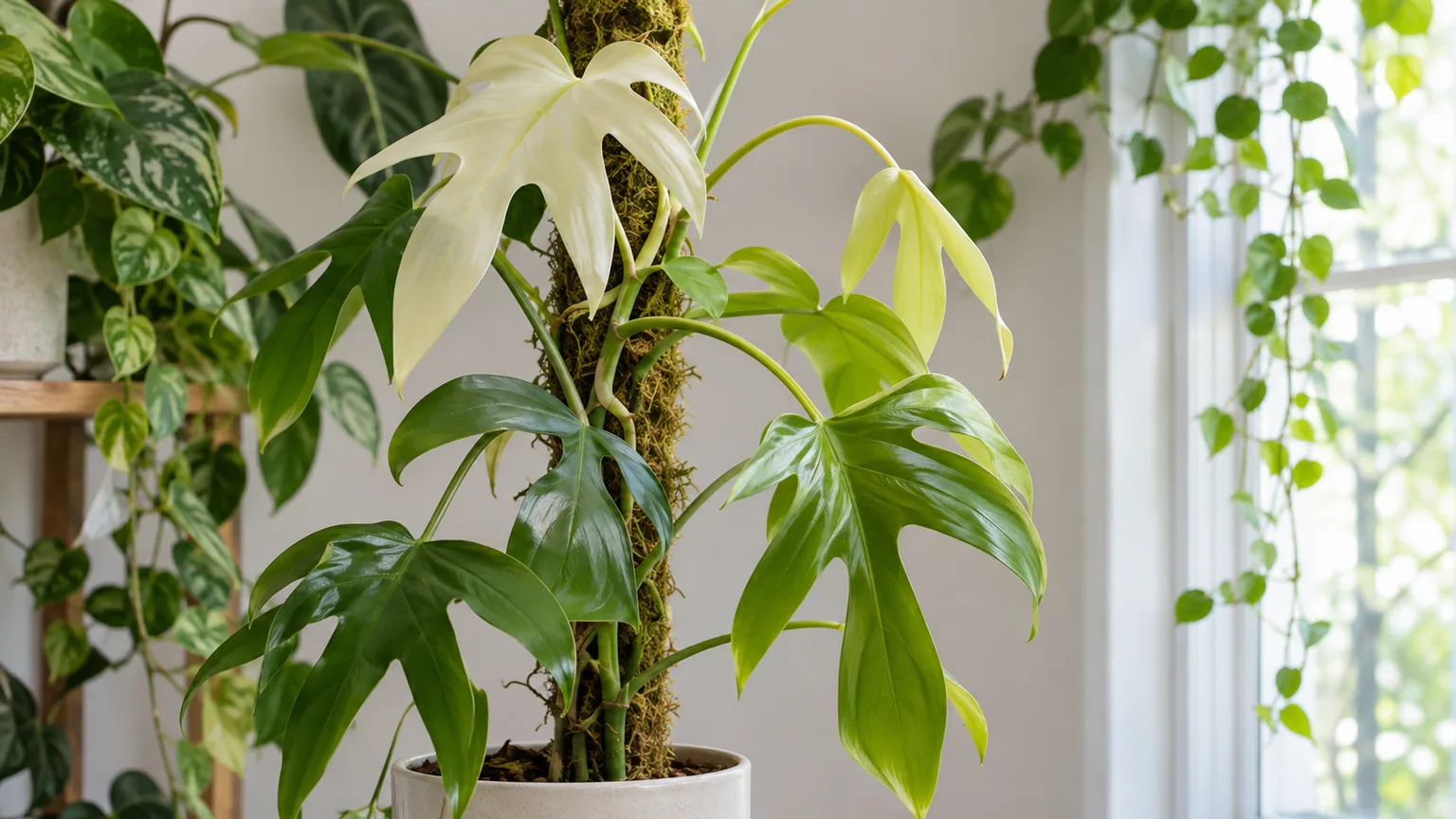
Drooping Leaves on Philodendron Florida Ghost: Causes, Checks & Fixes
This guide covers drooping leaves on Philodendron Florida Ghost. See also the general Drooping Leaves guide, watering, and light pages for this plant.
Drooping Leaves on Philodendron Florida Ghost: Causes, Checks & Fixes
Quick answer
Drooping leaves on Philodendron Florida Ghost mean the long petioles can no longer hold the lobed blades upright — usually thirst in a dry pot, root stress in a soggy pot, or weak pale growth stretching in dim light. For how moisture stress causes leaves to hang across houseplants in general, see our drooping leaves guide. On Florida Ghost, the telling split is pot weight plus the newest white leaf: a light pot with a limp tip means thirst, while a heavy wet pot with droop means roots, not thirst.
First step: push a finger 3–5 cm into the mix and lift the pot before you pour. Water only when that top layer is dry and the container feels light. One correct drink — or one deliberate pause — fixes most cases without touching fertilizer, spray, or a repot.
What drooping looks like on Florida Ghost
A healthy Florida Ghost holds its deeply lobed leaves out and up on firm, upright petioles, with the growth tip pushing pale white tissue that stiffens as it greens. Droop breaks that posture: petioles angle downward, blades hang like wet laundry, and the whole vine looks tired even though leaves may still be green.
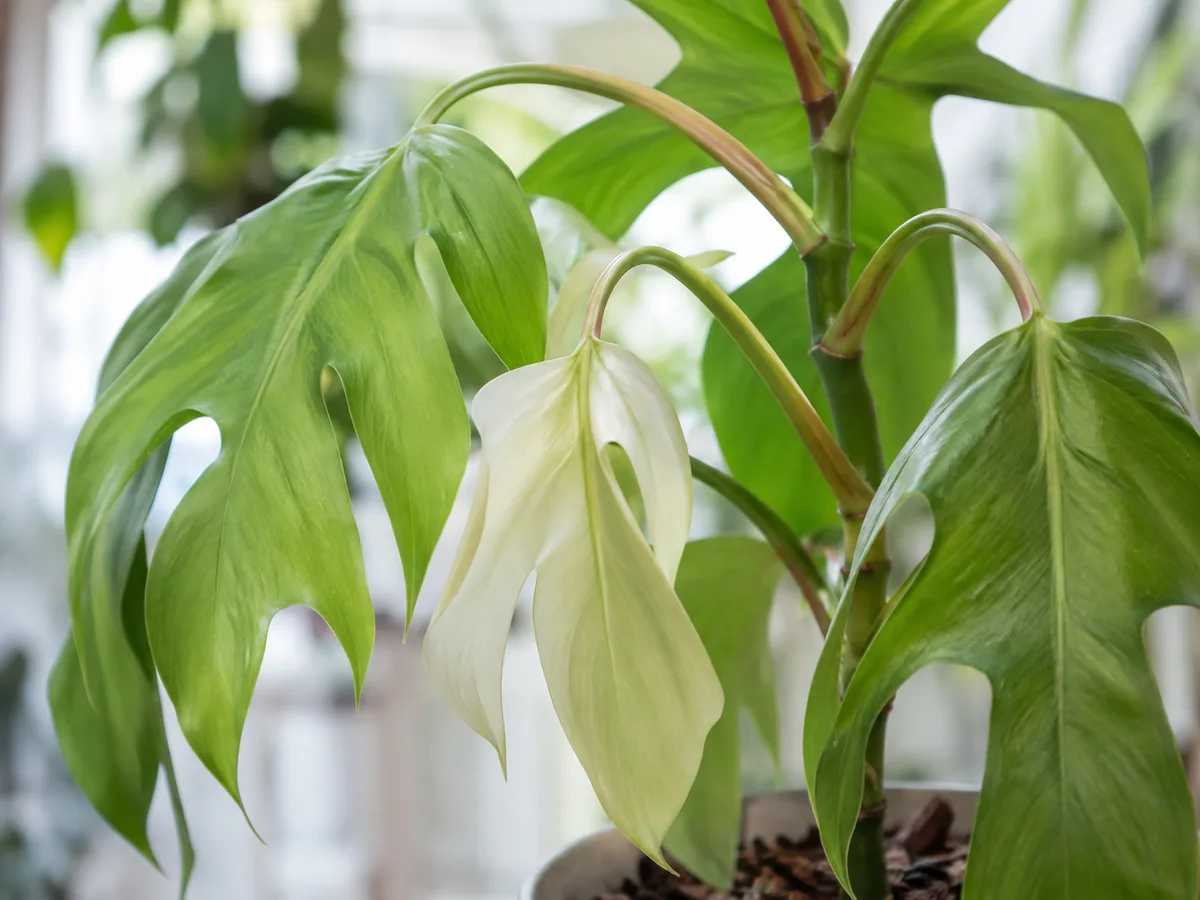
Droop bends the petioles downward and leaves the newest pale growth limp; check soil moisture and pot weight to distinguish thirst from root stress.
Underwatering droop starts at the growth tip and newest leaves. The white emerging leaf goes limp first because pale tissue carries less chlorophyll and less energy reserve, then older lobed blades follow. Mix pulls away from the pot wall and the container feels feather-light.
Overwatering droop looks similar from across the room but feels different up close. Leaves hang on mix that stays damp days after watering, lower leaves yellow while still limp, and petiole bases may feel soft where they meet the stem. A sour smell when you disturb the top centimeter of mix confirms the root zone has gone airless — saturated soil blocks the oxygen roots need, so foliage wilts in a wet pot.
Why the white new leaves droop first
Florida Ghost is unusual among philodendrons: each new leaf unfurls nearly white, then hardens through lime to green as chlorophyll builds (RHS notes this white-to-green sequence). Pale tissue photosynthesizes weakly, so it runs on stored energy and whatever bright filtered light reaches it.
In a dim corner, the plant stretches weak petioles toward the window and the white leaf arrives floppy instead of crisp. Owners often read this as thirst and water — but the pot is already moist, and the extra drink pushes roots toward rot. If your newest leaf is pale, limp, and stretching while older green leaves still hold, light is the problem, not water. Move the plant into brighter indirect light and let the next leaf tell you whether the fix worked.
Direct sun is the opposite trap. White tissue scorches fast behind hot glass, collapsing within hours with papery patches. Bright but diffused light — an east window or a few feet back from a south window — gives pale leaves energy without burning them.
Moss pole, kinked stems, and vine droop
Florida Ghost is a climbing hybrid of Philodendron pedatum and Philodendron squamiferum, and mature lobed leaves are heavy. A vine left to sprawl without support kinks its own stems under the weight, and kinked sections cannot move water cleanly — leaves beyond the bend droop even when roots and mix are perfect.
Check the stem path before you blame watering. If droop affects only the leaves past a sharp bend, a flop over the pot rim, or a section dangling off its pole, support is the fix: loosely tie the stem upright to a damp moss pole or bark board and let aerial roots grip. Climbing philodendrons size up and stabilize on a support, and Florida Ghost internodes stay shorter and stronger once anchored.
Also check pole moisture separately from pot moisture. A soaked moss pole wicking water into the stem bases while the pot stays wet keeps the lower vine too damp; a bone-dry pole on a thirsty plant adds nothing. Water the pot by the finger test, dampen the pole lightly, and never let the stem sit in a puddle at the base.
Why Florida Ghost droops on this mix and rhythm
This plant wants a chunky aroid blend that drains fast but holds some air — bark, perlite, and potting mix — and a dry-down of the top 3–5 cm between drinks, roughly every 7–10 days in summer and 10–14 in winter. Clemson Extension advises keeping philodendron soil evenly moist but never soggy, and never letting plants stand in water.
Thirst droop happens when the chunky mix dries all the way through — common in warm rooms, small terracotta pots, or when watering is a shallow sprinkle that never reaches the root ball. Turgor collapses, petioles hinge down, and leaf edges may crisp.
Wet droop happens when watering runs on schedule instead of soil state, the pot lacks drainage, or dense peat-heavy mix stays heavy for days. Overwatering can cause root rot on philodendrons, and damaged roots strand the foliage without water even in mud — the classic paradox where a wet plant looks thirsty.
Temperature and draft droop follows cold exposure. Philodendrons prefer nights around 65–70°F and days of 75–85°F (Clemson’s recommended range), and NC State notes they should be protected from cold drafts. A Florida Ghost parked against winter window glass or under an AC vent can hang limp overnight with perfect soil moisture. Feel the leaf temperature and check for vents within a few feet.
How to confirm the cause
Work in this order — each check rules out a fix before you apply one:
- Finger test plus pot lift. Push a finger 3–5 cm into the mix and lift the container. Dry plus light means thirst. Damp plus heavy days after watering means root stress. This one test, the same top-inches dry-out check trusted philodendron guides recommend, prevents the commonest mistake of watering a wet plant.
- Read the growth tip. A limp pale new leaf with firm older foliage points to light or support trouble. Whole-vine droop including older leaves points to water or roots.
- Feel petiole bases and smell the mix. Firm bases with dry soil confirm thirst. Soft bases, yellowing lowers, or a sour smell confirm root-zone failure — stop watering and inspect roots.
- Review the last two weeks. A recent move, repot, cold snap, or doubled watering frequency explains sudden droop faster than any pest theory. Spider mites and mealybugs can weaken plants, but they leave stippling, webbing, or cottony clusters — droop alone with clean leaf undersides is almost always water, light, or support.
The first fix to try
Check the top 3–5 cm and the pot weight, then act on what you find — thirst gets one deep drink, wetness gets a drying pause.
- Dry and light: Soak thoroughly until water runs from the drainage holes, empty the saucer within 15 minutes, and re-check posture in a few hours. If the mix repels water (it runs straight through), soak, wait 30 minutes, and soak again so the root ball actually rewets.
- Damp and heavy: Do not water. Empty any saucer or cachepot water, move the plant to bright indirect light with airflow, and verify drainage holes are open. Re-test in two to three days.
- Damp, heavy, plus soft stems or sour smell: Do not water. Slide the plant out, rinse the root ball, trim only mushy black roots back to firm white tissue, and repot into fresh chunky mix per the soil guide. See the repotting guide for mix and timing.
Make exactly one of these moves first. Stacking a repot, a feed, and a spray on the same day hides which action worked and stresses an already weak plant.
Step-by-step recovery by cause
Simple thirst, healthy roots
Water deeply once as above. Most petioles re-angle within 2–24 hours. Trim nothing yet — limp green tissue often recovers, and premature pruning removes leaves that would have photosynthesized for the next white flush. Resume the watering rhythm of top centimeters dry, not a fixed weekday.
Soggy mix, roots still firm
Hold water until the top 3–5 cm dry, keep the plant in bright indirect light, and empty standing water every time. Recovery takes several days to two weeks as oxygen returns to the root zone. Judge by the next leaf emerging firm, not by old yellow leaves re-greening — they will not.
Root rot confirmed
After trimming rot and repotting into airy mix, water lightly once to settle, then hold until the top dries. Expect two to four weeks before the growth tip pushes a firm leaf. If most roots were mush and the stem base is soft up the vine, take a stem-tip cutting with a node from the healthiest section as insurance — a Ghost vine roots readily while the mother plant recovers.
Low light or missing support
Relocate to bright filtered light and tie the vine to its pole. Existing stretched petioles will not shorten, but new leaves emerge tighter and hold upright. Give it three to four weeks and read the newest leaf, not the old ones.
Recovery timeline
- Thirst on healthy roots: visible lift within hours, full posture in a day.
- Mild overwatering: stabilizes over one to two weeks of careful dry-down.
- Repotted rot cases: new firm tip growth in two to four weeks.
- Light or support moves: next leaf (three to four weeks) is the verdict.
Leaves that turned fully yellow, papery, or mushy will not un-damage themselves. Success means droop stops spreading and fresh growth arrives firm and upright.
What not to do
Do not water on schedule without the finger test — calendar watering in a dim room is how wet droop starts. Do not fertilize drooping foliage; salts stress damaged roots, and overfertilizing is itself a listed philodendron risk. Do not mist limp leaves to perk them — surface water does not restore turgor and wets white tissue that spots easily. Do not repot a merely thirsty plant on day one, and do not swing a drooping Ghost into direct sun to “dry it out,” which scorches the pale leaves first. Wear gloves if you trim much tissue: philodendrons contain irritating calcium oxalates, and Connecticut’s plant health handbook notes bacterial spread through handling and splash — wash hands and tools after root work.
How to prevent it next time
Water by soil state: top 3–5 cm dry, pot noticeably lighter, then soak and drain. Full guidance lives in the watering guide. Keep the Ghost in bright indirect light per the light guide so white leaves arrive with enough energy to stand. Grow it up a pole from early on, use chunky mix with open drainage, and slow watering in winter when growth stalls — RHS advises letting philodendron compost dry slightly between waterings and easing off in low-growth periods. A weekly glance at tip firmness and pot weight catches the next droop while it is still a one-drink fix.
When to worry
Treat as urgent when droop spreads across several leaves on soggy soil, stems soften at the base, the mix smells sour or fishy, or the plant ignores a correct watering for more than a day or two. Connecticut diagnosticians note that philodendron root rot shows as poor vigor with lower leaves yellowing and dropping upward — that upward march on wet mix means inspect roots now. Mild one-leaf droop on a dry pot after a warm week, or brief limpness right after repotting with firm stems, can wait for the standard checks above.
Related Philodendron Florida Ghost guides
- Philodendron Florida Ghost overview — growth habit, white-leaf cycle, and whether this climber fits your space.
- Philodendron Florida Ghost watering — the dry-down test and seasonal rhythm behind most droop cases.
- Philodendron Florida Ghost light — bright indirect levels that keep pale new leaves firm.
- Philodendron Florida Ghost soil — chunky aroid mix that drains fast enough to prevent wet droop.
- Philodendron Florida Ghost repotting — when a root inspection earns a repot and when it does not.
- Philodendron Florida Ghost problems — browse every issue tracked for this plant.
Related tool
Use the Drooping Leaves Diagnosis Tool to narrow causes for drooping leaves on this plant before changing multiple variables at once.