Low Humidity on Philodendron Florida Ghost: Causes, Checks
Quick answer
Low humidity on Philodendron Florida Ghost shows up first on the white unfurling leaves, which crisp at the edges, plus stuck new leaves and dry aerial roots on the moss pole. First, run a humidifier near the plant and hold 55–70% humidity for two weeks before changing anything else.
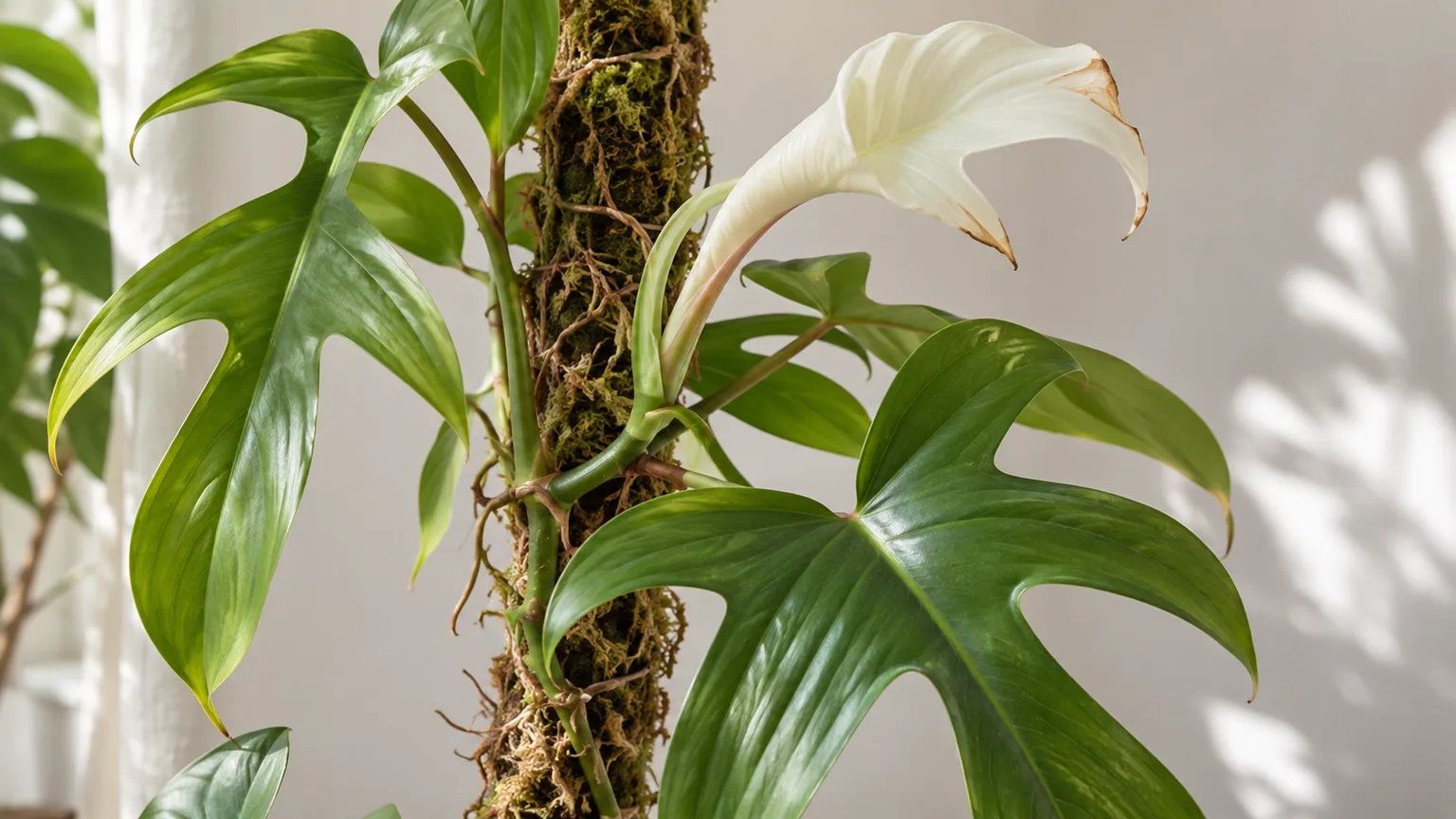
Low Humidity on Philodendron Florida Ghost: Causes, Checks & Fixes
This guide covers low humidity on Philodendron Florida Ghost. See also the general Low Humidity guide, watering, and light pages for this plant.
Low Humidity on Philodendron Florida Ghost: Causes, Checks & Fixes
Quick answer
Low humidity on Philodendron Florida Ghost shows up first on the white unfurling leaves, which crisp at the edges, plus stuck new leaves and dry aerial roots on the moss pole. First, run a humidifier near the plant and hold 55–70% humidity for two weeks before changing anything else.
Ghost tolerates average home air the way most philodendrons do, but it does not thrive in it. Sustained air below 40–45% is where the pale new growth starts paying the price — and because every new Ghost leaf arrives white and fragile, that price shows fast.
What low humidity looks like on Florida Ghost
For how dry air stresses houseplants in general, see our low humidity guide. On Florida Ghost, the pattern usually shows up as papery tan edges on the palest, newest leaves first, while older green leaves still look acceptable.
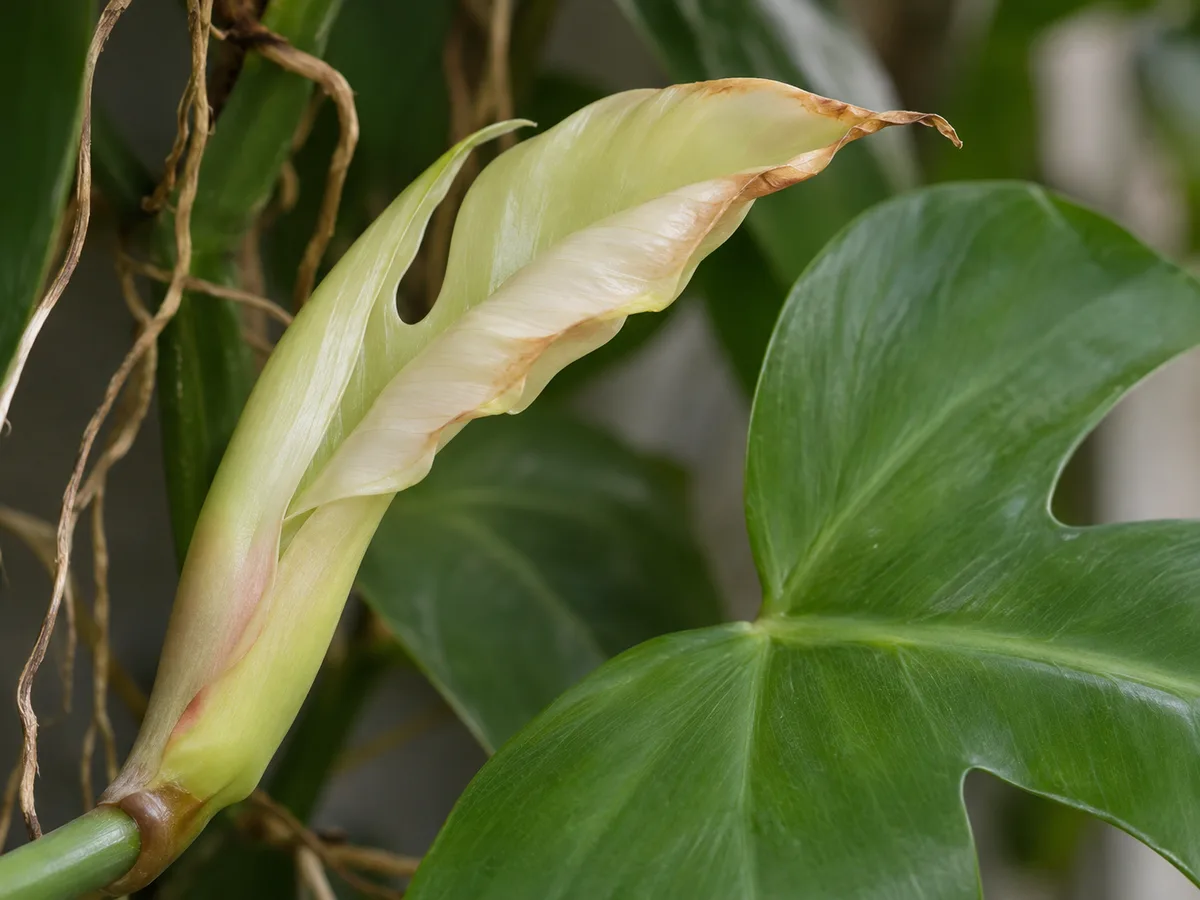
Dry air often crisps the soft white leaf edges before older green foliage shows stress.
Watch the unfurling leaf at the growth tip — it is the plant’s humidity gauge. In dry air it opens slowly, may stick inside its sheath, and emerges with crisped margins or a browned tip. Ghost’s foliage is pure white when young, and that pale tissue loses moisture faster than it can be replaced when the air is dry, so edges desiccate while the leaf is still soft.
The climbing stem tells the same story. Aerial roots reaching for the moss pole shrivel and turn brown instead of gripping, and the pole itself dries within hours of wetting. Established green leaves may cup or curl slightly inward — the leaf reducing its exposed surface — before any browning appears.
Why Ghost feels dry air first
Three traits of this cultivar stack the odds against it in dry rooms. First, the white new leaves carry little chlorophyll, so they photosynthesize weakly and have less energy to repair moisture stress while they harden off. Pale tissue is simply thinner armor than a mature green blade.
Second, Ghost is a climbing hybrid of two climbing species, and climbers feed partly through the air. In the humid forests its ancestors come from, aerial roots drink from moist air and damp bark between rains. In a heated living room at 30% humidity, those same roots desiccate, and the growth tip they serve slows down with them.
Third, the moss pole most Ghosts grow on is a humidity battery that dry air drains. A pole that stays lightly damp buffers the stem zone beautifully; in dry, heated air it wicks dry within hours and starts pulling moisture away from the stem instead. Clemson notes that high humidity is ideal for philodendrons even though they tolerate the low humidity of most homes — Ghost lives exactly in that gap between surviving and thriving.
How to confirm the cause
Read the air and the pattern together before treating. Run these checks in order:
- Measure at leaf level. Put a cheap hygrometer beside the foliage for a day, not across the room. Sustained readings below 45% with crisping on the newest, palest leaves is a dry-air diagnosis. Readings above 55% with the same damage point elsewhere.
- Read which leaves suffer. Dry air hits white unfurling leaves and leaf margins first, with the mix possibly still moist. Underwatering browns green and white leaves alike and comes with a light pot and mix pulling from the rim.
- Check the pole and roots. A bone-dry moss pole plus shriveled aerial roots corroborate dry air. Mushy stems, yellowing lower leaves, or a sour-smelling pot point to root trouble instead — fix drainage before anything else. The soil guide covers the chunky aroid mix this plant needs.
- Map heat sources. Radiators, fireplaces, heating vents, and AC outlets create desert microclimates even in a humid room. A Ghost parked beside a winter vent can sit in 25% air while the rest of the flat reads 50%.
If only the single oldest, lowest leaf is crisping while new growth unfurls cleanly, that is usually natural aging — remove it and carry on.
The first fix to try
Set up a humidifier near the plant and hold 55–70% at leaf level. That is the whole first step — not a repot, not a feed, not a misting routine.
Place the humidifier a few feet away so fine mist does not settle directly on white leaves, and let it run consistently rather than in occasional blasts. The Spruce recommends aiming for around 70% relative humidity for this cultivar with a humidifier nearby. Hold the new regime for at least two weeks before judging — the current unfurling leaf may already be damaged, and you are really waiting to see how the next one behaves.
Step-by-step recovery
After the humidifier is running, work through these in order, one change at a time:
- Rewet the moss pole cycle. Soak the pole thoroughly so the climbing stem and aerial roots have a damp surface to grip. In dry rooms this may mean watering the pole itself every couple of days at first. NC State notes this species group prefers warm temperatures, high humidity with moist, well-drained conditions — the pole is part of that moisture system for a climber.
- Move it off the dry-air runway. Shift the pot away from vents, radiators, and drafty doors. Houseplant101 puts the ideal at 60% or higher while noting Ghost survives average home humidity — your job is simply to keep it out of the driest seat in the house.
- Steady the watering. Water when the top 3–5 cm of mix is dry, soaking until water runs from the drainage holes, then empty the saucer. Dry air plus missed waterings compound fast, because leaves losing water to the air need roots that can resupply it. The RHS explains that when air humidity is low, plants transpire quickly and risk wilting if roots cannot keep up. Full timing lives in the watering guide.
- Group or tray it for the margins. Clustering plants or setting the pot on a pebble tray adds a few percentage points around the foliage — the RHS lists both among its recommended humidity measures (RHS). Treat these as supplements to the humidifier, not replacements.
- Trim only what is dead. Cut fully crisp edges with clean scissors, following the leaf’s natural shape. Leave anything still white or green and supple — it is still working. Wear gloves when handling cut tissue, since philodendron parts contain calcium oxalate crystals that irritate skin and mouths (Clemson Cooperative Extension).
Recovery timeline
Crisped edges will not heal — that tissue is finished. Success looks like no new crisping within a week or two, then a fresh leaf that unfurls on schedule and hardens from white toward green without drying at the margins.
Expect one full leaf cycle, roughly three to six weeks in the growing season, before calling it fixed. Ghost is a slow cultivar, and winter growth barely moves — judge winter recovery by arrested damage, not by new leaves. If each successive new leaf still sticks or crisps, the humidity still is not holding at leaf level, or underwatering is compounding it. Re-run the confirmation checks rather than trimming harder.
Lookalike symptoms
- Underwatering. Light pot, dry mix deep down, leaves of all ages wilting or curling — plus crisping. Dry air alone leaves the mix moist. Often both are present in heated rooms; fix the air first, then tighten watering cadence.
- Fertilizer salt burn. Tips curl as they brown, a white crust rims the pot, and damage follows a recent feeding. Clemson notes excess fertilizer browns philodendron leaf tips — flush the pot deeply and withhold feed until growth resumes. Rates are covered in the fertilizer guide.
- Sun scorch on white leaves. Papery bleaching on the sun-facing side of pale leaves within days of a move toward bright glass, even with good humidity. Ghost wants bright but diffused light — filter it rather than dimming the whole spot. Placement is detailed in the light guide.
- Cold drafts. Water-soaked patches that turn papery after exposure to cold glass or drafts. NC State gives the comfortable band as 65 to 85 degrees Fahrenheit with protection from cold drafts — damage on the window-facing side after a cold night is cold, not dry air.
- Spider mites. Stippled, dusty leaves with fine webbing, thriving in the same dry air. Check leaf undersides with a lens; dry air invites them, so the humidifier helps on both fronts.
Mistakes to avoid
Do not mist white leaves several times a day and call it humidity — droplets on pale tissue in still air invite bacterial spot, and the lift in humidity vanishes within minutes. Do not seal the plant in a plastic bag or tiny cabinet to spike humidity without airflow; stagnant wet air rots the same growth tip you are trying to save. Do not fertilize a stressed Ghost to push new growth — feeding does not fix air, and salts deepen margin burn. And do not stack a repot, a hard prune, and a relocation on the same day; each is a separate stress, and you will not be able to read which change helped.
Florida Ghost care cross-check
Once the humidifier is holding, audit the routine behind it: water when the top 3–5 cm dries per the watering guide, bright filtered light per the light guide, chunky bark-based mix with drainage per the soil guide, and light monthly feeding at half strength in active growth per the fertilizer guide. Dry-air damage recurs fastest where watering is already erratic, because the roots cannot resupply what the leaves lose.
How to prevent it next time
Keep the humidifier on the plant’s schedule, not yours — indoor air collapses every time winter heating kicks in, and that is when Ghost crisps. Keep the moss pole on a regular wetting rhythm so the stem zone never fully desiccates, and keep the pot out of the direct path of vents and radiators year-round. Grouping with other tropicals smooths the daily swings. When growth resumes in spring, resume light feeding only while new leaves are actively pushing, and flush the pot occasionally so minerals never accumulate to burn level.
When to worry
Treat it as urgent if new leaves stall inside their sheaths across several growth points at once, aerial roots shrivel along the whole stem, crisping spreads leaf to leaf within days despite moist mix, or pests colonize the weakened foliage. Those signs mean the growth tip is desiccating or something compounding — unpot to check roots, stabilize humidity and watering immediately, and only then consider further treatment.
Related guides
Use this page for dry-air crisping on Florida Ghost — papery edges on white new leaves, stuck unfurling growth, and shriveled aerial roots. For the general mechanics of dry indoor air across houseplants, the hub link above is the reference; everything else here is Ghost-specific. For the routine behind prevention, use the watering guide for dry-down timing, the light guide for filtered-bright placement, the soil guide for mix and drainage, and the fertilizer guide for safe feeding rates.
Related tool
Use the Humidity Calculator to narrow causes for low humidity on this plant before changing multiple variables at once.