Not Enough Light on Philodendron Florida Ghost: Causes
Quick answer
On Philodendron Florida Ghost, the clearest sign of too little light is new leaves emerging green instead of ghostly white, plus stretched stems and smaller leaves. First step: move the plant to bright, indirect light near an east-facing window or sheer-covered south window and leave it there for several weeks so the growth tip can respond.
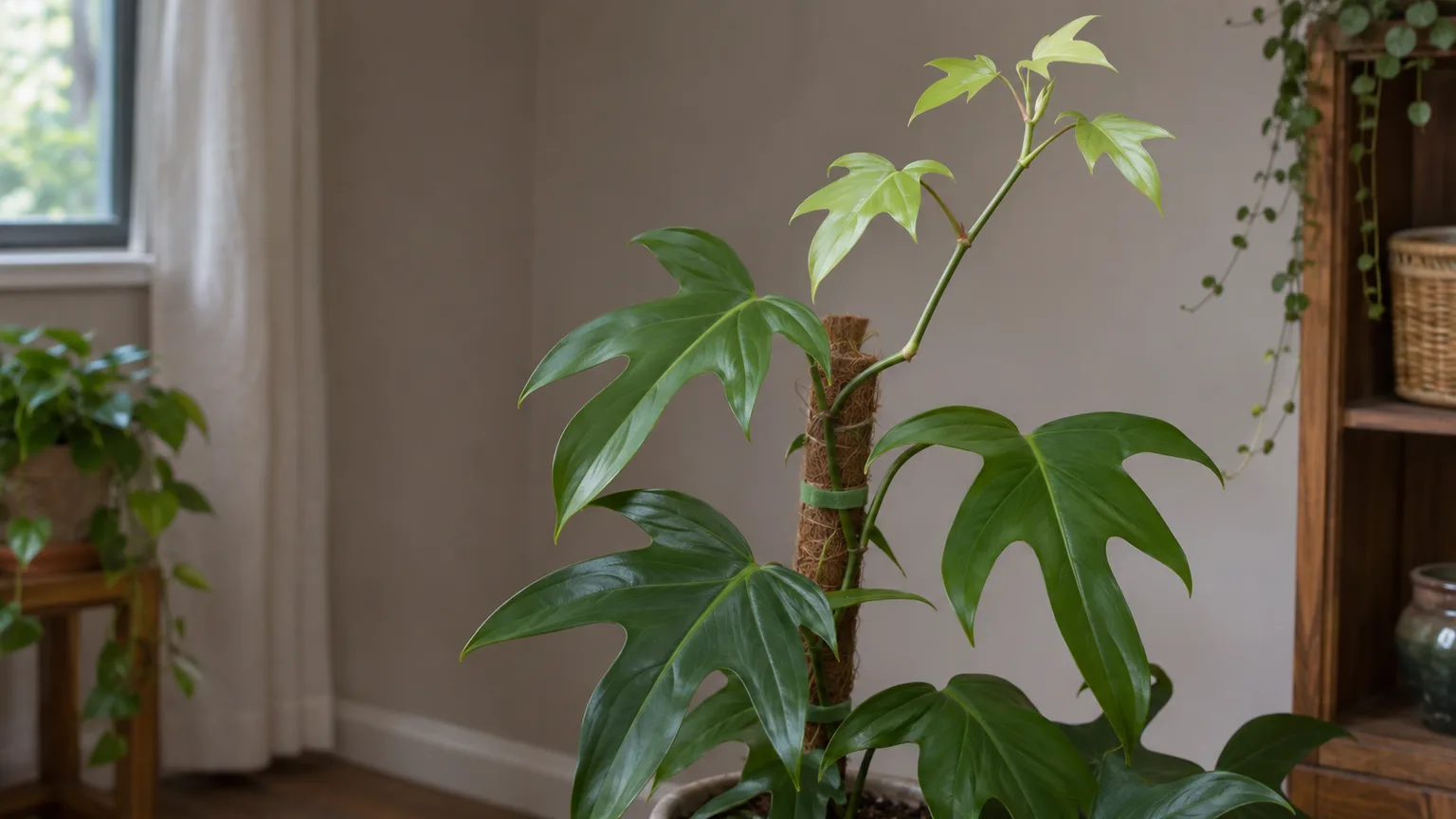
Not Enough Light on Philodendron Florida Ghost: Causes, Checks & Fixes
This guide covers not enough light on Philodendron Florida Ghost. See also the general Not Enough Light guide, watering, and light pages for this plant.
Not Enough Light on Philodendron Florida Ghost: Causes, Checks & Fixes
Quick answer
On Philodendron Florida Ghost, too little light shows first at the growth tip: new leaves emerge green instead of white, stems stretch with long gaps between leaves, and each new blade comes in smaller than the last. For how dim conditions weaken houseplants in general, see our not enough light guide. On Florida Ghost, the white-leaf clue makes the diagnosis unusually easy — if consecutive new leaves skip the ghost phase, light is almost always the reason.
First step: move the plant to bright, indirect light — near an east-facing window or behind a sheer curtain on a brighter window — and leave it undisturbed for several weeks so the tip can respond. Do not fertilize, repot, or prune yet; one placement change tells you more than a bundle of fixes.
What low light looks like on Florida Ghost
A well-lit Florida Ghost pushes out new leaves that are pure white or cream, then harden through lime-green to deep green as they age. In a dim spot, that sequence collapses: new leaves emerge minty or plain green, unfurl slowly, and sometimes stall half-open for a week or more. Because white young foliage maturing through lime-green to darker green is this cultivar’s signature, the missing ghost phase is the most reliable low-light signal on this plant.
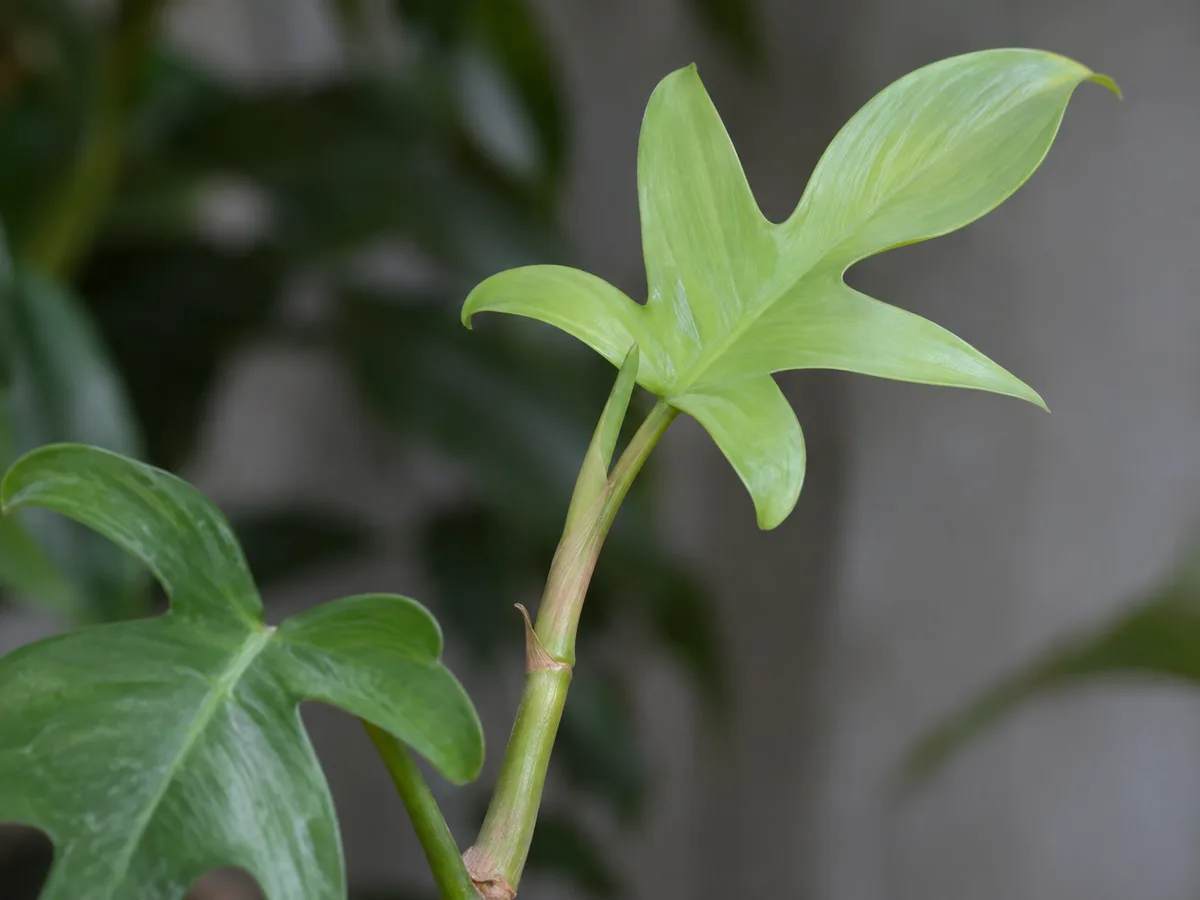
In low light, new Florida Ghost leaves may emerge green instead of starting white or cream.
The vine structure tells the same story. Internodes stretch, petioles reach sideways toward the nearest window, and the plant leans or sprawls off its moss pole instead of climbing tightly. Older leaves stay reasonably green while each new blade arrives smaller — a top-down decline that starts at the tip and works backward. That pattern matters: damage concentrated on the newest growth points to current conditions, not an old event.
Why Florida Ghost needs brighter light than green philodendrons
Florida Ghost is a climbing hybrid of Philodendron pedatum and Philodendron squamiferum, and it carries far paler new foliage than a plain heartleaf philodendron. Pale tissue holds less chlorophyll, so each new leaf needs strong filtered light to photosynthesize enough energy to expand and harden. A dark-green philodendron can coast in a dim corner; a Ghost pushing white leaves cannot.
Extension guidance puts it bluntly: of all indoor growth factors, adequate light matters most, because light drives the food production behind every new leaf — and under insufficient light, plants do not grow. On a Ghost, “not growing” looks like a tip that produces small green leaves at long intervals, or stops producing at all while older foliage looks fine. The plant is rationing: with little sugar coming in, maintenance of old leaves takes priority over new growth.
Dim light also slows water use, which is why this problem rarely travels alone. A vine in a dark corner drinks slowly, the chunky aroid mix stays wet for many days, and roots sit in damp conditions that invite rot. Low light and over-watering create favorable environments for soil-borne diseases indoors, so a light-starved Ghost with soggy mix faces two linked stresses, not one.
How to confirm low light is the cause
Work from the tip backward, and confirm the pattern before moving anything:
- Read the last three leaves. If two or three consecutive new leaves emerged green while older leaves show a white-to-green history, light dropped recently — perhaps a seasonal change, a move indoors, or a curtain that stays drawn.
- Measure the stretch. Compare internode gaps on the newest stem section against older sections. Clearly longer gaps plus smaller blades confirm the plant is reaching for light.
- Assess the window. Note direction and distance. A plant several feet from the glass, in a north-facing room, or behind heavy curtains receives a fraction of what sits in the sill. Northern exposures give the least indoor light year-round.
- Do the shadow check. Hold your hand a foot above the leaves at midday. A faint, blurry shadow means low light; a soft but defined shadow suits this plant. No shadow at all is too dark for a Ghost.
- Feel the mix. Push a finger into the top few centimetres. If the mix is still damp a week after watering and the tip shows the symptoms above, dim light plus excess moisture is the diagnosis — fix light first, and let the pot dry on its normal schedule.
If instead older leaves yellow from the base while the tip still pushes white leaves, suspect watering or roots rather than light, and inspect drainage before relocating the plant.
The first fix to try
Move the plant to bright, indirect light and leave it there. An east-facing window giving gentle morning sun is ideal; a south or west window works behind a sheer curtain that filters the harsh midday rays. Keep the moss pole and ties as they are — the goal is one change, so the next leaves tell you whether light was the cause.
Acclimate rather than shocking it. A Ghost that spent months in a dim corner scorches if thrown into strong sun in one day. Start it slightly back from the bright window or behind the sheer, then ease it closer over one to two weeks. Bright but indirect light is the standing advice for philodendrons precisely because direct summer sun burns their leaves.
Step-by-step light correction
Once the plant sits in its new spot, work through this order over the following weeks:
- Settle the position. Place the pot where it gets bright filtered light most of the day, out of direct midday sun. Growers aiming for the whitest new leaves often use the brightest indirect spot in the home, and some growers swear by grow lights to ensure the leaves start out white. If you use a grow light, keep a normal day-night rhythm rather than lighting around the clock.
- Clean the leaves. Wipe dust from both leaf faces with a damp cloth so the blades absorb the improved light fully. Dusty leaves in a brighter window still photosynthesize poorly, and the RHS lists occasional leaf wiping as part of keeping philodendrons in good light.
- Retie the vine. Fasten stretched stems loosely to the moss pole so new growth climbs upward into the light instead of sprawling sideways. Climbing philodendrons root into a damp pole and hold tighter internodes when supported.
- Water to the brighter spot. Better light means faster drinking. Return to the plant’s normal rhythm — soaking only once the top few centimetres dry — rather than the stretched-out schedule the dim corner imposed. Empty the saucer after each watering.
- Hold fertilizer. A light-starved plant has no nutrient deficiency; it has an energy shortage. Resume the normal monthly half-strength feed in spring only after the tip shows pale new growth.
Recovery timeline
Judge everything by the growth tip, not by existing leaves. Green leaves that already emerged will never bleach white — they will follow the normal path toward deeper green. Success looks like the next new leaf emerging paler than the last, unfurling faster, with a shorter stem gap behind it.
Expect the first responding leaf within four to eight weeks of the move in the growing season; winter moves answer more slowly. If three consecutive new leaves still emerge small and fully green after two months of genuinely bright filtered light, recheck: something may be blocking the light (dirty glass, a new awning, a taller building’s shadow), or roots damaged during the dim period may need attention. Only then consider unpotting to inspect roots.
Lookalike symptoms
Green new leaves do not always mean the current light is wrong:
- Normal maturing. Every Florida Ghost leaf greens with age — pure white when young, becoming lime-green and then darker green. One pale leaf turning green is normal; three green leaves in a row is not.
- Overwatering yellowing. Yellow, soft lower leaves with wet mix point to roots, even in decent light. Fix drainage and cadence rather than adding more light.
- Sun scorch. Crisp brown patches on white tissue after a sudden move mean too much direct sun, the opposite error. Filter the light instead of retreating to the dark corner.
- Pests. stippled, distorted, or sticky leaves with visible insects need pest treatment, not relocation. Check leaf undersides and the unfurling tip with a magnifier before blaming the window.
- Natural winter slowdown. Short days pause growth even in a good window. A resting tip with firm tissue needs patience and slightly less water, not a fertilizer rescue.
Mistakes to avoid
- Shoving it into direct sun. The fastest way to trade a light problem for a burn problem. Philodendrons as a group prefer bright indirect sunlight and scorch in direct rays; white Ghost tissue burns faster than green.
- Feeding a starving plant. Fertilizer cannot replace light energy, and salts in damp, dim mix stress roots further. Feed only actively growing plants in adequate light.
- Repotting on day one. A stretched vine rarely needs a new pot; it needs photons. Repot only if roots are circling, rotting, or the mix has collapsed — and even then, wait until the plant holds steady in better light.
- Chasing the sun daily. Dragging the pot between windows stresses the vine and makes the response unreadable. Pick the best bright indirect spot and commit for at least a month.
- Drowning the dim plant. Keep the soak-and-dry rhythm while light is poor; roots in cold wet mix fail faster than leaves in dim air.
How to prevent it next time
Give Florida Ghost the brightest indirect light in your home as its permanent station — an east window, a sheer-filtered south window, or a bright room position within a metre or two of the glass. Detailed placement ideas live in the Florida Ghost light guide. In winter, move it closer to the glass as days shorten, since the same window delivers far less light in December than in June.
Keep the routine boring: dust leaves when you water, keep the vine tied to its support, and water by finger-check rather than calendar. A plant that holds plump white-tipped growth, tight internodes, and a pot that dries on schedule is telling you the light is right. When spring growth surges, that is the moment for monthly feeding — not midwinter in a dark room.
When to worry
A Ghost holding firm green growth in moderate light is a cosmetic concern, not an emergency; reposition it and wait. Treat it as urgent if stems soften at the base, the tip stalls with blackened new tissue, or several leaves collapse within days — those signal root failure riding on top of the light shortage. In that case, check roots promptly, trim only clearly rotted material with clean tools, and reset the plant in fresh chunky mix in its brighter spot.
Related tool
Use the Light Requirement Calculator to match this plant to the right window and spot low-light placement before the next new leaf emerges green.