Slow Growth on Philodendron Majestic: Causes, Checks & Fixes
Quick answer
Philodendron Majestic naturally slows in fall and winter and after repotting or a move, but a stalled growth tip in a warm, bright season usually points to weak light at the vine tip, missing pole support, stressed roots, or underfeeding. First check the active tip, its filtered light, and root-zone moisture; correct the one cause the evidence fits before fertilizing or repotting.
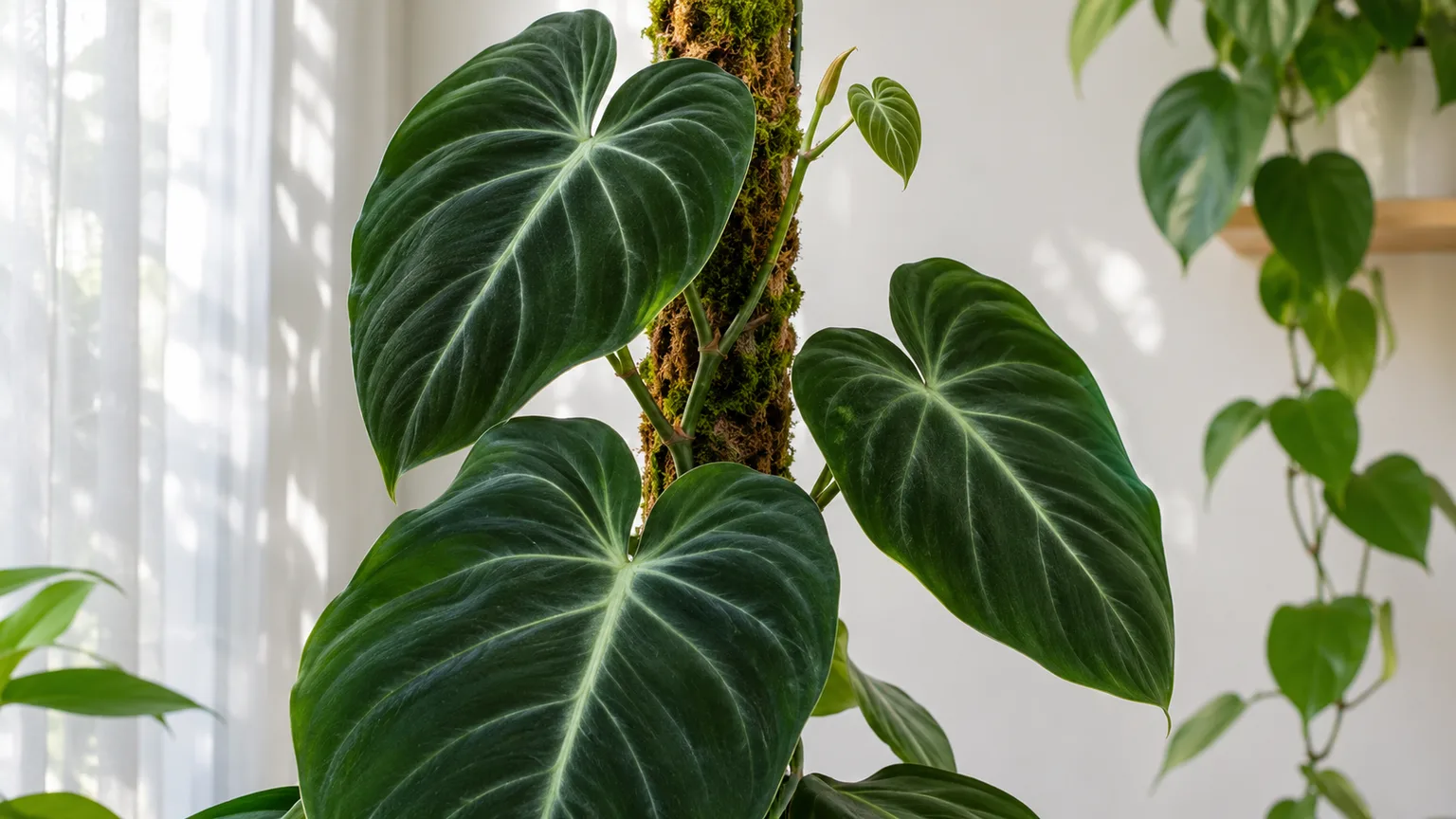
Slow Growth on Philodendron Majestic: Normal Pace or a Care Problem?
This guide covers slow growth on Philodendron Majestic. See also the general Slow Growth guide, watering, and light pages for this plant.
Slow Growth on Philodendron Majestic: Normal Pace or a Care Problem?
Quick answer
Philodendron Majestic is a moderate-to-fast climber when warm, bright, and well supported, and it predictably idles in fall and winter, after a repot, or while a new plant settles in. A stalled vine tip during the bright season is a different signal: it usually means the growth point is not getting enough usable light, the vine has no moist pole to root into, the roots are stressed from wet or compacted mix, or the plant has gone unfed through active growth.
Start with the active tip, not the oldest leaf. Note when the last leaf emerged, check the filtered light landing on the top of the vine, feel the mix a few centimetres down, and look at how the pot has been drying. Change one matching cause first. For the general mechanics of stalled houseplants, see the global slow-growth guide; the rest of this page interprets those mechanics on a velvet climbing Majestic.
What slow growth looks like on Philodendron Majestic
On a Majestic, slow growth means the climbing vine extends its tip and opens new leaves less often than it did under the same conditions, or new blades arrive progressively smaller than the plant’s own recent leaves. Because this hybrid sizes up foliage only when climbing conditions are right, a vine without support can look stalled even in good light: it keeps making small juvenile hearts while the tip creeps forward.
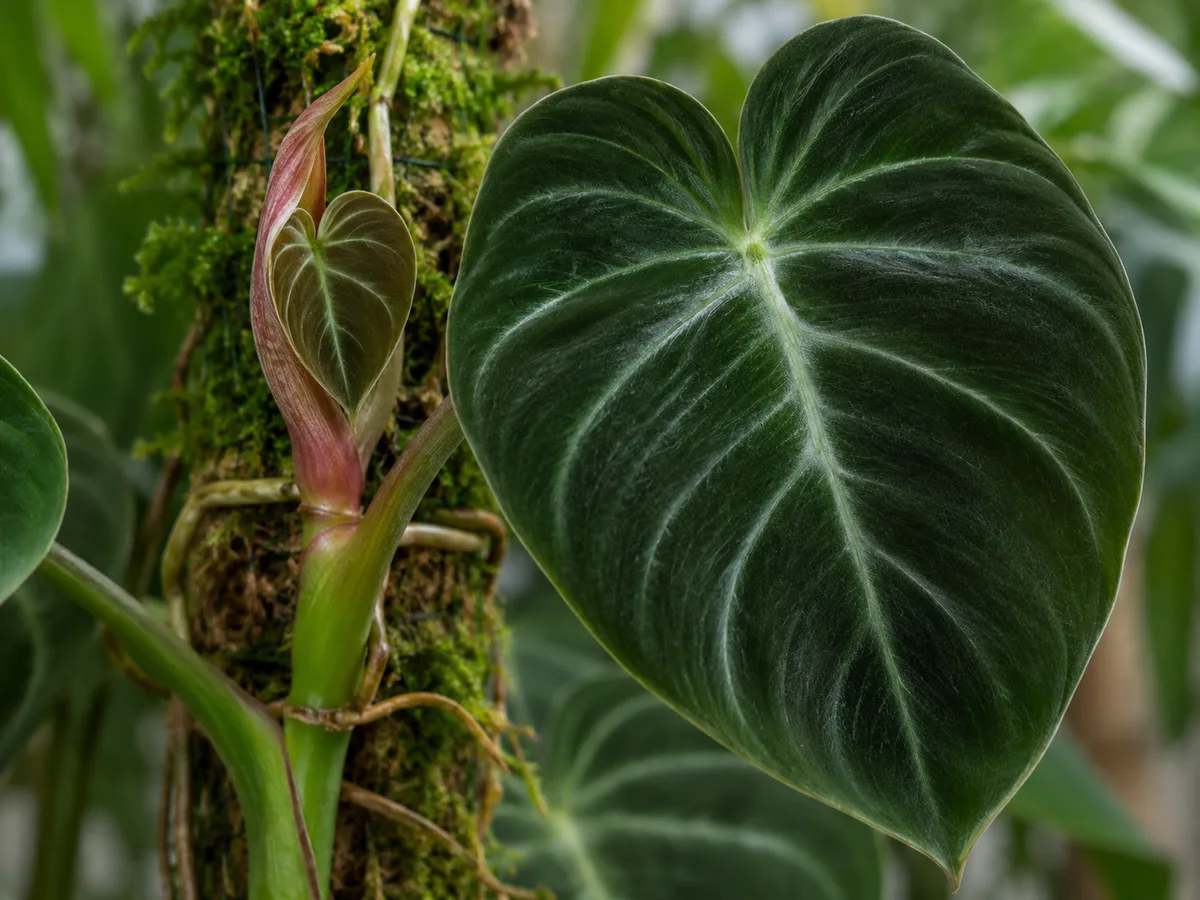
Compare new leaves with the plant’s own recent growth; smaller successive blades can signal a stall.
Follow the stem to its terminal growth point and look for a firm new cataphyll, a swelling sheath, or a short section of fresh stem. A leaf that is slowly separating from its sheath and opening is still progress; a tip that is soft, dark, dried out, or collapsed is damage, not patience. Compare the newest leaf against the two before it rather than against nursery photos, since juvenile Majestic leaves are small by design and only supported new growth shows whether the plant is truly sizing up.
When slow growth is normal and when it signals stress
A quiet spell is most likely ordinary when the stem is firm, the newest leaf is forming without fresh damage, older leaves hold their color, and the pot dries on its usual rhythm. Majestic-specific sources note that growth becomes slow through the fall and winter seasons, which matches the plant’s response to shorter days, weaker indoor light, and cooler windows. A recent arrival, a spring repot, or a move across the room can also pause the tip for weeks while roots re-establish; fix humidity and support before stacking other changes.
A care problem becomes more plausible when the pace change lines up with a second clue. Long gaps between leaves with the vine leaning hard toward the glass point to weak light. A pot that stays heavy and wet while lower leaves yellow suggests roots are struggling for air. Fine webbing or stippling on velvet undersides means spider mites rather than a feeding issue. New leaves that shrink while light and water look right raise the question of nutrition, especially if the plant has gone unfed through the growing season.
Why Majestic stalls: the usual causes in order
Weak filtered light at the vine tip
Insufficient light is the most common brake. Clemson Extension notes that too little light can yellow lower leaves and kill off growing tips, and that most philodendrons want indirect or curtain-filtered sunlight rather than a dim corner. Majestic adds a placement trap: the pot may sit in a bright-looking room while the climbing tip grows up into a shadow above the window line or behind a curtain. Judge light where the newest leaf unfurls, not at the pot rim, and use the Majestic light guide to place the top of the vine.
No moist pole to climb
Majestic is a vigorous climber whose aerial roots are meant to grip a support, and the RHS notes that climbing philodendrons can be trained onto a moss pole into which they root if kept moist. A vine dangling from a dry stake or trailing over the pot edge keeps producing small juvenile leaves no matter how good the window is. This is one of the plant-only causes that separates Majestic from rosette or self-heading philodendrons: without root contact on a textured, lightly moist pole, the tip has little reason to size up.
Wet, compacted, or cold roots
A chunky aroid mix that has broken down, a pot without drainage, or a nursery pot sitting in a water-filled cachepot keeps roots wet long after watering. Soggy mix drives root rot, and a damaged root system cannot push new leaves even in bright light. Cold compounds the stall: the plant grows best around 18–27°C and should stay well above 15°C, since cold stress slows growth and damages foliage. Check the Majestic soil guide when the pot stays heavy many days after a soak.
An unfed growing season or a root-bound pot
A Majestic that has grown actively for a year or more in the same mix without feeding may simply be hungry; The Spruce notes that a philodendron short on food grows slower than normal with smaller leaves. Conversely, a plant fed repeatedly with no response may be sitting in accumulated salts or a root mass that has filled the pot. Repotting every one to two years in spring suits this hybrid, but only when inspection supports it. Feeding and repotting are last in this order for a reason: they cannot fix dim light or wet roots.
How to confirm the cause
Work through these checks in order and write down what you find before changing anything.
- Read the season and the tip. Note when the last leaf emerged and whether the room has become darker or cooler. A winter pause with firm tissue and a sound root zone needs patience, not fertilizer.
- Measure light at the growth point. Watch the top leaves through the day. Long internodes, small new blades, and a vine leaning toward glass support a light diagnosis. If light is clearly weak, move the pole nearer filtered brightness gradually rather than into harsh midday sun.
- Feel the mix and lift the pot. Probe the top 3–5 cm and compare the pot’s weight just after watering with its weight days later. Sour smell, persistently heavy mix, or water pooling in the saucer points to drainage and root health, covered in the Majestic watering guide.
- Inspect the pole and aerial roots. Are aerial roots gripping a textured, lightly moist support, or dangling in air beside a smooth dry stake? A loose or dry pole explains small leaves on an otherwise healthy vine.
- Scan for pests on velvet. Check leaf undersides, petiole joints, and the folded sheath with bright light for webbing, moving specks, or cottony clusters. Velvet hides early spider mite damage well, so look closely before concluding the plant is merely resting.
- Review feeding and pot history last. Record the last feed, the product and dilution, and the last repot. Hunger fits only when light is adequate, roots are sound, and the plant has grown actively without food through spring and summer.
The first fix to try
Make the one correction with the clearest matching evidence. If the vine reaches toward a dim window and the mix dries normally, improve filtered light at the supported tip first: bring the pole nearer a bright east window or sheer-filtered south glass, or add a grow light on a timer. If the pot stays wet, prioritize drainage and root health over light moves or fertilizer. If pests are visible, isolate and identify them instead of feeding. If the only change is a slower pace in a darker season with every other sign steady, hold the care pattern rather than forcing a response.
Do not move, repot, prune, and fertilize together. Stacked changes hide which condition mattered and can stress a plant that needed only patience or brighter placement.
Step-by-step recovery
Once the first fix is in place, let the plant answer before adding more. A light correction should produce a firmer active tip and a new cataphyll within a few weeks; a moisture correction should make the pot’s dry-down predictable again. If the pole was the gap, moisten the support at watering time, tuck aerial roots gently against it, and tie stems loosely at the nodes without forcing brittle sections.
Feed only when the evidence points to hunger: adequate light, sound roots, active growth, and no feed through the growing season. The RHS recommends feeding philodendrons through April to September with a general houseplant fertiliser, and Majestic growers typically use a balanced liquid at reduced strength monthly in spring and summer, withholding it in fall and winter. Follow the product label, never apply concentrated feed to dry mix or compromised roots, and stop if leaf tips crisp or a salt crust appears. The Majestic fertilizer guide covers routine feeding; this page is not a deficiency diagnosis.
Recovery timeline
Judge recovery from new growth, not old leaves. Velvet blades that stayed small will not enlarge later, and scorched or dulled patches will not regain their sheen. Improvement looks like a firm tip, a cleanly opening cataphyll, and new leaves holding their size. A vine recovering from a repot or root trouble may pause longer than the first visible improvement suggests; avoid repeated unpotting to check.
If each new leaf keeps shrinking, several leaves yellow in sequence, the stem base softens, or the pot stays wet and heavy, recheck the first diagnosis with a focused root inspection. A vine with no firm viable node may not recover whole, though a healthy stem section with a node can sometimes be propagated as a backup.
Mistakes to avoid
Do not fertilize first because the plant is slow. Nutrients do not create light, attach a vine to a pole, repair rotted roots, or remove pests, and extra fertilizer on stressed roots can add salt injury. Do not water on a calendar schedule when the pot is still heavy, and do not repot into a much larger container without evidence the roots need room; a large volume of wet mix dries even more slowly. Do not cut healthy leaves to “encourage” growth, since removing sound foliage removes the leaf surface the plant needs to power the next leaf.
When to use this page vs other Majestic guides
Use this page when the main concern is the pace of new leaves or vine extension without a clear spot, pest, or rot symptom yet. When placement itself is the question, the Majestic light guide goes deeper on windows and grow lights. When the pot stays wet or smells sour, the Majestic soil guide and watering guide address the root zone. For routine feeding once growth resumes, use the Majestic fertilizer guide, and start from the Majestic overview for whole-plant context.
How to prevent it next time
Keep a short log for this vine: where the pole stands, which way the tip faces, when each leaf appears, and how many days the pot takes to lighten in each season. A photo of the same node every few weeks shows whether the pace is seasonal or followed a move, repot, or watering change. Keep the top of the vine in bright filtered light, the pole lightly moist so aerial roots stay attached, humidity near 60–75% so cataphylls open cleanly, and feeding inside the active season only. Recheck position and pot behavior as daylight shifts; a June placement often needs to move closer to glass or gain supplemental light by midwinter.
Related Philodendron Majestic guides
Use the overview for whole-plant context, the light guide for placement, the watering guide for dry-down rhythm, the soil guide when drainage or mix structure is unclear, and the fertilizer guide for routine feeding.
Related tool
Use the Plant Growth Rate Calculator to estimate a realistic growth pace for this Majestic from its light, season, and setup before changing more than one condition.