Low Humidity on Philodendron Silver Sword: Causes, Checks &
Quick answer
Low humidity shows on Philodendron Silver Sword as crispy brown leaf margins, dull silver finish, smaller new leaves, and new spears that stick while unfurling. First step: place a small humidifier near the plant and hold room humidity at 55-70% for two weeks before changing anything else.
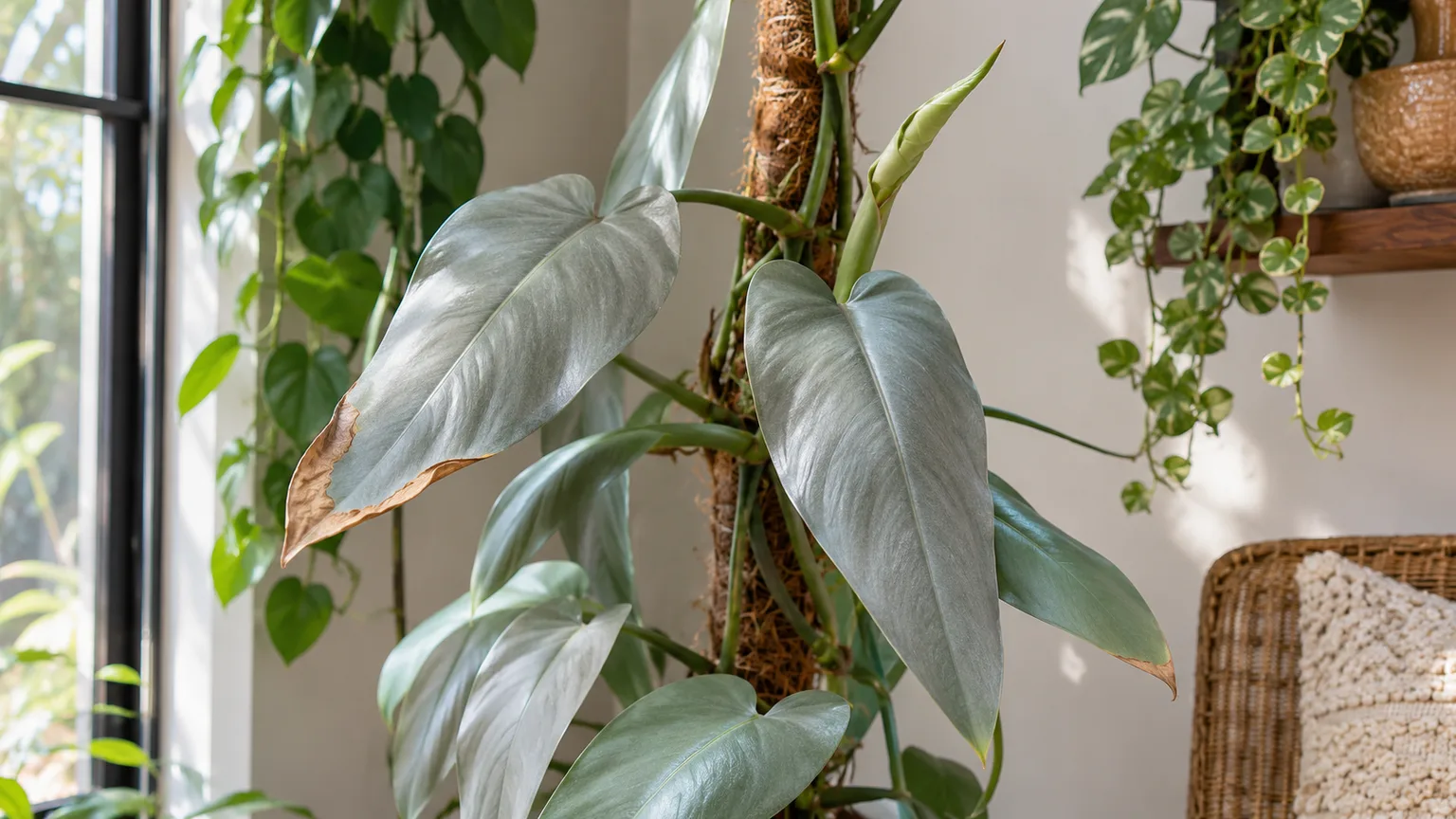
Low Humidity on Philodendron Silver Sword: Causes, Checks & Fixes
This guide covers low humidity on Philodendron Silver Sword. See also the general Low Humidity guide, watering, and light pages for this plant.
Low Humidity on Philodendron Silver Sword: Causes, Checks & Fixes
Quick answer
Low humidity shows on Philodendron Silver Sword as crispy brown leaf margins, a dulling silver finish, smaller new leaves, and new spears that stick or tear while unfurling. First step: place a small humidifier near the plant and hold room humidity at 55-70% for two weeks before changing anything else.
For how dry air stresses houseplants in general, see our low-humidity guide. On Silver Sword, the pattern is distinctive because its thin, metallic blades and climbing habit make dry air damage show fast and in specific places.
What low humidity looks like on Silver Sword
Healthy hastatum leaves are smooth, sword-shaped blades with a metallic silver-blue sheen and copper-toned reverses on mature foliage. When the air stays too dry, the wide flat blade loses water faster than the roots can replace it, and the thinnest tissue dies first.
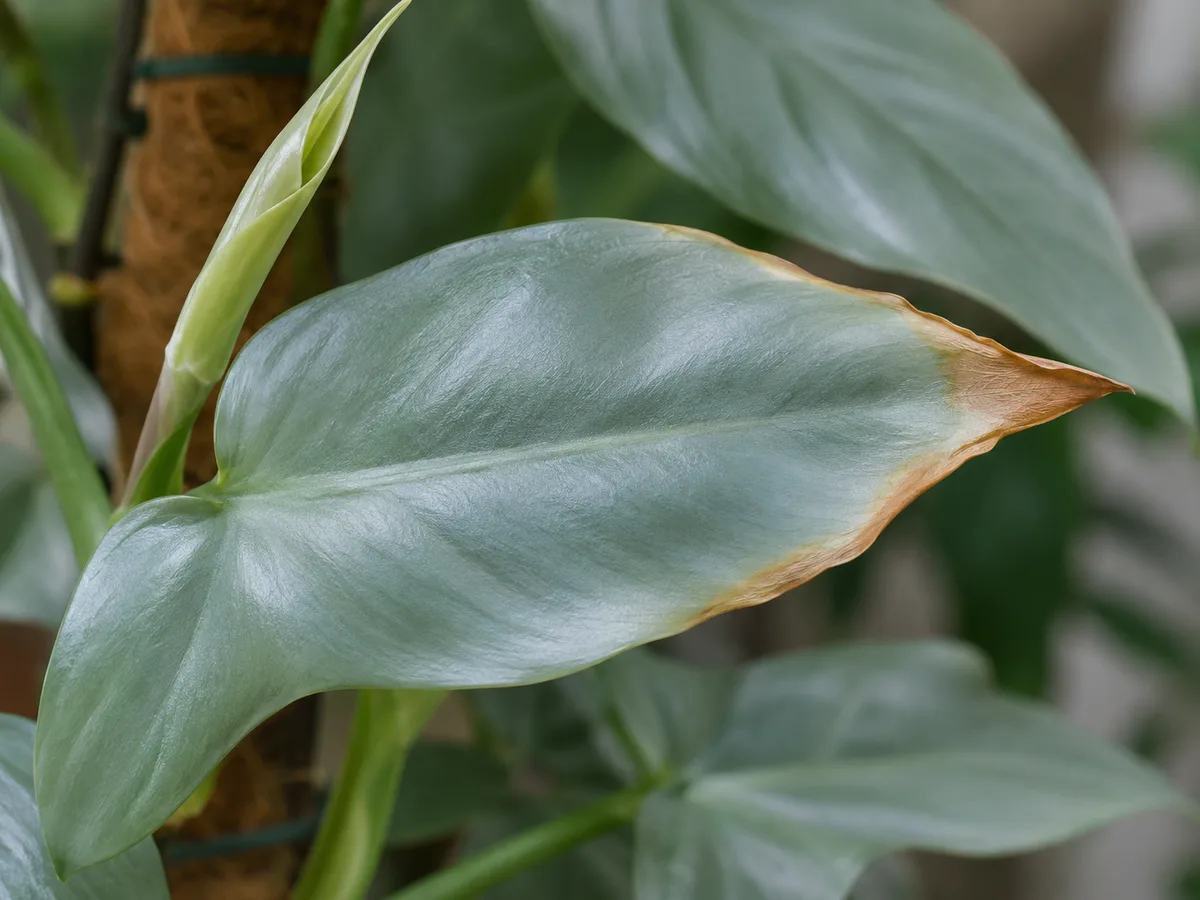
Dry air first crisps the thin leaf margins and can leave the newest spear stuck while it unfurls.
Expect brown, papery edges and tips that start at the leaf margin and creep inward. The silver finish goes dull and dusty-looking rather than glossy. New leaves emerge noticeably smaller than the last one, and the newest spear may stall half-unfurled, sometimes tearing along the stuck edge as it forces itself open. Older lower leaves usually look fine while the damage concentrates on new growth and exposed leaf margins near heat vents or sunny windows.
Why Silver Sword suffers in dry air
Philodendron hastatum comes from the warm, humid rainforest understory of Southeast Brazil, where it climbs tree trunks in constantly moist air. Indoors it grows best around 65 to 85 degrees Fahrenheit with high humidity, so a heated living room at 25-35% relative humidity in winter is far outside what its foliage is built for.
Three Silver Sword traits make it more sensitive than an average pothos. Its broad, thin blades have a large surface area that transpires heavily. As a true climber, it keeps pushing soft new spears at the vine tip, and that tender unfurling tissue desiccates first. And growers commonly mount it on a dry coir or moss pole that wicks moisture away from aerial roots instead of supplying it, compounding the stress at exactly the point where new leaves form.
How to confirm the cause
Buy or borrow a hygrometer and set it at leaf level, not across the room. Readings consistently below 40-45% alongside crispy margins point to dry air. Silver Sword genuinely thrives above 60% and starts showing trouble below 40 percent, with crispy edges and stalled growth as the signature.
Cross-check the watering rhythm before blaming the air. Push a finger into the mix: if the top few inches dry normally between waterings and the pot is not constantly soggy or bone-dry, the roots are likely fine and the air is the variable. Flip two or three leaves and inspect the undersides with your phone flashlight for stippling or fine webbing, which would implicate spider mites instead. Dry-air damage plus a clean soil rhythm plus no pests equals a humidity diagnosis.
First fix for Silver Sword
Put a small cool-mist humidifier within a few feet of the plant and hold the air around it at 55-70%. Refill it daily and run it steadily rather than in occasional blasts. This single change resolves most mild cases, and growers who added a humidifier near the plant report glossier, more metallic foliage within weeks.
Change nothing else for two weeks. Keep the watering schedule described in the Silver Sword watering guide exactly as it was, so you can read whether the crisping stops and new growth improves.
Step-by-step recovery
If a humidifier alone is impractical, layer these secondary steps in order:
- Group the Silver Sword with other tropical plants so their collective transpiration raises local humidity.
- Set the pot on a pebble tray with water below the pebble tops, keeping the pot base out of the water.
- Move it to a bright bathroom with a window for winter, where shower steam keeps air moist.
- Keep the plant away from radiators, heat vents, and cold drafts, which both dry the air and scorch margins.
- Wipe the blades with a soft damp cloth every couple of weeks so the silver sheen stays visible and pests are spotted early.
Do not compensate for dry air by watering more often. Hastatum rots in heavy mix kept wet, and soggy soil plus dry air produces yellow mushy leaves on top of crispy ones.
Keep the moss pole lightly moist
This step is Silver Sword-specific. A dry pole is a dead pole: aerial roots touching bone-dry coir or sphagnum get no moisture and the vine tip keeps pushing growth into dry air. Lightly mist or pour water down the pole itself once or twice a week so it stays faintly damp, not dripping. A moss pole or trellis that stays lightly moist anchors aerial roots and buffers the newest spear against dry room air.
If the vine has outgrown its pole and the tip dangles a foot above the support, extend the pole before doing anything else. New leaves only reach full size while the plant is actively climbing.
Freeing a stuck unfurling spear
Silver Sword spears that stall half-open in dry air are the most common panic moment with this plant. Do not pull the leaf open with your fingers; the tissue tears and scars permanently. Instead, raise local humidity around the spear by running the humidifier closer for a few days, and let it finish on its own. If the spear has been stuck for more than two weeks and the outer sheath is browning, raise humidity first and only then ease the sheath with damp fingertips. A freed leaf with a small tear will still photosynthesize fine.
Dry air invites spider mites on this plant
Spider mites love Silver Sword in dry winter air, and their early stippling hides well against silvery foliage. NC State lists spider mites among the key pests to monitor on hastatum. While humidity is low, inspect leaf undersides and the joints where petiole meets blade every week or two. If you find fine webbing or stippled dots, rinse the foliage in the sink, raise humidity, and treat with insecticidal soap, repeating until two consecutive inspections come back clean. Raising humidity discourages mites but does not cure an active infestation on its own.
What not to do
Do not mist heavily every day and leave the leaves wet overnight. Misting gives only a brief humidity bump and wet foliage overnight invites fungal leaf spots, so a humidifier or pebble tray beats a spray bottle. Do not fertilize a crisping plant to push new growth; feed only lightly during active growth once new leaves emerge clean. And do not repot on day one. Dry air is an atmosphere problem, and disturbing the roots adds a second stress the plant must recover from at the same time.
Recovery timeline
Crispy margins never heal, so judge progress by what is new. Within one to two weeks of steady 55-70% humidity, existing leaves should stop browning further and the current spear should finish unfurling. Over the next month, expect two to three new leaves at full size with clean edges. Philodendrons tolerate ordinary household humidity without dying, so a plant that only crisped at the margins typically resumes normal vining quickly. If new leaves keep emerging small or stuck after a month of good humidity, recheck light levels and whether the roots have filled the pot.
Lookalike symptoms
| What you see | More likely | How to tell |
|---|---|---|
| Soft yellow leaves plus wet, heavy soil | Overwatering | Pot feels heavy days after watering; stems soften at the base. Recheck the watering guide first. |
| Uniform brown tips on many plants at once | Salt or fertilizer buildup | Even tip burn with white crust on the soil surface; flush the pot. |
| Stippled silvery dots plus fine webbing | Spider mites | Damage hides on silvery foliage; check undersides with a flashlight. |
| Pale stretched stems, small leaves, dull silver | Too little light | Whole plant reaches toward the window; see the light guide. |
| Black patches after cold nights by glass | Cold draft damage | Sudden collapse after a cold snap, not gradual crisping. |
How to prevent it next time
Silver Sword wants moderately humid air at minimum, with 55-70% the practical indoor target through the heating season. Set up the humidifier in autumn before the heating comes on rather than after damage appears. Keep the plant in a chunky aroid mix per the soil guide so steady watering and steady humidity work together instead of fighting each other. One hygrometer at leaf level, checked when you water, catches every future dry spell while it is still invisible.
When to worry
Treat it as routine if only leaf margins crisp and new growth continues. Escalate if several spears in a row emerge deformed, if the vine tip blackens and stops extending, or if stippling and webbing confirm spider mites. A vine tip that has died back entirely will usually branch from the next node down once humidity is corrected, so even a rough winter rarely kills an established plant.
Related Silver Sword guides
- Silver Sword overview — full care profile and whether this climber fits your space.
- Silver Sword watering — use this when soil rhythm, not air, is the suspect.
- Silver Sword light — use this when growth is leggy and silver tone fades alongside crisping.
- Silver Sword soil — use this when the mix stays soggy or dries rock-hard between waterings.
Related tool
Use the Humidity Calculator to narrow causes for low humidity on this plant before changing multiple variables at once.