Drooping Leaves on Philodendron Splendid: Causes, Checks &
Quick answer
Drooping leaves on Philodendron Splendid are most often thirst in a fast-drying chunky mix or wet feet in a mix that stayed soggy. Lift the pot and feel the top 3–5 cm: light and dry means a deep soak; heavy and damp means drain it, add airflow, and leave the roots alone until it dries.
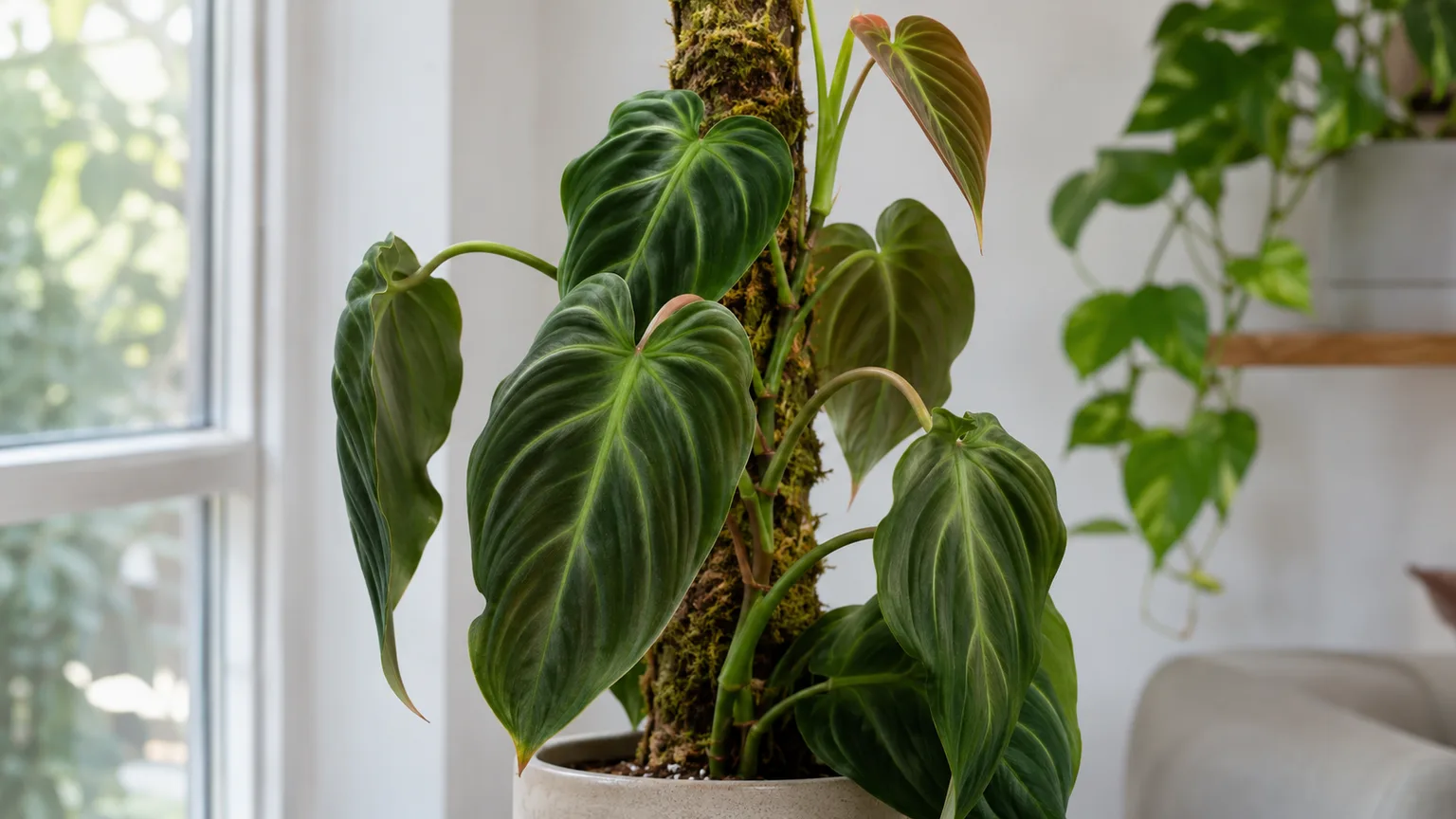
Drooping Leaves on Philodendron Splendid: Causes, Checks & Fixes
This guide covers drooping leaves on Philodendron Splendid. See also the general Drooping Leaves guide, watering, and light pages for this plant.
Drooping Leaves on Philodendron Splendid: Causes, Checks & Fixes
Quick answer
Drooping leaves on Philodendron Splendid are most often thirst in a fast-drying chunky mix or wet feet in a mix that stayed soggy. Lift the pot and feel the top 3–5 cm: light and dry means a deep soak; heavy and damp means drain it, add airflow, and leave the roots alone until it dries.
For the general mechanics of why leaves lose turgor and flop, see our drooping leaves hub. On Splendid specifically, read the droop together with the moss pole, the velvet leaf texture, and the climbing tip — those three tell you more than the soil alone.
What drooping looks like on Philodendron Splendid
Splendid is a velvet-leafed climbing hybrid, a cross of Philodendron melanochrysum and Philodendron verrucosum grown for its dark elongated blades, pale veining, and copper-toned new growth. When it droops, the big blades go limp and hang from softened petioles instead of holding themselves out from the vine, and the velvet surface looks dull rather than plush.
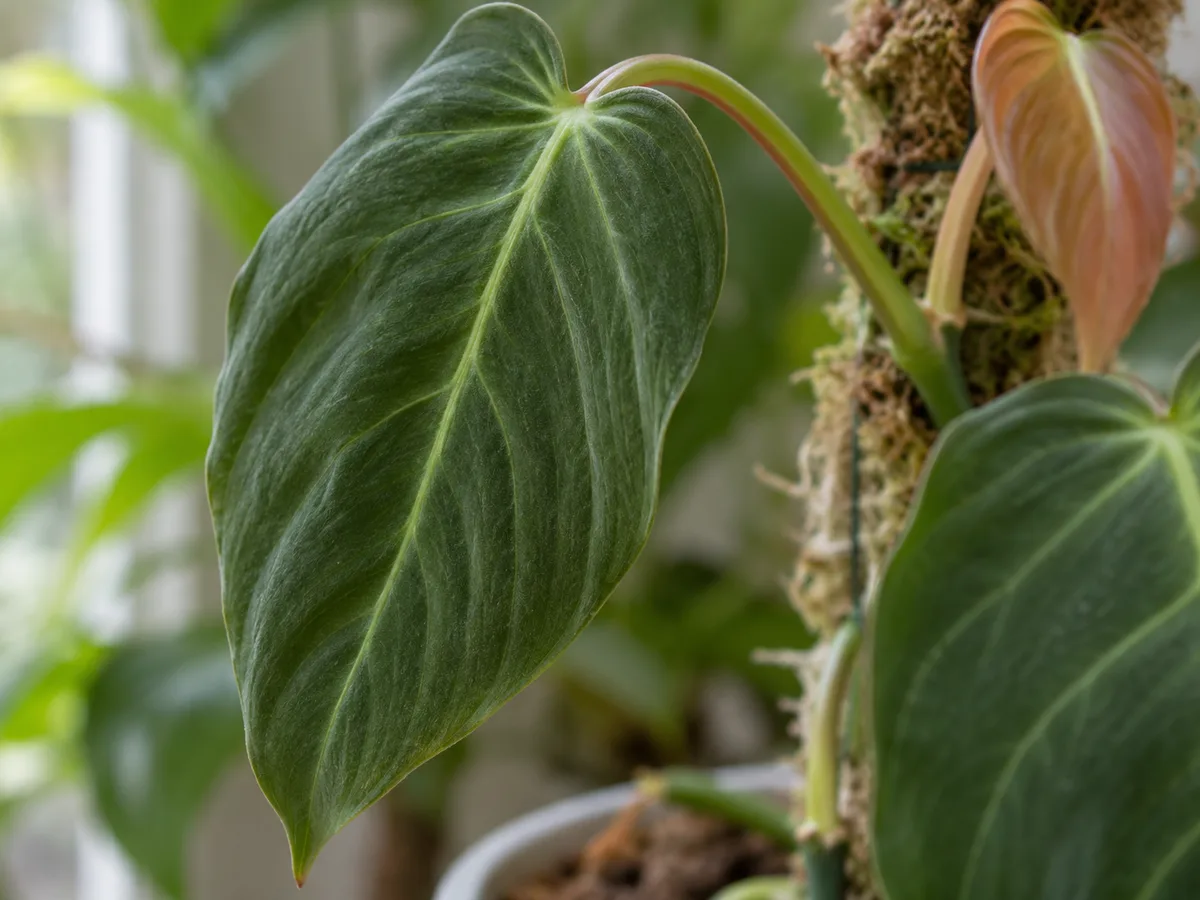
Droop softens the petioles and lets the broad velvet blades hang instead of holding out from the climbing vine.
Watch the climbing tip above all else. A firm tip with drooping older leaves usually means a passing water or humidity wobble. A soft or stalled tip with droop spreading downward means the root zone or the stem itself is in trouble, and the plant needs a hands-off recovery rather than another drink.
New copper leaves are an honest progress meter. If fresh growth keeps emerging with good colour while older leaves sag, the plant is still functioning. If new leaves stall, emerge small, or get stuck half-unfurled, the droop is part of a bigger stress pattern, often low humidity or failing roots.
Why Splendid droops: the four usual causes
1. The chunky mix dried out faster than expected
Splendid grows in an open aroid mix of potting mix, perlite, and orchid bark that drains fast by design. In warm weather or bright light that mix can go from moist to dry in days, and the broad velvet blades lose water quickly once it does. This is the kindest cause: the whole plant sags evenly, the pot feels light, and the top centimetres crumble dry.
Splendid-specific guidance is to allow the mix to dry about halfway down the pot between waterings, and this plant tolerates a missed watering far better than a soggy week. If your routine still follows a summer calendar while the plant sits in weaker autumn light, the schedule itself becomes the problem in the other direction — covered in the next section.
2. The mix stayed wet and the roots started failing
The same open mix turns against the plant when water collects in the saucer, the pot has no drainage, or watering stays on a fixed calendar through a slow-growth spell. Roots starved of air stop delivering water, so the leaves droop exactly as if thirsty — the classic trap where a second watering finishes the plant off.
Connecticut’s plant health handbook describes the pattern on philodendron: root rot brings gradually yellowing lower leaves that brown and drop alongside poor overall vigor and general decline, and the same source notes bacterial leaf spot can collapse petioles so affected leaves fold and fall. Heavy pot, damp sour mix, and soft stem bases confirm this cause. If stems at the base feel mushy or smell off, stop watering entirely and read the recovery section before touching the roots.
3. The moss pole dried out and the canopy is running on vine reserves
Splendid is a climber, not a self-supporting bush, and mature plants feed partly through aerial roots gripping the support. Climbing philodendrons do best trained onto a moss pole they can root into when it is kept moist, and a pole left bone-dry for weeks effectively cuts off part of the plant’s water system. The signature is droop concentrated in the upper leaves near a shrunken, detached section of vine while the potted base looks acceptable.
This cause is easy to miss because the pot check reads normal. Run your hand down the pole: dry, crispy moss with aerial roots waving in the air instead of embedded in it confirms the diagnosis. Plants recently moved, repotted, or re-tied often droop this way while their aerial roots reattach.
4. Cold shock, dry air, or a sudden move
Splendid wants steady warmth and humid air. Commonwealth guidance for the genus is to keep plants above 15°C in bright indirect light, away from cold draughts and hot radiators, and Splendid’s thin velvet blades punish violations faster than a glossy green philodendron would. A night against cold glass, a blast of air-conditioning, or a move from a humid cabinet to a dry living room can flop the whole plant within a day.
Low humidity adds a tell: leaf edges crisp while blades sag, and new leaves get stuck in their cataphylls instead of sliding out clean. Dry-air droop without root trouble still perks up with correction, but stuck new growth that rots in the sheath needs removing once the air is fixed.
How to confirm the cause
Work in this order so one check does not contaminate the next.
- Lift the pot. Light for its size with dry mix at 3–5 cm deep means thirst. Heavy with damp mix means excess water — do not water “to test.”
- Smell and feel the drainage. Sour smell, algae on the surface, or water pooling in the cachepot points at root-zone failure rather than simple thirst.
- Check the pole. Damp moss with embedded aerial roots rules out cause 3. Dry crispy moss with loose aerial roots confirms it, especially when upper leaves droop most.
- Squeeze the stems. Firm stems with limp blades suggest water or air stress. Soft, waterlogged stem bases or a mushy climbing tip mean rot or cold damage — hands off, no repot today.
- Review the last two weeks. Repotting, moving rooms, a cold night, heating switched on, or a missed watering round each point at their matching cause. Droop that started within a day of an event is usually that event.
Clemson Extension’s baseline for the genus is soil kept evenly moist but never soggy or standing in water, with night temperatures around 65–70°F and days 75–85°F. Measure your plant against that standard rather than against other houseplants with finer or fleshier roots.
The first fix to try
Do exactly one thing first: correct whatever the pot check told you.
If the pot is light and the mix is dry, give one thorough soak — water slowly until it runs freely from the drainage holes, empty the saucer completely after 15 minutes, and lightly moisten the moss pole so the aerial roots can drink too. Then stop. Most thirst-drooped Splendids start lifting within hours and look normal by the next day.
If the pot is heavy and damp, the first fix is subtraction, not addition: tip out standing water, remove the nursery pot from any cachepot, set the plant in gentle airflow in bright indirect light, and do not water again until the top centimetres actually dry. Resist unpotting on day one — torn roots on a stressed velvet aroid set recovery back further than patience does.
Step-by-step recovery
Follow this sequence only after the first fix, giving each step a day or two to show a response.
- Reassess after 24–48 hours. Perked blades and a firm tip mean the diagnosis was right; resume normal care. No change means re-check moisture before doing anything else.
- Stabilise the climb. Re-tie loose sections to a lightly moist pole with soft ties, guiding aerial roots against the moss without burying the stem. A securely attached vine sizes up its leaves instead of spending energy dangling.
- Fix the air, not just the water. Raise humidity toward the 60–70% this hybrid prefers, with airflow so damp velvet foliage does not sit still in weak light. A pebble tray, a grouped plant corner, or a cabinet all work; daily misting of velvet leaves does not, since beaded water on plush blades invites spot diseases.
- Inspect roots only if decline continues. If more leaves yellow, stems soften, or the mix stays wet for a week, slide the root ball out to look: white firm roots go straight back in, while brown mushy ones get trimmed with clean tools before repotting into fresh chunky mix. Wear gloves for this job — philodendron sap can irritate skin, and every part of the plant is listed as toxic to cats, dogs, and horses through insoluble calcium oxalates.
- Prune for shape only at the end. Remove fully browned or rotted leaves once new growth resumes, cutting back to firm tissue. Leave half-damaged leaves that are still green — they are still photosynthesizing for the recovery.
Recovery timeline
Thirst droop is fast: visible lift within hours, full posture within one to two days. Pole-related droop is slower, improving over one to three weeks as aerial roots reattach and new leaves emerge properly supported.
Root-zone recovery runs longest. Expect two to four weeks before the plant holds new posture reliably, and judge progress by the climbing tip and the newest leaf, not by old damaged blades. Old velvet leaves that crisped, browned, or went translucent will not re-inflate — recovery means the damage stops spreading and each new copper leaf unfurls cleaner than the last.
Lookalike symptoms
Droop is a posture problem, and several issues mimic it on velvet foliage.
- Natural vine flop vs stress droop. A healthy long vine leaning for support has firm stems and perky blades; a stressed plant has limp blades on softened petioles. The first wants a taller pole, the second wants diagnosis.
- Pest wilt. Spider mites and mealybugs stipple and weaken velvet leaves until sections sag. Check leaf undersides and axils with a lens — moving specks, webbing, or cottony clusters mean pests are driving at least part of the droop.
- Fungal leaf spot. Small rust-coloured spots that spread in damp still air look different from plain droop and need airflow and affected-leaf removal rather than watering changes.
- Normal old-leaf retirement. One lowest leaf yellowing and flopping while the tip grows strongly is routine turnover, not a rescue case. Whole-plant or tip-involved droop is never routine.
If the picture still does not fit after these comparisons, use the symptom-level guidance linked in the quick answer before changing anything else.
Mistakes to avoid
- Watering on suspicion. A second soak into an already heavy pot is the fastest way to convert mild stress into root rot.
- Fertilizing a drooping plant. Feeding stressed roots burns them; Splendid only wants half-strength balanced feed in active spring and summer growth, never as a rescue tonic.
- Repotting on day one. Fresh mix and torn roots compound shock. Repot only for confirmed rot or collapsed soil structure, and only after the plant stabilises.
- Misting velvet leaves to raise humidity. Beaded water on plush blades in weak light encourages fungal spotting. Humidify the air, not the leaf surface.
- Chasing the droop around the room. Moving the plant daily between window, bathroom, and cabinet adds shock on top of stress. Pick one bright indirect spot with stable warmth and leave it there to recover.
How to prevent it next time
Anchor Splendid care to its own rhythm, documented in the Philodendron Splendid overview and the watering guide. Water when the top 3–5 cm dries and the pot feels lighter — roughly every 7–10 days in summer, stretching to 10–14 days in winter — and always empty the saucer. Full pot-weight technique lives in the watering guide linked below; the light guide keeps leaves sizing up instead of stretching, and the soil guide covers keeping the chunky mix open over time.
Keep the moss pole lightly and consistently moist during growth so aerial roots stay embedded, and refresh or extend the pole at repot time rather than mid-crisis. Hold humidity in the 60–80% band with gentle air movement, keep temperatures steady and well above 15°C, and quarantine and inspect new aroids so pests never get the chance to weaken those velvet blades.
When to worry
Treat droop as urgent when several leaves collapse at once, stem bases turn soft or translucent, the climbing tip goes mushy, or decline follows a cold night. Those signs mean rot or cold injury rather than simple thirst.
Give up on individual leaves that are fully brown, mushy, or dried crisp — they will not recover. Give up on the whole plant only when the stem base and every node are soft and brown with no firm tissue left to cut back to. Anything with one firm node and a sound stem base can still restart, slowly, under stable care.
Related Philodendron Splendid guides
- Philodendron Splendid overview — full care profile: light, water rhythm, humidity, and moss-pole culture in one place.
- Watering guide — use when the pot-weight check is ambiguous or droop keeps recurring on a schedule.
- Light guide — use when droop comes with leggy stretched growth or shrinking new leaves.
- Soil guide — use when the mix stays wet for days, compacts, or smells sour.
Related tool
Use the Drooping Leaves Diagnosis Tool to rank the likely cause for your plant’s droop before changing more than one variable at a time.