Root Rot on Philodendron Splendid: Causes, Checks & Fixes
Quick answer
Root rot on Philodendron Splendid usually starts when its chunky aroid mix stays wet too long and roots suffocate. Unpot the plant and check the roots first: white and firm means hopeful, brown and mushy means trim. Cut away all rotted roots with a sterilized tool and repot into fresh chunky mix.
Root Rot on Philodendron Splendid: Causes, Checks & Fixes
This guide covers root rot on Philodendron Splendid. See also the general Root Rot guide, watering, and light pages for this plant.
Root Rot on Philodendron Splendid: Causes, Checks & Fixes
Quick answer
Root rot on Philodendron Splendid almost always traces back to a root zone that stays wet too long. This hybrid wants its chunky mix to dry in the top 3–5 cm between drinks, so a pot that stays heavy for days is the earliest warning. First step: slide the plant out of its pot and inspect the roots. Firm, pale roots mean adjust care and watch; brown, mushy, sour-smelling roots mean trim with a sterilized tool and repot into fresh mix.
For the general mechanics of how chronic wet mix damages roots, see our root rot guide. On Splendid, the pattern usually shows up first as yellowing lower leaves plus a wilt that watering does not fix.
What root rot looks like on Philodendron Splendid
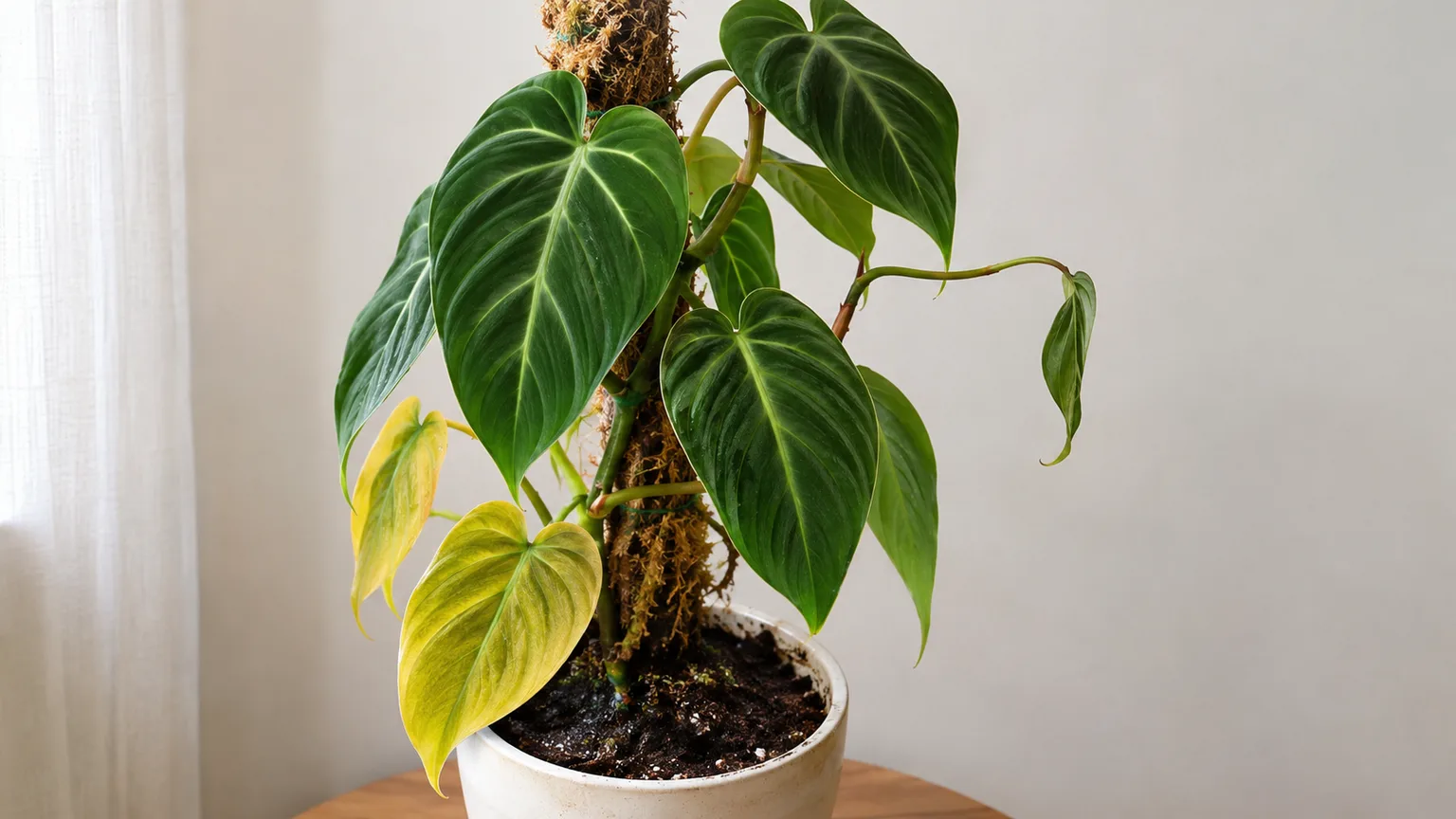
On this velvet climber, root rot rarely announces itself at the roots first, because they are hidden in the pot. What you see is a thirsty-looking plant sitting in damp mix: lower leaves yellow and soften, new copper-toned leaves stall or emerge small, and the vine feels limp at the climbing tip. Stems may turn soft near the soil line and pull away easily, which is a late and serious sign.
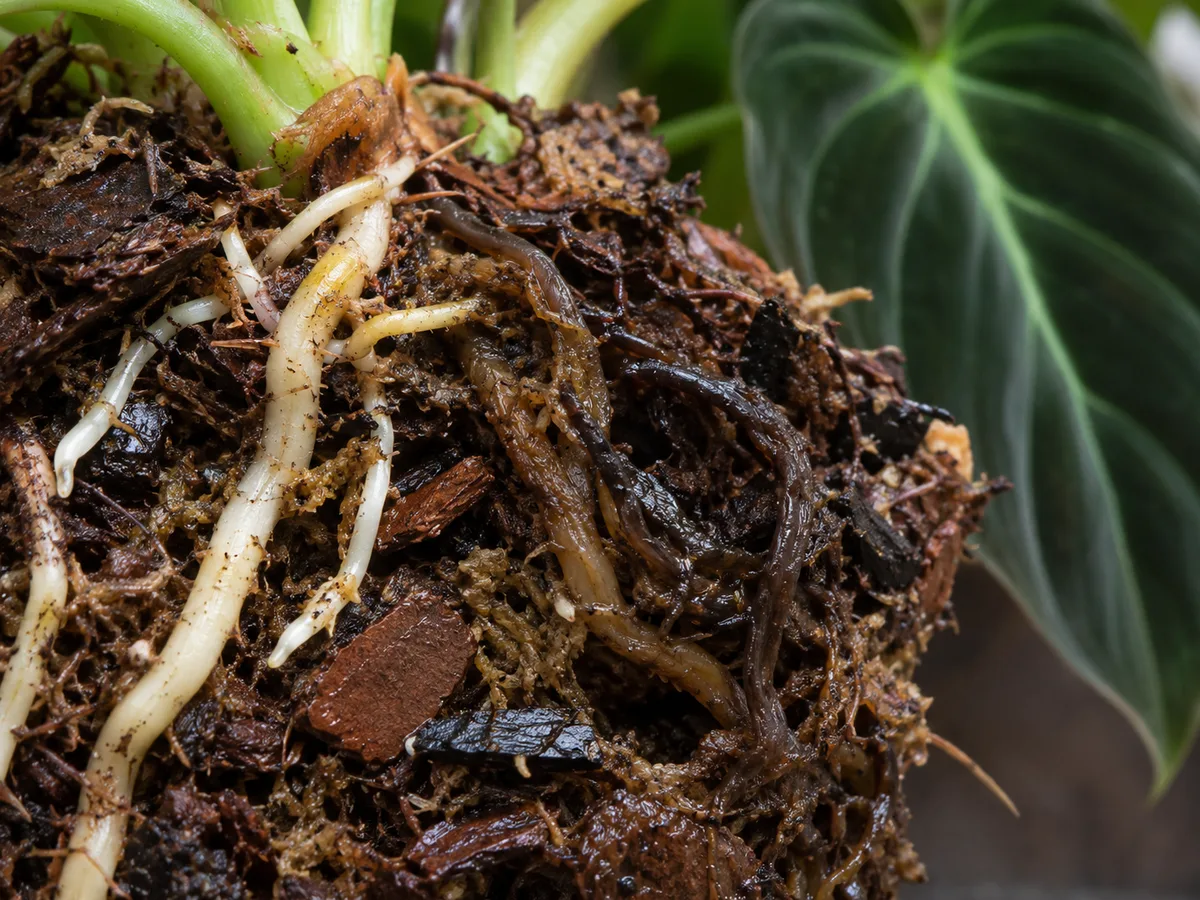
Rotted roots are brown, soft, and stringy beside the pale firm roots of healthy tissue.
The signature Splendid detail is the mismatch. A healthy plant holds its elongated velvet leaves firm on the moss pole; a rotting one droops while the mix is still wet. That combination — wilt plus wet soil — separates root rot from underwatering more reliably than leaf color alone.
Why a moss-pole velvet climber rots differently
Splendid is a verrucosum × melanochrysum hybrid that climbs rather than crawls, and that habit shapes its rot risk. Growers keep it on a moss pole so aerial roots can grip, which means water arrives from two directions: the pot mix below and the damp pole above. If both stay saturated — a moisture-retentive pole plus dense potting soil — the stem base sits in a wet collar where fungi thrive.
Its velvet leaves add a second trap. They demand 60–80% humidity for clean unfurling, so owners often mist heavily or run humidifiers while keeping light modest. Humid air slows evaporation from the pot, so a watering schedule that worked in a bright room becomes too frequent in a dim, humid corner. The roots then sit wet while the leaves look like they want more moisture, and extra watering makes it worse.
How to confirm the cause
Work in this order so you disturb the plant only as much as needed.
- Lift the pot. A healthy Splendid pot gets noticeably lighter as the top centimeters dry; a heavy pot days after watering points at the root zone, not the leaves.
- Finger-test the mix to the second knuckle and sniff the drainage holes. Sour or rotten-egg odor plus soggy mix is strong evidence of decay.
- Check the stem base and lowest nodes. Firm and green is reassuring; soft, dark, or translucent tissue means rot has reached the stem.
- If two or more of these point the wrong way, unpot. Shake and rinse the mix off under lukewarm water and examine every root: firm and pale is alive, while dark strands that feel mushy or slide off to a thin thread are dead.
Philodendrons in general decline fast once roots sit waterlogged, with yellow soggy leaves and eventual collapse (GardenForIndoor rescue steps). On Splendid, treat simultaneous wilt and wet mix as guilty-until-proven-innocent and confirm with the unpot check rather than another week of watching.
The first fix to try
Unpot and inspect the roots — that single action decides everything else. Root rot cannot be diagnosed or fixed from above the soil, and guessing with extra water or fertilizer only feeds the problem. Ease the root ball out, rinse it, and sort firm roots from mush under good light.
If you find a mix of healthy and rotted roots, trim every mushy root back to firm tissue with scissors wiped with rubbing alcohol, then repot into fresh chunky aroid mix as described in the Splendid soil guide. If nearly all roots are gone but the stem and a node with a growth point are still firm, skip repotting the corpse and go straight to the node-cutting rescue below.
Step-by-step recovery
- Unpot, rinse, and trim. Cut all brown, black, or mushy roots to clean firm tissue, sterilizing the tool between cuts. Removing dead tissue matters because rot organisms such as Pythium water molds spread inward from damaged root tips.
- Let the cuts air-dry for 30–60 minutes in bright indirect light. Do not apply fertilizer or seal cuts with wax.
- Repot into fresh chunky mix — potting mix plus perlite plus orchid bark — in a pot with drainage holes, sized to the remaining root ball rather than the old pot. Oversized pots hold the wet reservoir that caused the problem.
- Water lightly once to settle the mix, then empty the saucer completely and do not water again until the top 3–5 cm dries. Follow the rhythm in the Splendid watering guide rather than a calendar.
- Park the plant in bright indirect light with gentle airflow, keep humidity moderate rather than tropical-wet while it has few working roots, and hold all fertilizer until new growth looks healthy for at least two weeks. Details on placement are in the Splendid light guide.
Checking stem base, nodes, and aerial roots
Splendid gives you extra diagnostic tissue that bushy philodendrons lack, so use it. Squeeze the stem base gently between thumb and finger: it should feel turgid like a fresh green bean. Soft or sunken patches at the soil line mean rot has moved from roots into stem, and any section that feels hollow or weeps should be cut back to firm green tissue.
Follow the vine upward node by node. Nodes that are plump with firm aerial-root nubs are viable rescue material even if the pot roots are gone. Aerial roots that are silver-white and firm are alive; ones that are brown and slimy get trimmed. When the climbing tip is still firm and the newest leaf, however small, looks clean, the plant has enough living growing points to rebuild from.
Node-cutting rescue when the root system is gone
Sometimes trimming leaves almost nothing — a bare stem with a few good nodes. That is not necessarily the end for a climbing aroid, because each node can root independently. Cut the vine into sections so each has one firm node plus a leaf where possible, discarding any soft or discolored stem between them. Root-rot specialists describe trimming away damaged roots and starting over in fresh medium as the standard salvage when decay is extensive.
Lay or pin the cuttings on damp (not wet) sphagnum or perlite in a ventilated propagation box under bright indirect light, and air it daily. Roots typically emerge from the node in two to four weeks; move each cutting to chunky mix once roots reach a few centimeters. Full propagation technique is covered in the Splendid propagation guide.
Recovery timeline
Judge progress by new activity, not by old leaves recovering — yellowed or softened leaves will not turn perfect again. Within one to two weeks after trimming, the remaining foliage should stop yellowing and the stem base should feel firm rather than soft. Fresh root tips and a new leaf spike usually follow within four to eight weeks in warm conditions.
Slow or absent regrowth past two months, especially with continued softness at the base, means decay is still active. Re-inspect the roots once; if rot has returned, the mix is still too dense or watering too frequent, and a second trim into even chunkier mix plus a smaller pot is the honest next step.
Lookalike symptoms
| What you see | More likely | How to tell |
|---|---|---|
| Wilt with dry, light pot and crispy leaf edges | Underwatering | Mix pulls from pot sides; watering perks leaves within hours |
| Yellow lower leaves but roots firm and white | Natural aging or light hunger | Oldest leaves only; new growth normal; see the Splendid overview for growth habit |
| Droop plus tiny webs or stippled velvet leaves | Spider mites | Fine webbing and pale speckling on leaf undersides, roots healthy |
| Wilting in wet mix with fungus gnats hovering | Overwatering heading toward rot | Gnats breed on constantly damp surfaces; roots may still be firm — dry-down now prevents rot |
| Wilt with mushy brown roots and sour soil | Root rot | Confirmed only by the unpot root check |
Mistakes to avoid
Do not fertilize a freshly trimmed Splendid — salts stress open root wounds and the plant cannot use nutrients until it regrows uptake tissue. Do not repot into the same old mix “to save money”; the pathogens and fine compacted particles come with it. And do not stack surgery, a bigger pot change, pesticide drenches, and a new pole all on day one — one targeted rescue, then stable conditions so you can read the response.
A common Splendid-specific mistake is keeping the moss pole sopping while the pot roots recover. Mist the pole lightly so aerial roots stay alive, but let the pot cycle through its dry-down; the recovering root ball needs air more than the pole needs soaking.
How to prevent it next time
Prevention is pot physics plus light. Keep Splendid in a chunky bark-and-perlite mix that water runs through freely, always with drainage holes, and size the pot to the root ball at each repotting. Water on finger-test, not schedule: the top layer should dry slightly between waterings, which for Splendid means roughly the top 3–5 cm indoors.
Light is the hidden lever. Philodendrons kept in bright indirect light use water steadily and dry on schedule, and climbing types like Splendid’s relatives grow best around 18°C to 27°C, while a plant pushed into a dim corner to “raise humidity” stays wet and invites the fungi behind most houseplant root decay. Bright indirect light, a pot that lightens between drinks, and an emptied saucer prevent the vast majority of repeat cases — the same drainage-first logic behind why soggy soil turns roots waterlogged applies doubly to velvet climbers on poles.
When to worry
Most early cases caught at the yellow-leaves-plus-heavy-pot stage are fixable with one trim and repot. Escalate when the stem base is soft over several centimeters, when rot returns after a proper rescue, or when no firm node remains for cuttings. A Splendid with a fully soft stem base and no viable nodes has nothing left to rebuild from, and replacing it is the reasonable call.
Severity note: This issue is marked medium for Philodendron Splendid — a triage clue, not a guarantee. Early root-zone rot is very recoverable; stem-base rot is much harder.
Related tool
Use the Root Rot Risk Checker to narrow causes for root rot on this plant before changing multiple variables at once.
Related Philodendron Splendid guides
- Splendid watering guide — use when the pot never seems to dry and you need the dry-down rhythm.
- Splendid soil guide — use when the mix stays soggy or compacts; pick the chunky aroid recipe.
- Splendid light guide — use when a dim spot keeps the pot wet; fix placement so the mix cycles properly.
- Splendid repotting guide — use when the plant is root-bound, the pot has no drainage, or rescue needs a smaller clean pot.
- Splendid propagation guide — use when roots are gone and node cuttings are the rescue path.