Brown Tips on Philodendron Splendid: Causes, Checks & Fixes
Quick answer
Brown tips on Philodendron Splendid most often mean dry indoor air below the 60-70% humidity this velvet climber prefers, often combined with fertilizer salt buildup or a moss pole left dry while the pot stays wet. First step: raise humidity around the plant with a humidifier and flush the pot with plain room-temperature water until runoff runs clear.
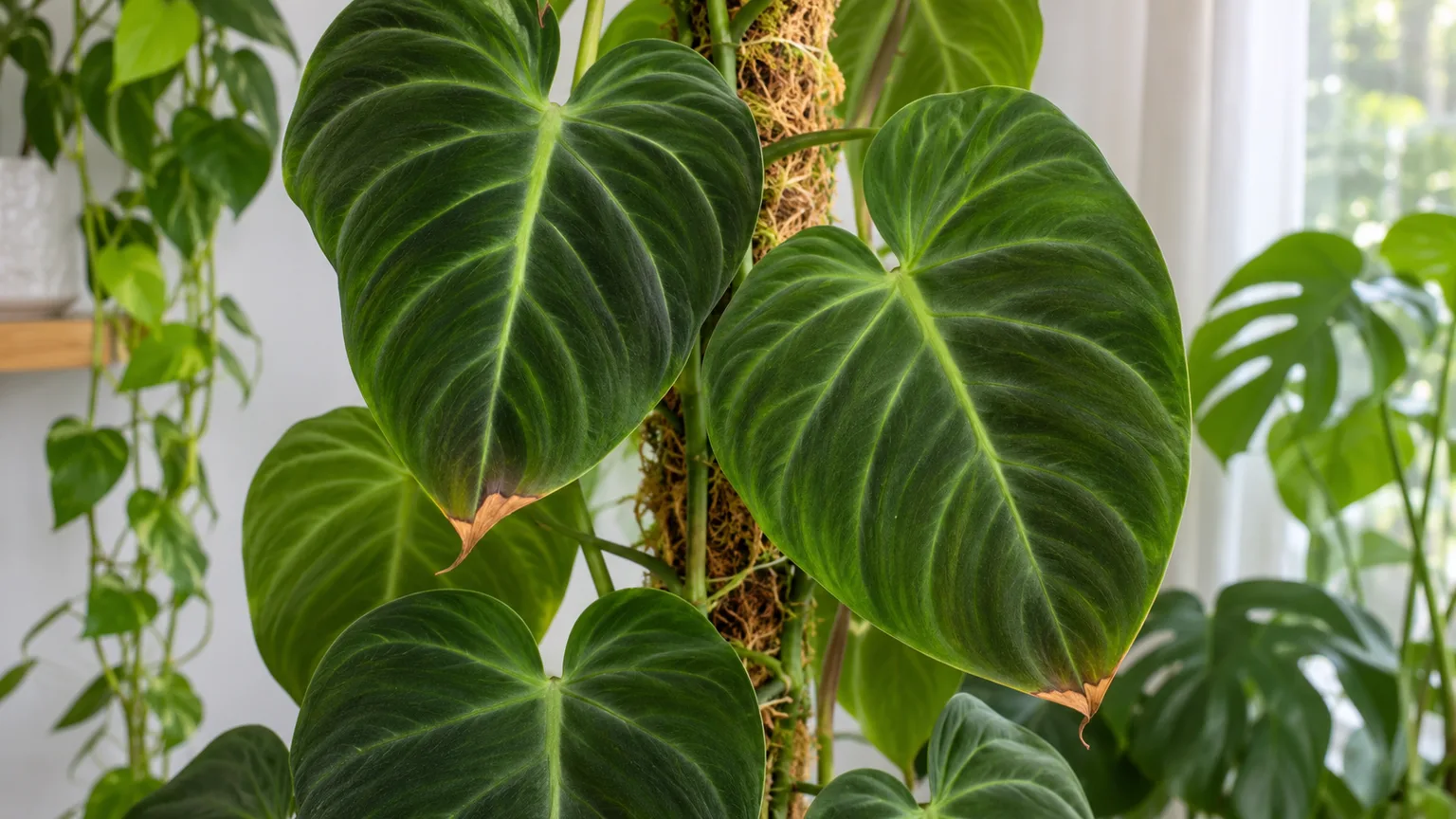
Brown Tips on Philodendron Splendid: Causes, Checks & Fixes
This guide covers brown tips on Philodendron Splendid. See also the general Brown Tips guide, watering, and light pages for this plant.
Brown Tips on Philodendron Splendid: Causes, Checks & Fixes
Quick answer
Brown tips on Philodendron Splendid most often mean the air around the leaves is drier than this Colombian velvet climber tolerates, sometimes combined with fertilizer salts accumulated in the mix or a moss pole left dry while the pot stays wet. For how tip burn works across houseplants in general, see our brown tips guide. On Splendid, the pattern usually shows up as crisp tan edges on the largest velvet leaves first, while the rest of the blade stays dark and firm.
First step: run a humidifier near the plant and flush the pot. Soak the mix with plain room-temperature water until it drains freely, empty the saucer, and dampen the moss pole in the same session. Then wait a full watering cycle before changing anything else.
What brown tips look like on Philodendron Splendid
On Splendid, tip burn starts at the narrowest point of the blade — the leaf apex and sometimes the raised outer margins — as a thin tan or papery-brown rim. The damage feels dry and brittle, not soft or water-soaked. Veins inside the browned zone fade from gold to dull straw, while the rest of the leaf keeps its dark velvet sheen.
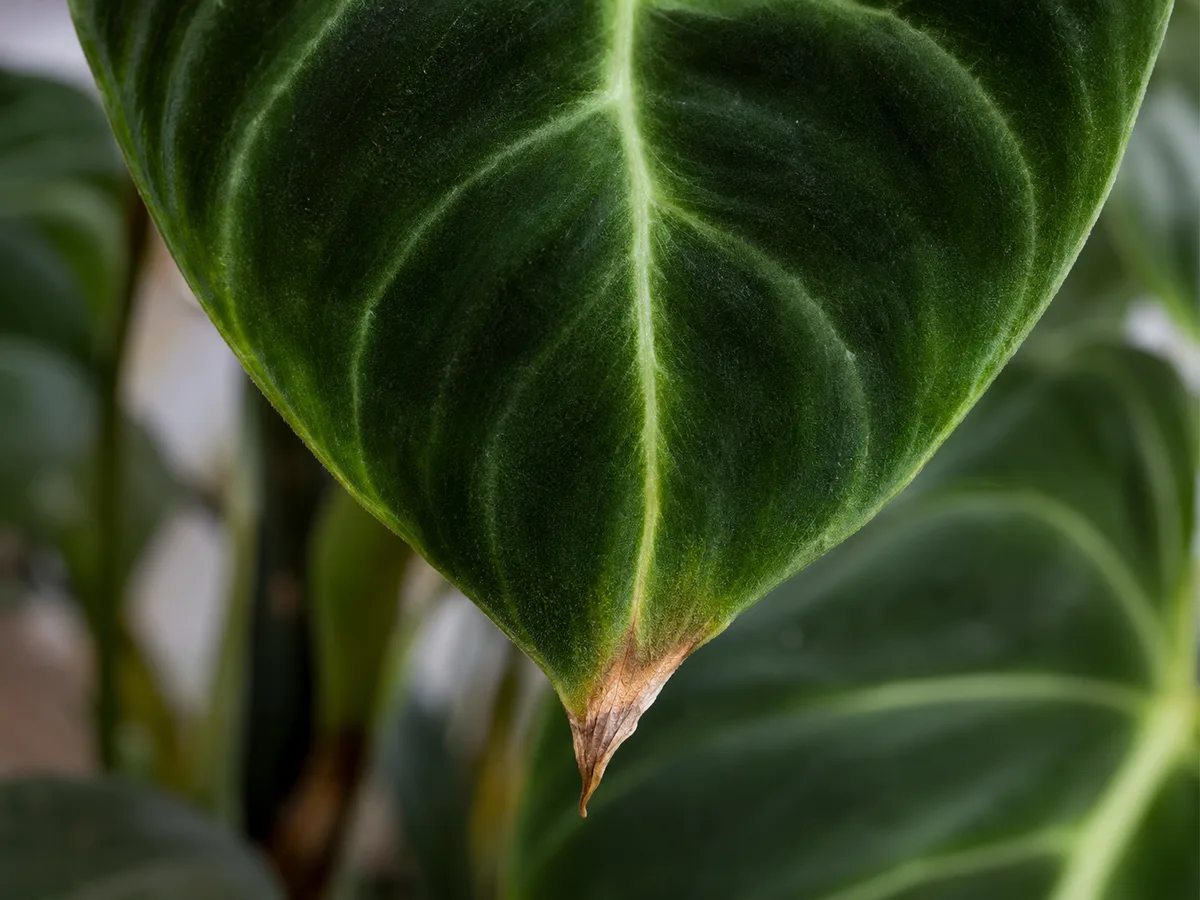
Tip burn on Splendid appears as a narrow, brittle tan edge while the rest of the velvet leaf remains firm.
Because Splendid leaves are large and slow to replace, the same crisped tip can sit unchanged for months. New leaves emerging with clean margins while old tips stay brown is the normal recovery picture, not a sign the fix failed. Whole leaves browning at once, or browning that starts at the leaf base near the petiole, points away from simple tip burn and toward root or light problems covered in the Splendid overview.
Why Splendid browns at the tips first
Splendid is a climbing philodendron native to Colombian wet forest, where humidity rarely drops and roots grip bark that dries between showers. Indoors, three mismatches hit the leaf margins before anywhere else.
Dry air below 60% hits velvet margins hardest
The tiny hairs that give Splendid its suede texture hold a thin humid layer against the leaf — an advantage in cloud forest, a liability in heated living rooms. When room humidity sits at 30–40% through winter, the thinnest tissue at the tips loses water faster than roots can resupply it, and margins crisp. Iowa State Extension lists philodendrons among houseplants wanting bright light with steady moisture and humidity rather than dry indoor air. If your newest leaf unfurls cleanly but older tips brown in January, dry air is the prime suspect.
The dry-pole gap starves the climbing section
Splendid splits its drinking zones between the pot and the vertical support: climbing philodendrons root into moist moss poles when trained upward, and those aerial roots feed the upper leaves. A grower who soaks the pot on schedule but never wets the pole leaves the top of the vine in permanent drought — tips on the highest leaves brown while lower foliage looks fine. If damage concentrates on leaves above the point where the vine meets a dust-dry pole, you have found your cause. Pair any fix with the pole-watering routine in the Splendid watering guide.
Salts and hard water burn margins from the roots up
Velvet leaves show fertilizer stress sooner than glossy philodendrons. Monthly feeding at full label strength, small daily sips that never drain, or hard tap water leave mineral salts in the mix; roots take up the concentrated solution and leaf margins — the end of the water line — scorch. A white crust on the soil surface or pot rim is the giveaway. Clemson HGIC notes philodendrons need light, well-drained potting media that flushes freely, and its watering guidance recommends periodic heavy watering to leach excess salts rather than constant light drinks. The RHS similarly recommends rainwater or filtered water in hard-water areas for philodendrons, which matters doubly on dark velvet where mineral spots cannot be wiped off without damaging texture.
How to confirm the cause
Work through these checks in order and stop at the first clear hit:
- Humidity at the leaves — Hold a hygrometer at canopy height for a day. Readings under 50% with crisp tips only on older leaves confirm dry air as at least a contributor.
- Salt crust check — Look for white or yellowish crust on the mix surface and inside the pot rim. Crust plus brown tips after a heavy feeding season points to salt buildup rather than underwatering.
- Pole moisture — Squeeze the moss or coco fiber at aerial-root height. Dust-dry fiber with tip burn concentrated on upper leaves confirms the dry-pole gap.
- Watering rhythm — Probe 3–5 cm deep and lift the pot. Mix that swings from soggy to bone-dry between waterings crisps margins through drought stress; checking moisture before every drink is the habit that prevents it. Full probe technique is in the Splendid watering guide.
- Light position — Bleached pale patches on the sun-facing side before browning mean direct sun through glass, not humidity. Velvet scorches faster than glossy leaves, so compare against the placement rules in the Splendid light guide.
- New growth quality — Clean new leaves with brown old tips means the plant already recovered or the cause is mild. Deformed new leaves or sheaths stuck for weeks mean humidity and moisture need fixing now, not trimming.
First fix for Philodendron Splendid
Raise humidity around the plant and flush the pot in one session. Set a small humidifier near the vine (aiming for roughly 60% relative humidity), then soak the mix with plain room-temperature water until runoff flows freely and empty the saucer within 30 minutes. Pour water slowly down the moss pole until the fiber is evenly damp.
This single combined step addresses the two most common causes at once without stacking repots, sprays, or fertilizer on a stressed plant. Wait one full dry-down cycle and check whether the next emerging leaf has cleaner margins before adjusting anything further.
Step-by-step recovery
After the humidify-and-flush session:
- Hold fertilizer for at least a month. University of Maryland guidance recommends feeding indoor plants monthly during active growth and pausing when plants are stressed or recently disturbed — a salt-burned Splendid qualifies on both counts.
- Switch to filtered, rain, or distilled water if your tap is hard or leaves show white spotting alongside brown tips.
- Water the pole every time you water the pot so aerial roots stay functional. Morning dampening that dries by evening is safer than overnight soaking on velvet foliage.
- Trim only for appearance. Cut just inside the brown edge with clean scissors, following the leaf’s natural outline. Never cut into green tissue hoping to “stop the spread” — tip burn does not spread like infection.
- Refresh the mix at the next spring repot if crust returns quickly despite flushing. Bark-heavy blends that have broken down hold salts; the equal-parts recipe and squeeze test are detailed in the Splendid soil guide.
Recovery timeline
Humidity-only tip burn: Browning stops advancing within two to three weeks of steady humidifier use. Judge success by the next leaf unfurling with clean margins — old tips stay brown permanently.
Salt buildup: One thorough flush plus a month without fertilizer usually halts new browning. If fresh crust appears within two waterings, the mix is exhausted and needs replacement rather than another flush.
Dry-pole damage: Upper leaves stabilize once the pole stays consistently damp, typically within one new leaf cycle. Leaves that browned while their aerial roots desiccated will not heal; the vine’s new growth above the re-wetted zone is the progress signal.
Mistakes to avoid
Do not mist velvet leaves as a humidity substitute — surface wetting evaporates in minutes and overnight damp on velvet in cool corners invites fungal spotting. Use a humidifier or closed-zone setup instead.
Do not fertilize a browning Splendid to “help it recover.” Salts are a leading cause of the damage, and feeding before flushing makes margins worse.
Do not repot on day one. Repotting adds root stress on top of margin burn; flush, humidify, and confirm the cause first. Repot only if the mix smells sour, stays wet for ten days, or crust returns immediately after flushing.
Do not cut whole leaves for a few brown tips. Each large velvet blade powers the vine; removing several at once sets back the recovery you are trying to speed up.
How to prevent it next time
Keep humidity near 60–70% through the dry months — the single highest-leverage habit for this plant, as laid out in the Splendid overview. Water pot and pole as one system, feed at half label strength monthly only while new leaves are actively emerging, and flush with plain water every month or two. In hard-water homes, default to filtered or rain water year-round rather than alternating. Finally, check the Splendid fertilizer guide before each feeding season so dilution and pause rules stay matched to the plant’s actual growth pace.
When to worry
Treat as urgent if browning races from tips across whole blades within days, several leaves yellow at once on wet mix, stems feel soft at the base, or the mix smells sour — those are root-decay signals, not cosmetic tip burn. Treat as routine if damage is limited to crisp tips on older leaves, new growth looks clean, and the plant otherwise climbs steadily.
Related Philodendron Splendid guides
- Philodendron Splendid overview — whole-plant context: humidity targets, pole setup, and acclimation
- Philodendron Splendid watering — pot-plus-pole moisture rhythm and dry-down checks
- Philodendron Splendid light — filtered placement that avoids velvet scorch
- Philodendron Splendid soil — chunky mix recipe and flush-friendly drainage
- Philodendron Splendid fertilizer — dilution and seasonal pause rules that prevent salt burn
Related tool
Use the Brown Tips Diagnosis Tool to narrow causes for brown tips on this plant before changing multiple variables at once.