Slow Growth on Philodendron Splendid: Causes, Checks & Fixes
Quick answer
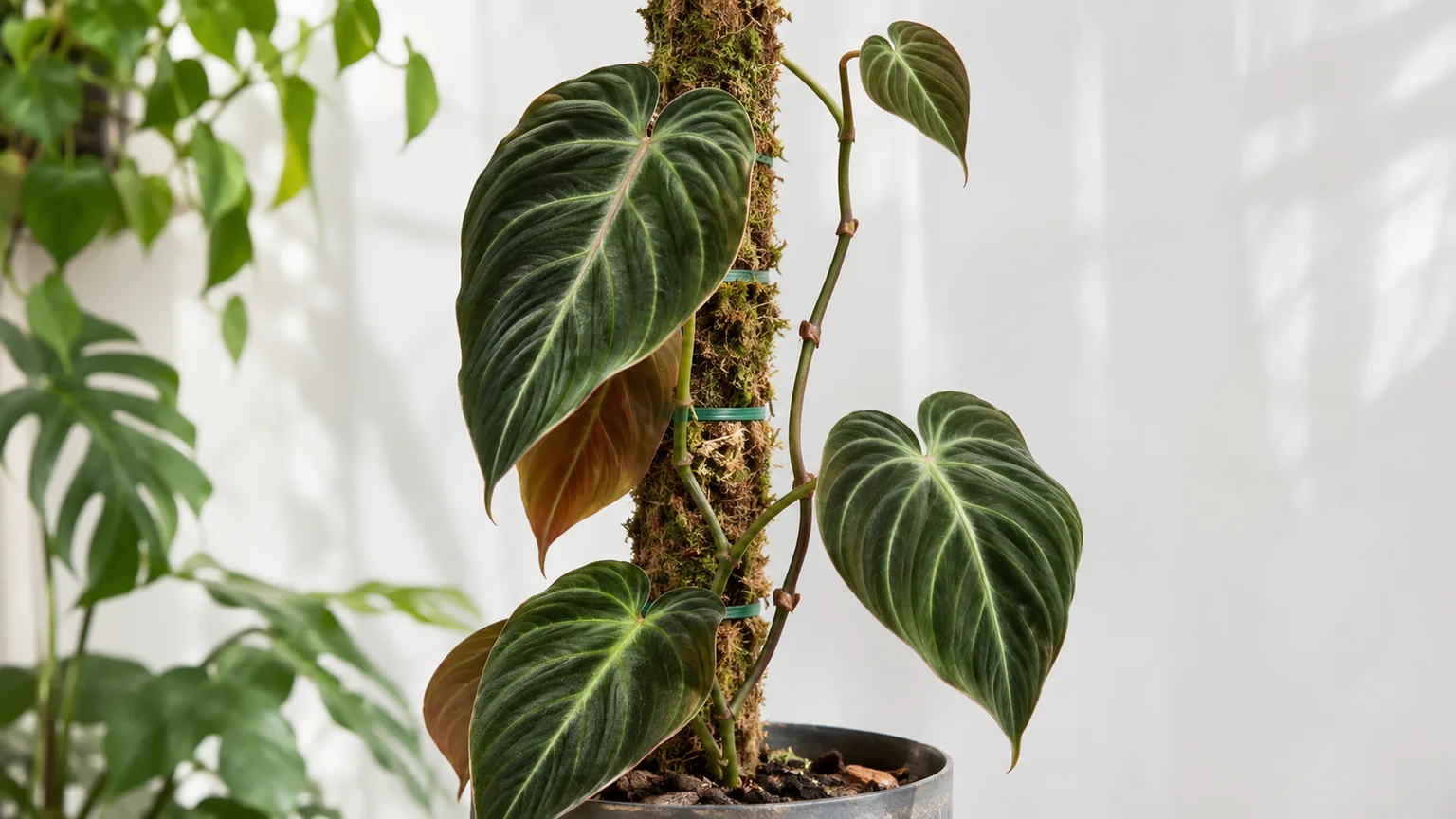
Slow growth on Philodendron Splendid is most often dim light or a hungry, pot-bound root zone — not disease. First fix: move it into brighter indirect light and leave it there for two weeks before changing anything else. Most healthy vines resume copper-toned new growth once light, feeding season, and root space line up.
Slow Growth on Philodendron Splendid: Causes, Checks & Fixes
This guide covers slow growth on Philodendron Splendid. See also the general Slow Growth guide, watering, and light pages for this plant.
Slow Growth on Philodendron Splendid: Causes, Checks & Fixes
Quick answer
A Splendid that sits for weeks without a new copper leaf is almost always short of light, short of food, or out of root room — not sick. This velvet verrucosum × melanochrysum climber can survive in dim corners, but its growth will become slow and leggy there, with leaves losing their luster.
Do one thing first: move the plant into brighter indirect light — near a bright window where sunbeams never touch the foliage — and leave it undisturbed for two weeks. Light drives everything else on this plant, so brighten first and judge feeding or repotting only after the vine has had time to respond.
What slow growth looks like on Philodendron Splendid
On Splendid, a stall has a signature. The climbing tip goes quiet: no fresh copper spear for six weeks or more in spring or summer. When leaves do appear, each is smaller than the last, and the bare stem between leaf joints stretches longer — the classic leggy pattern. Because this hybrid is grown for its size-up effect on a pole, the earliest warning is often that new leaves stop getting bigger even though the vine keeps creeping.
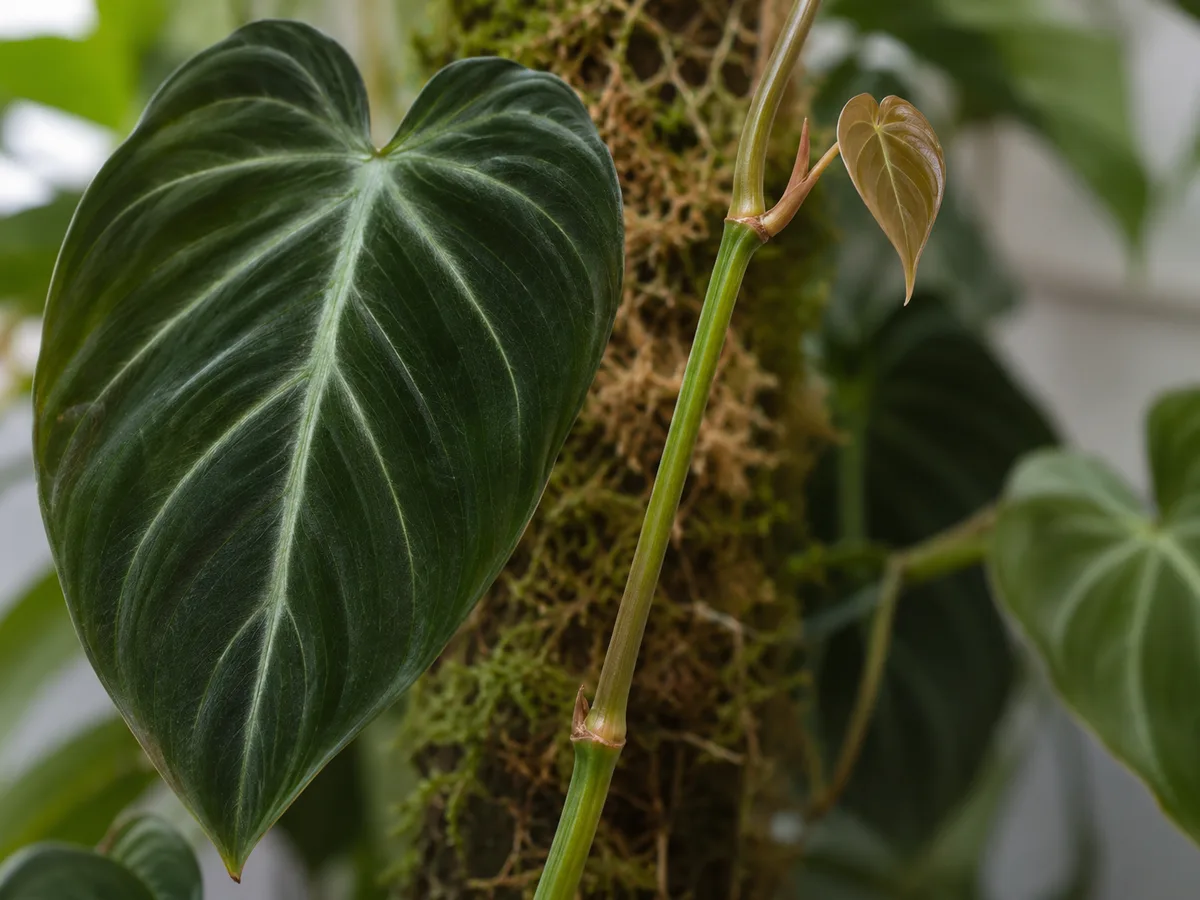
Compare successive leaves and stem spacing to spot a stall in the climbing tip.
Read the whole vine, not one leaf. A plant with firm velvet leaves, a green growing tip, and clean leaf undersides that is simply idle is waiting on conditions. A vine with soft stems, yellowing lower leaves, or sticky residue on the new growth has a different problem wearing a slow-growth disguise — see the lookalike section before feeding anything.
Why Splendid stalls: the usual suspects in order
Dim light is the most common brake. Splendid wants bright but indirect light, and philodendrons starved of it become leggy and produce fewer, smaller leaves. A vine three metres from a north window or behind heavy curtains photosynthesises just enough to survive, never enough to build a big velvet leaf. If your light setup has drifted since you bought the plant — shorter days, a moved pot, a new building across the street — growth fades gradually, which is why owners often notice it late.
Hunger comes second. A Splendid in fresh mix coasts on stored nutrients for months, then new leaves shrink and the vine idles. The signal is well documented: slow growth and small leaf size are how a philodendron tells you it is underfed, and pale new leaves can point to missing calcium and magnesium. Vines fed nothing for a year, or fed through winter and then never in spring, both end up stalled by midsummer.
A packed root ball comes third. Philodendrons can sit in one pot for a couple of years, but once roots grow densely packed, water and nutrients stop reaching the vine evenly and growth plateaus even in good light. If roots circle the drainage holes or the pot dries out within a day of watering, the root zone — not the leaves — is the bottleneck. Spring is the right repotting window, so a stall that starts the second year in one pot is rarely coincidence.
Cold and winter rest finish the list. Splendid grows best in steady indoor warmth around 65 to 85 degrees Fahrenheit and must stay above 15°C per RHS guidance. A vine parked near a draughty window or a hot radiator over winter idles to protect itself. For how stalled growth works across houseplants in general, see our slow growth guide. On Splendid, seasonal rest plus one of the three causes above explains nearly every stall.
How to confirm the cause at home
Work through this order — light, season, food, roots — and stop at the first clear fail.
- Light test. Stand where the plant sits at midday. You should see open sky reflected without direct sunbeams on the leaves, and velvet foliage should be dust-free enough to show its sheen. Wipe a leaf: a thick grey film means months of reduced photosynthesis. Long gaps between small leaves confirm the verdict, since stems that are long and leggy with inches between leaves are not getting enough light.
- Season check. If it is late fall or winter and the vine is firm, green, and pest-free, you may be watching normal rest. Do not try to force winter growth with extra food — note the pause and plan spring feeding instead.
- Feeding history. When did this plant last get fertilizer, at what strength, and in which months? No feeding since last summer plus shrinking new leaves points at hunger. Heavy recent feeding plus stalled, pale growth points the other way — possible salt stress, which needs a different fix.
- Root check. Lift the nursery pot: feather-light a day after watering plus visible root circling means pot-bound. Heavy and soggy days after watering with a stall means the mix has failed, and the watering routine needs review before any feeding happens.
The first fix to try
Brighten the light — one move, then patience. Place Splendid where it gets bright indirect light all day: an east window with a sheer curtain, or a few feet back from a bright south or west window. Dust the velvet leaves gently with a soft dry cloth so they can actually use the light. Then change nothing else for two weeks and watch the climbing tip for a swelling copper spear.
Do not fertilize, repot, and relocate in the same weekend. Stacked changes hide which one worked and stress a vine that is already running on reserves.
Step-by-step recovery after light is fixed
Once the plant sits in good light, work the remaining causes in this order.
- Feed only in the growing season. Through spring and summer, give a balanced liquid fertilizer diluted to half strength once a month, then stop fertilizing entirely until the following spring as temperatures drop. Monthly spring and summer feeding with a pause in the cool months matches standard philodendron practice of feeding monthly in spring and summer and every six to eight weeks in fall and winter — leaner for a slow velvet hybrid. If you suspect salt buildup from past overfeeding, flush the pot with plain room-temperature water once and wait two weeks before resuming half-strength feeds.
- Repot if roots demand it — in spring. Move up one pot size into fresh chunky aroid mix, and wait about a month before fertilizing so damaged roots heal. A spring repot followed by steady feeding routinely restarts vines that idled all winter. Review the soil mix at the same time: decomposed, compacted bark that stays soggy will stall growth again within weeks.
- Give the vine something to climb. Indoors Splendid can grow as a climber on a moss pole or trellis; a vine left to sprawl puts energy into stem length instead of leaf size, which reads as slow, disappointing growth. Tie the stem loosely to a lightly moist pole so aerial roots attach — leaves size up only once the vine believes it is climbing.
- Hold warmth steady. Keep the plant in its 65–85°F comfort band, away from cold draughts and hot radiators. Night chills near glass in winter quietly cancel out good light and feeding.
Recovery timeline
Judge everything by the newest growth, never by old leaves filling out — small leaves stay small. Within two to four weeks of brighter light, the climbing tip should swell and push a copper spear. That first leaf may still be modest; the second and third leaves in good light with monthly feeding should each come in larger. Full momentum — regular unfurlings that hold velvet texture and sheen — typically returns over one to two leaf cycles in the growing season. A vine that pushes deformed, stuck, or rapidly yellowing new growth after corrections needs a pest and root re-check rather than more food.
Lookalike symptoms: what slow growth is not
| What you see | More likely | How to tell |
|---|---|---|
| Long bare stems, tiny spaced leaves | Not enough light | Gaps between leaves widen; see the light guide |
| No growth all winter, firm green vine | Seasonal rest | Tip healthy, no pests, resumes in spring without intervention |
| Small pale new leaves despite good light | Underfeeding | Shrinking leaf size over months; review the fertilizer routine |
| Stall plus yellow lower leaves and wet mix | Overwatering / root stress | Pot heavy days after watering; check watering before feeding |
| Stall plus sticky residue or cottony tufts | Pests on new growth | Inspect tip and leaf undersides with a lens first |
Mistakes to avoid
Do not fertilize a cold, soggy, or pest-hit vine to “push” growth — food on stressed roots burns them and deepens the stall. Do not repot and feed in the same week; fresh mix plus immediate fertilizer routinely damages the fine roots a stalled plant needs most. Do not water more often hoping to wake the plant up — Splendid’s thick roots rot in constantly wet mix, and rot stalls growth far longer than hunger ever did. And do not chase the stall with a bigger pole, a new pot, and a new window in one day; change light first, then read the plant.
How to prevent the next stall
Keep Splendid in bright indirect light year-round and re-check the spot each season as day length changes. Feed monthly at half strength through spring and summer only, following extension fertilizing practice of resting indoor plants in the cool months. Repot every one to two years in spring before roots pack solid, refreshing the bark so the mix stays open. Keep humidity 60–80% with gentle airflow so each new leaf unfurls cleanly instead of sticking and stunting. A vine that climbs a moist pole, eats in season, and never sits cold rarely stalls twice.
When to worry
Relax if the vine is firm, green, and pest-free with a healthy tip — even a two-month pause in good winter conditions usually resolves in spring. Act promptly if stalled growth pairs with soft or blackened stem bases, a sour smell from the mix, sudden multi-leaf yellowing, or visible pests clustering on the newest growth. Those combinations mean the root zone or the tip itself is under attack, and waiting out the season will cost you the vine.
Related Philodendron Splendid guides
Slow growth shares triggers with several sibling issues, so pick by pattern: leaves stretching on long bare stems belong with leggy growth, while pale uniform fading fits a feeding review. Wet mix with yellowing lower leaves is a watering and root-zone problem first, and dusty fading foliage in a dark corner is a light problem. Use this page when the vine is firm and healthy but idle; route to pest or rot guides the moment stickiness, spots, or soft stems appear.
Related tool
Use the Plant Growth Rate Calculator to estimate a realistic growth pace for your Splendid’s light and season before deciding its stall is abnormal.