Wilting on Philodendron Splendid: Causes, Checks & Fixes
Quick answer
Wilting on Philodendron Splendid is most often a dry chunky mix, a dry moss pole starving the upper vine, or soggy roots that can no longer drink. Lift the pot and feel the top 3–5 cm: light and dry means one deep soak; heavy and damp means drain it and let it dry before you do anything else.
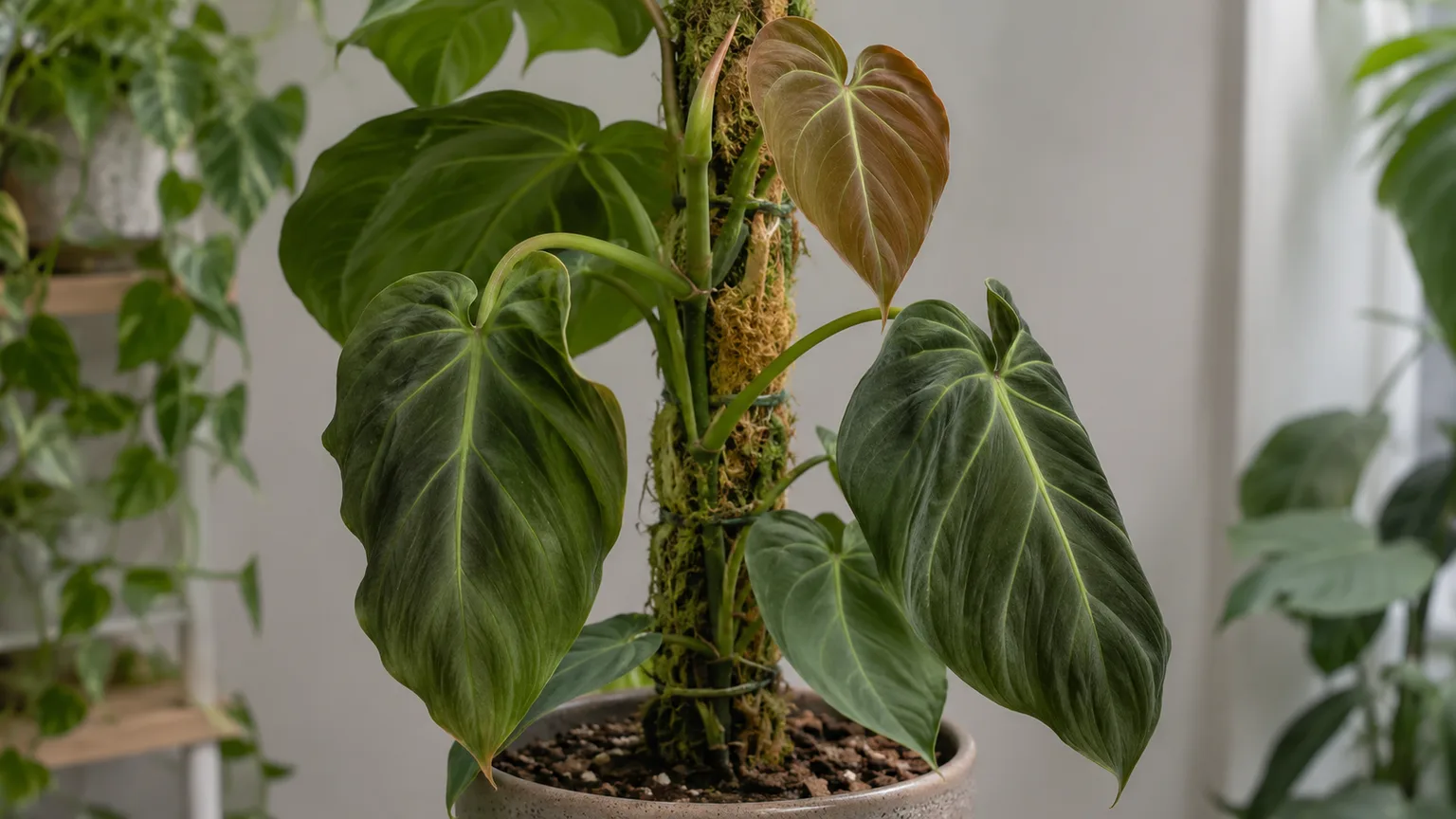
Wilting on Philodendron Splendid: Causes, Checks & Fixes
This guide covers wilting on Philodendron Splendid. See also the general Wilting guide, watering, and light pages for this plant.
Wilting on Philodendron Splendid: Causes, Checks & Fixes
Quick answer
Wilting on Philodendron Splendid is most often a dry chunky mix, a dry moss pole starving the upper vine, or soggy roots that can no longer drink. Lift the pot and feel the top 3–5 cm: light and dry means one deep soak; heavy and damp means drain it and let it dry before you do anything else.
For how wilting works in general across houseplants, see our wilting guide. On Splendid specifically, read the wilt together with the moss pole, the velvet leaf texture, and the climbing tip — those three tell you more than the soil alone.
What wilting looks like on Philodendron Splendid
Splendid is a velvet-leafed climbing hybrid of Philodendron verrucosum and Philodendron melanochrysum, grown for dark elongated blades, pale veining, and copper-toned new growth. When it wilts, the big blades lose their plush stiffness and flop from softened petioles, and the velvet surface looks dull and papery rather than rich.
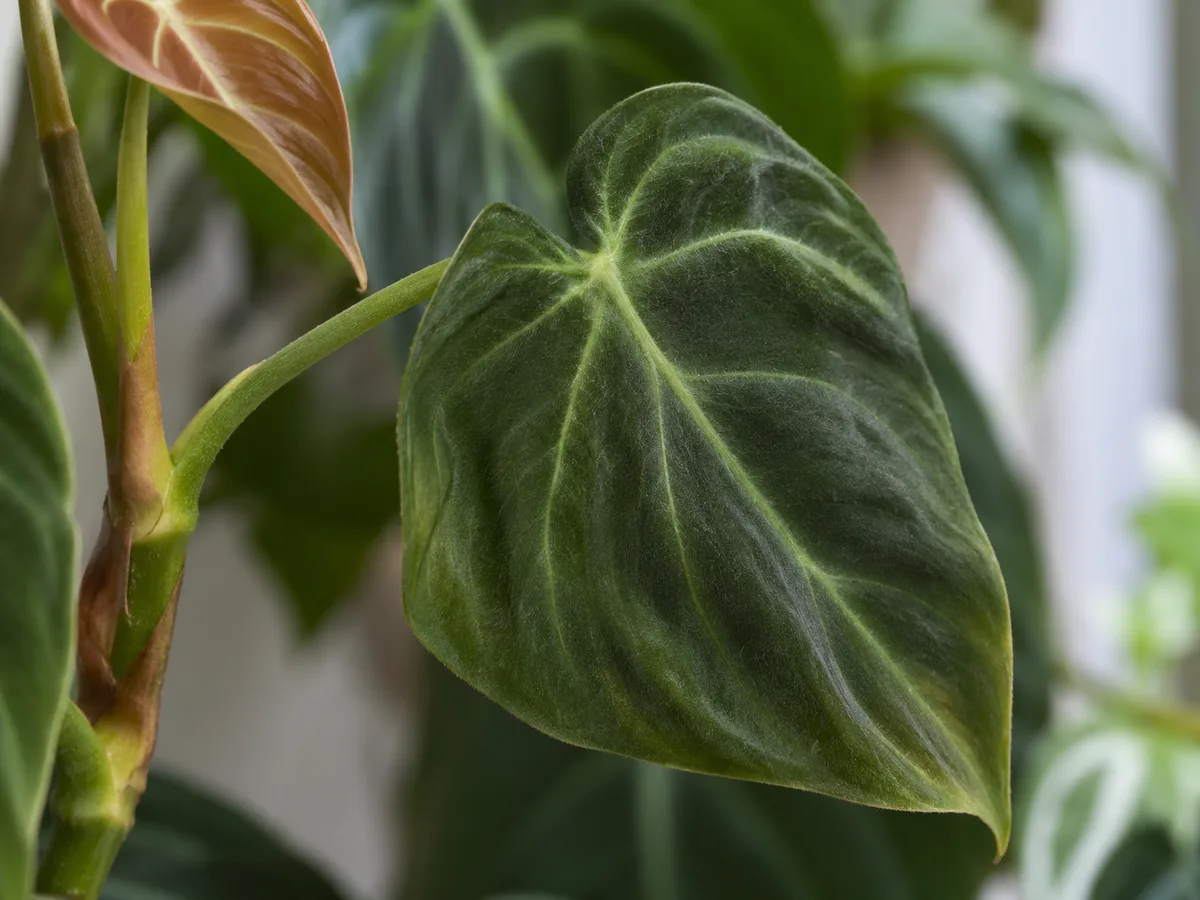
Wilting softens the velvet blade and petiole; check pot weight and mix moisture before changing watering.
Watch the climbing tip above all else. A firm tip with wilting older leaves usually means passing thirst or a dry pole. A soft or stalled tip with wilt spreading downward means the root zone or the stem itself is failing, and the plant needs a hands-off recovery rather than another drink.
Copper new leaves are an honest progress meter. If fresh growth keeps emerging with good colour while older leaves sag, the plant is still functioning. If new leaves stall, emerge small, or stick half-unfurled, the wilt is part of a bigger stress pattern — usually low humidity or failing roots.
Why Splendid wilts: the five usual causes
1. The chunky mix dried out faster than expected
Splendid grows in an open aroid mix that drains fast by design, and a warm bright spot can dry it days ahead of schedule. Philodendrons do best when compost is allowed to dry out slightly between waterings, but a bark-heavy mix in a small pot can overshoot from “slightly dry” to bone-dry while the surface still looks fine. The whole vine goes limp at once, starting with the largest, thirstiest blades.
2. The moss pole dried out and the upper vine lost its second water source
This is the cause other philodendron guides miss. Splendid is a true climber whose aerial roots drink from a moist pole, and climbing philodendrons naturally grow into a moss pole they can root into. When the pole stays dry for weeks, attached aerial roots shrivel — and the upper leaves wilt even though the pot mix feels damp. Suspect this when lower leaves look fine but everything above the pole’s dry zone sags.
3. Soggy mix and rotting roots that cannot drink
The cruel trick of wilting is that drowned roots cause the same flop as thirsty ones. Splendid is sensitive to overwatering, and extension guidance notes that overwatering can cause root rot on climbing philodendrons. Infected plants show yellowing lower leaves moving upward with poor vigor and general decline, and stems soften from the base. If the pot feels heavy days after watering, the roots — not the watering can — are the problem.
4. Dry air plus heat pulling water faster than roots supply it
Velvet verrucosum-type leaves punish dry air faster than glossy green philodendrons. Splendid wants 60–80% humidity; in heated winter rooms or beside a radiator, transpiration outruns uptake and leaf edges wilt and crisp even when the mix is correctly moist. This kind of wilt pairs with brown tips and stuck new leaves rather than whole-plant collapse.
5. Cold shock or a draught
Splendid is a tropical hybrid that stalls below 15°C. Climbing philodendrons prefer warmth between 65 to 85 degrees Fahrenheit and should be protected from cold drafts. A night against cold glass or in the path of an air-conditioner blast can collapse leaves within hours — sudden, whole-plant, and unrelated to watering.
How to confirm the cause
Work in this order so one check rules causes in or out:
- Lift the pot. Light means dry; heavy days after watering means soggy. This single test separates cause 1 from cause 3.
- Push a finger or chopstick 3–5 cm into the mix. Dry and crumbly confirms thirst. Damp with a sour or musty smell confirms root trouble.
- Squeeze the moss pole and inspect aerial roots. A dry, crispy pole with shrivelled grey roots explains upper-vine wilt with a fine-looking pot.
- Feel the climbing tip and stem bases. Firm tip means a passing wobble; soft base or mushy tip means rot or cold injury.
- Replay the last 72 hours. Heating switched on, a cold window, a missed watering, or a heavy-handed soak usually names the trigger.
The first fix to try
Do the lift-and-feel test, then take exactly one corrective action: if the pot is light and the top 3–5 cm is dry, give one deep soak until water runs freely from the drainage holes, empty the saucer, and lightly moisten the moss pole. Do not fertilize, repot, or prune anything yet.
If instead the pot is heavy and damp, the first fix is the opposite — tip out standing water, set the pot where air moves gently, and leave the roots untouched until the mix dries toward the top 3–5 cm. Watering a wilted plant with wet feet is the fastest way to turn a setback into root rot, because underground rots are difficult to manage because they are not visible until damage is extensive. Make one correction, then watch for 24 hours: thirsty Splendids re-inflate, rotted ones do not.
Step-by-step recovery
Once the first fix is in and the plant has had a day to respond, proceed only as far as the symptoms demand:
- Re-check turgor after 24 hours. Perkiness returning means thirst — resume normal pot-weight watering. No change with wet mix means root trouble; move to step 2.
- Unpot only if the mix stays wet or smells off. Shake off soggy mix and trim only roots that are black, mushy, or slide off leaving a stringy core. Firm white or tan roots stay.
- Repot into fresh chunky mix in a pot with drainage holes. Keep the same pot size or one step down — a smaller root system in a big wet pot rots again.
- Re-attach the vine and dampen the pole. Tie stems loosely, press living aerial roots against moist sphagnum, and keep the pole lightly damp while it re-roots.
- Stabilize the air. Bright indirect light, steady warmth, humidity near 60–70%, and no draughts or radiators. Hold fertilizer until new growth looks healthy for at least two weeks.
Recovery timeline
Thirst-only wilt is fast: leaves re-inflate within hours of a soak and look normal within a day or two. Pole-related upper-vine wilt takes longer — days to a couple of weeks as aerial roots rehydrate and reattach. Root-rot recovery is measured in new growth, not old leaves: expect the climbing tip to firm up first, then a clean copper leaf in three to six weeks if the remaining roots are sound. Old leaves that browned or crisped will not smooth out; they are scars, not failures.
Wilting vs lookalikes on Splendid
| What you see | More likely | Tell |
|---|---|---|
| Limp blades that rebound after watering | Underwatering | Light pot, dry mix, firm stems |
| Limp blades that stay limp in wet mix | Overwatering / root rot | Heavy pot, soft base, sour smell; full root-rot checks live in the soil guide |
| Only upper leaves sagging, pole dry | Dry moss pole | Shrivelled aerial roots, lower leaves fine |
| New leaf stuck half-open, edges crisping | Low humidity, not true wilt | Humidity and unfurling help in the Philodendron Splendid overview |
| Yellowing lower leaves with flop | Root decline or natural aging | Spreading yellow plus soft stems means roots; one old leaf alone is normal |
| Sudden collapse after a cold night | Cold shock | Timing tied to temperature, whole plant at once |
Mistakes to avoid
Do not water on a fixed calendar to “prevent” wilt — repeated premature soaking is what drowns Splendid roots, and experienced growers warn that you should establish a rhythm that never leads to wilted leaves without swinging to permanent sogginess. Do not fertilize a wilted plant; salts stress damaged roots further. Do not repot on day one unless the mix is sour and sodden — repotting a merely thirsty plant adds shock to thirst. And do not mist velvet leaves heavily as a humidity fix; wet velvet in still air invites spot diseases. Raise humidity with a humidifier or grouping, not a spray bottle.
How to prevent it next time
Anchor Splendid care to its own rhythm, documented in the Philodendron Splendid overview and the watering guide. Water when the top 3–5 cm dries and the pot feels lighter — roughly every 7–10 days in summer, stretching to 10–14 days in winter — and always empty the saucer. Keep the moss pole lightly and consistently moist during growth so aerial roots stay embedded, and hold humidity in the 60–80% band with gentle air movement. The light guide keeps leaves sizing up instead of stretching in dim corners where pots stay wet too long, and steady warmth well above 15°C avoids the overnight collapses no watering schedule can fix.
When to worry
Treat wilt as urgent when several leaves collapse at once, stem bases turn soft or translucent, the climbing tip goes mushy, or decline follows a cold night. Those signs mean rot or cold injury rather than simple thirst.
Give up on individual leaves that are fully brown, mushy, or dried crisp — they will not recover. Give up on the whole plant only when the stem base and every node are soft and brown with no firm tissue left. Anything with one firm node and a sound stem base can still restart, slowly, under stable care.
Related Philodendron Splendid guides
- Philodendron Splendid overview — full care profile: light, water rhythm, humidity, and moss-pole culture in one place.
- Watering guide — use when the lift-and-feel test is ambiguous or wilt keeps recurring on a schedule.
- Soil guide — use when the mix stays wet for days, compacts, or smells sour.
- Light guide — use when wilt comes with leggy stretched growth or shrinking new leaves.
Related tool
Use the Plant Watering Calculator to calibrate soak timing for your pot size and season before changing more than one variable at a time.