Drooping Leaves on Philodendron White Princess: Causes
Quick answer
Drooping leaves on Philodendron White Princess are most often thirst, soggy mix, or cold stress. Push a finger 3–5 cm into the mix and lift the pot: if dry and light, soak deeply; if wet days after watering, drain and let it dry before you do anything else.
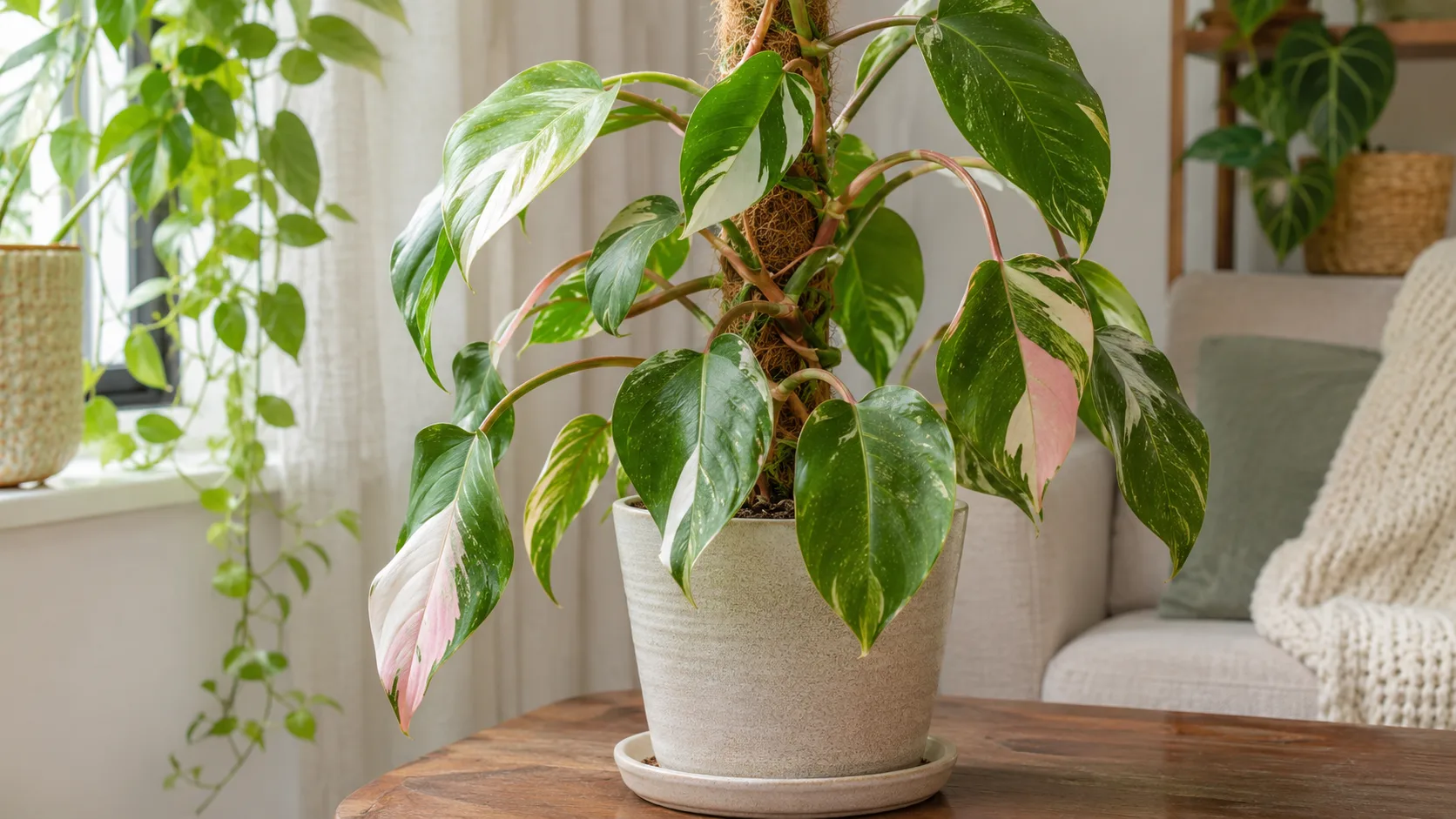
Drooping Leaves on Philodendron White Princess: Causes, Checks & Fixes
This guide covers drooping leaves on Philodendron White Princess. See also the general Drooping Leaves guide, watering, and light pages for this plant.
Drooping Leaves on Philodendron White Princess: Causes, Checks & Fixes
Quick answer
Drooping leaves on Philodendron White Princess are most often thirst, soggy mix, or cold stress. Push a finger 3–5 cm into the mix and lift the pot: if dry and light, soak deeply; if wet days after watering, drain the saucer and let it dry before you do anything else.
For the general mechanics of why leaves lose turgor, see our drooping leaves guide. On White Princess specifically, the pattern usually shows up through its climbing erubescens stems, its chunky-mix moisture rhythm, and its thin white-variegated sectors that flag stress first.
What drooping looks like on White Princess
On this plant, drooping means normally upright blades on arching petioles go limp and point downward, often with the whole stem tip nodding. Because White Princess is a climbing Philodendron erubescens type with elongated heart-shaped leaves, early droop shows as soft, folding blades while the stems stay firm.
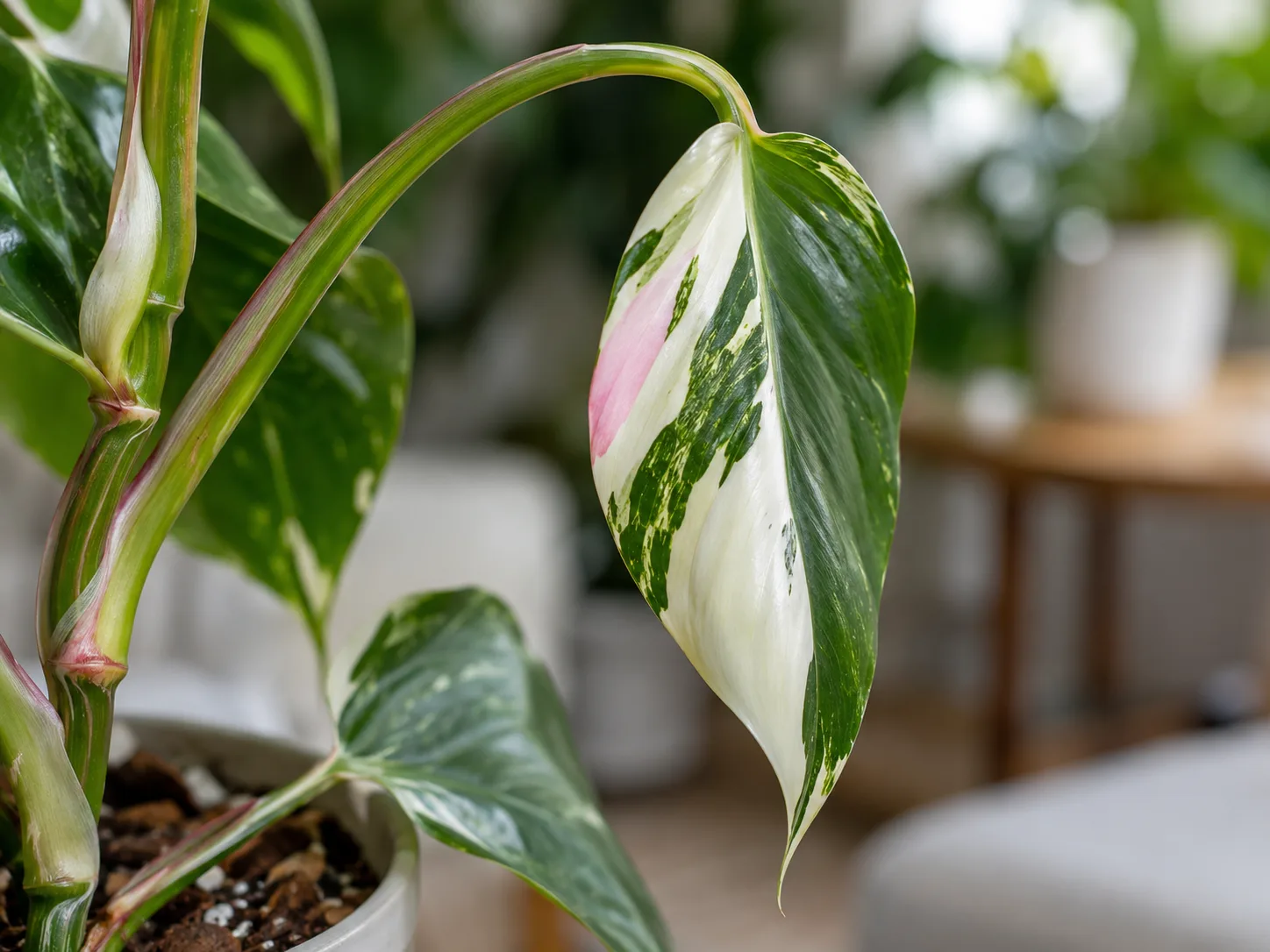
Drooping starts as normally upright blades lose firmness and point downward while stems remain firm.
Watch the white sectors first. Variegated tissue carries little chlorophyll and loses water faster than the green parts, so pale patches may wilt, crisp, or brown at the edges a day or two before the green tissue looks bad. That asymmetry is a useful early warning, not a separate disease.
Also distinguish true droop from a support problem. A healthy climbing White Princess with firm leaves that simply flops sideways is asking for a moss pole or trellis, not a watering rescue. Limp, lifeless blades are a water or root problem; firm blades on a toppling vine are a support problem.
Why White Princess gets drooping leaves
Underwatering is the most common and most forgiving cause. White Princess wants water when the top 3–5 cm dries, roughly every 7–10 days in summer. In a chunky bark-heavy mix near a bright window, small pots can dry all the way through faster than owners expect, and the whole plant folds within a day or two.
Overwatering causes the identical symptom through the opposite mechanism. Soggy mix suffocates roots, and rotted roots cannot deliver water, so the plant wilts in wet soil. The RHS advises letting philodendron compost dry slightly between waterings and warns that saturated compost leads to root rot — the classic trap is watering a drooping plant that is already drowning.
Cold drafts and heat swings. NC State notes this species prefers 65–85°F and protection from cold drafts, with direct sun avoided. A White Princess parked against winter glass, near a frequently opened door, or above a hot radiator can collapse within hours as leaf water loss outruns root uptake.
Low humidity plus strong light. White and pink sectors transpire quickly in dry, bright air. A plant that droops every hot afternoon but recovers by evening is losing water faster than its roots supply it, not rotting.
Transplant and relocation shock. White Princess sulks after repotting, moss-pole installation that disturbs roots, or a move to a dimmer room. Expect a week or two of softness while it adjusts, provided the mix moisture is correct.
Pests. Sap feeders such as spider mites, mealybugs, aphids, and scale weaken stems until they sag; Clemson lists these as the main insect concerns on indoor philodendrons alongside water problems. Sticky residue, cottony fluff, or fine webbing on leaf undersides separates pest droop from water droop.
How to confirm the cause
Work in this order before changing anything:
- Finger test plus pot weight. Push a finger 3–5 cm into the mix and lift the pot. Dry plus light means thirst. Still damp days after watering plus heavy means excess water.
- Drainage audit. Confirm the pot has drainage holes and the saucer is empty. Plants left standing in water keep the lower root zone saturated even when the surface looks dry.
- Stem squeeze. Firm stems with limp blades point to water or environment. Soft, mushy, or foul-smelling stem bases point to rot — slide the plant out promptly.
- Root inspection when wet-droop is suspected. Healthy roots are pale and firm; rotted roots are soft, brown, and may smell bad, which Wisconsin Extension calls the telltale sign of wilt-despite-wet-soil.
- Recent-history check. Any move, repot, cold night, heating blast, or missed watering in the last two weeks usually names the culprit. Match the timeline before treating.
The first fix to try
First, correct the moisture error you just diagnosed — nothing else yet. If the mix is dry, soak thoroughly until water runs from the drainage holes, then empty the saucer within the hour so the roots never sit in stale water. If the mix is wet, tip out standing water, empty the cachepot, and let the top centimeters dry before watering again.
This single correction resolves most White Princess droop within a day. Do not fertilize, repot, prune, and spray on the same day; stacked interventions hide which fix worked and stress an already struggling plant.
Step-by-step recovery
For thirst droop: After the deep soak, check again in 12–24 hours. Blades should stiffen and lift. If the bark mix shrank away from the pot rim and water ran straight through, bottom-water for 20 minutes so the bark rehydrates, then drain fully.
For soggy-mix droop without rot: Stop watering, improve airflow, and move the plant to bright indirect light at normal room warmth. Water again only when the top 3–5 cm is dry — adjust frequency to actual moisture, not a calendar schedule.
For confirmed root rot: Unpot, rinse the root ball, and trim every soft brown root back to firm pale tissue with clean scissors. Repot into fresh chunky aroid mix (potting mix plus perlite plus orchid bark) in a pot with drainage holes, water lightly, and hold fertilizer until firm new growth appears. White Princess roots readily from stem cuttings with nodes, so a badly rotted plant with one healthy node can be restarted in water as insurance.
For support flop: Tie firm stems loosely to a damp moss pole. Aerial roots grip the pole over a few weeks, and new leaves size up once the plant climbs instead of sprawling.
For pests: Wipe stems and both leaf faces with a damp cloth, rinse the plant, and recheck weekly. Treat only confirmed active infestations, starting with the gentlest effective option.
Wear gloves when handling cut stems and roots: philodendrons contain calcium oxalate crystals that irritate mouth, lips, and skin, so keep sap off your face and away from pets and children.
Recovery timeline
Thirst droop usually visibly lifts within hours and fully resolves in one to three days. Soggy-mix cases stabilize over one to two weeks as the root zone dries and re-oxygenates. After root pruning, expect two to four weeks before a firm new leaf proves recovery; old drooped leaves may stay slightly lax forever. If new growth emerges brown, mushy, or stalled after a month, unpot and recheck the roots rather than waiting longer.
Lookalike symptoms
Drooping from water trouble is easily confused with three things on this plant. Natural old-leaf decline affects one lowest leaf at a time while the crown stays firm. Light starvation shows as leggy stems with small, increasingly green leaves rather than sudden limpness. Heat wilt recovers by evening; rot wilt never recovers overnight. When in doubt, the soil-moisture test plus an overnight wait separates environmental droop from root disease.
Mistakes to avoid
Do not water on a fixed weekly schedule without checking the mix — seasonal light and indoor heating change dry-down speed constantly. Do not repot a merely thirsty plant; unpotting adds shock to a problem plain water would have solved. Do not fertilize drooping foliage hoping for a perk-up; salts stress damaged roots further. And do not mist constantly as a humidity fix for a plant sitting in wet soil — damp leaves plus wet roots invite leaf spot, which spreads when water contacts foliage.
White Princess care cross-check
Lock in the conditions that keep this variegated climber upright. Give bright indirect light so the green tissue powers the plant without scorching white sectors. Keep the check-before-you-water rhythm of soaking only when the top 3–5 cm dries. Grow in a chunky, fast-draining aroid mix that holds air around the roots even after a full soak. Repot and add support in spring using the repotting approach rather than disturbing roots mid-crisis, and revisit the full White Princess care overview whenever several variables drift at once.
When to worry
Urgency signs include stems softening from the base upward, a sour or rotten smell from the pot, rapid multi-leaf collapse, or drooping that deepens after correct watering. These mean the root system is failing and the plant cannot rehydrate itself — inspect roots the same day. A single lowest leaf drooping while the crown pushes firm growth is routine aging, not an emergency.
Related White Princess guides
- Watering guide — use when droop recurs and you need to relearn this pot’s dry-down speed.
- Soil guide — use when the mix stays wet for days or smells sour after watering.
- Light guide — use when droop pairs with fading variegation, scorch on white sectors, or leggy stems.
- Repotting guide — use when roots circle the pot, rot needs trimming, or a moss pole must go in.
- Care overview — use when several care variables drifted at once and you need the whole-plant reset.
Related tool
Use the Drooping Leaves Diagnosis Tool to rank thirst, overwatering, cold stress, and root problems for drooping leaves on this plant before changing multiple variables at once.