Yellow Leaves on Philodendron White Princess: Causes
Quick answer
Cream-white splashes are normal variegation on Philodendron White Princess, but soft yellowing spreading across green tissue usually means too much water. First step: check moisture deep in the pot and let the mix dry before watering again.
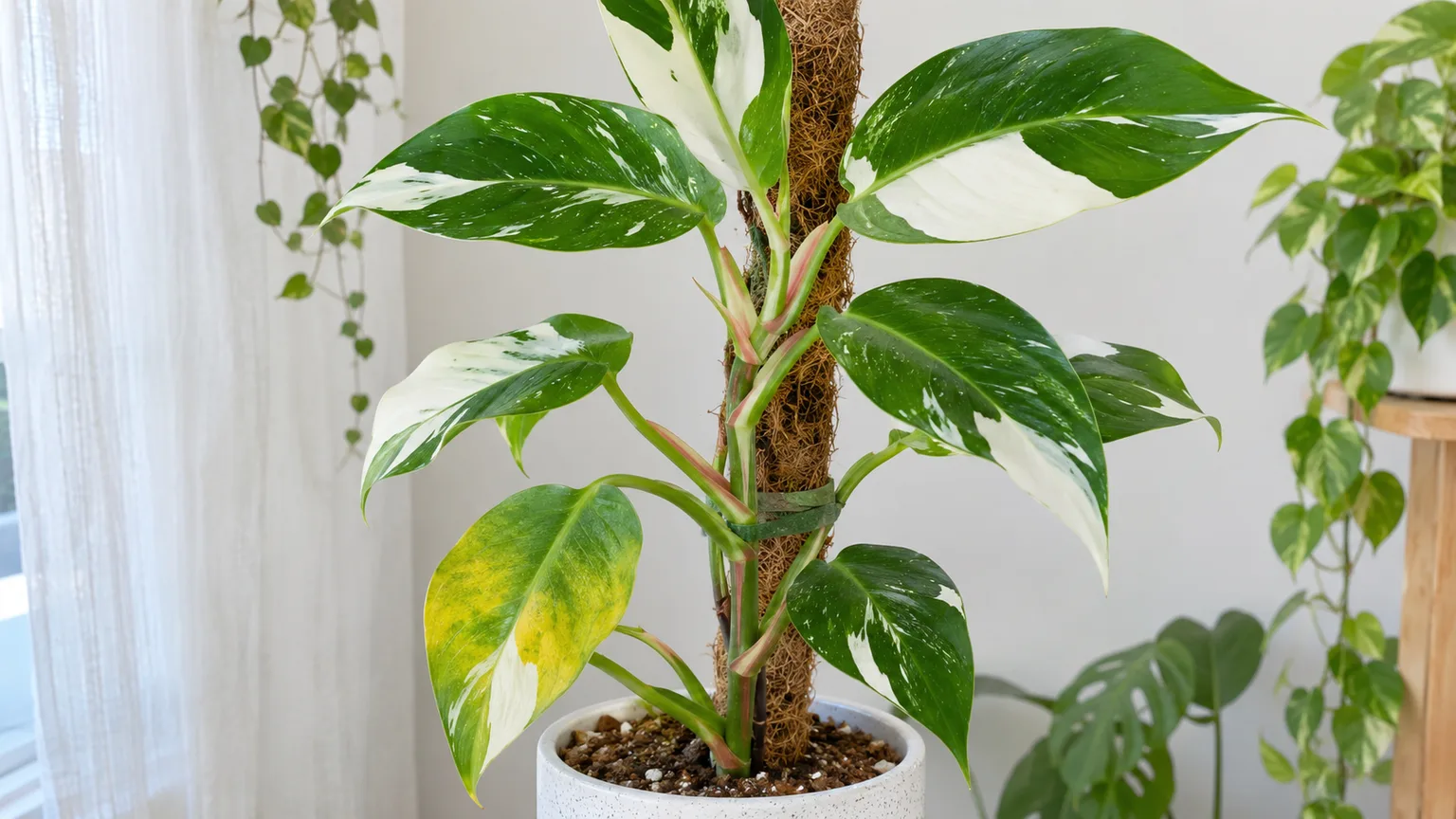
Yellow Leaves on Philodendron White Princess: Causes, Checks & Fixes
This guide covers yellow leaves on Philodendron White Princess. See also the general Yellow Leaves guide, watering, and light pages for this plant.
Yellow Leaves on Philodendron White Princess: Causes, Checks & Fixes
Quick answer
Philodendron White Princess confuses a lot of owners because its prized white splashes can look like bleaching at first glance. Use this page when green tissue is fading, softening, or yellowing from the older leaves upward. For general leaf-color mechanics across all houseplants, see our yellow leaves hub. On this plant, the cause is usually soggy mix, and the single first fix is to confirm deep-soil moisture and let the pot dry before watering again.
White variegation or true yellowing
White Princess is a cultivar of Philodendron erubescens with green leaves splashed with white variegations. Those cream-white sectors have sharp boundaries, feel the same thickness as green tissue, and appear on new leaves as a stable pattern. True yellowing behaves differently: it washes across green areas, often starts on the oldest lower leaves, and the leaf feels limp or papery rather than firm.
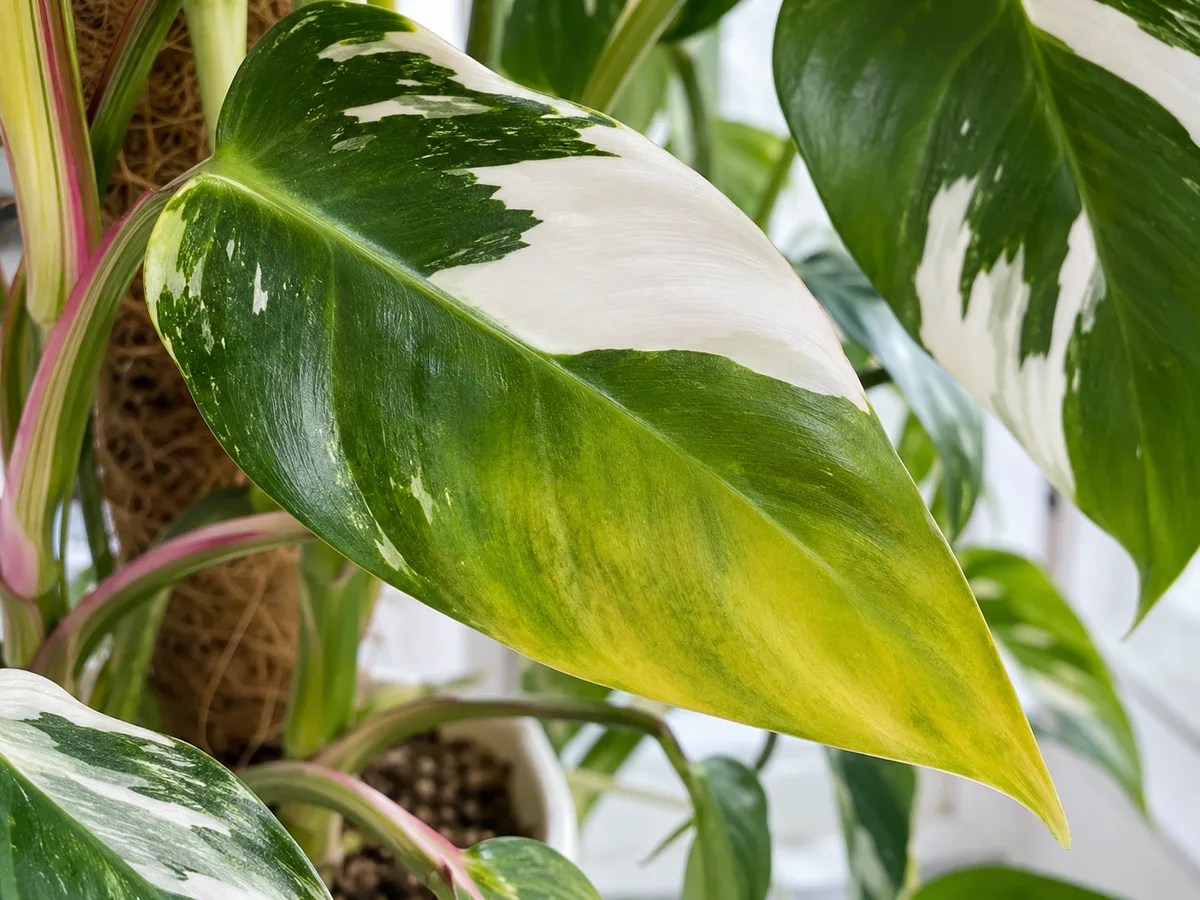
Crisp cream-white sectors are normal variegation; diffuse yellowing across formerly green tissue is a stress signal.
The distinction matters because white tissue carries almost no chlorophyll. As white leaf tissue produces no food for the plant, the green parts work harder, which is why variegated plants can be less robust than their all-green relatives. A White Princess therefore shows stress earlier than a plain green philodendron, and its white zones are always the first to crisp. If the pattern is crisp and the plant is growing, enjoy it. If green areas are fading, keep reading.
Why White Princess leaves turn yellow
Overwatering is the leading cause on this plant. It prefers moist but well-drained soil, and overwatering can cause root rot, which shuts down water and nutrient uptake so lower leaves yellow first. Cachepots without drainage, dense peat-heavy mix, and calendar watering in winter are the usual setups behind it. Because many plant problems and deaths are the result of environmental conditions rather than insects or diseases, rule out water and light before assuming pests.
Low light is the second common driver. This cultivar needs strong indirect light to support its variegation, and dim corners slow growth until older leaves are shed yellow. Direct sun causes the opposite damage: the white zones scorch within days. Old potting mix contributes too, since salts can build up in potting soil and cause leaves to turn yellow or wilt. Underwatering, cold drafts below its preferred warmth, and heavy-handed fertilizer round out the list.
How to confirm the cause
Work through these checks in order and stop at the first match.
- Deep moisture: Push a finger or wooden skewer halfway into the mix. Damp plus yellow lower leaves means too much water. Dusty-dry plus thin, crispy leaves means too little.
- Pot weight and drainage: Lift the pot. Heavy days after watering plus no flow from the holes signals trapped water. Tip the nursery pot out of its cover and empty any standing water.
- Mix age and texture: Squeeze a handful. If it stays a wet ball instead of crumbling, the mix is compacted and suffocating roots. Gritty, fast-draining mix points away from a water problem.
- Light position: Note the distance to the nearest window and any direct sun patches on leaves. Fading in a dark corner implicates light; bleached white zones facing glass implicate sun.
- Pattern and pace: One old leaf fading while new growth looks clean is normal aging. Several leaves yellowing together, or yellowing plus soft stems, means an active root-zone problem.
- Pests: Inspect leaf undersides and stem joints with a lens for spider mites, mealybugs, aphids, or scale before treating anything.
The first fix to try
First, correct the moisture: drain the cachepot, and if the mix is soggy, move the nursery pot to a bright, airy spot and withhold water until the top half of the mix dries. This single drying correction resolves most early cases without repotting, feeding, or spraying. Re-check in three to four days. Only unpot for a root inspection if stems are soft, the mix smells sour, or yellowing keeps spreading during the dry-down.
Step-by-step recovery
Once the mix has dried to the target depth, water thoroughly until flow runs from the drainage holes, then empty the saucer so roots never sit in water. Remove only leaves that are fully yellow and pull away easily; leave partly green leaves attached since they still photosynthesize. If you unpotted and found black, mushy roots, trim those back to firm white tissue, repot into fresh chunky mix, and hold off fertilizer until new growth appears. Judge progress by the newest leaf: firm texture with a clean white-and-green pattern means the plant has turned the corner, usually within two to four weeks in the growing season.
What browning white edges mean
White Princess owners often see the white zones crisp brown while green tissue still looks fine, and this is a variegation problem rather than whole-leaf chlorosis. Any stress shows quickly on the white variegated parts first, causing browning from underwatering, overwatering, low humidity, or sun exposure. Treat brown-edged white sectors as an early warning: stabilize water and light now and the next leaf usually emerges clean. Do not chase the browning with fertilizer, since excess feed burns the white zones fastest.
Light and the variegation tradeoff
This cultivar lives on a light tightrope that all-green philodendrons never face. Too little light and plants can revert, losing their variegation as new leaves emerge plain green. Too much direct sun and the variegated parts burn easily, so only indirect light is safe. Aim for a bright room set back from the window or filtered through a sheer curtain, where the plant casts a soft shadow. If new leaves arrive smaller and greener, move it closer to the light. If white zones bleach or crisp, pull it back. Our light guide covers placement room by room.
Mistakes to avoid
Do not fertilize a yellowing White Princess to green it up. Extra salts in already stressed mix worsen the damage, and concentrated feed marks the white tissue first. Do not repot, prune hard, and spray for pests on the same day, since stacked shocks stall recovery and hide which fix worked. Do not mist the leaves to fix yellowing either, because wet foliage invites the leaf spot this species is prone to while doing nothing for roots. Wear gloves when handling cut leaves and stems, since philodendron sap can irritate skin, and keep the plant out of reach of children and pets. Full background on the species sits at the Philodendron White Princess hub, and every open problem for it is listed in the problems hub.
How to prevent it next time
Prevention follows this plant’s natural preferences: warm temperatures between 65 and 85 degrees, high humidity, and a loose organic mix that drains freely. Water on dryness rather than schedule, checking that the top half of the mix is dry first, as detailed in the watering guide. Pot into an equal-parts style blend of potting compost, perlite, and orchid bark so roots never sit soggy, following the soil guide. In hard-water homes, rainwater or filtered water at room temperature helps keep the mix chemistry stable. Feed with a diluted balanced fertilizer monthly in summer only, per the fertilizer guide, and refresh the mix every two to three years before salts accumulate.
When to worry
Treat the situation as urgent when multiple leaves yellow within days, the stem base softens, growth stalls entirely, or a sour smell rises from the mix. Those signs mean root rot is active and the plant can collapse fast. A single oldest leaf yellowing every month or two while new leaves unfurl patterned and firm is routine turnover. Cold exposure below about 12 degrees can also trigger sudden widespread yellowing, so check for open windows and drafty sills in winter first.
Related tool
Use the Yellow Leaves Diagnosis Tool to narrow the cause for your plant before changing more than one variable at a time.