Mealybugs on Philodendron White Princess: Causes, Checks &
Quick answer
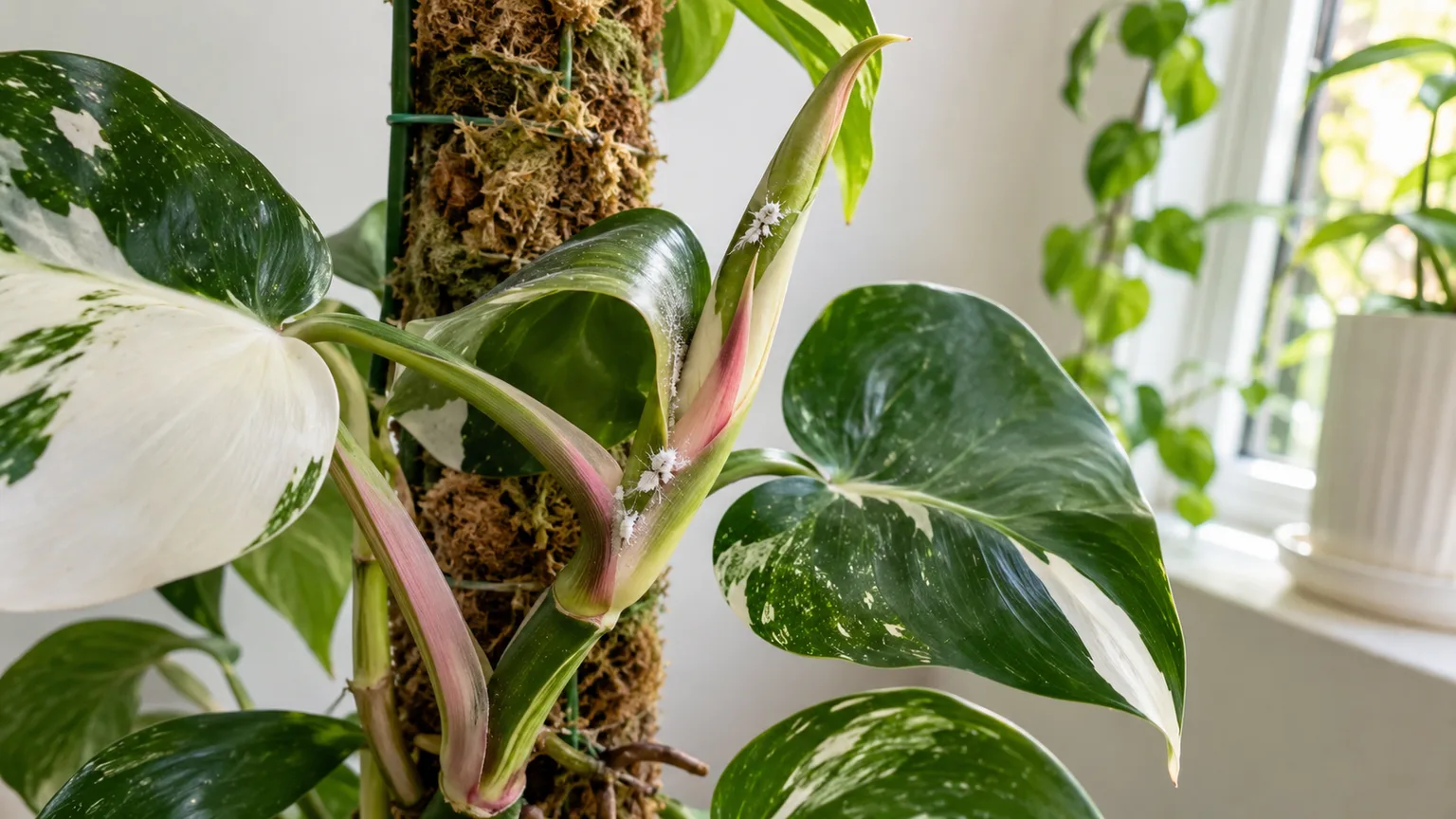
Mealybugs on Philodendron White Princess show as white cottony tufts packed into leaf-sheath seams and the unfurling spear. First step: isolate the plant and dab every visible cluster with 70% isopropyl alcohol on a cotton swab.
Mealybugs on Philodendron White Princess: Causes, Checks & Fixes
This guide covers mealybugs on Philodendron White Princess. See also the general Mealybugs guide, watering, and light pages for this plant.
Mealybugs on Philodendron White Princess: Causes, Checks & Fixes
Quick answer
Mealybugs on Philodendron White Princess show up as white cottony tufts packed into leaf-sheath seams, petiole grooves, and the unfurling spear — rarely out on open leaf faces. First step: isolate the plant and dab every visible cluster with 70% isopropyl alcohol on a cotton swab so the liquid touches each insect directly.
Do not start with a full-plant spray or a repot. White Princess hides mealybugs in tight crevices where sprays never reach, and its pale variegated sectors burn easily under oil or alcohol left sitting in sun.
What mealybugs look like on White Princess
Mealybugs are small, soft, wax-covered insects that cluster in colonies and suck sap from new tissue. On White Princess they read as tiny white cotton balls wedged where the leaf sheath hugs the stem, along the pink-striped petiole grooves, and inside the newest spear before it opens. Heavy feeding leaves a sticky shine on the leaves below and can slow or stall the next leaf.
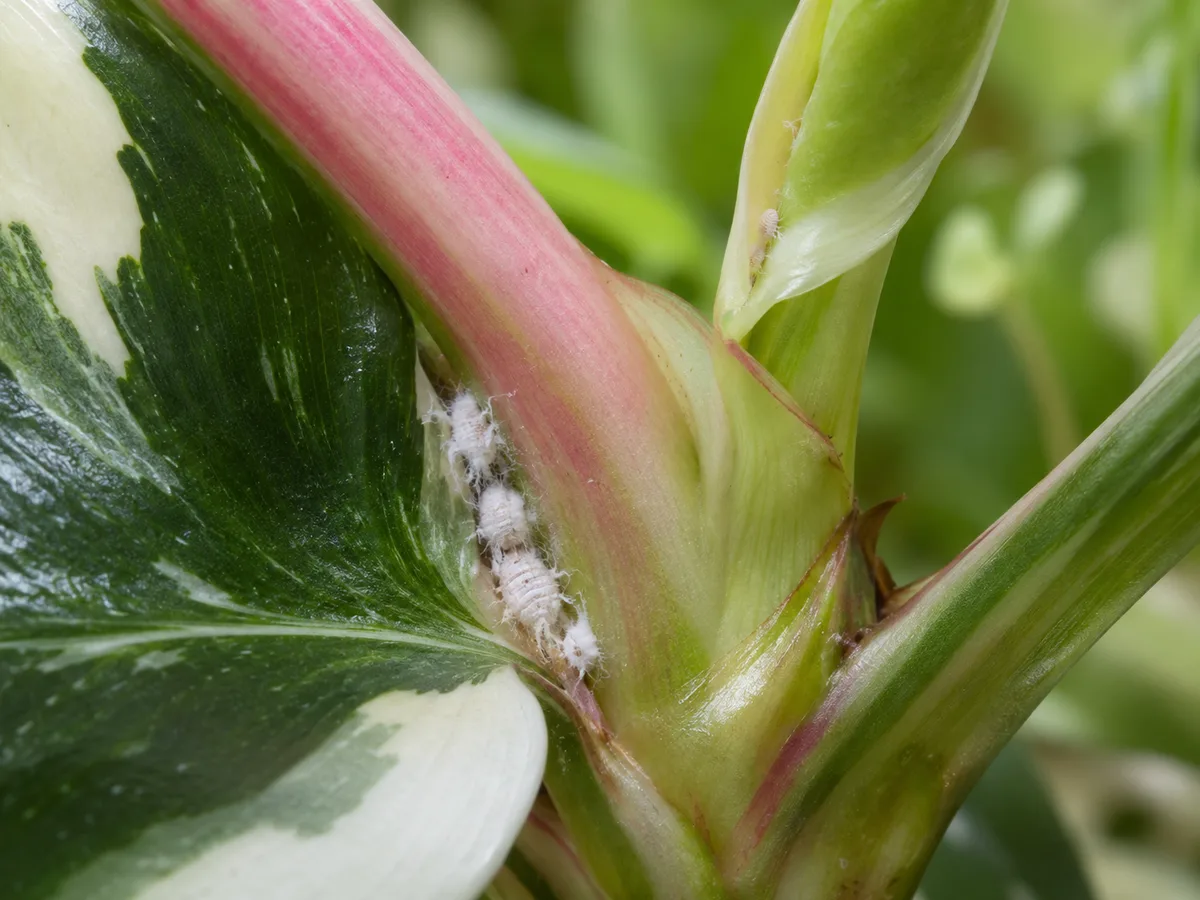
Raised cottony tufts in sheath seams and the unfurling spear are characteristic mealybug hiding spots.
White variegation complicates the ID. From a distance, a small colony can pass as just another pale fleck on a highly white leaf. The touch test settles it: variegation is flat and part of the leaf, while a mealybug tuft is raised, waxy, and smears when pressed with an alcohol-dipped swab.
Where they hide on this climber
White Princess is an upright erubescens climber with clasping leaf sheaths, cataphyll remnants, and grooved petioles — a maze of sheltered seams. Expect colonies in three places first: inside the sheath seam of the newest two leaves, at the base of the unfurling spear, and on the stem side pressed against the moss pole where air stays still and humid. Node bumps and aerial-root nubs are secondary shelters worth parting open with a fingertip.
This matters because a leaf-face inspection misses most of the population. Peel back each sheath gently, unroll nothing by force, and use a magnifier on the crown. Crawlers — the tiny unwaxed young — wander before settling, so also check the leaf just below the visible colony.
Why White Princess draws them
Philodendron sits on the short list of houseplants mealybugs prefer: philodendron is a preferred host, so new plants deserve a close scout before joining the collection and close monitoring for weeks after. Most indoor infestations arrive on a recently purchased or gifted plant, not out of thin air. White Princess adds two risk factors: it pushes soft, nitrogen-fed new spears that mealybugs favor for egg laying, and nursery cuttings often root in humid propagation cups where a starter colony goes unnoticed.
For the general biology of how these insects feed and spread, see our mealybug guide. On White Princess specifically, the pattern is almost always the same: a new plant or a soft growth flush brings them in, and the sheath seams let them build numbers before anyone looks closely.
How to confirm before treating
Confirm with three checks in order. First, find at least one raised white cottony mass in a sheath seam or on the spear, not just flat white leaf markings. Second, look for sticky honeydew — a clear sticky film on leaves beneath the colony, sometimes with black sooty mold growing on it or ants visiting. Third, note the growth response: feeding at stem tips, leaf junctures and new growth weakens and stunts plants and can yellow foliage, so a spear that stalls while tufts multiply points firmly at mealybugs rather than dust or edema.
Rule out lookalikes quickly. Perlite dust and mineral residue wipe away dry with no sticky film. Scale insects are hard bumps that do not smear cottony. Thrips leave silvery rasped patches and black specks rather than cotton. If you are unsure after the three checks, treat one colony with the alcohol dab and watch: a mealybug colony dissolves and smears, dust does not.
First fix: isolate, then alcohol-dab
Move the plant away from everything else — crawlers walk to neighboring pots. Then work through the plant with cotton swabs dipped in 70% isopropyl alcohol, touching each cluster until the white wax dissolves and the insects underneath are wetted. This direct-contact approach matches the standard isolation and dabbing method recommended for manageable indoor infestations, and it avoids drenching the whole plant on day one.
Take your time at the crown: dab inside each sheath seam, around every node, and along the pole-facing side of the stem. Check the Philodendron White Princess overview if you need a refresher on its sheath-and-node anatomy before you start prying. One meticulous pass that gets the hidden clusters is worth more than three quick wipe-downs of open leaves.
Follow-up sprays and the repeat cycle
The dab kills what you can see, not the eggs sealed under wax or the crawlers that hatch days later. About a week after the first pass, treat remaining activity with insecticidal soap or neem oil according to the label, coating leaf undersides and sheath seams in the evening. Repeat applications on a weekly rhythm for three to four weeks, since repeat sprays catch new hatch that a single treatment misses.
Between rounds, keep inspecting rather than spraying on a calendar alone. If fresh tufts keep appearing only at one node, keep dabbing that node instead of escalating to stronger chemistry. Reserve systemic insecticides for large collections with label approval for indoor ornamentals, and never stack a systemic, a repot, and a hard prune in the same week on an already stressed plant.
Protecting white variegation during treatment
Pale White Princess sectors have little chlorophyll and scorch faster than green tissue, so treat the white areas as delicate. Test the alcohol swab on one green patch first and check the next day for browning before working across variegated leaves. After any soap or oil application, keep the plant out of direct sun until the leaves are fully dry, and blot pooled liquid out of the spear and sheath seams with a dry swab.
If the plant leans on a moss pole, pull the stem gently away from the pole while treating so the contact side dries. Review the light guide and hold the plant in bright indirect light during recovery — strong enough to support the next spear, never harsh midday sun on freshly treated leaves.
Node-cutting backup when the crown is packed
Erubescens-type philodendrons root readily from stem nodes, which gives you a clean restart option when the crown is matted in wax. If the growing tip has stalled for weeks under a heavy colony, take a top cutting with two to three firm nodes showing stem variegation, strip the infested lower leaves, dab every node seam with alcohol, and root it separately in water or damp perlite. Keep the cutting in its own quarantine spot until two clean leaves open.
Do not attempt this on day one for a light infestation — dabbing and follow-up sprays clear most cases. The cutting is a backup for plants whose spear and upper sheaths are too encrusted to clean without destroying the growth point.
Mistakes to avoid
Do not fertilize your way out of this. Fresh nitrogen pushes exactly the soft growth where mealybugs prefer to lay eggs, so pause feeding until new spears open clean; the fertilizer guide sets the normal schedule to return to. Do not repot on discovery day either — White Princess sulks when its chunky mix is disturbed, and a repot scatters crawlers through fresh medium. Confirm the soil guide mix is draining well, correct the watering rhythm if the pot stays soggy, and let the plant stabilize between interventions.
Two more common errors: blasting the plant with a hose, which drives crawlers deeper into the sheaths, and spraying oil in bright light, which cooks the white sectors. Evening treatments, dried leaves, and targeted dabs beat force every time.
Prevention tied to this plant’s routine
Quarantine every newcomer for several weeks and inspect the sheath seams twice before it joins the shelf — this single habit prevents most repeat infestations. Keep White Princess in bright indirect light with the top few centimeters of mix drying between waterings so growth stays compact and firm rather than stretched and soft. Wipe the pole-facing stem monthly and check inside the newest sheath weekly; a colony of three bugs takes seconds to dab, while a colony of three hundred takes a month.
When to worry
Escalate when the spear is matted shut, when several leaves yellow within a week, or when honeydew and sooty mold spread to neighboring plants despite isolation. A plant that drops leaves and stalls all new growth after a full month of thorough treatment is telling you the infestation outruns the host — at that point, take the cleanest top cutting if one exists and discard the rest rather than dosing endlessly.
Related tool
Use the Pest Identifier Tool to narrow causes for mealybugs on this plant before changing multiple variables at once.