Underwatering on Philodendron White Princess: Causes
Quick answer
Underwatering on Philodendron White Princess shows as limp leaves that perk up after watering, crisp brown edges on the white sectors, and a light pot with dry mix 3 to 5 cm down. First step: soak the pot thoroughly until water drains freely, tip the saucer dry, then resume watering when the top half of the mix dries.
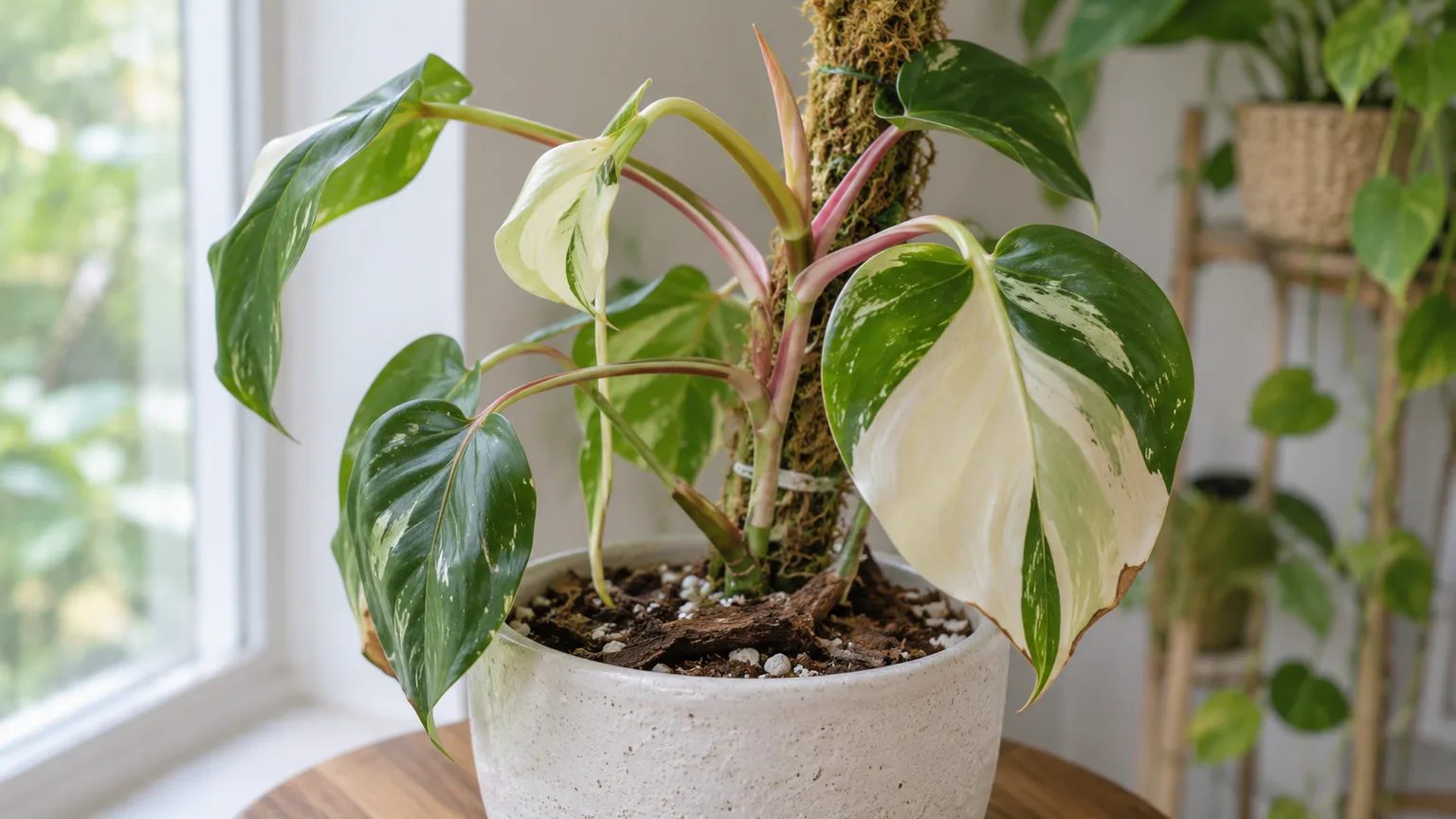
Underwatering on Philodendron White Princess: Causes, Checks & Fixes
This guide covers underwatering on Philodendron White Princess. See also the general Underwatering guide, watering, and light pages for this plant.
Underwatering on Philodendron White Princess: Causes, Checks & Fixes
Quick answer
Philodendron White Princess is a variegated form of Philodendron erubescens, a climbing tropical perennial that wants moist, well-drained soil rather than a permanent drought. Underwatering shows up as limp, soft-drooping leaves, dry and crumbly mix 3 to 5 cm down, a noticeably light pot, and crisp brown edges that start on the white sectors. The dead giveaway is reversibility: thirsty leaves perk up within hours of a good drink.
First step: soak the pot thoroughly until water runs freely from the drainage holes, then tip the saucer dry. That single deep drink tells you whether the plant was simply thirsty or whether something else is wrong.
What underwatering looks like on White Princess
The whole plant goes limp at once, leaves and petioles sagging together rather than one lower leaf yellowing at a time. The mix feels dry and crumbly several centimeters down, the pot lifts easily, and you may see the soil surface shrinking back from the pot rim. After repeated dry spells, leaf edges turn papery and brown, and the damage almost always starts on the white splashes: pale tissue with no food-producing chlorophyll desiccates first while neighboring green tissue still looks acceptable.
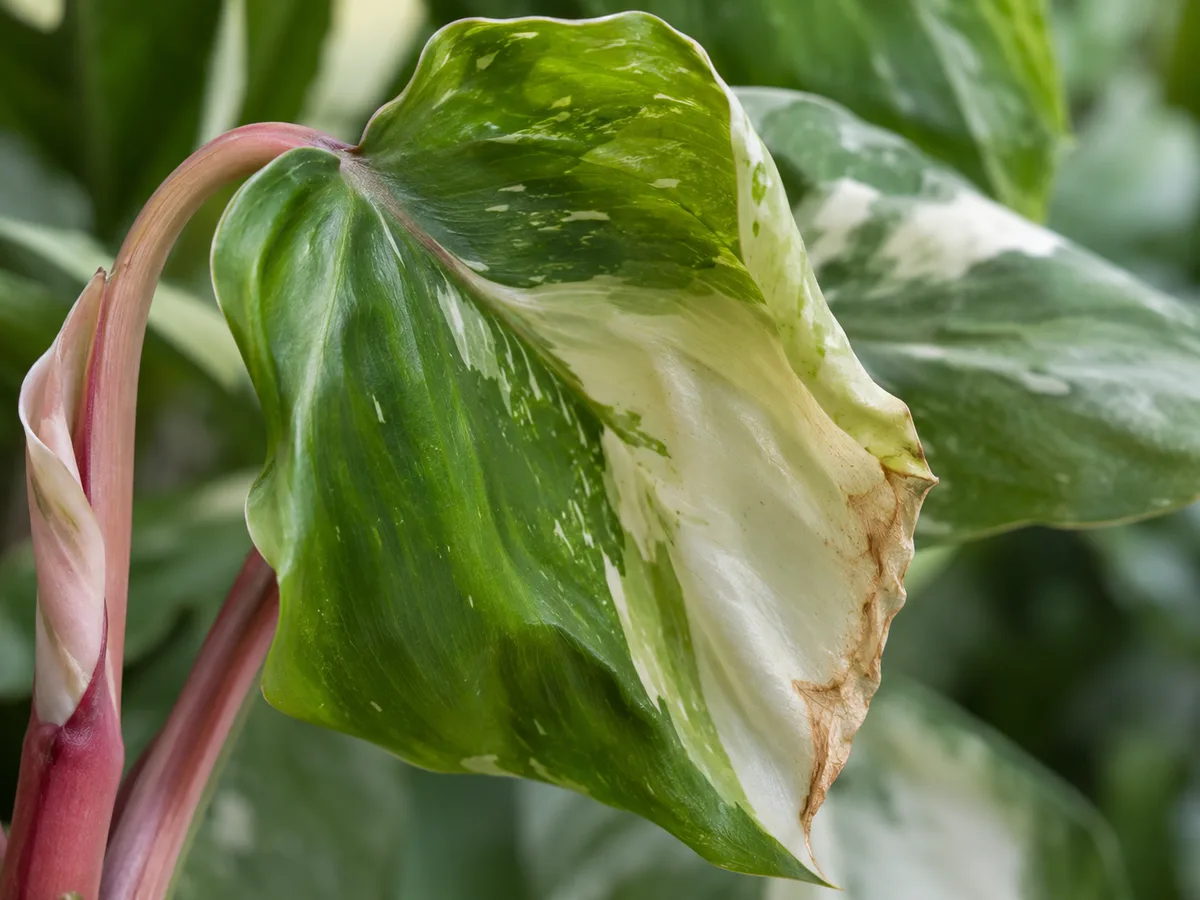
Crisping often appears first along the white sectors; dry mix and a light pot help confirm thirst.
Watch the newest leaf. White Princess pushes growth from a sheath, and a thirsty plant stalls mid-unfurl: the spear sits half-open, feels dry and papery, and may emerge smaller with a crinkled tip. Older leaves may curl inward along the margins to cut water loss, and in long droughts the plant sacrifices the oldest leaves, which yellow from the edges inward and drop.
Why White Princess runs dry
This species roots into loose organic debris in Colombian rainforests, so its fine roots expect a cycle of thorough wetting followed by airy dry-down, not weeks of dust. Indoors, four White Princess setups dry out far faster than their owners expect. For how drought stress weakens houseplants in general, see our underwatering guide. On White Princess, the pattern usually shows up as whole-plant limpness plus crisping white edges while the newest leaf stalls half-unfurled.
Plant-specific drying traps:
- Variegation with no energy reserve. NDSU Extension notes that white leaf tissue makes no food for the plant, so variegated plants can be less robust than their green counterparts. White Princess carries exactly that handicap: heavily splashed leaves transpire normally but photosynthesize poorly, so repeated drought exhausts the plant faster than it would a plain green philodendron.
- Chunky bark mix in a small pot. The airy aroid mix White Princess needs holds little water by design. In a 10 cm pot near a bright window, that mix can swing from soaked to bone-dry in under a week of summer growth, and each missed check lands harder than it would in dense peat.
- A moss pole that drinks first. A climbing White Princess on support sends aerial roots into the pole. If you wet the pole but skip the pot, or the pole wicks pot moisture upward and dries it faster, the root ball can sit dry while the pole looks damp.
- Heat and bright light speed. Warm rooms above radiators or in strong indirect light pull water from those big glossy leaves fast. The summer schedule that worked in May fails in a July heatwave without any change in your habits.
How to confirm the cause
Work in this order so one check builds on the last:
- Probe at depth. Push a finger 3 to 5 cm into the mix near the pot edge. Dry and crumbly at depth means drought; cool and clinging means water is present and the limpness has another cause.
- Lift the pot. A thirsty pot feels strikingly light. Learn its dry weight now so future lifts take two seconds.
- Look at the soil surface. Mix pulling away from the pot walls or a hard, shrunken surface means the root ball went hydrophobic and needs a slow rehydration, not a fast pour that runs down the gap.
- Run the perk test. Water thoroughly and wait two to four hours. Genuinely underwatered leaves firm up visibly; leaves that stay limp in now-moist mix point toward root damage instead.
- Read the newest leaf. A dry stalled spear with papery edges fits repeated underwatering. A mushy collapsed spear in damp mix points the other direction entirely.
The first fix to try
Soak the whole root ball in one session: pour slowly across the surface until water streams from the drainage holes, wait ten minutes, then repeat so the center of the ball actually wets. Tip the saucer dry afterward. This mirrors the standard erubescens rhythm of letting the top half of the soil dry out between waterings, then watering well.
Do nothing else that day. No fertilizer, no repot, no pruning. One change lets you read the perk response honestly within hours.
Step-by-step recovery
Mild cases (limp leaves, dry mix, firm stems): the first soak is usually the whole fix. Leaves firm up by evening. Resume the check-before-you-water rhythm and watch the next leaf unfurl cleanly.
Moderate cases (shrunken hydrophobic mix, crisped white edges): water in two slow passes or stand the nursery pot in a few centimeters of room-temperature water for ten to fifteen minutes so the shrunken ball rehydrates from all sides, then drain fully. Loosen the top centimeter of crust with a chopstick so future pours penetrate instead of sheeting off. Trim only fully crisped brown edges with clean scissors, leaving a thin brown margin so you do not wound living tissue.
Severe cases (whole plant collapsed, mix like dust, brittle roots at the surface): soak, drain, and give the plant a humid, bright-indirect recovery spot out of direct sun for a week. If leaves stay limp two days after the mix is genuinely moist, slide the root ball out: white flexible roots mean keep waiting, while widespread brittle brown fine roots mean trimming the dead fraction and repotting into fresh chunky aroid mix sized to the living roots. Remember that experience with this cultivar says it is far easier to overwater than to underwater, so rebound with normal dry-down checks, not daily rescue sips.
The stuck-spear check only climbers need
White Princess unfurls each leaf from a papery sheath, and drought glues that mechanism shut. If a spear has stalled for more than a week, feel it: dry and papery means underwatering, and normal watering plus steady room humidity usually releases it within days. Never force a stuck leaf open with your fingers; torn spears scar permanently and invite rot at the wound. If the sheath feels soft or smells off in damp mix, that is a rot signal, not a thirst signal, and belongs in the problems hub differential, not the watering can.
Recovery timeline
Limp leaves typically firm up within two to six hours of a real soak. That is your confirmation, not your victory: the plant then needs one to two weeks of steady dry-down cycling before you trust it again. Expect the next new leaf, usually two to four weeks out in warm bright conditions, to unfurl clean and full-sized. Crisped white margins will never green up again, so judge everything by new growth. If limpness returns days after every watering despite moist mix, unpot and inspect roots rather than pouring more.
Mistakes to avoid
- Daily rescue sips. Small daily pours keep the top damp while the core stays dry, then swing the plant into overwatering within a week. Soak fully, then wait for the top half to dry.
- Fertilizing a wilted plant. Drought-stressed roots take up salts poorly, and fertilizer in dry mix burns them. Resume feeding only after new growth looks healthy for a couple of weeks.
- Misting instead of watering. Wet leaves do nothing for dry roots. The RHS advises letting the compost dry slightly between waterings without leaving plants standing in water, and neither half of that rule is satisfied by a spray bottle.
- Repotting on day one. A limp but firm-stemmed plant needs water, not a new pot. Unpot only if the perk test fails and roots look damaged.
- Blaming the white sectors. Crisping pale edges look like a variegation defect but almost always trace to the root zone going dry. Fix water before hunting for exotic causes.
How to prevent it next time
Prevention is a checking habit, not a schedule. Water thoroughly when the top half of the mix is dry, roughly every 7 to 10 days in active summer growth and every 10 to 14 days in winter, always confirmed by finger and pot weight rather than the calendar. Keep the plant in bright indirect light so growth stays compact, since dim corners slow everything and heatwaves accelerate it; see the light guide if you recently moved the plant. Small pots, bark-heavy mixes, and warm spots get checked twice as often. And act early on purpose: the Missouri Botanical Garden notes that environmental stress comes first and weakened plants are attacked by insects and disease only afterward, so a timely drink prevents pest problems too.
When to worry
Treat it as urgent when the whole plant collapses in a feather-light pot, mix has pulled cleanly from the walls, or several leaves crisp simultaneously in heat. Those cases justify same-day soaking, not waiting for the weekend. A single limp afternoon that resolves by evening, or one crisped edge on an otherwise firm plant, is routine thirst. Start from the Philodendron White Princess overview if you are unsure which symptom guide fits, since limpness overlaps with several problems.
Related tool
Use the Plant Watering Calculator to estimate a sensible check-back interval for underwatering recovery on this plant before changing multiple variables at once.