Overwatering on Philodendron White Princess: Causes, Checks
Quick answer
Overwatering on Philodendron White Princess shows as yellow lower leaves, limp stems, and mix that stays wet 3 to 5 cm down days after watering. First step: stop watering and let the top 3 to 5 cm of mix dry before you pour again.
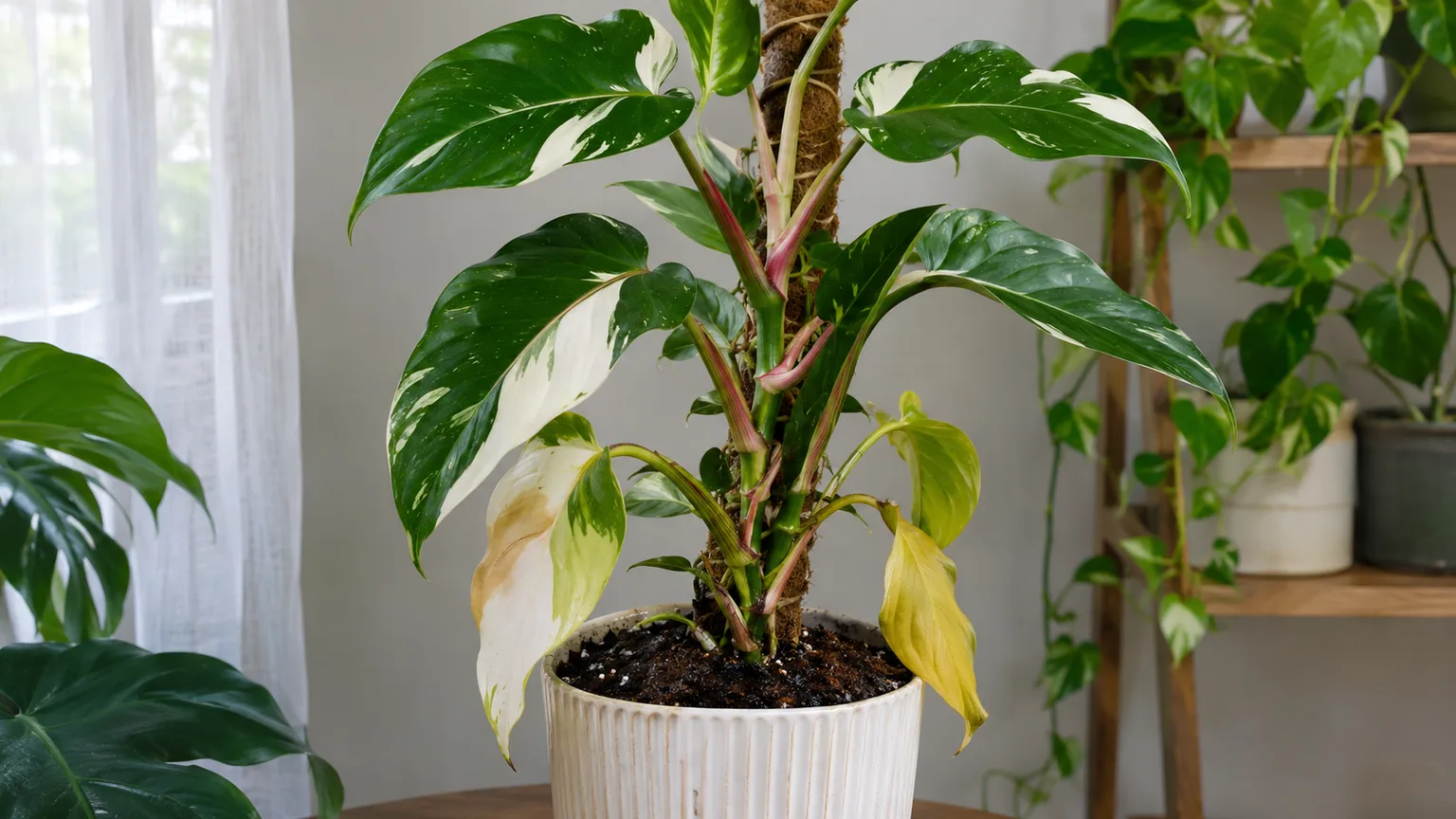
Overwatering on Philodendron White Princess: Causes, Checks and Fixes
This guide covers overwatering on Philodendron White Princess. See also the general Overwatering guide, watering, and light pages for this plant.
Overwatering on Philodendron White Princess: Causes, Checks and Fixes
Quick answer
Philodendron White Princess is a variegated form of Philodendron erubescens, a climbing tropical perennial that wants moist but well-drained soil rather than constantly wet mix. Its white-splashed leaves photosynthesize less than plain green leaves, so it drinks more slowly than its size suggests, and a weekly pour on a fixed schedule easily outruns what the roots can use. Overwatering shows up as yellow lower leaves, limp stems, stalled new growth, and a pot that stays heavy days after watering.
First step: stop watering and let the top 3 to 5 cm of mix dry out before you pour again. That single pause tells you whether the plant only needs a rhythm change or whether stems and roots are already failing.
What overwatering looks like on White Princess
Lower leaves yellow first while the mix still feels damp a few centimeters down. The white sectors often show damage earliest, turning yellow or developing soft brown patches, because the pale tissue is thinner and less forgiving than the green parts of the leaf. Stems go limp rather than crisp, and a new leaf may stall half-unfurled or emerge smaller than the last one.
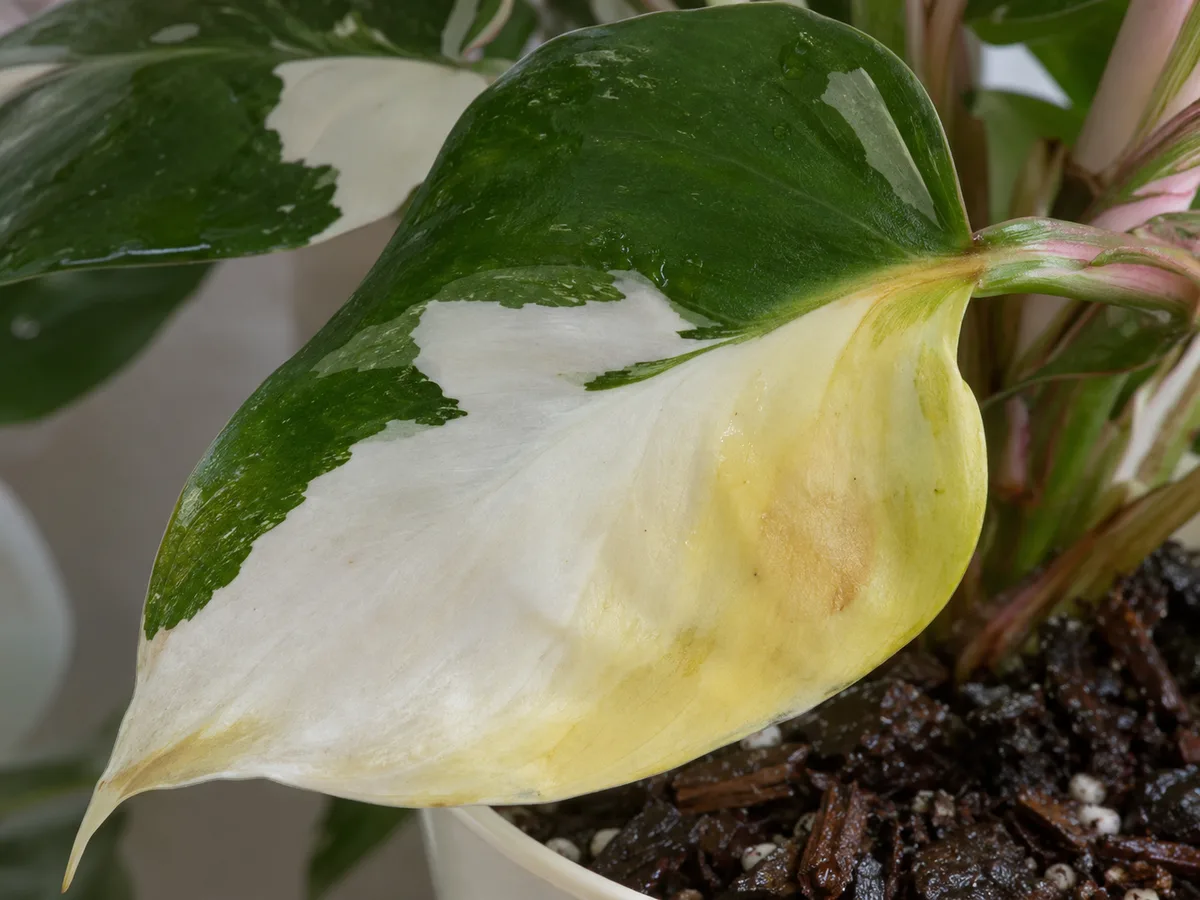
Overwatering can soften and yellow lower leaves while the pot remains heavy and damp.
A heavy pot is the giveaway. Lift it a day or two after watering: if it still feels dense and the surface looks dark and compacted, water is sitting where the roots need air. You may also notice fungus gnats hovering, a sour or musty smell from the mix, or white mold crusting on the surface. Soft, dark stem bases are the line between simple overwatering and advancing rot.
Why White Princess gets overwatered
In the wild, philodendrons are hemi-epiphytes that root into loose bark and leaf litter, so their roots expect air around them between rains. A dense peat mix in a decorative cachepot is the opposite of that habitat, and it stays wet far longer than the plant’s root ball can tolerate. For how chronic wet mix damages roots in general, see our overwatering guide. On White Princess, the pattern usually shows up as limp stems and yellowing lower leaves while the top of the pot looks deceptively dry.
Three White Princess traits make it especially easy to overdo:
- Slow-drinking variegation. The white patches contribute little energy, so the plant uses water more slowly than a green philodendron of the same size. Bright indirect light helps it keep up; dim corners slow water use further while the watering can keeps coming.
- A moss pole that never dries. Climbing support encourages bigger leaves, but a constantly soaked pole wicks moisture down into the mix and keeps the root zone wet between waterings.
- Winter slowdown. Growth nearly idles in cool, darker months, stretching the dry-down from days to weeks. The summer schedule that worked in July drowns the plant in January.
Oversized pots and pots without drainage holes complete the trap: extra wet mix around a small root ball simply never dries.
How to confirm the cause
Work in this order so one check builds on the last:
- Probe at depth. Push a finger or wooden chopstick 3 to 5 cm into the mix near the pot edge. Surface dryness means nothing; dampness at depth days after watering confirms excess moisture.
- Lift the pot. A waterlogged pot feels noticeably heavy. Compare it against how it feels when fully dry so you learn its dry weight.
- Inspect drainage. Pull the nursery pot out of any cachepot, check that the hole is open, and tip out standing water from the saucer. Blocked drainage explains many cases on its own.
- Read the stems and newest leaf. Firm green stems with one or two yellow lower leaves suggest simple overwatering. Soft or dark stem bases, a sour smell, or a collapsed new leaf point toward root rot instead.
- Rule out thirst. Underwatered leaves feel thin, papery, and crisp with dry, light mix. Overwatered leaves feel soft and limp in heavy, damp mix. The finger test settles it.
The first fix to try
Stop watering and move the plant through a full dry-down: wait until the top 3 to 5 cm of mix is dry before watering again. Set the nursery pot where air circulates, empty the saucer after every future watering, and give bright indirect light so the leaves start using moisture again. This matches the core philodendron rule to let the compost dry slightly between waterings and take care not to overwater.
Do nothing else during this pause. No fertilizer, no repot, no pruning. One change lets you read whether yellowing stops and the next leaf unfurls cleanly.
Step-by-step recovery
Mild cases (firm stems, just yellow lower leaves): dry-down is usually enough. Keep the check-before-you-water rhythm going forward, improve light if the plant sits in a dim corner, and remove only fully yellow leaves once they come away easily.
Moderate cases (soggy mix that never dries, gnats, surface mold): slide the root ball out and inspect it. Healthy roots look pale and flexible. If most roots look sound, scrape off moldy top mix, refresh it with chunky aroid mix, confirm the drainage hole is clear, and return the plant to the same pot. Clemson Extension advises keeping philodendron soil evenly moist but never soggy, and never letting plants stand in water.
Severe cases (soft stem bases, sour smell, black mushy roots): trim away every black or mushy root with clean scissors, keeping only firm pale roots. Repot into fresh chunky mix with perlite and orchid bark in a right-sized pot with drainage, water lightly once to settle it, then resume the dry-down rhythm. Variegated erubescens types do best in a chunky, well-draining potting mix in a pot with drainage holes, which is exactly what a recovering White Princess needs.
Water at the base when you resume, keeping water off the foliage, since wet leaves invite the leaf spot problems this species is prone to.
When only cuttings can save it
If the stem base has gone fully soft but upper nodes still look firm, White Princess can restart from stem cuttings. Choose a section with at least one node showing the pink striping on the green stem, since that striping marks the variegation you want to keep. Root it in water or damp perlite in bright indirect light, and discard any mushy tissue so rot does not travel with the cutting. This backup plan is worth knowing because a rotted crown rarely recovers, while a single good node often does.
Recovery timeline
Leaves that already yellowed will not turn green again. Expect the plant to stabilize first: no new yellowing for one to two weeks after the dry-down. Then watch the newest leaf. A clean, firm unfurling leaf is the real sign of recovery, typically two to four weeks after correction in warm bright conditions. If yellowing keeps climbing the stem or new growth emerges distorted, unpot and check the roots rather than waiting longer.
Mistakes to avoid
- Watering on a calendar. White Princess wants water when the top 3 to 5 cm dries, not every Sunday. Seasonal and light changes shift the schedule constantly.
- Misting a stressed plant. Extra surface moisture does nothing for wet roots and keeps foliage damp enough for leaf spot.
- Fertilizing during the crisis. Salts stress damaged roots further. Resume feeding only after new growth looks healthy for a couple of weeks.
- Repot-ting into a bigger pot. More mix means more trapped water. Same size or smaller, with drainage, until the plant rebounds.
- Stacking fixes. Dry-down first, then reassess. Repotting, pruning, moving, and feeding all in one weekend hides which change worked and stresses the plant further.
How to prevent it next time
Prevention is a rhythm, not a gadget. Water when the top 3 to 5 cm is dry, roughly every 7 to 10 days in summer and every 10 to 14 days in winter, adjusting to your light and pot size. Keep the plant in chunky aroid mix with perlite and orchid bark, always in a pot with a working drainage hole, and tip saucers dry. Hold it in bright indirect light so the variegated foliage keeps transpiring, keep it above 15°C, and let a moss pole dry between soakings rather than keeping it perpetually damp.
Remember what is happening underground: roots in waterlogged soil die because they cannot absorb the oxygen they need, and the damage is often mistaken for a pest problem. Checking moisture before every watering is the cheapest prevention there is.
When to worry
Treat it as urgent when stem bases soften, the mix smells sour, multiple leaves collapse within days, or the plant wilts despite wet soil. Those signs mean root function is failing and same-day unpotting is justified. A single yellow lower leaf on an otherwise firm plant in damp mix is routine overwatering, not an emergency, and a patient dry-down resolves it.
Related tool
Use the Plant Watering Calculator to estimate a sensible check-back interval for overwatering recovery on this plant before changing multiple variables at once.