Spider Mites on Philodendron White Princess: Causes, Checks
Quick answer
On Philodendron White Princess, spider mites show as tiny pale stippling dots plus fine webbing on leaf undersides, easiest to spot on the white variegation. First step: isolate the plant and rinse the undersides of every leaf in the shower, then confirm live mites with a white-paper tap test before spraying anything.
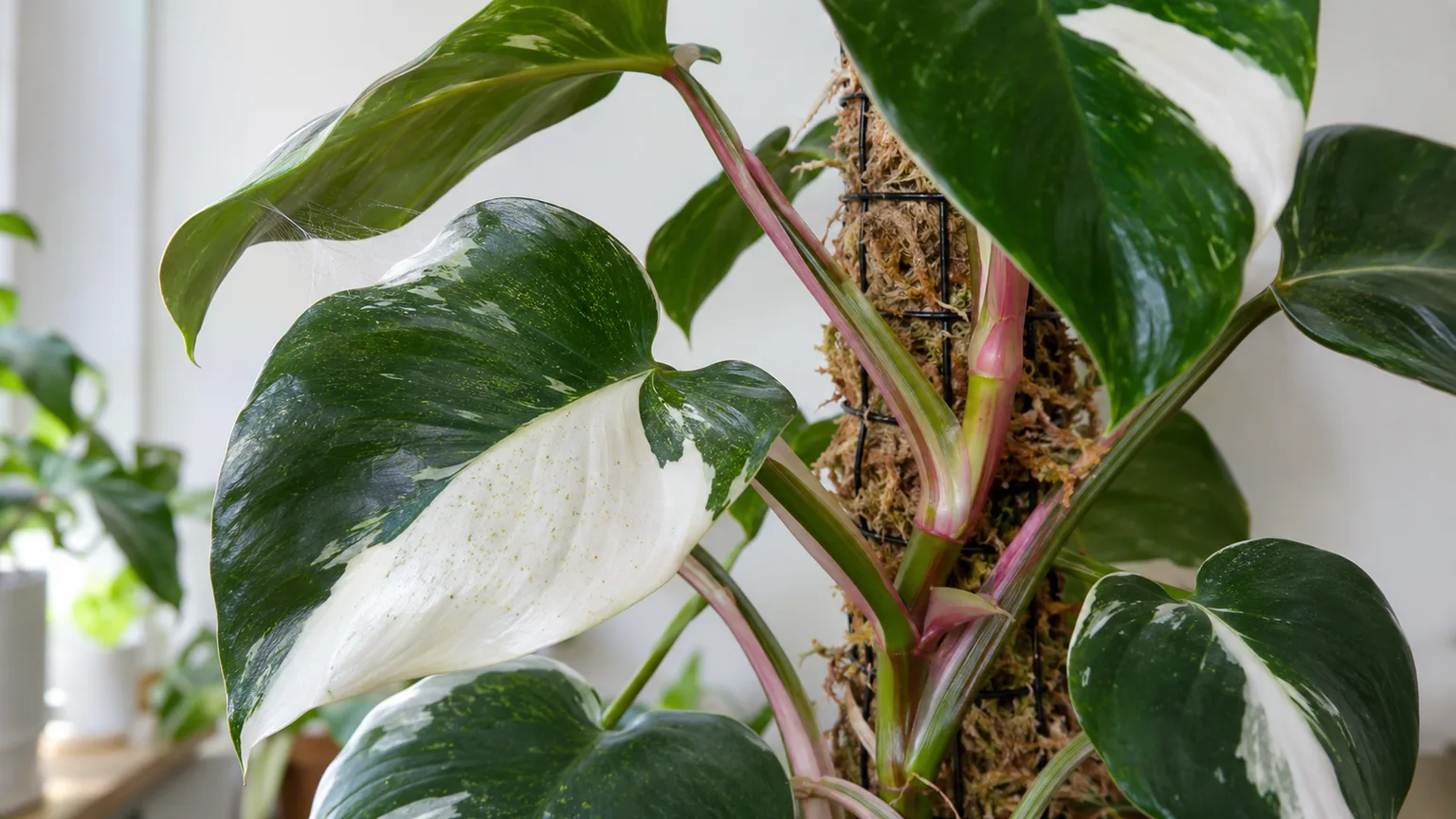
Spider Mites on Philodendron White Princess: Causes, Checks & Fixes
This guide covers spider mites on Philodendron White Princess. See also the general Spider Mites guide, watering, and light pages for this plant.
Spider Mites on Philodendron White Princess: Causes, Checks & Fixes
Quick answer
On Philodendron White Princess, spider mites show as tiny pale stippling dots plus fine webbing on leaf undersides, easiest to spot on the white variegation. First step: isolate the plant and rinse the undersides of every leaf in the shower, then confirm live mites with a white-paper tap test before spraying anything.
For the general mechanics of how these pests feed and spread, see our spider mite hub. On a White Princess, the pattern usually shows up first as faint speckling on the white patches, because damage is far more visible there than on the green tissue.
What spider mites look like on a White Princess
The earliest sign is stippling: clusters of tiny yellow-white dots on the upper leaf surface where mites pierce individual cells and suck out the contents. On the green parts of the leaf this speckling is subtle, but on the white variegation it reads as dirty-looking flecks that will not wipe off. As colonies grow, leaves take on a dull gray or bronzed cast, and fine silk webbing appears around leaf undersides, petioles, and the unfurling spear.
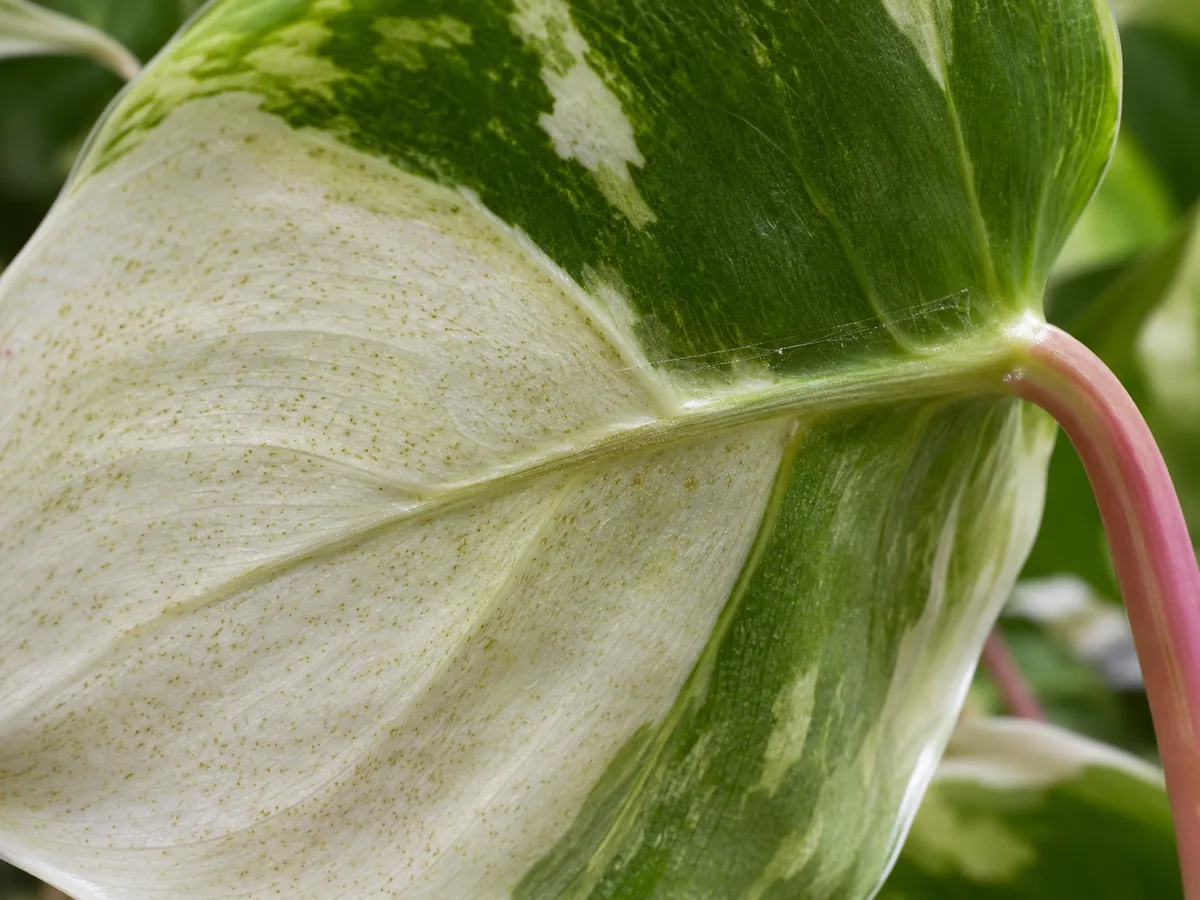
Spider-mite feeding leaves tiny pale stipples, with fine silk often visible on leaf undersides.
Mites themselves are barely visible without magnification. They gather in colonies on the undersides of leaves, often near veins, and heavy infestations wrap leaves in condensed webbing that is tighter and messier than a spider’s web. Severe cases yellow whole leaves and drop them, starting with older foliage while new growth emerges already speckled.
Where mites hide on a White Princess
This plant gives spider mites three excellent hiding places, and each one changes where you inspect. First, the broad heart-shaped leaves have large, smooth undersides where colonies of a hundred or more mites can feed undisturbed. Second, the tightly furled new spear traps mites inside its folds, so a leaf can emerge pre-damaged even after you have cleaned every open leaf. Gently unroll and check each spear with a lens.
Third, White Princess is a climber that is often grown up a moss pole or trellis, and the damp, fibrous pole surface plus clasping aerial roots shelter mites and eggs through a single-leaf rinse. When you treat the plant, rinse and wipe the pole too, and check where petioles meet the support. If your plant leans on the main plant hub photos for what healthy new growth should look like, compare each emerging spear against that clean unfurl.
Why a White Princess gets spider mites
Spider mites thrive in hot, dry, dusty indoor air, and dry conditions greatly favor them because low humidity speeds their feeding while stressing their natural enemies. A White Princess near a radiator, heat vent, or sun-baked windowsill in winter is the classic victim: the air is arid, the plant is slightly drought-stressed, and there are no predatory mites indoors to check the colony.
Drought stress itself makes the problem worse. Plants short of water can shift in chemistry in ways that make them more nutritious to mites, so a White Princess allowed to dry out hard between waterings is more vulnerable than one kept evenly moist. Review your routine against the watering guide — this species wants moist, well-drained mix, not a full dry-down. Dusty leaves compound the issue, since dust both hides early stippling and creates a favorable surface for mites; plants that have not been wiped or rinsed in months are usually hit hardest.
New-plant introductions are the other common trigger. Mites ride in on nursery foliage and spread leaf-to-leaf, which is why infestations often appear two to three weeks after bringing home a new aroid. Quarantine newcomers away from your White Princess for at least two weeks.
How to confirm the cause
Do the white-paper tap test first: hold a sheet of white paper beneath several leaves and tap the foliage sharply. If tiny specks fall and crawl, you have live mites — this simple test is one of the most reliable home confirmations. Then inspect with a 10x hand lens: look on leaf undersides for moving dots plus translucent eggs, cast skins, and eggshells, which confirm an active breeding colony rather than old damage.
Rule out lookalikes before treating. Thrips leave dark fecal specks and silvery scraped patches; mealybugs show as cottony clusters in axils; simple dust wipes away while stippling does not. The problems hub can route you to the right comparison page if the tap test comes back negative but the foliage still looks off.
The first fix to try
Isolate the plant and rinse the undersides of every leaf thoroughly in the sink or shower. This single action physically removes a large share of mites, eggs, and webbing with zero chemical risk to the variegation, and it is the recommended opening move: periodically hosing small houseplants and wiping larger leaves with a soft damp cloth is the core of indoor mite control. Support each White Princess leaf from above while the water hits the underside so petioles do not snap, and include the unfurling spear and moss pole.
Then wait and re-check in three to four days with another tap test. Only if live mites persist should you move to sprays. Do not start with fertilizer, repotting, or a pesticide stack — a stressed plant needs the colony knocked down first, and you need the re-check to tell you whether the rinse was enough.
Step-by-step recovery
- Isolate and rinse. Move the plant away from all other houseplants and shower leaf undersides, stems, and the pole. Bag and snip off the worst webbed leaves.
- Treat every susceptible plant at once. Mites wander, so rinse neighboring houseplants the same day rather than playing whack-a-mole one pot at a time.
- Apply soap or oil only if mites persist. Insecticidal soaps work on spider mites but only where the spray directly wets the mites, with no residual effect — so coat every underside until dripping, and repeat at one- to two-week intervals while populations persist. Neem and horticultural oils are the other homeowner options, applied the same way with thorough underside coverage.
- Protect the white variegation during sprays. Test any soap or oil on one leaf first, spray in the evening out of direct sun, and keep the plant out of bright light until dry — white tissue scorches more readily than green. Never use household liquid soaps or cleaning products as substitutes.
- Repeat on schedule. Because most mite treatments miss eggs, plan two to three applications spaced out, and keep tap-testing between rounds. If one product fails after two full rounds, switch modes rather than doubling the dose.
Broad-spectrum insecticides often backfire: they kill mite predators and some, like carbaryl, can trigger worse outbreaks, so avoid them for indoor mites.
Recovery timeline
New damage should stop appearing within one to two weeks of effective treatment — the key metric is clean stipple-free tissue on leaves that unfurl after treatment, not the old leaves improving. Old stippling, bronzing, and web scars are permanent; heavily marked leaves will never look pristine, though they can still photosynthesize if mostly green.
Expect the plant to look rough for a month while it pushes fresh spears. A White Princess in good light with steady moisture usually unfurls a clean leaf every few weeks in the growing season. If new spears still emerge speckled after three weeks of correctly applied treatment, the colony survived in a spear fold or on the pole — re-rinse those refuges and continue the spray interval rather than declaring victory.
Mistakes to avoid
Do not mist the leaves and assume that counts as humidity control — brief misting does not suppress mites and wet foliage invites leaf-spot problems on philodendrons. Do not repot on day one; root disturbance adds stress without touching a foliage pest. Do not fertilize a mite-stressed plant to “help it recover,” since tender nitrogen-pushed growth is prime mite food; hold feed until new spears emerge clean, then resume per the fertilizer guide.
Do not spray in bright midday sun or leave oil-coated white patches baking in a south window — phytotoxicity burn on variegated tissue is a common self-inflicted second problem. And do not treat only the worst leaf; spot-treating one leaf while the colony breeds on the next is the main reason infestations “come back.”
White Princess care cross-check
Recovery depends on making the plant less mite-friendly. This species prefers warm temperatures, high humidity, and moist organic mix in partial shade, and it sulks near cold drafts or harsh direct sun. Move it to bright indirect light — enough to keep variegation strong but not so much that white patches crisp — and keep it away from heat vents.
Check that the soil mix drains freely yet holds even moisture, since alternating sogginess and hard dry-downs stress the plant in both directions. If the pot has been tight for a year or more, plan a repotting only after the mites are gone and new growth is clean. Dust leaves monthly so the next stippling outbreak is visible early instead of hiding under grime.
How to prevent it next time
Keep relative humidity around the plant moderate through grouping, a pebble tray, or a humidifier rather than misting. Water consistently so the mix never bakes bone-dry, following the weight-and-touch checks in the watering routine. Wipe leaf undersides monthly and rinse the moss pole whenever you shower the plant — the pole is the refuge most owners forget.
Quarantine every new plant for two weeks with weekly tap tests before it joins the collection. In summer, when hot dry conditions let populations explode, raise inspection frequency to weekly; a two-minute underside check catches colonies before webbing appears. Prune only spent or fully yellowed leaves with clean tools per the pruning guide, and save any propagation projects until the mother plant tests clean for a full month.
When to worry
Treat as urgent when webbing wraps multiple leaves, stippling covers new spears, or leaves yellow and drop in clusters — colonies reproduce fast in warm dry rooms, with eggs hatching in under a week. If more than half the foliage is bronzed and webbed, the realistic move is to discard the plant or cut it back hard to clean nodes rather than fighting a losing spray campaign that risks every nearby plant.
Related Philodendron White Princess guides
- Philodendron White Princess hub — use for overall care baselines when this page’s cross-checks raise watering, light, or soil questions.
- White Princess problems hub — use when the tap test is negative and you need to route to a different diagnosis.
- White Princess watering — use for the steady-moisture routine that prevents drought-stress vulnerability.
- White Princess light — use for bright-indirect placement that protects white variegation during recovery.
- White Princess soil — use for mix choices that hold even moisture without sogginess.
Related tool
Use the Pest Identifier Tool to narrow causes for spider mites on this plant before changing multiple variables at once.