Wilting on Philodendron White Princess: Causes, Checks &
Quick answer
Wilting on Philodendron White Princess is most often a dry chunky mix, but soggy roots cause the same droop. Push a finger 3 to 5 cm into the mix: if dry, water deeply until it drains; if wet, stop watering and check drainage and roots. White sectors flag stress first, so act on the newest growth, not the worst leaf.
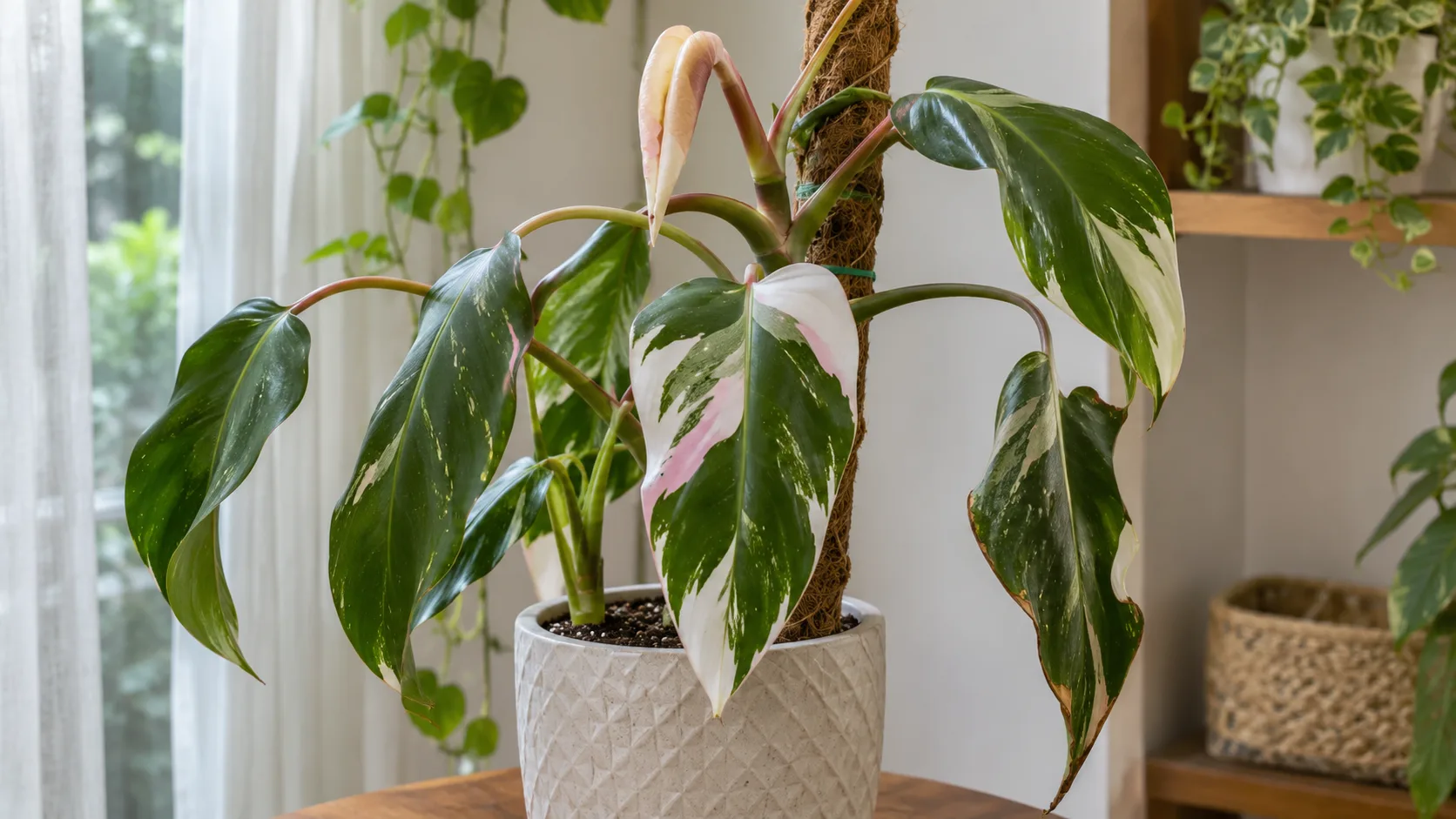
Wilting on Philodendron White Princess: Causes, Checks & Fixes
This guide covers wilting on Philodendron White Princess. See also the general Wilting guide, watering, and light pages for this plant.
Wilting on Philodendron White Princess: Causes, Checks & Fixes
Quick answer
Push a finger 3 to 5 cm into the mix before you do anything else. Wilting on Philodendron White Princess is most often simple thirst in a fast-drying chunky mix, but damaged roots on a soggy plant produce the identical droop, and watering a rotted plant makes it worse. If the mix is dry, water deeply until it runs from the drainage holes and reassess in 24 hours. If the mix is wet, empty the cachepot, let it dry, and inspect the roots. For how chronic wet mix damages roots in general, see our wilting guide. On White Princess, the rest of this page covers what is different: white sectors that flag stress first, a moss pole that changes drying patterns, and stem nodes worth saving.
What wilting looks like on White Princess
A thirsty White Princess goes limp from the petioles outward: leaves hang downward, feel soft and papery, and the newest unfurling leaf stalls mid-spear. The white sectors show damage first, turning thin, then brown and crispy at the edges, while green tissue on the same leaf may still look acceptable. That split appearance is characteristic of this cultivar, because pale tissue carries little chlorophyll and has less buffer against stress.
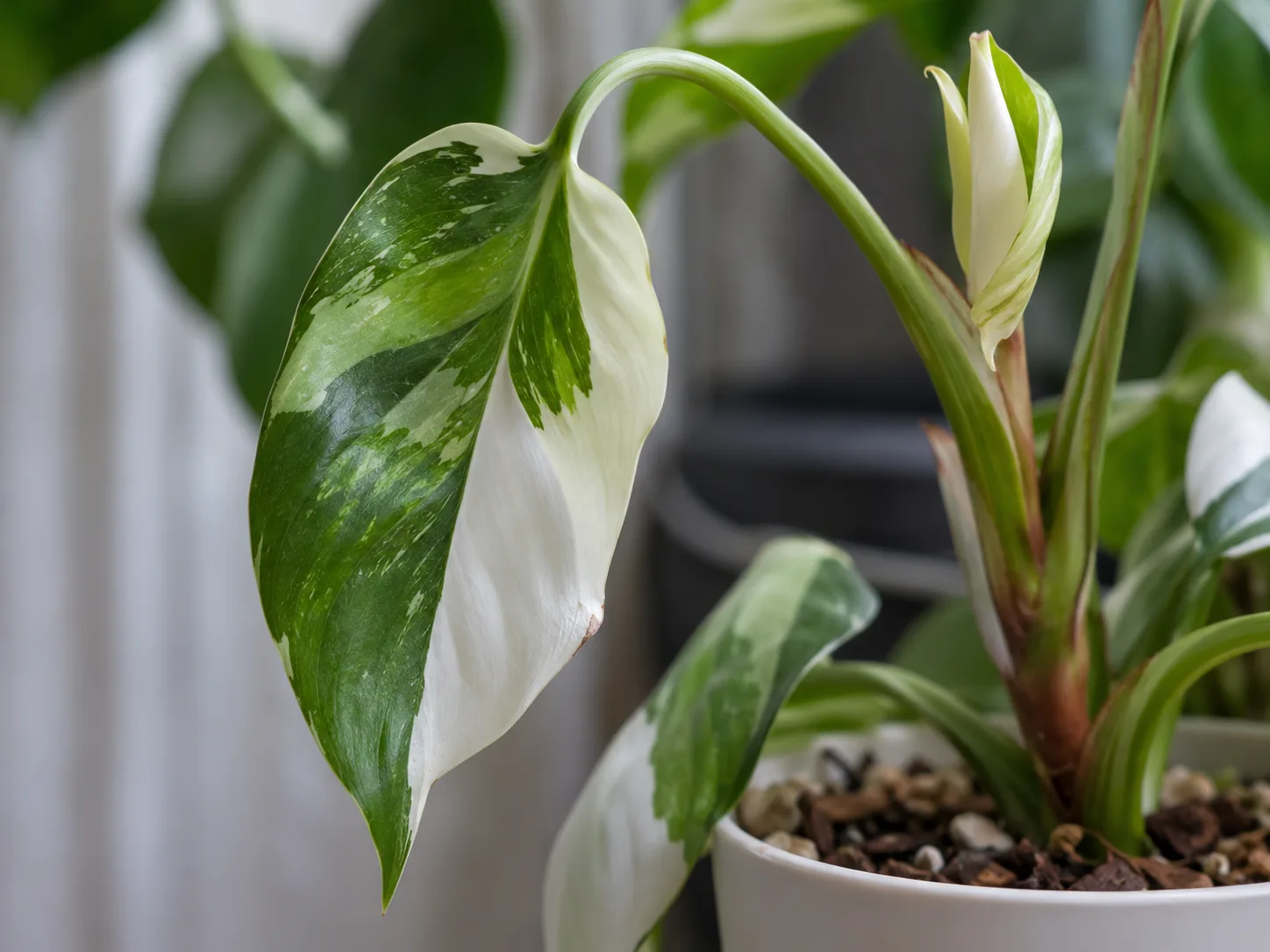
Wilt softens the leaves and can stall new growth; the pale sectors may show stress before green tissue.
A root-damaged plant looks similar at a glance but with telling differences. Leaves turn soft and yellow rather than papery, sometimes with a translucent quality, and the stem base may feel tender or smell sour. Wilting here comes from loss of turgor pressure that no amount of watering fixes, because the delivery system itself is broken. One more White Princess tell: when the pink striping on green stems fades to dull brown-green along with the wilt, suspect roots rather than a missed watering.
Why White Princess wilts the way it does
White Princess is a climbing Philodendron erubescens type grown in a chunky aroid mix of potting mix, perlite, and orchid bark. That mix is deliberate: it drains fast and holds air around the roots. The tradeoff is that in bright light and warm rooms it can dry all the way through in under a week, and the plant’s thin variegated sectors lose moisture faster than plain green leaves. A plant on a moss pole dries unevenly, with the pole side staying damp while the pot side goes bone dry, which fools calendar waterers.
The second half of the story is that this cultivar tolerates missed waterings far better than it tolerates wet feet. Roots sitting in saturated mix lose access to oxygen, decay, and stop transporting water, so the canopy wilts while standing in moisture. Extension guidance for philodendrons stresses letting compost dry slightly between waterings and keeping plants above 15C in indirect light, which matches exactly how White Princess wants to live: bright, warm, airy at the roots, never waterlogged.
Dry mix versus soggy roots: the core diagnosis
Use this table before treating, because the two main causes demand opposite actions:
| What you find | Likely cause | First action |
|---|---|---|
| Light pot, dry crumbly mix, papery crispy leaf edges, perky stems | Underwatering | Deep water once until it drains freely |
| Heavy pot, soggy mix days after watering, soft yellow leaves, sour smell | Overwatering and possible root rot | Stop watering, drain fully, inspect roots |
| Wilting plus stalled new spear after a recent repot | Transplant shock with disturbed fine roots | Stable spot, normal watering, wait |
| Wilting plus cold windowsill, heat vent, or recent move | Temperature or draft stress | Return to steady 18 to 29C, away from drafts |
| Wilting plus sticky residue, cottony clusters, or stippled leaves | Sap-feeding pests | Confirm pests, then treat the infestation |
The underwatering row is the common one and the easy win: thorough watering until excess drains, with bottom-watering for severely shrunken root balls, usually restores firmness within a day. The soggy row is the dangerous one. Paradoxically, an overwatered philodendron wilts too, with soft pale leaves instead of crispy ones, because rotting roots cannot deliver water (overwatering signs). Never answer a heavy wet pot with more water.
How to confirm the cause at home
Work in this order so one check answers the next question:
- Finger test. Push into the mix to 3 to 5 cm. Dry means thirst; damp days after watering means excess. Follow the full rhythm in the watering guide rather than guessing a schedule.
- Pot weight. Lift the nursery pot. A thirsty White Princess feels strikingly light; a waterlogged one stays heavy. Compare against how it felt right after a proper watering.
- Drainage audit. Is the nursery pot sitting in pooled water inside the cachepot? Are drainage holes blocked by compacted bark? Standing water is the fastest route to root damage, and extension advice is explicit that philodendrons must never sit in standing water.
- Smell and stem check. Sour or swampy odor from the mix, or a soft stem base, points to rot. Firm stems with dry mix point to thirst.
- Root peek. Slide the root ball out. Healthy roots are firm and pale; rotted ones are brown or black, soft, or slimy. Trim only what is clearly dead with clean shears, and wear gloves since philodendron sap can irritate skin.
- Pole and aerial roots. Check whether the moss pole is bone dry while the pot is wet, or vice versa. Shriveled aerial roots on the pole side explain a plant that wilts despite damp pot mix.
- Pest scan. Look under leaves and along pink-striped stems for spider mites, aphids, or mealybugs, all documented sap feeders that weaken philodendrons. P. erubescens also hosts pests such as thrips per NC State Extension, so inspect new growth closely.
- Newest growth verdict. A firm new spear means the plant is already recovering. A spear that has stalled, blackened, or emerged deformed means the stress is ongoing or the roots are compromised.
The first fix to try
Do exactly one thing first: correct the water state you just diagnosed. Dry mix gets one deep, complete watering. Drench until water flows freely from the holes, empty the cachepot after 15 minutes, and leave the plant alone for 24 hours before judging. Most thirst wilts resolve on that single drink, and stacking fertilizer or repotting on top only obscures the result.
If the mix is wet, the one action is the opposite: remove the nursery pot from the cachepot, pour off every drop of standing water, and let the root zone breathe. Do not water again until the top 3 to 5 cm dries. If the plant perks up as the mix dries, you caught simple overwatering. If it keeps declining in drying mix, move to the root-rot rescue below rather than waiting another week.
When wet means root rot: the White Princess rescue
Unpot over a tray and rinse the mix gently from the roots so you can see clearly. Cut away only roots that are mushy, black, or slide apart, keeping every firm pale root even if the ball looks sparse. Repot into fresh chunky aroid mix in a clean pot with open drainage, following the ratios in the soil guide, and settle the plant at its previous depth. Root rot from fungi such as Rhizoctonia is a documented philodendron problem controlled with sterile mix and avoiding overwatering, not with home sprays, so skip the hydrogen peroxide experiments and rely on surgery plus air.
White Princess has a rescue advantage most plants lack: stem nodes. If the root system is mostly gone but upper stems still show pink striping and firm nodes, take a cutting with one to two nodes showing stem variegation and root it in water or damp moss while you stabilize the mother plant. Review the method in the propagation guide before cutting. This node backup is why you should never throw a rotted White Princess away until the stems themselves are mush.
White Princess-only traps that fake a watering problem
- Cold shock. This erubescens type wants steady warmth around 18 to 29C, and cold damage below roughly 10C impairs water transport so leaves wilt in damp soil. Drafts from windows, doors, and air-conditioning vents cause the same collapse (temperature extremes and drafts). If the wilt followed a cold night by the glass, warmth and stability are the fix, not water.
- Heat plus dry air. Above about 29C with low humidity, thin white sectors transpire faster than roots can supply, and edges crisp while the mix still feels okay. Moderate to high humidity protects the pale tissue; a pebble tray or humidifier beats misting, which wets leaves without changing the room.
- Light misplacement. Dim corners push weak, leggy growth that flops and reads as wilt, while harsh direct sun scorches white sectors first. The plant needs the bright indirect light described in the light guide: enough to hold variegation, never midday sun on the leaves.
- Root-bound climber. A mature plant that dries out within two days of every watering, with roots circling the pot or escaping the holes, is not underwatered by habit but under-potted. Move up one pot size in spring per the repotting guide rather than watering daily.
- Transplant shock. Fine root hairs damaged during repotting cannot absorb normally for a week or two, so a freshly repotted plant wilts in perfectly good mix. Keep it stable, shaded slightly, and watered normally; it resolves as new root hairs grow.
Recovery timeline and what improvement looks like
Thirst recovery is fast: leaves firm within hours, fully upright by the next day, and the new spear resumes within a week. Rot recovery is slow: expect two to four weeks of no further yellowing, then a firm new leaf as the signal that fresh roots are working. White sectors that crisped will never green up again; prune them only once fresh growth proves the plant has turned the corner, since damaged leaves still photosynthesize through their green parts.
Feed nothing until that new growth looks healthy for at least two weeks. A monthly dilute feed in spring and summer suits this plant, but fertilizer on damaged roots burns rather than heals. If you want the seasonal feeding detail when recovery is confirmed, the fertilizer guide has the schedule.
Mistakes to avoid
Do not fertilize a wilted plant to perk it up. Do not repot, prune hard, and spray for pests on the same day; pick the single most likely cause and give the plant time to answer. Do not mist limp leaves as a cure, since surface wetting does not restore turgor and invites leaf-spot bacteria that collapse petioles. And do not cut away every ugly leaf at once on a variegated plant: each remaining green sector is funding the recovery.
When to use this page versus other White Princess guides
Use this page when leaves and petioles go limp and soft. If the plant is upright but discolored, start instead from the full problem list on all White Princess problems. For the general care behind every fix here, the White Princess hub links the complete routine.
Related Philodendron White Princess guides
- White Princess hub - full care routine and placement behind every wilt fix
- Watering - the check-before-you-water rhythm that prevents both thirst and soggy wilt
- Soil - chunky aroid mix ratios that keep roots oxygenated
- Light - bright indirect levels that hold variegation without scorching white sectors
- Repotting - when root-bound drying speed means upsizing, and how to limit shock
- Fertilizer - feeding schedule to resume only after recovery shows in new growth
- Propagation - node-cutting backup when roots are too far gone to save
- All White Princess problems - yellowing, brown tips, and pests when limpness is not the main symptom
Related tool
Use the Drooping Leaves Diagnosis to narrow causes for wilting on this plant before changing multiple variables at once.