Drooping Leaves on Pomegranate: Causes, Checks & Fixes
Quick answer
Drooping leaves on Pomegranate most often mean the root ball dried out in sun and heat, or the mix stayed soggy and roots cannot breathe. First, push a finger 3 to 5 cm into the mix: if dry, give one deep soak until water drains freely; if wet, hold water and improve drainage.
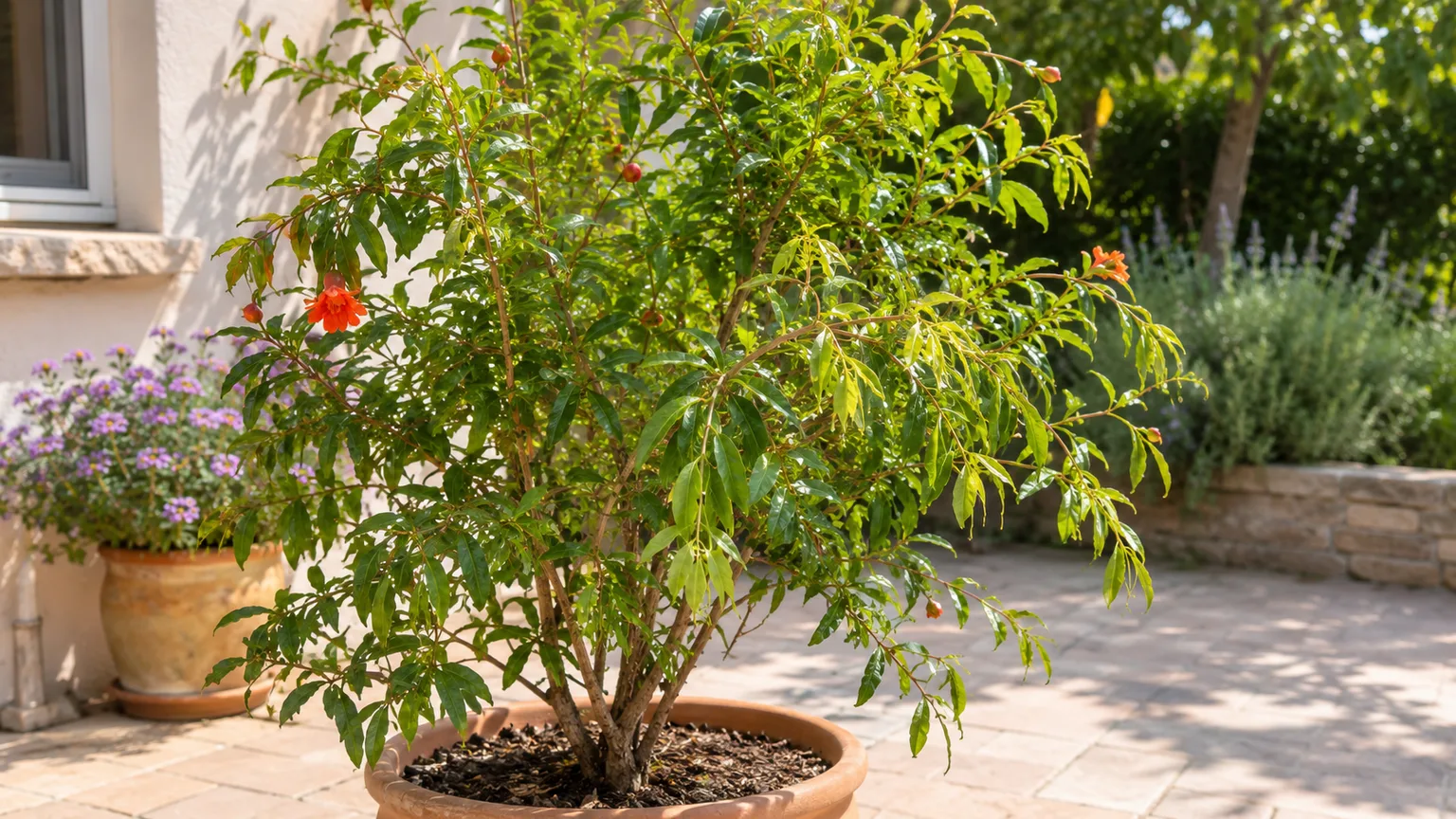
Drooping Leaves on Pomegranate: Causes, Checks & Fixes
This guide covers drooping leaves on Pomegranate. See also the general Drooping Leaves guide, watering, and light pages for this plant.
Drooping Leaves on Pomegranate: Causes, Checks & Fixes
Quick answer
Drooping leaves on Pomegranate (Punica granatum) most often mean the root ball dried out under strong sun, or the mix stayed soggy and the roots cannot breathe. Pomegranates are deciduous shrubs or trees, so the first job is ruling out normal cool-season leaf fall before treating anything. If leaves are limp in the growing season, test the mix 3 to 5 cm down and act on what you find: dry means one deep soak, wet means hold water and fix drainage.
What drooping looks like on Pomegranate
Thirsty Pomegranate leaves lose their gloss, soften along the lance-shaped blade, and hang downward from the stem, often with dry, crisp edges. Young shoot tips flag first in afternoon heat, and flower buds or tiny fruitlets may drop if dryness persists. Overwatered plants look different: leaves turn dull yellow-green, feel soft rather than papery, and fall while the mix is still damp, sometimes with a sour smell at the drainage holes. Because this species carries small, narrow leaves on stiff woody branches, whole-branch flagging stands out fast against the normally upright, bushy canopy.
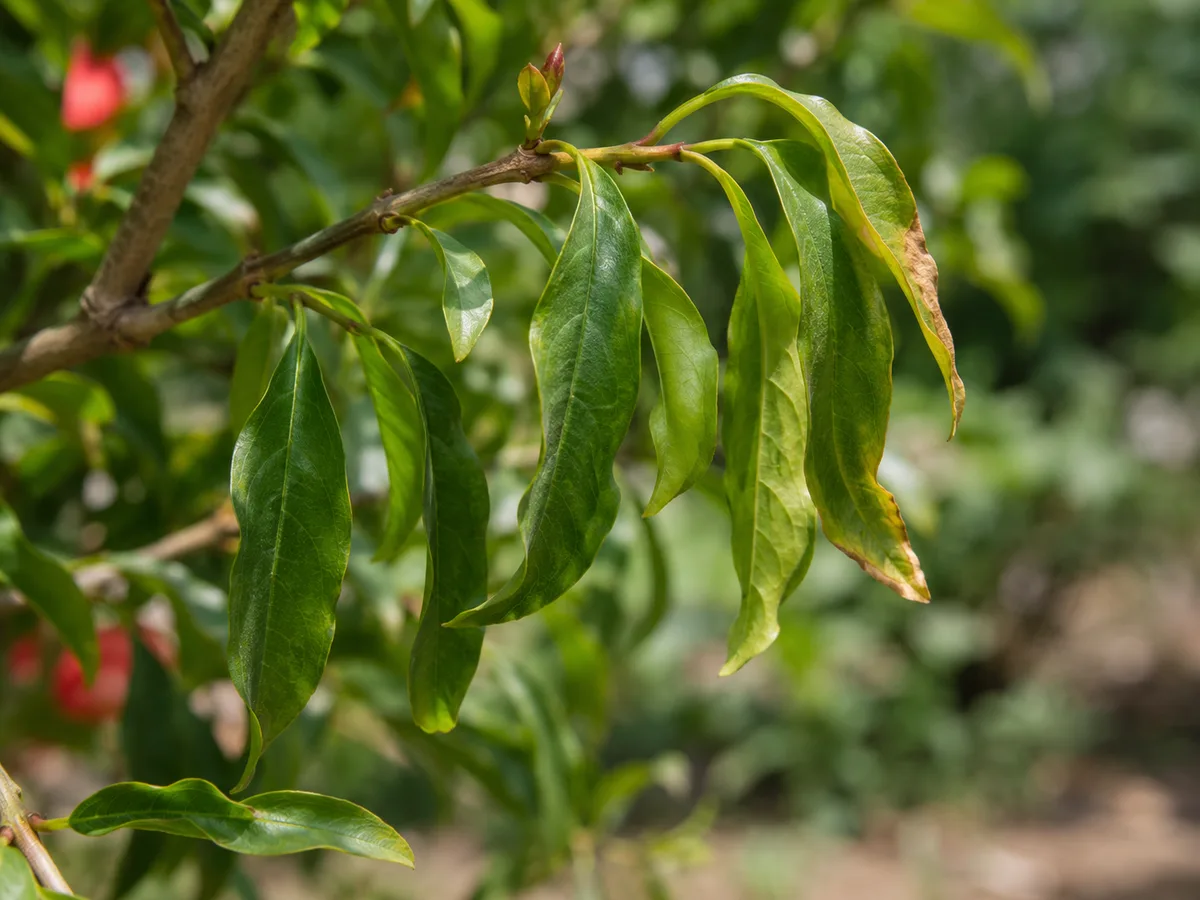
Early water stress can soften new pomegranate leaves and make the branch tips flag before lasting damage appears.
First: rule out normal autumn leaf fall
Pomegranate is deciduous, and complete leaf drop in cool weather is dormancy, not disease. Dormancy sheds the oldest interior leaves first while stems stay firm and buds rest until spring; the plant asks for less water while bare because a leafless shrub uses moisture slowly. True droop happens in the growing season, hits soft new growth as well as older leaves, and pairs with a clear moisture story in the pot or soil. If your plant defoliated after cold nights arrived and the wood is supple with live buds, let it rest cool and drier rather than forcing water and fertilizer to wake it.
Why Pomegranate droops
A dry root ball in sun and heat
Pomegranates prefer full sun, and that appetite for light is exactly why potted plants flag on hot afternoons. A container in six or more hours of direct sun can exhaust its moisture reserve in a day or two, and the plant answers with limp leaves and dropped buds. Established in-ground shrubs tolerate drought, but fruiting plants still need steady moisture, and Utah State University Extension recommends deep thorough watering every 7 to 10 days in dry conditions. Containers always run ahead of that schedule. For how chronic wet mix damages roots in general, see our drooping leaves guide. On Pomegranate, the pattern usually shows up as midday flagging that recovers overnight at first, then stops recovering once the root ball bakes fully dry.
Soggy mix and suffocated roots
The mirror image is just as common, especially in heavy garden clay, oversized pots, or cachepots without drainage. Pomegranate tolerates many soils only where there is good drainage and moisture, and stagnant water around woody roots invites rot that shows up as droop no drink can fix. Warning signs include mix that stays wet for days, water pooling on the surface, algae or fungus gnats, and leaves yellowing while soft. If the pot feels heavy days after watering and lower leaves keep falling, the roots are short of air, not short of water.
Heat waves and cold snaps
Sustained heat above the plant’s comfort zone drives transpiration faster than even healthy roots can supply, so leaves wilt each afternoon despite damp soil. At the other end, Pomegranate hardens off gradually but suffers cold damage below 12 degrees, and frost-nipped shoots droop, blacken, and die back. Match the symptom to the weather log: heat wilt tracks hot afternoons and eases at night, while cold damage follows a frosty night and does not ease by morning.
Transplant shock and root disturbance
Newly planted, repotted, or bare-rooted Pomegranates often droop for a week or two while damaged fine roots regrow. Planting too deep, teasing roots apart aggressively, or moving a sun-grown plant into a different exposure all add stress at once. This kind of droop is uniform across the canopy rather than starting on one branch, and it should stabilize, not worsen, within two weeks.
Sap-feeding pests
Aphids cluster on shoot tips and buds, while whiteflies, mealybugs and scale drain sap from leaves and young stems, and heavy infestations leave foliage sticky, stippled, and limp. Check leaf undersides, shoot tips, and the joints where leaves meet stems before assuming a watering fault. Sooty mold growing on honeydew is a strong hint that pests, not the hose, are the real problem.
Wilt and root disease escalation
When one branch wilts while the rest looks fine, or dieback moves inward from shoot tips despite correct watering, think beyond routine stress. Pomegranate can suffer root and vascular disease, and NC State notes that leaf spot, fruit blotch and root rot may occur on this species. Branch-level wilt that never perks up after a proper soak, cankers, or discolored wood under the bark deserves a local extension diagnosis rather than repeated home treatments.
How to confirm the cause
Work through these checks in order on the day you notice droop:
- Finger test at depth. Push a finger 3 to 5 cm into the mix near the root ball, not just at the surface. Dry and crumbly means thirst; cool and damp means hold water. Full technique for this plant’s rhythm: Pomegranate watering.
- Pot weight and drainage. Lift the pot. Light plus dry mix confirms underwatering; heavy plus wet mix confirms excess. Confirm water actually exits the drainage holes and never sits in a saucer or cachepot.
- Timing pattern. Overnight recovery points to heat or mild thirst; no recovery by morning points to root trouble. Sudden whole-canopy droop after repotting points to transplant shock.
- Weather and season check. Recent heat waves, frost nights, or the move into autumn dormancy each rewrite the diagnosis. Cool-season bare branches with firm wood are rest, not rescue.
- Pest and bark inspection. Look under leaves and along shoot tips for aphids, whiteflies, mealybugs, and scale. Scratch a thumbnail-sized patch on a suspect branch: green, moist tissue is alive, while brown dry tissue maps dieback.
- Root sniff test for pots. Slip the root ball out if wet-soil droop persists. White-tipped firm roots are healthy; brown mushy roots with a sour smell confirm rot.
The first fix to try
Give one deep, correct watering based on the finger test, and nothing else yet.
If the mix is dry 3 to 5 cm down, soak thoroughly until water streams from the drainage holes, empty the saucer after 20 minutes, and shade a container lightly for the rest of that one hot afternoon. Do not trickle small daily sips; a woody shrub needs the whole root zone rewetted at once. If the mix is already wet, skip water entirely, clear blocked holes, remove the saucer, and move the pot where air circulates. Details for judging depth and runoff: Pomegranate watering. Wait 24 hours and read the leaves before adding fertilizer, sprays, or repotting.
Step-by-step recovery
- Reassess after one day. Firmer morning leaves mean thirst was the cause; keep the steady rhythm below. Still limp despite correct moisture means roots or pests need attention.
- Clear the obvious. Wash honeydew and light pest clusters off with a firm water jet, and prune only fully dead, brittle tips back to live wood. Leave limp-but-green tissue in place while it recovers.
- Treat confirmed pests. Dislodge small scale and mealybug colonies with an alcohol-dampened cotton swab and follow with insecticidal soap on active crawlers per label directions. Recheck weekly for two cycles rather than spraying once and assuming victory.
- Rescue rotten roots. For sour-smelling container mix, unpot, trim black mushy roots to firm white tissue with sterilized cutters, and repot into fresh free-draining loam in a pot that just fits the remaining roots. Keep the recovering plant in bright but sheltered light until new shoots emerge.
- Feed only after growth resumes. Hold all fertilizer until fresh leaves expand and hold firm for about two weeks. A stressed woody plant cannot use nutrients, and salts in dry mix burn damaged roots.
Recovery timeline
Thirst-only droop usually firms up within 24 hours of a deep soak, with full gloss returning over several days. Heat-flagged shoot tips straighten by the next cool morning once watering steadies. Transplant-shock droop stabilizes within two weeks and pushes new buds after that. Root-rot recovery is slowest: expect four to eight weeks before clean new shoots prove the trimmed root system works again. Judge everything by new growth, not old leaves. Scorched margins never heal, but fresh shoots with normal spacing and shine mean the plant has turned the corner.
Lookalike patterns to rule out
| Pattern | Leaves and stems | Soil and timing | Likely cause |
|---|---|---|---|
| Midday flagging, overnight recovery | Soft limp blades, dry edges later | Light pot, dry at depth, hot afternoons | Underwatering or heat load |
| Yellow-soft droop, no recovery | Dull yellow-green limp leaves | Heavy wet pot, poor drainage | Overwatering and root suffocation |
| Cool-season bare branches | Older leaves yellow and fall, firm wood | Autumn cold, slowing water use | Normal dormancy |
| One-branch wilt | Single limb flags while rest holds | Correct watering, spreading dieback | Vascular or root disease |
| Sticky stippled droop | Honeydew, sooty mold, visible insects | Any moisture level | Sap-feeding pests |
| Post-move uniform droop | Whole canopy soft within days of planting | Recent repot or transplant | Transplant shock |
If the row that fits is not the watering rows, use the Pomegranate problems hub to route to the matching guide instead of stacking fixes from several rows at once.
Mistakes to avoid
- Flooding a plant that is already wet. More water never fixes droop caused by suffocated roots.
- Small daily sips. Shallow watering wets only the top while the deep root ball stays dry, training roots upward into drought.
- Fertilizing limp foliage. Salts burn stressed roots and cannot replace missing water or air.
- Repotting on day one. Unpotting adds shock; reserve it for confirmed rot or severe compaction after the first-fix test.
- Shearing drought-stressed branches. Pomegranate fruits on older wood, so hard pruning during stress removes future crop and stored energy at once. Shape later via Pomegranate pruning once recovery shows.
- Treating dormancy as disease. Forcing water and feed on a resting deciduous shrub rots roots while the plant is programmed to sleep.
Pomegranate container and sun cross-check
Containers rewrite every watering rule for this species. A terracotta pot on a sunny terrace can dry in a day while the neighboring garden bed stays moist for a week, and Epic Gardening notes these trees stay drought tolerant yet perform better with enough to drink. Mulch the surface, keep the pot proportionate to the root ball, and check moisture every couple of days through heat rather than trusting a calendar. Indoors rarely works long-term; these shrubs perform poorly inside and seldom fruit there, so a drooping indoor plant is usually asking for outdoor sun and air, not more attention in a dim room. Confirm placement against the Pomegranate light needs and the drainage mix in Pomegranate soil before blaming disease.
Sun, suckers, and fruiting wood
A healthy Pomegranate is a sun-built machine: at least six hours of direct light, good airflow, and a naturally multi-stemmed frame that replaces itself with basal suckers over a very long life. Those suckers drink too, so a thicket of unthinned shoots in a small pot empties the mix faster than a trained plant. Decide early whether you want a multi-stemmed shrub or a single-trunk tree, remove only the suckers that conflict with that shape, and thin for light and air rather than shearing every tip. Because fruit forms on older wood, every cut trades future harvest for tidiness; prune with intent once the plant has recovered, and let established plants harden gradually into cold instead of pushing soft late-season growth with nitrogen.
How to prevent it next time
Water Pomegranate on root-zone readings rather than weekdays: deep soaks when the top 3 to 5 cm dries, free drainage every time, and steadier moisture from flowering through fruit ripening when rind quality is set. Keep the plant where the Pomegranate hub baseline assumes it lives: full outdoor sun, breezy air, and loam that drains. Refresh mulch in late spring, thin suckers for airflow, and taper water after harvest as leaves color and fall. New plants earn a watchful first summer with twice-weekly checks until you learn how fast their pot or patch dries.
Related Pomegranate guides
Use this page for limp, hanging foliage during the growing season. Follow the link that matches what you found:
- Pomegranate hub - species baseline, sun needs, and deciduous habit
- Pomegranate watering - depth test, soak method, and container rhythm
- Pomegranate light - sun hours and indoor versus outdoor placement
- Pomegranate soil - free-draining loam mix and drainage fixes
- Pomegranate problems hub - route lookalike symptoms to the right guide
Conclusion
Drooping leaves on Pomegranate are usually a water story written by sun, pots, and drainage rather than a mystery illness. Rule out cool-season dormancy first, read the mix at depth, and apply one deep soak or one drying correction before anything else. New glossy shoots, not rescued old leaves, mark recovery. Keep the rhythm steady through fruit season, give the shrub the sun and drainage it evolved for, and most droop episodes end with a single good watering decision.
Related tool
Use the Drooping Leaves Diagnosis Tool to narrow causes for drooping leaves on this plant before changing multiple variables at once.