Mold on Soil on Pomegranate: Why It Appears and How to Fix
Quick answer
White mold on pomegranate soil is almost always harmless saprophytic fungus feeding on organic matter in the mix, not a disease attacking the tree. Scrape off the moldy top layer, then let the top 3 to 5 cm of mix dry before watering again and give the pot sun and moving air.
Mold on Soil on Pomegranate: Causes, Checks and Fixes
This guide covers mold on soil on Pomegranate. See also the general Mold on Soil guide, watering, and light pages for this plant.
Mold on Soil on Pomegranate: Causes, Checks and Fixes
Quick answer
White mold on pomegranate soil is almost always harmless surface fungus, not a disease of the tree. Scrape off the moldy top layer, then let the top 3 to 5 cm of mix dry out before watering again. Then fix the two conditions that grew it: a soil surface that never dries and still, sunless air around the pot.
What mold on soil looks like on a pomegranate
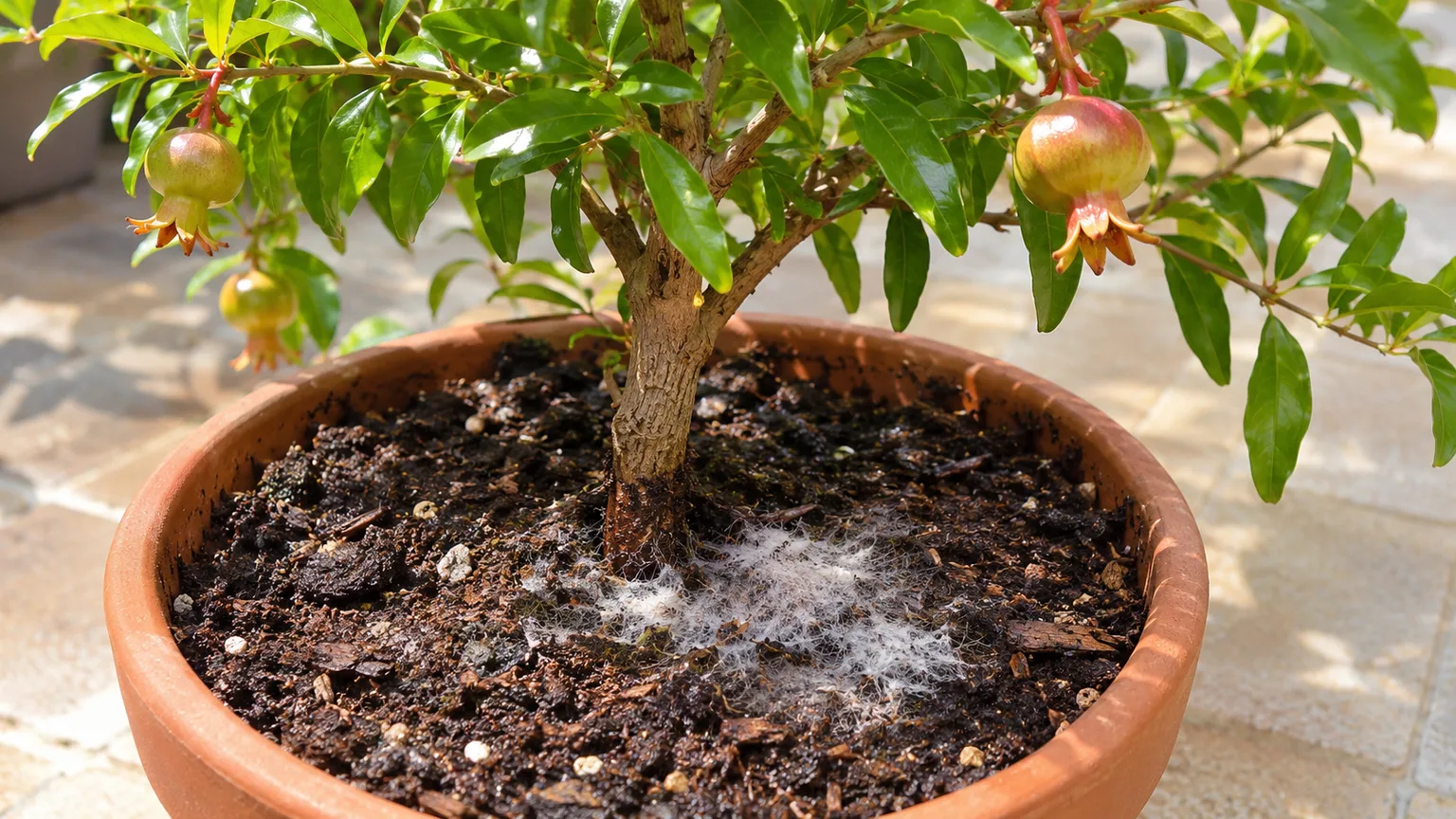
Expect a thin white or pale grey fuzz spread across the potting surface, sometimes with tiny thread-like strands through the top crumbs of bark or compost. It sits on the mix, not on the woody stems, leaves, or developing fruit. This growth is a saprophytic fungus feeding on dead organic matter in the potting mix, and saprophytes do not attack living plant tissue.
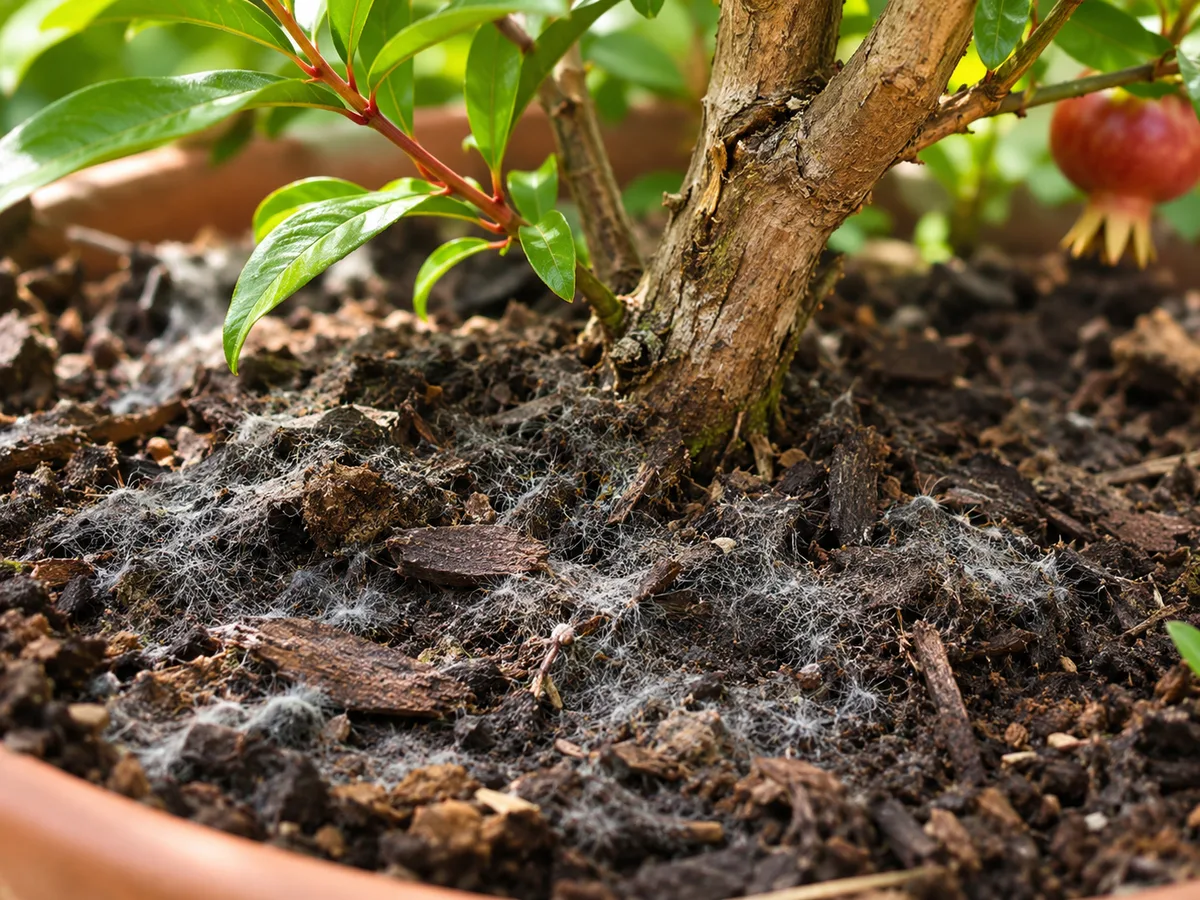
Surface saprophytic fungus feeds on damp organic mix; clean woody stems and healthy leaves indicate that it is not growing on living plant tissue.
For how surface mold behaves on potted plants in general, see our mold on soil guide. On a pomegranate, the pattern has a specific meaning: this is a sun-loving tree that demands full sun and sharp drainage, so a moldy surface means the pot is being kept far wetter and stiller than the tree wants.
Why a sun-loving tree gets moldy soil
Pomegranate thrives in hot sun and well-drained loam, and established trees tolerate drought. Mold appears when container care drifts away from those needs. The usual triggers are watering on a calendar instead of by soil dryness, a saucer or cachepot holding standing water, a compost-heavy mix whose surface never dries, and a sheltered indoor corner or crowded balcony with almost no air movement. Each of these keeps the top layer damp for days, which is exactly what surface fungi need.
Potted trees are far more vulnerable than in-ground ones. A garden bed drains and breathes; a plastic pot of rich mix on a shaded patio does not. Monsoon or rainy spells make it worse, because the surface gets rewetted before it ever dries.
The dormancy trap: winter watering on a summer schedule
This is the most pomegranate-specific cause. Pomegranate is deciduous and drops its leaves in the cool season, and a leafless tree uses very little water. Growers who keep watering through winter on their summer rhythm end up with a permanently damp surface under a bare tree, and mold follows. If the fuzz appeared between late autumn and early spring while the branches are bare, overwatering during dormancy is the prime suspect. Reduce watering sharply while the tree is leafless and resume a normal rhythm only as spring buds swell.
How to confirm it is harmless surface mold
Check three things before doing anything else. First, push a finger 3 to 5 cm into the mix: harmless mold can sit over a healthy root zone, but if that layer is soggy days after watering, the watering rhythm is wrong. Second, smell the mix: earthy is fine, while a sour or rotten smell signals stagnant, airless soil that needs more than a scrape. Third, tell mold apart from its lookalikes. A hard, gritty white or brown crust is mineral salt buildup, not fungus. A powdery white coating on the leaves themselves is a leaf mildew problem, not soil mold. Yellow, orange, or jelly-like blobs on very damp bark mix are slime molds, which also feed on decaying matter and answer to the same drying treatment.
First fix: scrape the surface and let it dry
Do one thing first: lift away the moldy top layer, about the top 1 to 2 cm of mix, with a spoon and throw it away. Scraping off the visible mold removes the concentrated growth and gives you a clean surface to judge recovery against. Then do not water again until the top 3 to 5 cm feels dry and the pot feels distinctly lighter. This single drying step is what actually stops the fungus, so resist the urge to spray, fertilize, or repot on the same day.
Step-by-step recovery
Once the surface is drying, work through the rest in order. Move the pot into full sun and open space, since moving air strips humidity off the soil surface and speeds evaporation more than almost anything else. Improve air circulation by spacing nearby plants apart, opening a window or balcony door daily, or running a small fan on low a few feet away. Empty the saucer within half an hour of every watering so the base never sits in a reservoir. For lasting prevention, top-dress with about a half inch of coarse grit, horticultural sand, or fine pumice: the inorganic layer holds almost no water and gives surface fungi nothing to feed on, and it also makes it harder for fungus gnats to lay eggs in the damp mix below. If the mix is old, dense, or drains sluggishly, plan a repot into a grittier free-draining blend in late winter or early spring, when pomegranate handles root disturbance best.
When mold points to a root-zone problem
Surface fuzz alone is cosmetic, but take it seriously when it comes with deeper symptoms. Act promptly if the mix stays waterlogged for days, smells sour, the base of the trunk feels soft, or leaves yellow and drop while the soil is wet. Those signs point past surface mold toward suffocated roots. In that case, ease the plant out of its pot, trim only clearly black and mushy roots, and reset into fresh draining mix rather than returning it to the same stagnant pot. Steady deep watering suits fruiting trees: Utah State University Extension suggests a deep thorough watering every 7 to 10 days for established plants in dry conditions, with containers checked far more often by soil dryness, not by date.
Mistakes to avoid
Do not reach for fungicide sprays first: they do not fix the damp, still conditions, and the mold returns within days. Do not water from above with daily misting, which wets exactly the layer you are trying to dry. Do not fertilize a moldy, soggy pot to perk the tree up; feeding a stressed root zone makes things worse. And do not bury the problem under a thick new layer of compost or manure, which simply adds fresh food for the next bloom of fungus.
How to prevent it next time
Keep the tree where a pomegranate belongs: in at least six hours of direct sun with open airflow, since good drainage and sun are its baseline needs. Water deeply only when the top 3 to 5 cm is dry, and always allow the pot to drain completely with the saucer emptied afterward. Refresh container mix every two to three years so it stays open and gritty rather than compacted, and keep the grit top-dressing in place so the surface flashes dry within hours of watering. Finally, match the calendar to the tree: steady moisture from flowering through fruit ripening, then a sharp cutback once leaves fall and the tree goes dormant.
Related pomegranate guides
Use this page when the problem is fuzz on the soil surface. For the watering rhythm that keeps the surface drying properly, read the pomegranate watering guide. For mix, drainage, and container setup, read the pomegranate soil guide. To compare against other issues on the same tree, browse the pomegranate problems hub.
Related tool
Use the Plant Problem Diagnosis Tool to narrow causes for mold on soil on this plant before changing multiple variables at once.