Slow Growth on Scindapsus Treubii Dark Form: Causes, Checks
Quick answer
Scindapsus Treubii Dark Form is naturally slow, so a pause in new leaves is not automatically a problem. Compare its growth with its own past pattern and check light, moisture, temperature, and roots before changing care. If it sits in a dim spot, improve indirect light first rather than adding fertilizer.
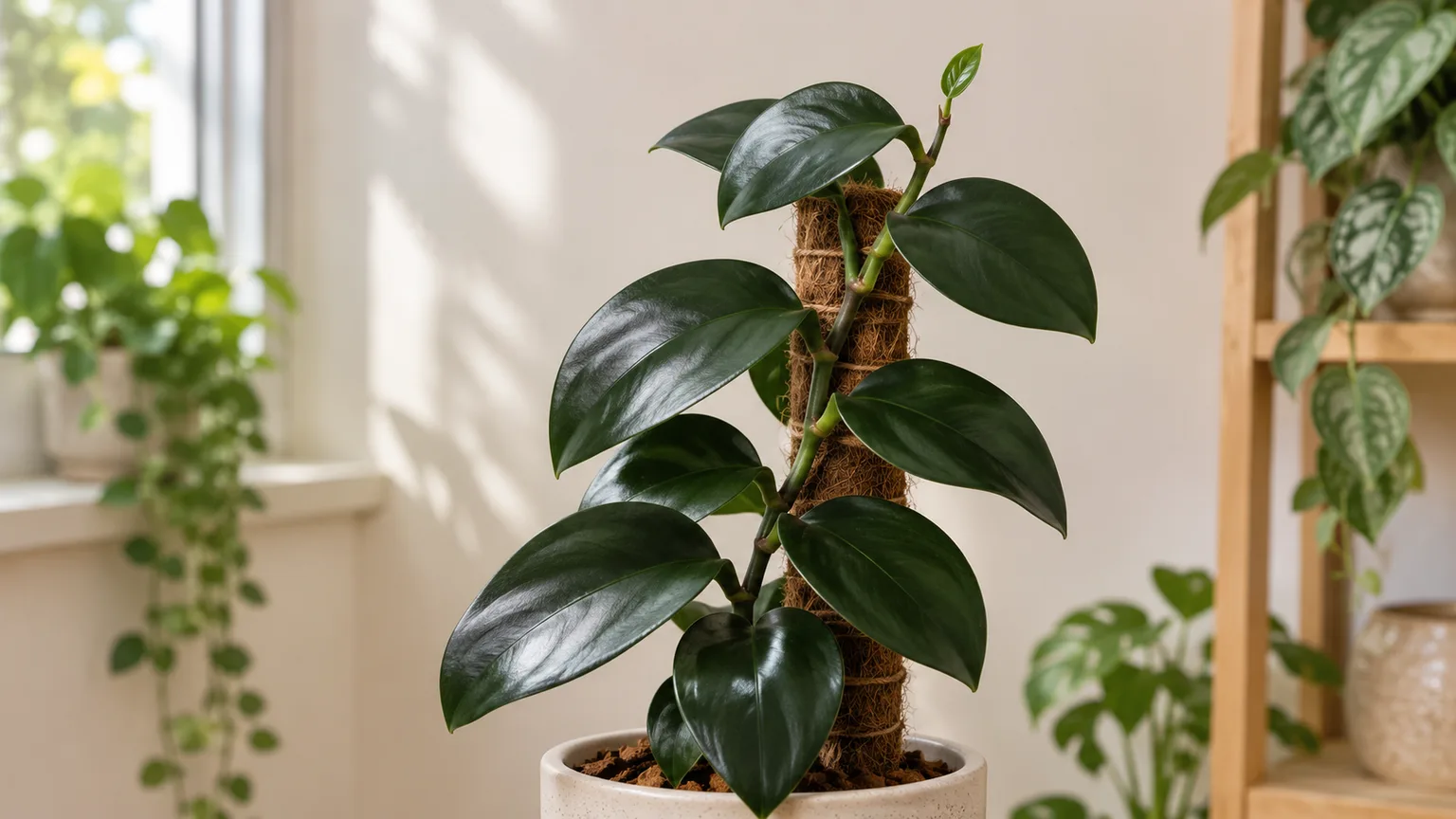
Slow Growth on Scindapsus Treubii Dark Form: Causes, Checks & Fixes
This guide covers slow growth on Scindapsus Treubii Dark Form. See also the general Slow Growth guide, watering, and light pages for this plant.
Slow Growth on Scindapsus Treubii Dark Form: Causes, Checks & Fixes
Quick answer
Scindapsus Treubii Dark Form is naturally slow, so a pause of a few weeks is not automatically a problem. Compare its newest leaves with its own past growth and check light, moisture, temperature, and roots before calling it stalled. First, move it into brighter indirect light if its placement is dim and confirm the roots are firm and the pot dries between waterings; change one condition at a time.
For the general mechanics of why houseplants stall, see our slow growth guide. On Dark Form specifically, the pattern almost always traces back to usable light, tired roots, or winter timing rather than a disease.
What slow growth looks like on Dark Form
A healthy Dark Form pushes out thick, glossy leaves from the vine tip, with new leaves often lighter before darkening as they mature. Scindapsus treubii is a slow-growing tropical evergreen climber, so judge its pace against its own prior growth rather than a fixed leaf schedule.
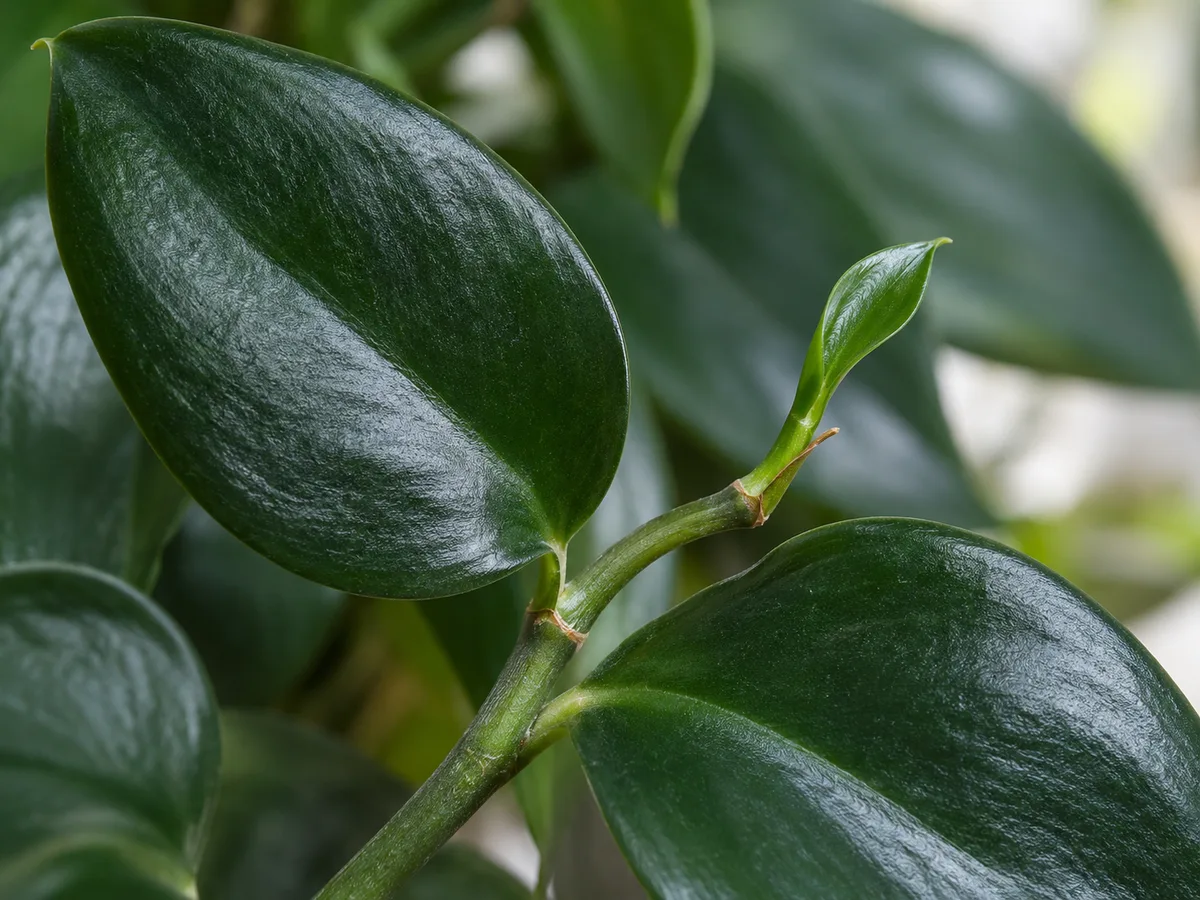
A smaller new leaf and short internodes can help distinguish a growth pause from the plant’s naturally slow pace.
True stalling looks different: the vine tip goes quiet for months, new leaves emerge noticeably smaller than older ones, or internodes stay short while the plant otherwise looks green. Leaves that unfurl and never darken can signal the plant lacks the energy to finish developing them, which traces back to the leaf’s high concentration of chloroplasts demanding steady light to complete maturation.
Why Dark Form stalls more easily than expected
Dark leaves suggest a plant that thrives in shade, but growers consistently find this cultivar wants abundant bright indirect light to keep producing. Its dark foliage does not mean it can grow well in a dim room; low usable light can limit the energy available for new leaves. A Dark Form parked several feet from a window or behind a sheer curtain plus a dark corner wall is the classic stall setup.
Below the soil, this plant’s thick, juicy roots punish chronic wetness. Watering before the mix has dried, or a dense peat-heavy mix that stays soggy, damages fine roots and quietly halts new growth even when the leaves still look fine. The species does best when watered when the soil is half dry to almost completely dry, and pots that never reach that point keep the plant in survival mode.
Growth may slow when winter brings shorter days or cooler temperatures. A plant in old, compacted mix or with roots circling the pot may also struggle, but age of the mix alone does not confirm nutrient depletion. Sap-feeding pests such as mealybugs, aphids, and spider mites, the documented pests of this species, drain energy the same way and should be ruled out when growth stops suddenly.
How to confirm the cause
Work through these checks in order on a day the plant would normally be watered soon.
- Light at leaf level. Hold your hand a few inches above the leaves at midday. A soft, well-defined shadow means decent indirect light; a faint blur means the spot is dim. Note the distance to the nearest window and whether a building or tree blocks it.
- Pot weight and soil. Lift the pot. Heavy and damp long after watering points to overwatering or a compacted mix, while a feather-light pot with leaves curling points to underwatering. Either extreme stalls growth.
- Roots. Look through the drainage holes or slip the root ball out. Firm pale roots are healthy; black, soft, sour-smelling roots confirm rot, and a solid mat circling the pot confirms it is root-bound.
- Newest growth and pests. Inspect the vine tip and leaf undersides with your phone flashlight. Sticky residue, cottony clusters, fine webbing, or stippled leaves mean pests are taxing the plant.
- Season and feeding history. If it is late autumn or winter and everything else looks healthy, seasonal rest is the likely answer. If the plant is actively growing but has not been fertilized for a long time, nutrient availability may be worth reviewing after light and root conditions.
Match the pattern before treating: dim spot plus small pale leaves means light, wet heavy pot plus soft stems means roots, winter-only pause means season.
The first fix to try
If the plant sits in a dim spot, give it more usable light as the single first move: place it where it receives bright indirect sunlight or filtered light for most of the day, such as near an east-facing window or just back from a bright south or west window. Do not put it into direct afternoon sun, which scorches the leaves, and do not change water, fertilizer, and pot at the same time. One variable lets you read the response.
If the root check already showed black soft roots or a severely circling mat, handle that first instead, since no amount of light fixes dead roots. Otherwise, light first, then reassess after the next watering cycle.
Step-by-step recovery
Once the plant sits in better light, work through the remaining bottlenecks in this order.
- Stabilize watering. Let the top half of the mix dry between waterings and empty any cachepot so the pot never sits in standing water. Full watering guidance is in the watering guide.
- Address the roots if needed. For rot, trim only the black soft roots with clean scissors, repot into fresh airy mix, and hold off water until the top layer dries. For a root-bound plant, move one pot size up in spring using a chunky blend of potting mix, bark, and perlite, a combination Dark Form growers report success with in a chunky, fast-draining mix. Repotting detail is in the repotting guide.
- Feed only an actively growing plant. Once a new leaf is clearly developing, feed according to the product label during active growth and reduce feeding when growth slows. Avoid fertilizing a stalled or stressed plant; general pothos care advice also recommends feeding during active growth. The fertilizer guide covers dilution and salt flushes.
- Warm the spot. Keep the plant in a warm indoor location; NC State recommends temperatures around 65–75°F and protection from cold drafts. Cool roots grow slowly even in good light.
- Treat pests if found. Wipe or rinse off visible insects and treat the whole plant, since a half-treated infestation keeps draining the energy meant for new leaves.
Recovery timeline
Expect patience rather than a sudden flush. There is no reliable fixed recovery schedule. After correcting the cause, watch for firm, healthy new growth; damaged roots or leaves may take longer to recover, and a plant that remains stalled or declines needs another check of its growing conditions.
Judge progress by new growth and overall condition rather than a deadline. Spreading yellow leaves, stems softening from the base, or progressively smaller leaves despite improved conditions warrant another check. Unpot only when other signs point to root trouble; repeated disturbance can add stress.
Lookalike symptoms
Slow growth shares early signs with several other issues, so confirm you are on the right page.
- Winter rest affects the whole plant evenly and reverses in spring without intervention. True stalling persists through the favorable season.
- Leggy growth produces long bare stretches between small leaves reaching toward light, while stalled growth produces almost nothing at all. A stretching plant needs the same light fix but may also need pruning once it recovers.
- Root rot adds yellow lower leaves, mushy stems, or a sour smell to the stall. Light alone will not fix it.
- Pest drain shows visible insects, stippling, sticky honeydew, or distorted new leaves alongside the pause.
- Normal old-leaf aging drops one lower leaf occasionally while the tip keeps producing. That is not stalling.
If yellow leaves dominate the picture rather than a quiet tip, start with the problems hub to pick the better-matching guide.
Mistakes to avoid
Do not fertilize a stalled Dark Form hoping food restarts it. Extra salts in a pot with inactive roots can burn the remaining healthy root tips and deepen the stall. Similarly, do not repot into a much larger pot for “room to grow”: excess wet mix around a small root system invites the rot that stopped growth in the first place.
Avoid stacking light moves, repotting, pruning, and sprays in one weekend. Each change stresses the plant slightly, and combined changes make it impossible to tell which one worked. One correction, one observation window.
How to prevent it next time
Prevention is mostly placement plus pot discipline. Keep the plant permanently in bright indirect light rather than a decorative dim corner, and check the light guide when seasons change window strength. Refresh the potting mix when it has broken down or stays wet longer than it used to; see the soil guide for a chunky, airy mix that helps keep roots oxygenated.
Water by checking the mix, not the calendar, and feed lightly only while new leaves are forming. A regular look at the vine tip helps you notice changes before other symptoms appear.
Related Scindapsus Treubii Dark Form guides
- Watering guide: use when the pot stays wet or dries unpredictably, since moisture problems stall growth before leaves show it.
- Light guide: use when leaf size shrinks or new leaves stay green instead of darkening.
- Soil guide: use when the mix stays soggy, smells sour, or has broken down and compacted.
- Fertilizer guide: use once growth has restarted and you need a safe feeding rhythm.
- Problems hub: use when yellow leaves, pests, or soft stems dominate and slow growth is only one symptom among several.
Related tool
Use the Plant Growth Rate Calculator to log new-leaf intervals and confirm whether your Dark Form is truly stalled or growing at its normal slow pace.