Mealybugs on String of Turtles: Identification and Control
Quick answer
Isolate the String of Turtles, then inspect the leaf-stem joints and overlapping vines for cottony wax and insects beneath it. Remove visible colonies carefully, test any treatment on a small area first, and recheck the plant weekly because hidden insects or eggs can be missed.
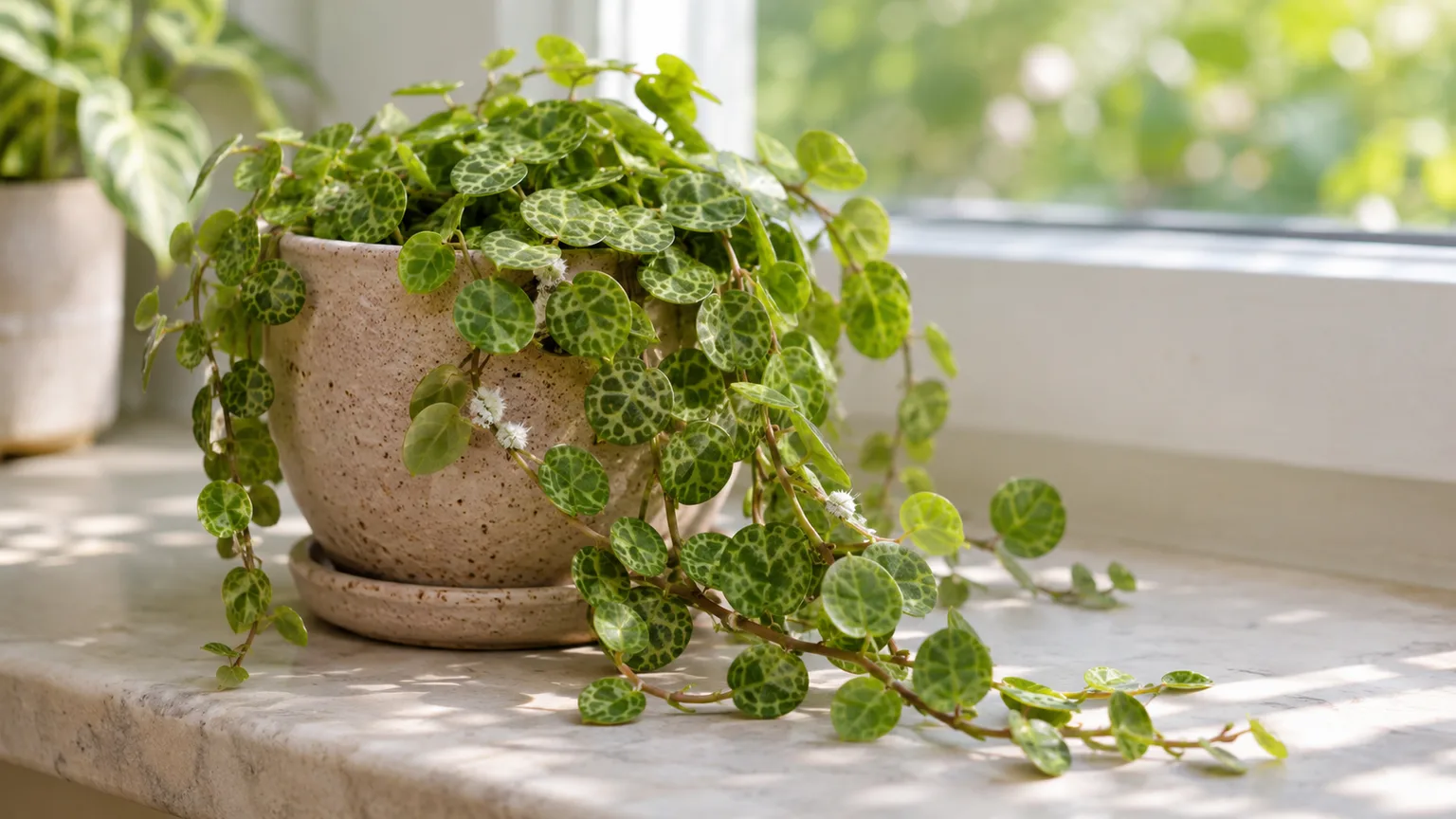
Mealybugs on String of Turtles: Find and Treat Them
This guide covers mealybugs on String of Turtles. See also the general Mealybugs guide, watering, and light pages for this plant.
Mealybugs on String of Turtles: Find and Treat Them
Quick answer
Isolate the plant from nearby houseplants. Then use a bright light to inspect the joints where the round, patterned leaves meet their stems, plus places where trailing strands cross or rest against the pot. Mealybugs often hide in these protected spots. Look for cottony white wax and check underneath for an insect or egg sac. (RHS describes the white wax and sheltered colonies; UC IPM notes common lookalikes and the need to examine the insect)
What mealybugs look like on String of Turtles
Mealybugs are soft-bodied sap-feeding insects covered in a white, waxy coating. On String of Turtles, the plant’s overlapping leaves and vines can make the stem joints harder to see, so part the strands gently and inspect both sides. Do not identify a pest from a white mark alone: confirm cottony wax with an insect or eggs beneath it. The Royal Horticultural Society describes mealybugs and their eggs under fluffy wax, and UC IPM cautions that other pests can produce similar waxy coverings. (RHS identification guide; UC IPM identification notes)
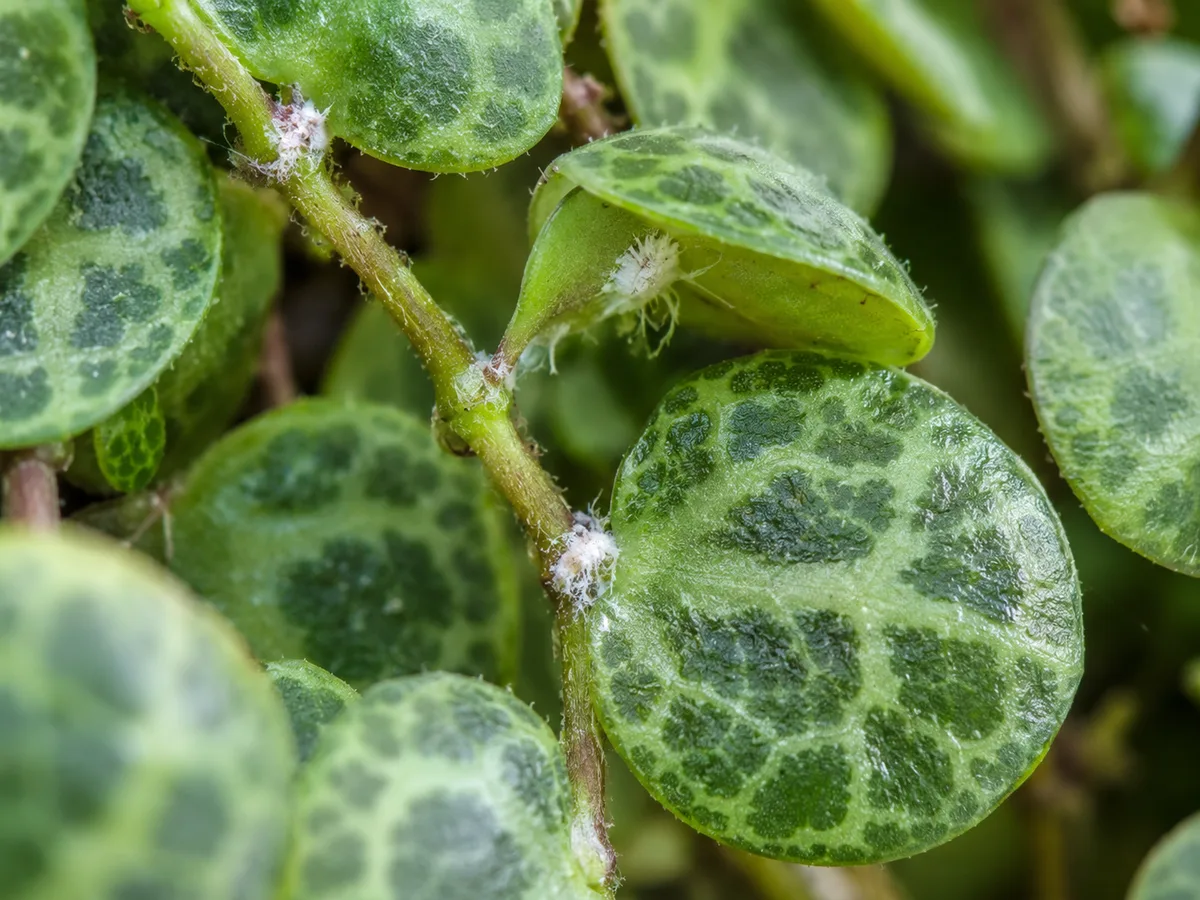
Check the hidden joints along the trailing stems; visible white wax can cover insects or eggs.
Look for sticky honeydew on the leaves, pot, or nearby surface. Heavier infestations can support dark sooty mould growing on that residue. These signs raise suspicion, but the wax-covered insect is the more useful confirmation. (RHS on honeydew and sooty mould)
Where to inspect and what can be confused with mealybugs
Start at the crown, then follow each vine to its tip. Check the leaf axils, undersides, stem nodes, pot rim, and any place where two strands touch. Clemson Extension includes mealybugs among common houseplant pests; Peperomia-focused guidance also recommends checking the axils and nodes on peperomia. (Clemson Cooperative Extension houseplant pest guide; Peperomia mealybug inspection guide)
Scale insects, woolly aphids, and other sap feeders may also have wax or leave sticky honeydew. Examine the insect beneath the covering if possible. Loose lint or dried water residue will not have a living insect or egg mass underneath. If you find clusters of exposed insects mainly on fresh growth, or fine pale stippling rather than cottony clusters, compare the symptoms in the String of Turtles problems hub. (UC IPM on mealybug lookalikes)
How to remove mealybugs safely
- Isolate the pot. Keep its leaves and vines from touching other plants while you inspect and treat. Check nearby plants as well.
- Remove visible colonies. Use a damp cotton swab or soft tissue to lift off the insects and wax. Bag and discard the material, then inspect the same spot again.
- Test before using a treatment. UC IPM recommends that small houseplant infestations may be dabbed directly with isopropyl alcohol at 70% or less, but advises testing a small area first and waiting 1–2 days to check for leaf burn. Avoid soaking this plant or applying an unlabelled spray across all its foliage. (UC IPM spot-treatment guidance)
- Repeat inspection and removal. Mealybugs can be missed in crevices, and one pass may leave hidden insects. Recheck the plant weekly and repeat careful removal if live pests appear. Contact soaps or horticultural oils may suppress exposed crawlers, but test any product on a small section and follow its label. (RHS on hidden colonies; UC IPM on repeat treatment and contact products)
Avoid combining several treatments at once. Treat only after identifying the pest, and keep treated foliage away from strong direct sun until dry if the product label calls for that precaution.
Check roots only when the evidence points there
Some mealybug species feed on roots, but a few white insects on a stem do not mean the plant needs repotting. If the plant continues to decline or the infestation repeatedly returns while the visible stems stay clean, inspect the soil line and root ball for cottony patches. UC IPM describes root-feeding mealybugs and notes that they can be hard to detect before roots are exposed. (UC IPM on root-feeding mealybugs)
If the roots look healthy and you find no underground pests, return the plant to its normal care rather than increasing watering or fertilizer. Check the String of Turtles care overview and watering guide if you also suspect a separate care problem.
Prevent another infestation
Inspect new plants before placing them beside this one, and keep them separate for a short observation period when practical. Clean up dead leaves and check the trailing stems regularly, especially after bringing a new plant home. Houseplant pest guidance recommends inspection and separation as practical ways to catch infestations early. (University of Wisconsin Extension mealybug guide; RHS houseplant pest prevention)
For more symptoms and care issues, visit the String of Turtles problems hub or use the Pest Identifier Tool. The general mealybug guide covers the pest across houseplants.
Frequently asked questions
What do mealybugs look like on a String of Turtles?
Look for small cottony white clusters at leaf-stem joints or where vines overlap. Check under the wax for an insect or egg sac; sticky honeydew can also appear.
Where should I inspect first?
Trace each stem from the crown to its tip. Check the leaf joints, undersides, and places where trailing strands touch, moving the vines gently to see hidden surfaces.
Can I use rubbing alcohol on this plant?
UC IPM describes careful spot dabbing with isopropyl alcohol at 70% or less for small infestations. Test one small area first and wait 1–2 days for leaf damage before treating more.
Why did mealybugs return after I removed them?
A hidden insect or egg sac may have escaped your first inspection. Recheck the entire plant and repeat careful removal weekly until you no longer find live pests.
Should I repot a String of Turtles with mealybugs?
Not for a few visible insects on the stems. Check roots only if the plant keeps declining or pests return despite controlling the visible colonies.