Spider Mites on String of Turtles: Identification
Quick answer
Spider mites can leave tiny pale speckles on String of Turtles leaves; heavier infestations may add fine silk and yellowing. Part the trailing strands, check leaf undersides with a magnifier, and confirm moving mites or eggs before treating. Isolate the pot, rinse or wipe the foliage if practical, and recheck regularly because contact treatments can miss eggs and hidden mites.
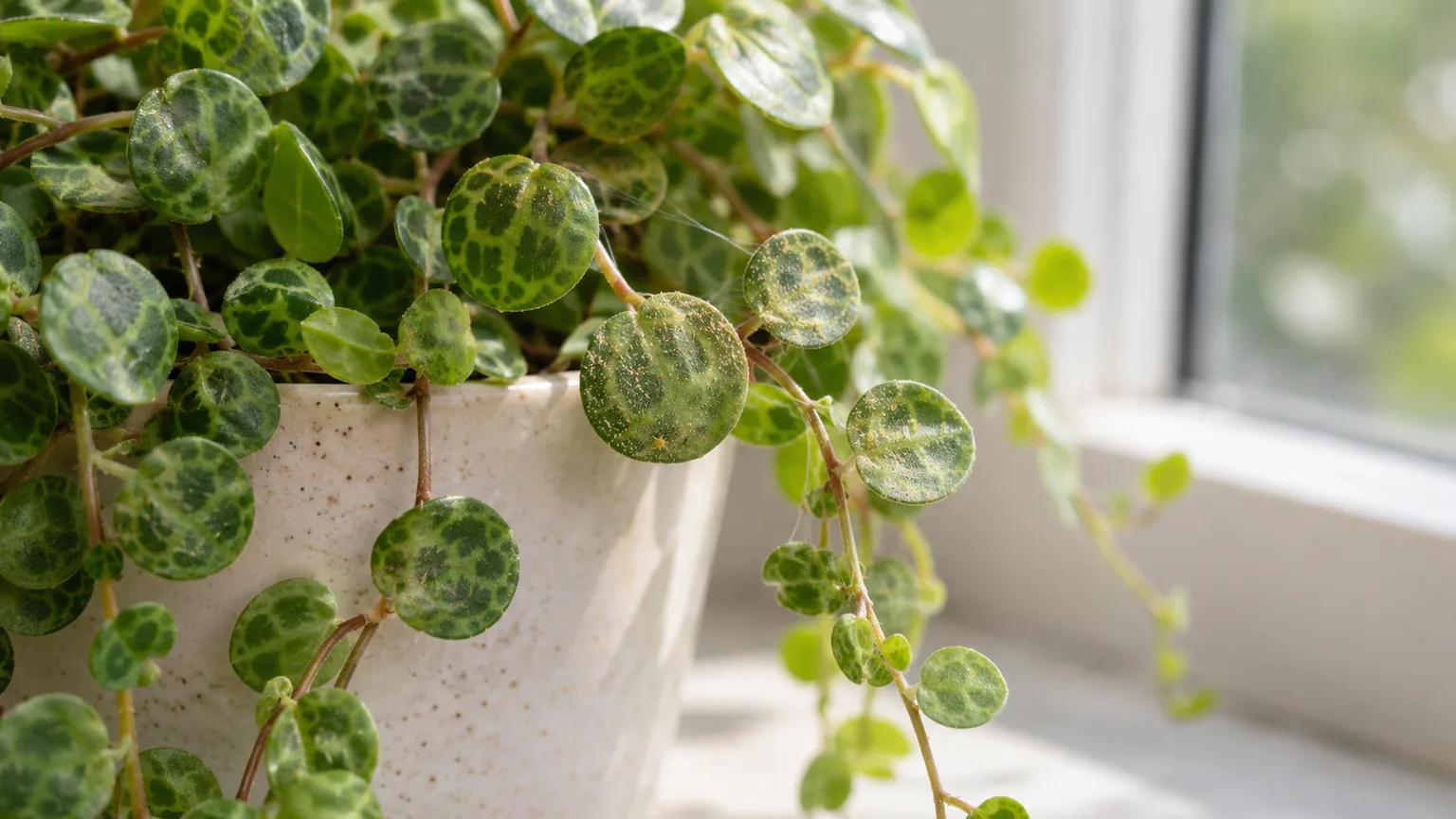
Spider Mites on String of Turtles: Spot Stippling and Fine Webbing
This guide covers spider mites on String of Turtles. See also the general Spider Mites guide, watering, and light pages for this plant.
Spider Mites on String of Turtles: Spot Stippling and Fine Webbing
Spider Mites on String of Turtles: Spot Stippling and Fine Webbing
Quick answer
Spider mites are tiny arachnids that feed on plant cells. On String of Turtles, look for fine pale dots or mottling on the round leaves; heavier feeding can yellow leaves and produce delicate silk. Part the trailing strands and inspect the undersides of leaves and the stem joints with a hand lens. If you suspect mites, tap a strand over white paper and watch for tiny specks that move. Isolate the plant, use a careful physical rinse or wipe if practical, and keep checking for survivors.
What spider-mite damage looks like
Spider mites pierce plant cells and remove their contents. The first sign may be a fine dusting of pale dots rather than a clearly visible insect. As feeding continues, patches can become yellow, bronze, or pale; serious infestations may cause leaves to dry or fall. Fine silk and shed skins can show up beneath leaves or between stems when populations are higher. (UC IPM describes early stippling and later discoloration; RHS lists mottling and webbing among signs on indoor plants)
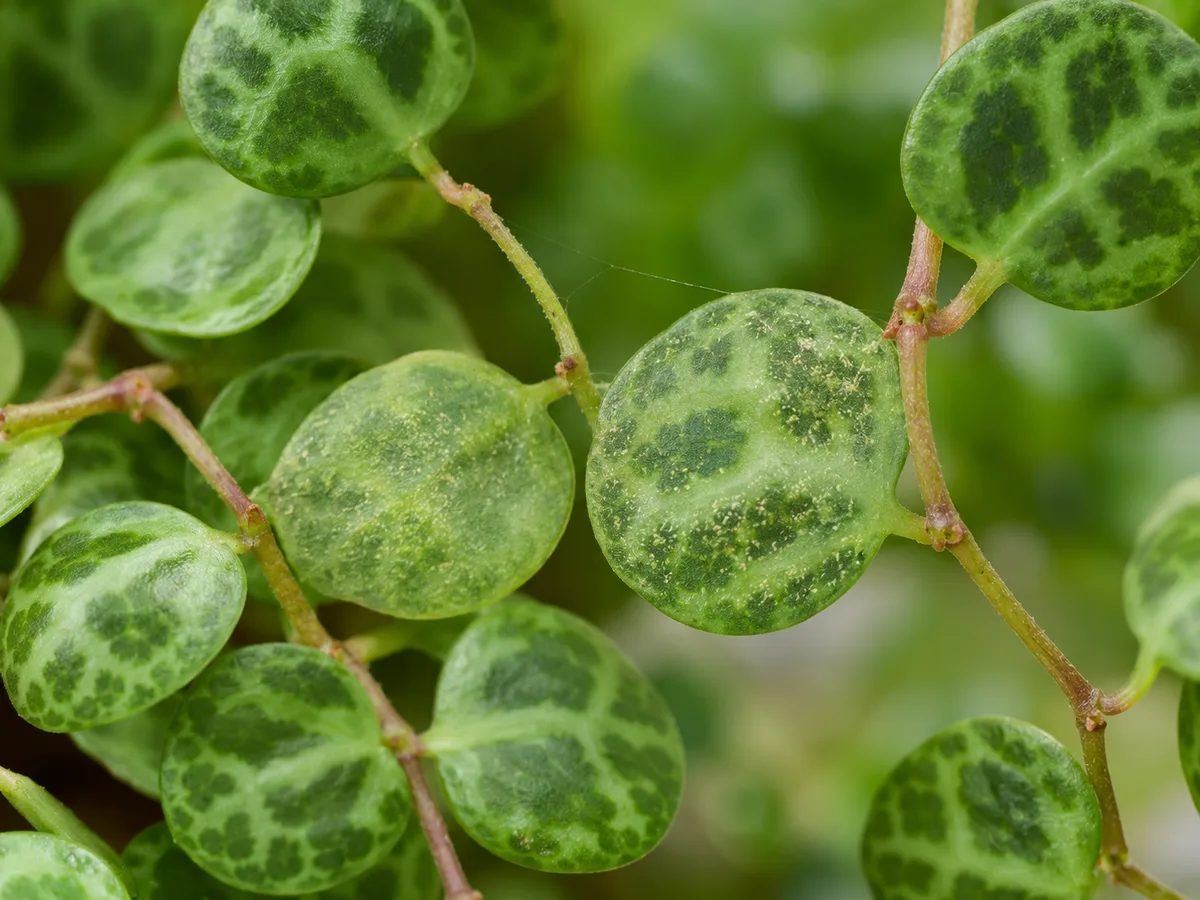
Look for clusters of tiny pale feeding marks and fine silk, then confirm the pest on the foliage before treating.
String of Turtles has compact patterned leaves along thin, overlapping vines. That shape can make the undersides and stem joints harder to inspect, so gently separate the strands and check several leaves, not only the most damaged one. Spider mites feed on many houseplants; sources do not establish that this species is uniquely susceptible. The close inspection steps here adapt general mite guidance to the plant’s trailing growth. (RHS notes that spider mites affect a range of houseplants)
Confirm mites before treating
Use a bright light and a hand lens to examine the undersides of affected leaves, the vine joints, and any fine silk. Look for tiny moving mites, round eggs, or pale cast skins. You can also tap a strand over a white sheet of paper; watch any specks for movement. UC IPM recommends checking beneath leaves and confirming mites before choosing a treatment. (UC IPM inspection guidance)
Stippling by itself is not proof of spider mites. Dust, mechanical scuffs, sun scorch, or other sap-feeding pests can also leave discolored leaves. Scale insects are usually visible as fixed bumps on stems or leaf surfaces, while spider mites move and may leave fine webbing. A single loose strand may be from an ordinary spider; pair webbing with stippling or live mites before diagnosing an infestation. (Colorado State Extension compares houseplant scale and mites; RHS describes mottling as a spider-mite sign)
What to do when you confirm spider mites
Move the pot away from nearby plants and inspect those plants too. When crowded or when a host is declining, female mites can disperse to other plants, so check nearby pots even if their leaves look healthy. (UC IPM explains spider-mite dispersal) Remove heavily damaged fallen leaves and wipe the shelf or sill, but keep the plant’s light and watering routine steady while you treat the pest.
For a small infestation, rinse the foliage with a gentle stream that reaches the undersides, supporting the thin vines so they do not break. If rinsing would leave the potting mix saturated, isolate the affected strand and wipe it with a damp cloth instead. Let the foliage dry in moving air. UC IPM recommends water sprays for reducing spider mites and stresses coverage of leaf undersides. (UC IPM water-management guidance)
If mites remain, consider only a product labeled for spider mites and suitable for the plant and indoor setting. Contact soaps and oils must reach the mites, may require repeat applications, and can injure some foliage. Follow the product label, test a small area first, and avoid applying a product to a drought-stressed plant or in excessive heat. Do not combine several treatments at once. (UC IPM soap and oil cautions; RHS management options for glasshouse red spider mite)
Avoid broad-spectrum insecticides unless a label specifically supports the intended use; they can kill beneficial predators and may contribute to mite outbreaks. Keep the plant free of dust and water it appropriately, since water-stressed plants can be more vulnerable to mite damage. Do not overwater this succulent or keep it humid as a substitute for inspecting and controlling confirmed mites. (UC IPM on water stress and pesticide effects; UC IPM nursery monitoring guidance)
Monitor new growth and prevent a repeat
Spider mites can be difficult to spot, and one rinse or contact treatment may miss individuals tucked into overlapping foliage. Recheck the undersides of leaves, vine junctions, and nearby plants every few days at first. Repeat a labeled contact treatment only as its instructions direct. UC IPM recommends regular monitoring because populations can grow quickly under favorable conditions. (UC IPM monitoring guidance)
Existing stippling may remain while the plant begins to recover; judge progress by the absence of fresh damage and by clean new leaves. UC IPM notes plants often recover after mites leave. (UC IPM on recovery after mite damage) Maintain bright indirect light and a fast-draining mix as described in the String of Turtles care overview and watering guide. If leaves soften or darken at the base, compare the signs with root rot on String of Turtles rather than increasing watering to address mite damage.
For another suspected pest, use the Pest Identifier Tool and compare the String of Turtles problem guide. For broader pest context, see the spider-mite guide.
FAQs
How can I tell whether my String of Turtles has spider mites?
Look for fine pale stippling, then inspect leaf undersides and stem joints with a magnifier. Confirm moving mites, eggs, cast skins, or fine silk before treating; stippling alone can have other causes.
Can I rinse spider mites off a String of Turtles?
A careful rinse can dislodge some mites if it reaches both sides of the foliage. Keep the potting mix from becoming soaked, let the leaves dry with airflow, and check again because a rinse may miss mites or eggs.
Does webbing always mean spider mites?
No. A stray strand may be from an ordinary spider. Look for webbing together with pale stippling, cast skins, eggs, or moving mites on the plant.
Should I raise humidity to get rid of spider mites?
Do not use humidity as the treatment. Keep the succulent in suitable normal conditions, avoid drought stress, and address confirmed mites directly; persistently damp conditions can create other problems.
How often should I check after treatment?
Inspect leaf undersides and overlapping vines every few days at first, then continue routine checks until you find no live mites or fresh damage. Follow the label if you use a soap or oil product.