Root Rot on String of Turtles: Signs and Recovery
Quick answer
First lift the String of Turtles’ nursery pot out of any cachepot and pour away standing water. Yellow leaves alone do not confirm root rot: if the mix stays wet and the plant keeps declining, inspect the fine roots for brown, soft, or foul-smelling tissue. Keep the mix lightly moist after recovery begins, but never soggy.
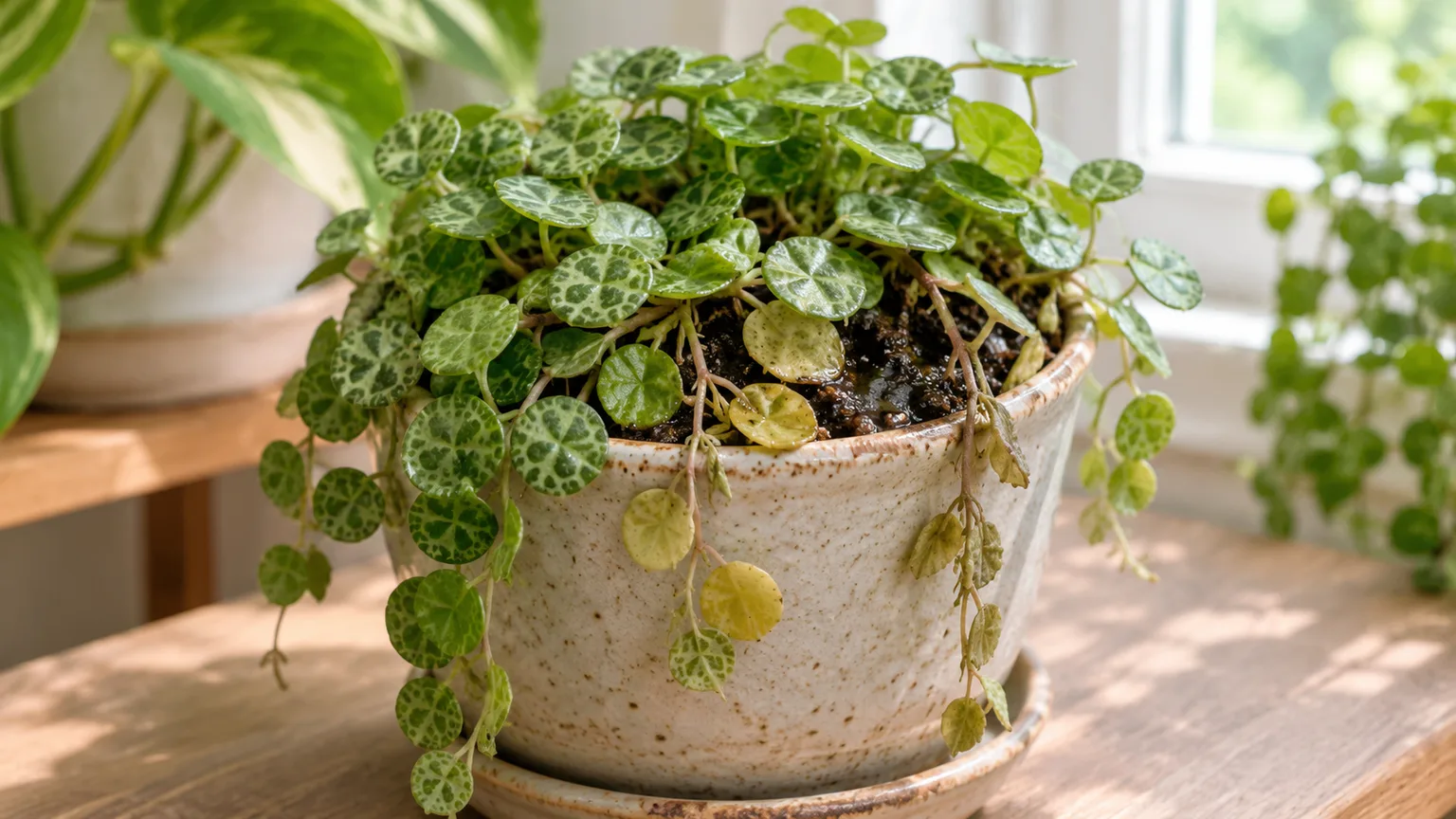
Root Rot on String of Turtles: How to Check and Save Healthy Vines
This guide covers root rot on String of Turtles. See also the general Root Rot guide, watering, and light pages for this plant.
Root Rot on String of Turtles: How to Check and Save Healthy Vines
- Search intent: identify whether a declining String of Turtles has root rot, learn what to inspect, and decide whether the plant or healthy vines can be saved.
- Specific angle: the plant’s fine trailing stems and preference for lightly moist, airy mix make leaf symptoms easy to misread; distinguish wet-soil stress from confirmed root decay before cutting or repotting.
- Reader outcome: remove standing water, verify root condition, make one measured recovery change, and protect healthy vine sections if the root system is badly damaged.
- Root Rot on String of Turtles: Signs and Recovery
- String of Turtles Root Rot: How to Check the Roots
- Saving a String of Turtles With Root Rot
Root Rot on String of Turtles: Signs and Recovery
- Check for root rot on String of Turtles, trim only damaged roots, reset its chunky mix and watering, and save healthy trailing cuttings.
- Yellow leaves can have several causes. Learn how to confirm root rot on String of Turtles and help healthy roots and vines recover.
- Find the signs that separate wet-soil stress from root rot, then use a careful recovery plan for your String of Turtles.
Check for root rot on String of Turtles, trim only damaged roots, reset its chunky mix and watering, and save healthy trailing cuttings.
- H1: Root Rot on String of Turtles: How to Check and Save Healthy Vines
- H2: First, remove standing water
- H2: What root rot looks like on this trailing peperomia
- H2: Check the small root ball without overhandling the vines
- H2: A measured rescue for String of Turtles
- H2: Why this plant’s moisture balance is easy to misread
- H2: Save healthy trailing sections if the roots are badly damaged
- H2: When yellowing is not root rot
- H2: Prevent another wet-root cycle
- H2: When to use this page versus other String of Turtles guides
Root Rot on String of Turtles: How to Check and Save Healthy Vines
First, remove standing water
Lift the grow pot out of its decorative outer pot and pour away any water collected underneath. Keep the plant in bright, indirect light while you check it; do not immediately drench, fertilize, or apply a fungicide. Standing water can leave houseplant roots with too little air, and overwatering is a common noninfectious cause of indoor plant decline. (University of Florida explains how standing water stresses roots)
Yellowing alone is not proof of root rot. If the mix dries normally and the vines stay firm, leave the roots undisturbed and review recent watering and light first. If the soil remains wet for days and the plant continues to wilt or soften, inspect the roots before deciding to repot.
For the general root-rot mechanism, see our root rot guide. The checks below focus on String of Turtles (Peperomia prostrata) and its fine, trailing growth.
What root rot looks like on this trailing peperomia
Look for a cluster of signs rather than a single yellow leaf: the potting mix stays wet, several leaves lose firmness or turn yellow, and stems near the soil line become soft or dark. Root rot can make a plant wilt even while the soil is wet; affected roots are often brown and soft, and may smell unpleasant. Those root signs are more useful than leaf color by itself. (Wisconsin Extension’s root-rot signs)
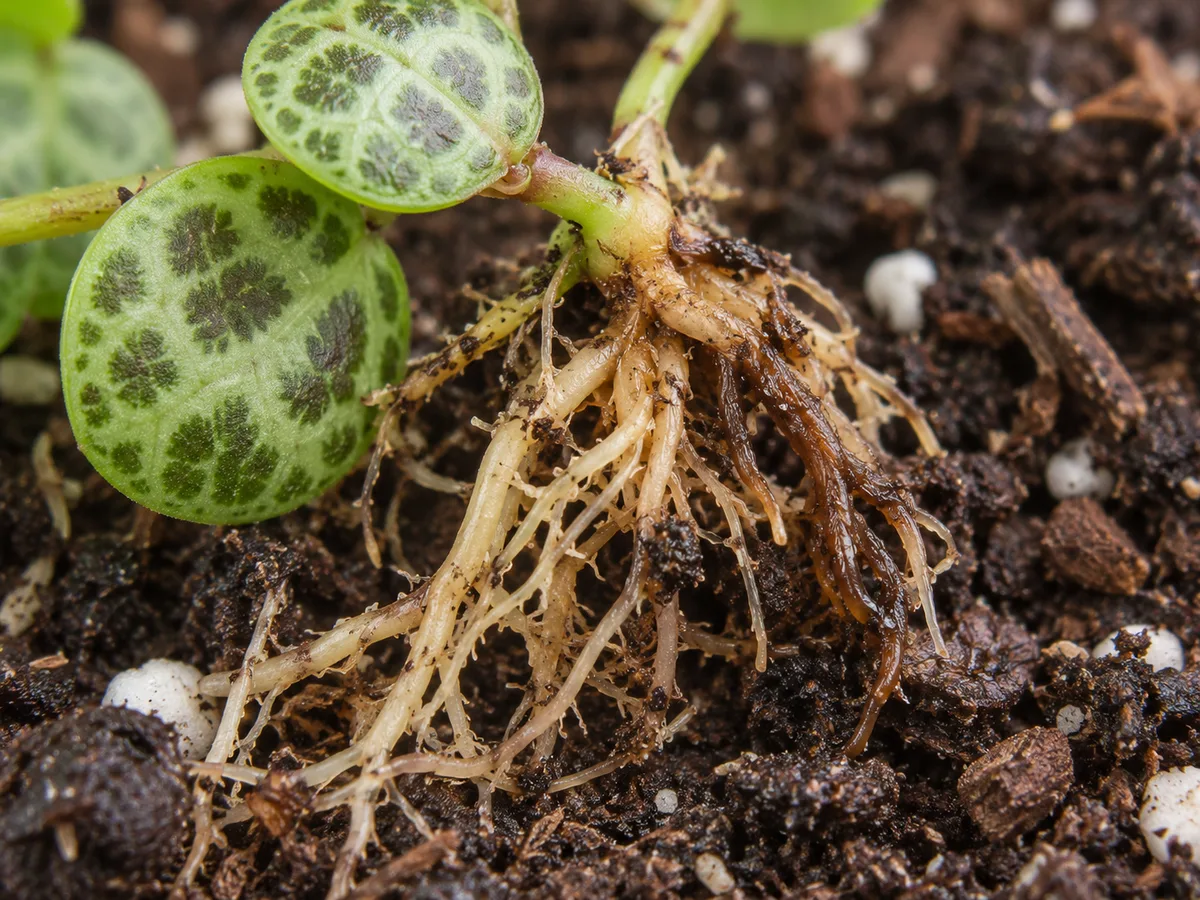
Brown, soft roots among firmer pale roots support a root-rot diagnosis when the pot has also stayed wet and the plant is declining.
The small patterned leaves can wrinkle when the plant is too dry, while prolonged wetness can also lead to yellowing or soft growth. Compare the pattern with underwatering on String of Turtles and yellow leaves on String of Turtles before disturbing a healthy root system. The University of Wisconsin notes that root inspection is needed because wilt, yellowing, and nutrient-like symptoms can overlap with other problems. (Wisconsin Extension on symptom overlap)
Check the small root ball without overhandling the vines
If symptoms are spreading and the potting mix is persistently wet, slide the root ball out gently. Support the soil and crown rather than pulling the thin trailing stems. Brush away only enough mix to see the roots. Healthy roots should feel firm; brown roots that collapse or slough when lightly touched are more concerning. A foul smell and wet mix strengthen the case, but no one sign identifies the pathogen. (Penn State Extension’s indoor-plant diagnosis guidance; Wisconsin Extension on root inspection)
Check the pot as well. Does it have open drainage holes? Is there compact, peat-heavy mix at the bottom, or water trapped in an outer pot? String of Turtles’ care profile calls for excellent drainage and a chunky peperomia mix; its watering guide recommends keeping the medium lightly moist but never soggy. That balance matters because letting this plant go bone-dry for too long can also stress its small leaves. See the String of Turtles soil guide and watering guide for its normal baseline.
A measured rescue for String of Turtles
If you find clearly soft, decayed roots, trim only those sections with clean, sharp scissors. Keep firm cream, tan, or pale roots. Discard old saturated mix rather than packing it around the remaining roots, then set the plant in a clean pot with drainage and fresh, airy peperomia mix. Do not use a much larger pot; excess mix around a small root system can stay wet longer. University of Wisconsin Extension recommends drainage holes, fresh potting mix, and moderated moisture for houseplants with root rot. (Wisconsin Extension’s prevention and care steps) Gardening Know How describes the same basic recovery sequence of removing damaged roots and using fresh, well-drained potting mix. (Gardening Know How’s houseplant recovery steps)
Water the new mix enough to settle it, allow it to drain fully, and empty the saucer. After that, check the top inch rather than following a calendar: water when that surface layer begins to dry, then let the pot drain. This matches the plant’s care needs better than either keeping it saturated or treating it like a desert succulent. The String of Turtles overview explains its bright indirect light and steady-but-careful moisture needs.
Avoid adding peroxide or fertilizer as a shortcut. Root decline may reflect oxygen-starved, wet mix rather than an infection that a home treatment can cure. University of Florida Extension advises checking growing conditions before labeling a houseplant problem as disease; Wisconsin Extension does not recommend chemical fungicides for routine houseplant root rot. (UF/IFAS on disease versus overwatering; Wisconsin Extension on fungicides)
Why this plant’s moisture balance is easy to misread
String of Turtles (Peperomia prostrata) grows as a compact mat of thin, trailing stems with small, patterned leaves, so the soil line can be hidden beneath overlapping vines. (Cafe Planta’s Peperomia prostrata guide) The leaves may look delicate enough to need frequent watering, but a continuously wet root zone is not the same as evenly moist care. The plant’s own care profile calls for a chunky mix, bright indirect light, and watering after the top inch begins to dry. During slower winter growth, the mix may take longer to reach that point, so check the pot instead of keeping a summer schedule.
The trailing shape also makes it easy for long strands to sit over a damp pot rim or for softened stems at the soil line to go unnoticed. When you inspect, lift the strands gently and check where each enters the mix. If only one stem section is soft while the roots and other vines remain firm, compare with wilting on String of Turtles and review whether that stem was bent or damaged before treating the whole root system.
Save healthy trailing sections if the roots are badly damaged
If most roots have softened but some vines remain firm, take a few clean cuttings from healthy sections before discarding the rotted base. Choose stems with intact patterned leaves and no dark, mushy areas; do not use visibly decayed tissue as propagation material. Follow the site’s String of Turtles propagation guide for rooting those cuttings. This is a backup, not a guarantee: cuttings from a plant with widespread stem rot may also fail.
If the decay reaches every stem base or the crown, replacement may be more practical than repeated pruning. Bag the discarded material and old mix, wash the pot, and clean cutting tools before using them on another plant. Wisconsin Extension cautions that contaminated mix and drainage water can carry root-rot organisms. (Wisconsin Extension on sanitation and reused mix)
When yellowing is not root rot
One or two older leaves yellowing while the rest of the plant remains firm may reflect normal leaf turnover or a recent care change. Wrinkled, thin leaves with dry mix point more toward underwatering. A trailing section that loses color mostly on the dim side of the pot may need brighter indirect light; use the String of Turtles light guide before increasing water. If the soil surface has fuzzy growth but the plant is otherwise firm, compare with mold on String of Turtles soil; surface mold alone does not establish that the roots are rotting.
If the diagnosis remains unclear, avoid repeated unpotting. Record how long the mix takes to dry, whether the pot drains, and whether new leaves stay firm. Widespread, rapid decline despite corrected moisture is a reason to seek a local extension plant clinic or discard a severely affected plant rather than repeatedly applying products.
Prevent another wet-root cycle
- Use a pot with unobstructed drainage holes and never let the grow pot sit in the runoff.
- Keep the chunky mix airy; replace compacted medium when repotting is actually needed.
- Check the top inch before watering. In winter, slower growth can mean longer intervals between checks.
- Give the trailing canopy bright, indirect light so the plant can use water at a steady pace; see the String of Turtles light guide.
- Review overwatering on String of Turtles if the pot repeatedly stays wet, or repotting guidance if the medium has compacted.
When to use this page versus other String of Turtles guides
Use this page when a wet pot and declining growth lead you to inspect roots. Start with the String of Turtles problems hub to compare symptoms; the watering guide covers routine moisture checks, and the overwatering guide covers a persistently wet mix before roots are confirmed damaged. For general causes and symptoms across plants, use the root rot guide.
How can I tell if my String of Turtles has root rot?
Look for several clues together: mix that stays wet, continued wilting or yellowing, and roots that are brown and soft rather than firm. A sour odor can add concern, but leaf color alone is not enough to confirm it. (Wisconsin Extension on root-rot symptoms)
Should I let String of Turtles soil dry completely after root rot?
No. This peperomia should not be left bone-dry for long. After removing damaged roots and repotting, let excess water drain and wait until the top inch begins to dry before watering again; keep the mix lightly moist, never soggy.
Can String of Turtles recover from root rot?
It may recover if firm roots or healthy stem sections remain. Remove only soft, decayed tissue, provide fresh airy mix, and judge progress by firm new growth. A plant with rot through every stem base may not be salvageable.
Do I need to use fungicide for root rot?
Usually not as a first step. Root decline can result from prolonged wet conditions as well as pathogens, and Wisconsin Extension does not recommend chemical fungicides for typical houseplant root-rot control. Correct drainage and remove decayed tissue first. (Wisconsin Extension on fungicide limits)
Can I save healthy String of Turtles cuttings if the roots are badly damaged?
Yes, if some trailing sections are still firm and free of dark, mushy tissue. Take clean cuttings from healthy growth and follow the plant’s propagation guidance while discarding decayed material.