Mold on String of Turtles Soil: Causes and Fixes
Quick answer
A small, soft white patch on String of Turtles potting mix is often surface fungus feeding on organic matter, but it is a clue to check moisture rather than proof of root disease. Let the surface dry between waterings, clear fallen leaves, and confirm the pot drains freely.
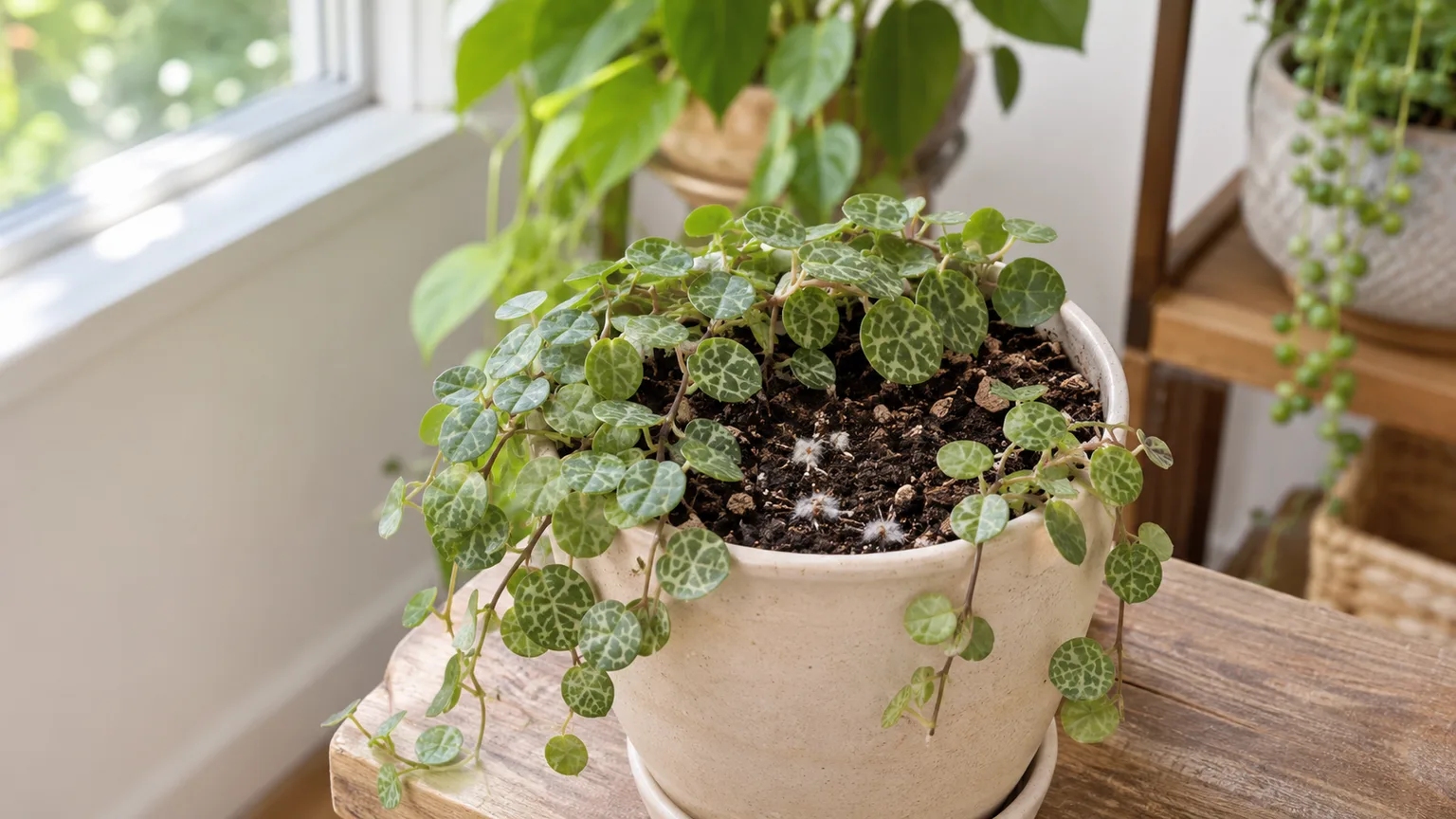
Mold on String of Turtles Soil: What to Check and Do
This guide covers mold on soil on String of Turtles. See also the general Mold on Soil guide, watering, and light pages for this plant.
Mold on String of Turtles Soil: What to Check and Do
Quick answer
A small patch of soft, white fuzz on String of Turtles soil is often a surface fungus using dead organic matter in the potting mix. It does not, by itself, mean the plant has an infection or root rot. Treat it as a prompt to check how long the surface stays damp, whether fallen leaves are sitting on the mix, and whether water can leave the pot.
String of Turtles is Peperomia prostrata. The Royal Horticultural Society (RHS) recommends loose, free-draining compost for peperomias and letting the compost partially dry between waterings. (RHS peperomia growing guide)
What the white growth may be
Saprotrophic fungi feed on dead and decaying organic matter. The RHS describes these fungi as decomposers that recycle dead material; a soft surface growth can therefore be part of the activity in the potting mix rather than a fungus attacking the living String of Turtles. (RHS guide to saprotrophic fungi; Epic Gardening’s guide to white mold on houseplant soil)
That said, the appearance alone cannot identify the organism or explain why it appeared. A patch that returns alongside mix that remains wet deserves a closer care check. UC IPM notes that houseplant decline is commonly associated with watering problems and that soggy soil can result from overwatering or poor drainage. (UC IPM houseplant problem guide)
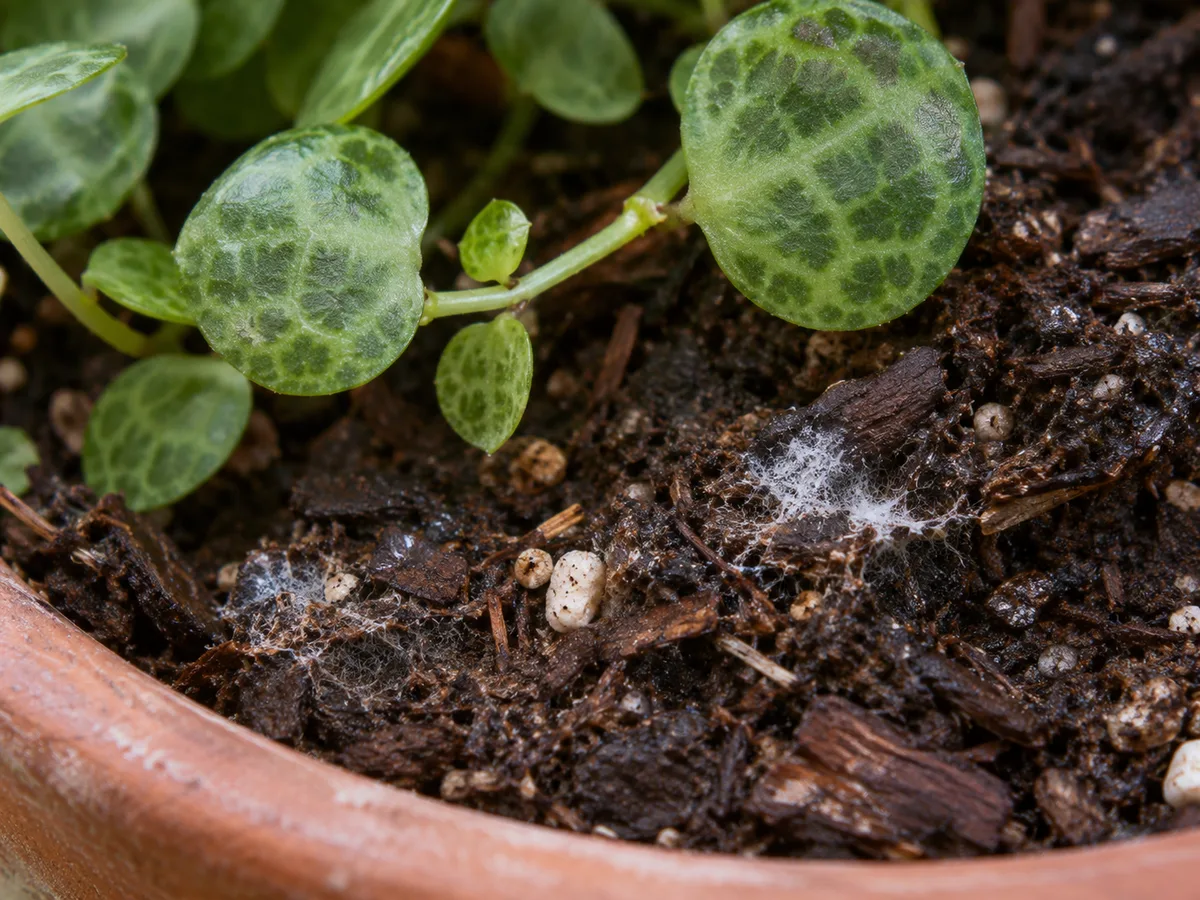
Soft, threadlike surface growth is different from a hard mineral crust. Check the mix and roots before deciding on a treatment.
Check the texture before treating
- Soft, fuzzy or threadlike growth: This may be surface fungus on damp organic mix. Lift a small area gently with a spoon if you want to remove it, then check the soil’s moisture and the pot’s drainage. White growth is not a diagnosis by itself. (The Spruce’s mold identification and care guide)
- Hard white or tan crust: Mineral salts from fertilizer or water can form a firm crust that does not brush away like fuzz. Colorado State University Extension describes this whitish crust as soluble-salt buildup on potting mix. (Colorado State Extension on whitish crust)
- White insects or cottony clusters on stems: Check leaf joints and the undersides of leaves. Sap-feeding pests such as mealybugs may be present above the soil; compare with the String of Turtles mealybug guide.
- Mushrooms or yellow fruiting bodies: These are different from a white fuzzy film. Do not let children or pets eat unknown mushrooms; remove fruiting bodies from reach and identify them before handling as food. The RHS notes that a small number of fungal fruiting bodies are poisonous if eaten. (RHS saprotrophic fungi guidance)
Why mold may appear on the potting mix
The surface stays damp
Watering again while the mix is still wet can keep the surface favorable for fungal growth. This is especially easy to do in a cool room, during slower winter growth, or when a large pot holds more compost than the plant’s roots can use. The RHS advises checking peperomia compost with a finger and allowing it to partially dry; watering too much or leaving the pot standing in water can lead to root rot. (RHS peperomia watering advice)
Drainage is blocked or water is trapped
Check that the nursery pot has an open drainage hole and that the outer cover pot or saucer is not holding water. A dense mix or a pot that is much larger than the root ball may also stay wet longer. The RHS recommends loose, free-draining compost for peperomias and warns that an oversized pot can keep compost wet for longer. (RHS peperomia planting guidance)
Dead leaves and still air add to the problem
Fallen leaves provide organic material for decomposers. A tightly packed display or a spot with little air movement can also slow surface drying. Remove loose, dead leaves from the soil and give the plant ordinary room ventilation; there is no need to point a strong fan directly at the delicate vines. The Spruce and Epic Gardening both list plant debris, moisture, and poor airflow among factors that can accompany moldy houseplant soil. (The Spruce on moldy soil contributors; Epic Gardening on white soil mold)
A measured first response
- Check moisture before watering again. Feel the mix below the surface instead of following a calendar. For this peperomia, let the compost partially dry between waterings, then water thoroughly and allow excess to drain. Do not leave the pot standing in collected water. (RHS peperomia watering guidance)
- Remove what is loose. If the patch bothers you, lift the visible surface growth and any fallen, decaying leaves with a clean spoon. Avoid digging down through the fine roots or removing a large amount of mix just to make the surface look spotless. Surface scraping and correcting the growing conditions are among the practical steps described by The Spruce. (The Spruce’s removal guidance)
- Confirm drainage. Empty the saucer or cachepot and make sure the drainage hole is clear. If the mix remains wet for an unusually long time, inspect the container and soil structure instead of adding more water or fertilizer. UC IPM identifies poor drainage and overwatering as reasons soil can become soggy and roots can decline. (UC IPM on houseplant watering and drainage problems)
- Watch the plant, not just the soil surface. Firm leaves and stable stems with a small surface patch are less concerning than a plant that keeps wilting while wet, develops soft stems at the soil line, or loses leaves quickly. Those signs warrant checking the root system and comparing with root rot on String of Turtles. (UC IPM houseplant symptom guide)
Do not apply cinnamon, vinegar, peroxide, or a fungicide as a default fix. A surface patch does not establish that the plant has a disease requiring a pesticide. If you suspect a specific disease, identify it first and use only a product labeled for that plant and use.
When repotting may be appropriate
Repotting is not necessary for one small fuzzy patch if the plant otherwise looks stable and the pot drains. Consider changing the mix or container when the compost stays saturated, drainage holes are blocked or absent, or the roots are dark and soft. Use a pot only slightly larger than the root ball and a loose, free-draining peperomia mix; avoid a heavy, oversized container that will retain excess moisture. (RHS peperomia potting and root guidance)
If you do repot, handle the thin trailing stems gently and remove only clearly dead or mushy roots with clean scissors. Then keep the plant in bright, indirect light and return to watering based on the mix’s drying rather than a fixed weekly schedule. For related symptoms, see the String of Turtles problems hub and its watering guide.
Prevent the patch from returning
Keep the surface free of fallen leaves, use a pot with working drainage, and allow the compost to partially dry between waterings. Recheck moisture after a seasonal change or a move to a cooler, dimmer location, since the mix may then dry more slowly. A loose, well-drained mix and a pot sized for the roots support the peperomia’s care needs; brighter light should still be indirect, not harsh direct sun. (RHS peperomia growing guide; Epic Gardening’s mold prevention overview)
For a wider check of symptoms and likely causes, use the Plant Problem Diagnosis Tool. If the soil is damp and small flies are emerging from it, compare with fungus gnats on String of Turtles; mold itself does not confirm a gnat infestation. (UC IPM fungus gnat and houseplant guidance)
FAQs
Is white mold on String of Turtles soil harmful to the plant?
A small fuzzy patch is often a surface decomposer and does not by itself mean the plant is diseased. Check how wet the mix stays and watch for separate signs such as persistent wilting or soft stems.
Should I water when the soil has mold?
Only after checking the mix. Peperomia compost should partially dry between waterings; empty standing water from the saucer or outer pot.
How can I tell mold from mineral crust?
Fuzzy growth is soft and can be lifted. A hard white or tan layer is more consistent with mineral salts on the mix.
Do I need to repot because of mold?
Not for a small patch alone. First correct excessive moisture and confirm drainage. Repot when the mix remains soggy or roots are damaged, using a loose mix and a pot close to the root-ball size.
Can cinnamon or fungicide remove the mold?
Do not treat a surface patch with a home remedy or fungicide by default. Identify a specific plant disease before choosing any pesticide, and follow the product label. Address moisture and debris conditions first.