Brown Tips on String of Turtles: Causes and Fixes
Quick answer
On String of Turtles, a few dry brown tips can follow water stress, direct sun, or very dry air; persistently wet mix can also damage roots and disrupt water uptake. Check the mix and drainage, recent light or heat changes, and whether browning is spreading before changing care.
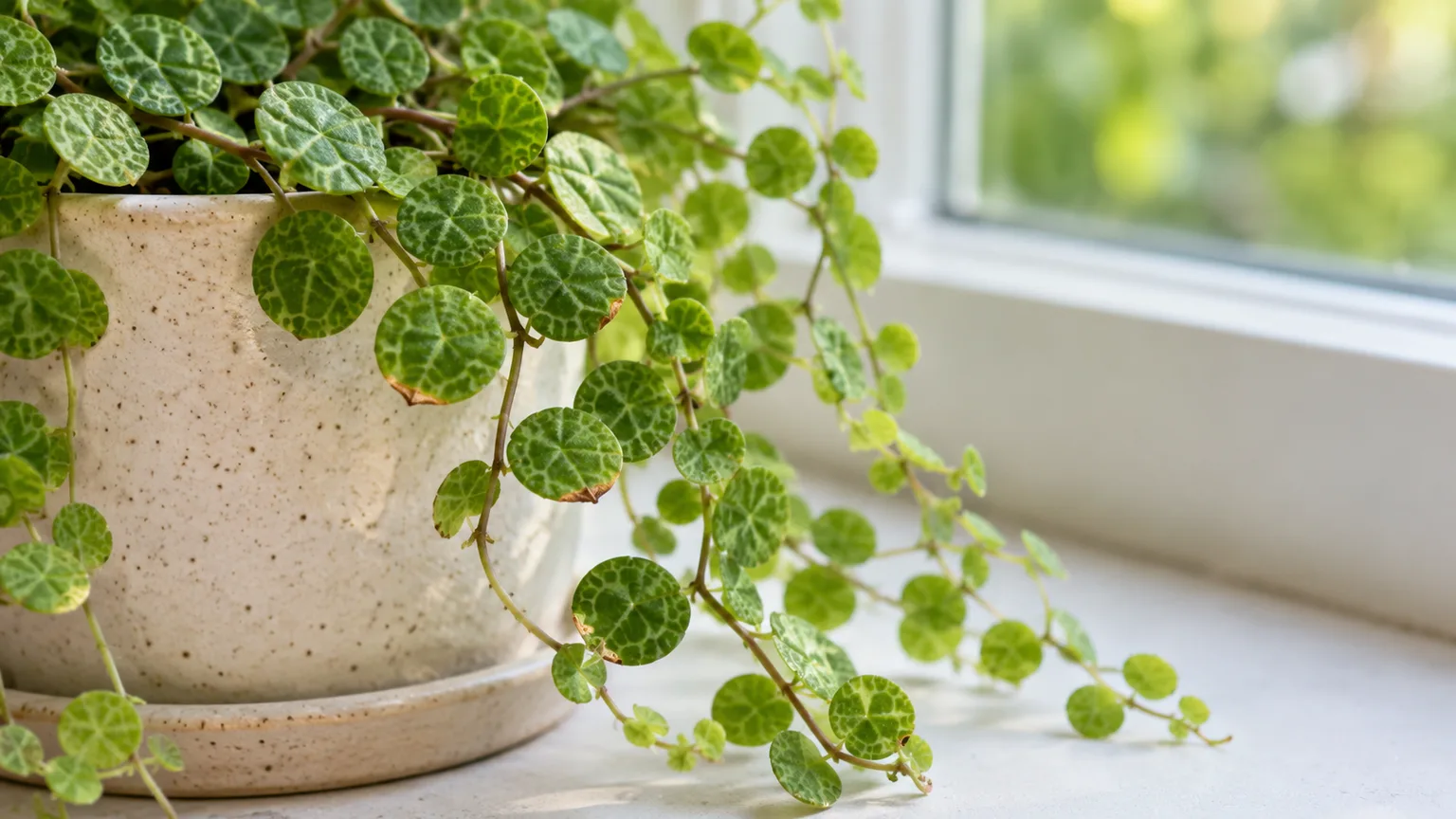
Brown Tips on String of Turtles: Causes and Care Checks
This guide covers brown tips on String of Turtles. See also the general Brown Tips guide, watering, and light pages for this plant.
Brown Tips on String of Turtles: Causes and Care Checks
Quick answer
A few dry brown tips on a String of Turtles do not identify one cause by themselves. The first checks are the potting mix, roots and drainage, recent changes in light or heat, and whether the problem is affecting new leaves or spreading across the plant. Peperomia prostrata prefers bright indirect light and should not sit in persistently wet compost; the Royal Horticultural Society (RHS) says to let the top few centimetres dry before watering and warns that overwatering can lead to root rot. (RHS peperomia growing guide)
Why String of Turtles can develop brown tips
Brown tips are a symptom, not a diagnosis. Underwatering can leave foliage dry; overwatering can damage roots and interfere with water uptake. Dry air, poor ventilation, a hot radiator, or too much direct sun may also injure leaves. RHS lists both excess and insufficient watering, dry atmosphere, and ventilation among possible causes of brown margins, and advises checking the roots and other signs before choosing a response. (RHS houseplant leaf-damage guide)
String of Turtles has small, fleshy, patterned leaves on delicate trailing stems. Avoid treating it like a thirsty leafy plant: the RHS identifies it as Peperomia prostrata, recommends bright indirect light, and cautions against persistently damp compost and positions close to radiators. A grower’s species-specific guide from Ohio Tropics likewise emphasizes drainage and avoiding mix that stays wet. (RHS peperomia guide; Ohio Tropics species guide)
Read the pattern before changing care
- Crisp tips with a dry, light pot: Check whether the mix has dried much farther than usual or water is running down the sides without soaking it. If the mix is dry, water evenly and let excess drain. Do not leave the pot standing in water.
- Brown tips with a pot that stays heavy or damp: Check for blocked drainage and inspect the roots if the plant is declining. Dark, soft roots and a persistently wet root ball point to root trouble, so adding more water is unlikely to help. Peperomias are vulnerable to root rot in persistently damp conditions. (RHS peperomia guide)
- Dry or scorched patches on the window-facing side: Consider recent exposure to direct sun or a move from a dimmer spot. Shift the plant into bright, filtered light rather than deep shade. (RHS peperomia guide)
- Damage after a heater or dry-air change: Move the plant away from a radiator or hot draft. Peperomias prefer some humidity but can adapt to ordinary household air, so first remove the obvious heat source instead of trying several humidity treatments at once. (RHS peperomia guide)
- A few older leaves affected while new growth looks sound: Monitor before intervening. Older houseplant leaves can naturally age and die back; widespread or accelerating damage deserves a closer care review. (RHS houseplant leaf-damage guide)
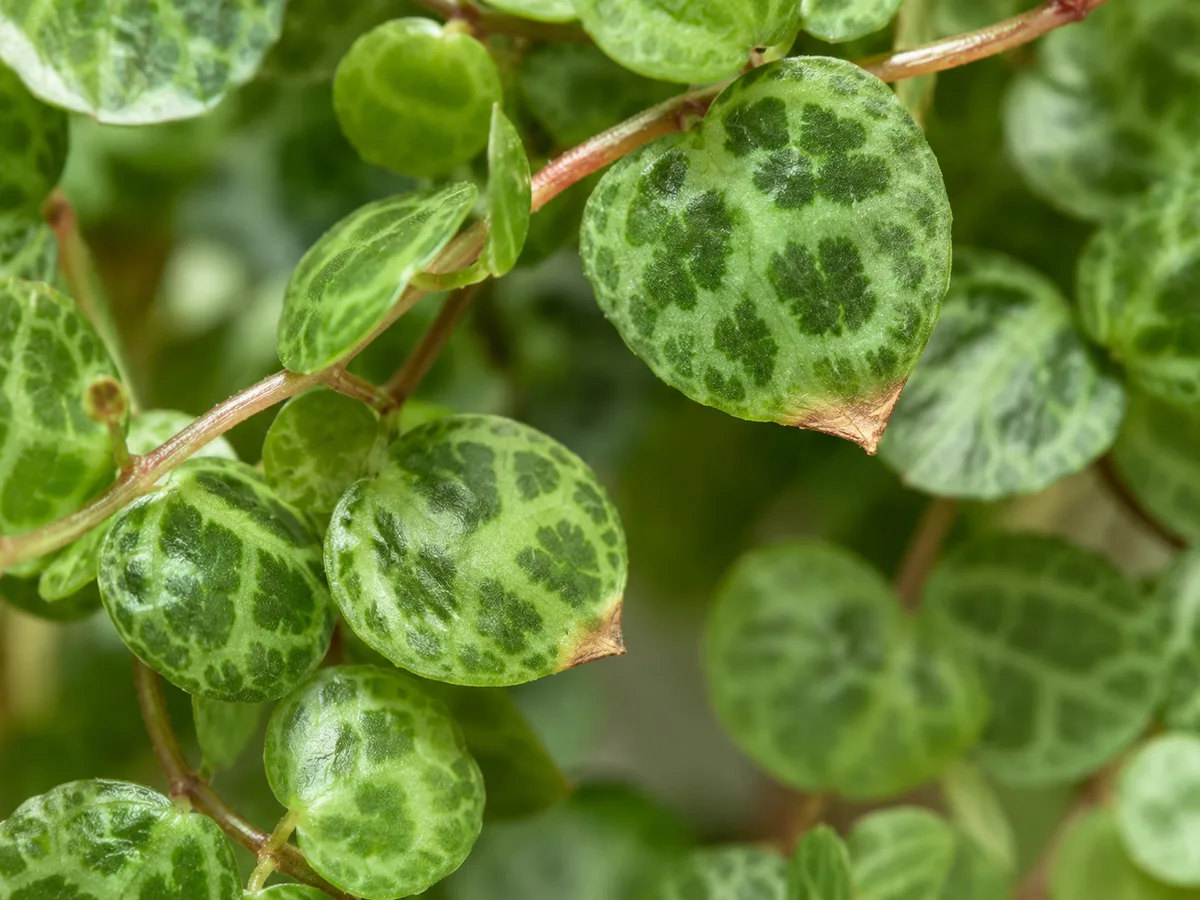
A small, dry edge is different from a soft, water-soaked, or rapidly spreading lesion. Compare several leaves and check the pot before deciding what to change.
First fixes to try
- Check the mix, not a calendar. Feel the upper layer and lift the pot to estimate how quickly it is drying. When the top few centimetres have dried, water thoroughly and allow the pot to drain; do not keep the root zone constantly wet. This follows the RHS watering guidance for peperomia. (RHS peperomia guide)
- Correct only a confirmed light or heat issue. Use bright indirect light and keep the plant away from a heater or cold draft. Avoid moving it directly from shade into harsh sun. (RHS peperomia guide)
- If the pot is staying wet, inspect drainage and roots. Ensure the drainage hole is open and empty any cachepot or saucer after watering. If roots are soft and the mix remains saturated, remove clearly damaged roots and repot into a suitably sized pot with an open drainage hole and fresh, free-draining mix. Connecticut’s Agricultural Experiment Station also describes moisture-related oedema in Peperomia, underscoring why persistent excess moisture deserves attention. (Connecticut Agricultural Experiment Station: Peperomia)
- Pause fertilizer if you have been feeding heavily. Do not add fertilizer to a stressed plant as a quick cure. Excess fertilizer can contribute to salt stress in houseplants; treat this as one possibility only when the feeding history supports it, not as a species-specific diagnosis. (Epic Gardening brown-tip diagnostic overview)
Make one evidence-based adjustment and watch the next growth. Brown tissue will not become green again; recovery is shown by healthy new leaves and no further spread. Avoid pruning every affected vine, repotting, changing light, and increasing humidity all at once, because that makes it harder to tell what helped.
When to investigate further
Act promptly if stems become soft, several leaves turn translucent or collapse, or damage spreads quickly. Those signs are more concerning than one or two dry tips. Check the root zone first, and compare related symptoms in the String of Turtles problem guides. For broader symptom context, compare the brown-tip symptom cluster. For other diagnoses, see the String of Turtles problem guides or use the Plant Problem Diagnosis Tool.
Prevent recurring brown tips
Keep the plant in stable, bright indirect light; water according to the mix’s drying, not a fixed schedule; and use a pot that drains. Check it after a seasonal move, a heater change, or a long stretch of cloudy weather. Typical household humidity may be adequate for peperomia, so prioritize watering, root condition, light, and nearby heat before adding a humidifier. (RHS peperomia guide; Ohio Tropics species guide)
FAQs
Why are the tips of my String of Turtles turning brown?
Several stresses can look alike. Check the mix, drainage, recent direct sun or heat, and whether the browning is spreading. Diagnose from the plant’s conditions rather than the color alone.
Should I water more when the leaf tips turn brown?
Only if the mix is dry and the plant is due for water. Persistently damp mix can harm Peperomia roots, so assess moisture first.
Can direct sun cause brown tips on String of Turtles?
Strong direct sun can scorch foliage. Keep it in bright indirect light and make any move gradually.
Will brown tips turn green again?
No. The damaged tissue generally stays brown. Watch for healthy new leaves and for the damage to stop advancing.
Should I raise humidity or repot my plant?
Neither is automatic. Peperomias can adapt to typical household humidity. Repot when the mix, drainage, or root inspection indicates a persistent wet-root problem.