Underwatering String of Turtles: Signs and Recovery
Quick answer
Underwatering is most likely when String of Turtles has dry mix through the root zone, a noticeably light pot, and leaves that feel less plump or slightly wrinkled. Confirm the potting mix is dry before watering; then water evenly until excess drains and empty the saucer. Do not follow a fixed calendar, since Peperomia should partly dry between waterings and needs less water in winter.
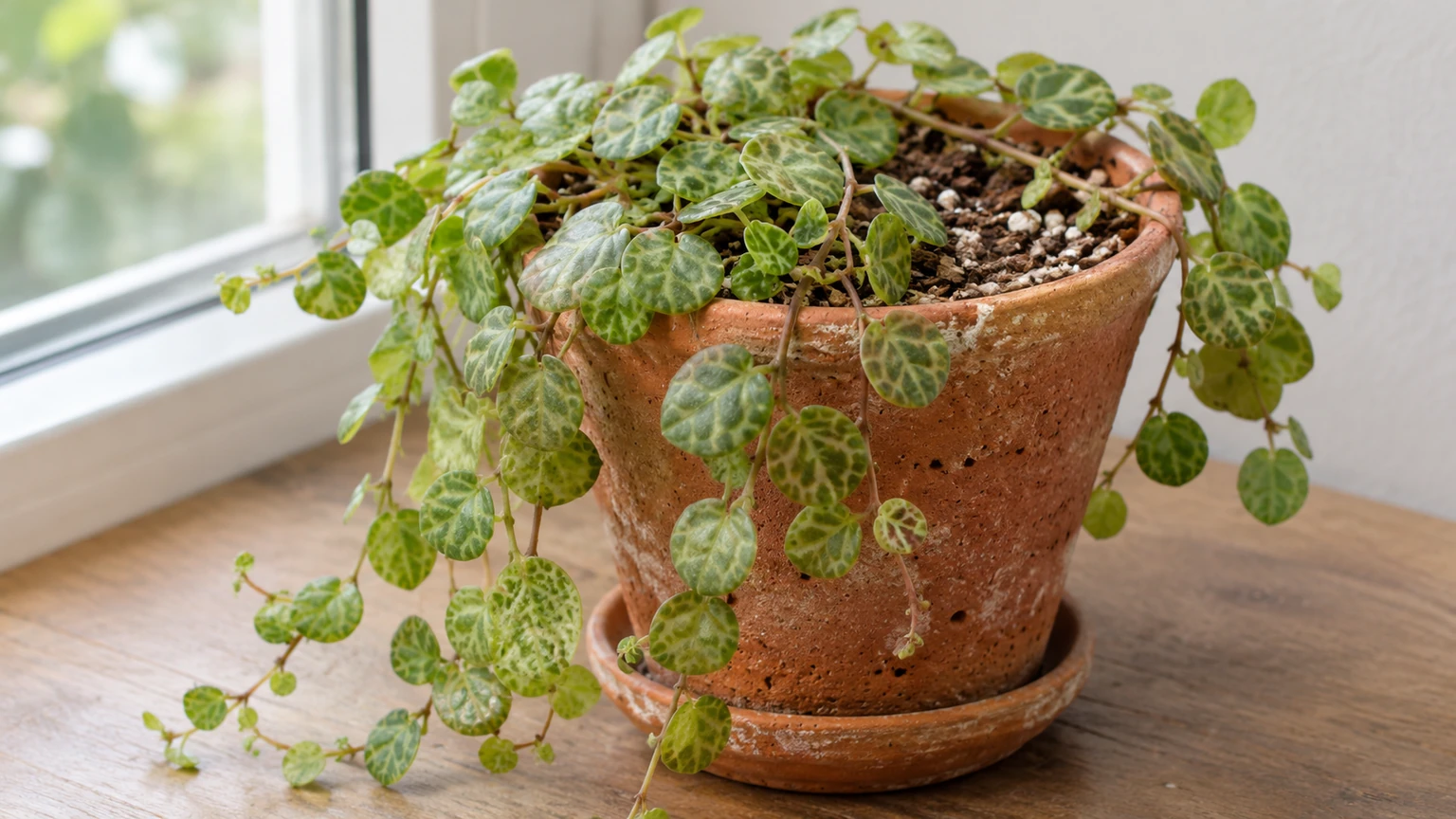
Underwatering String of Turtles: Signs and Safe Recovery
This guide covers underwatering on String of Turtles. See also the general Underwatering guide, watering, and light pages for this plant.
Underwatering String of Turtles: Signs and Safe Recovery
Underwatering String of Turtles: Signs and Safe Recovery
Quick answer
Check the potting mix before adding water. Underwatering is more likely when the mix is dry through the root zone, the pot feels light, and several leaves have become less plump or faintly wrinkled. String of Turtles (Peperomia prostrata) has fleshy leaves that store some moisture, so a dry surface by itself does not prove the plant is thirsty. Peperomia guidance recommends checking the mix and allowing it to partly dry between waterings, rather than following a fixed schedule. (RHS Peperomia care; NC State Extension on Peperomia leaves)
Signs that fit underwatering
Look for a combination of clues rather than one leaf. The pot may feel much lighter than it does after watering, and the mix may be dry several centimeters below the surface. Leaves on more than one strand may feel less firm, look slightly puckered, or lose some of their usual plump shape. New growth may pause if the plant has remained dry for an extended period.
Those leaf changes are clues, not a stand-alone diagnosis. Peperomia species have fleshy leaves that can store water, and P. prostrata has small succulent-like foliage. A plant can therefore remain firm for a while after the surface dries. The species-specific RHS guidance says to water moderately during summer and sparingly in winter, while its broader Peperomia guide recommends letting compost partly dry between waterings. (RHS species details; RHS Peperomia watering guidance)
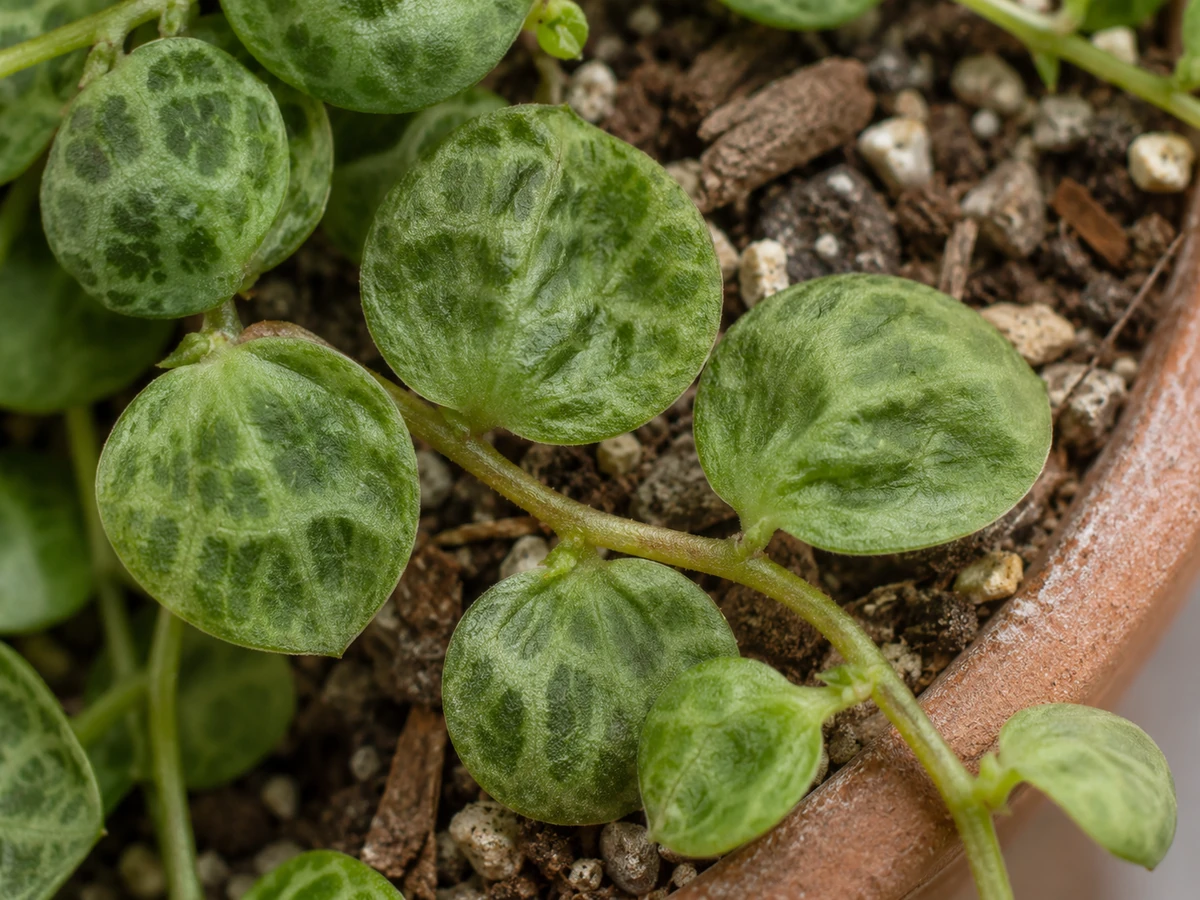
Faint wrinkling can support an underwatering diagnosis when the root-zone mix is also dry and the pot is light.
Check the root zone before watering
- Feel below the surface. Move aside a little top dressing and check the mix with a finger or wooden skewer. The RHS advises checking Peperomia compost by touch and letting it partly dry between waterings. (RHS growing guide)
- Lift the pot. Compare its weight with how it feels just after watering. A light pot supports the dry-soil diagnosis; a heavy pot suggests moisture is still present lower down.
- Inspect drainage. Make sure the container has an open drainage hole and that water is not sitting in an outer cachepot or saucer. Clemson Extension recommends well-drained mix and allowing water to drain before returning a Peperomia to its saucer. (Clemson Extension care guide)
- Look at the leaves and stems. Dry, slightly softened leaves alongside dry mix support underwatering. Soft, yellowing or dropping leaves with damp mix call for a different check, because overwatering and root rot can also cause decline. (NC State Extension on Peperomia problems)
Rehydrate without leaving the roots wet
If the root zone is dry, water the soil evenly until a small amount drains from the bottom. Let the pot finish draining and empty the saucer or decorative pot. If very dry mix sheds water down the sides, use a few slower pours, pausing between them so the root ball can absorb water. Avoid leaving the pot standing in a bowl of water for a long time.
Do not compensate with daily small splashes. Recheck the mix before watering again and let it partly dry. Peperomias are vulnerable to root problems when they stay too wet, and both Clemson Extension and the RHS emphasize drainage and careful watering. (Clemson Extension; RHS Peperomia care)
Rule out overwatering and other lookalikes
Wrinkled foliage can reflect water stress, but it does not tell you whether the soil is dry or wet. Check the pot and roots before changing your routine:
- Dry mix and light pot: underwatering is plausible; water thoroughly and let the pot drain.
- Damp mix and soft, yellowing or falling leaves: suspect excess moisture or root damage; do not add more water until the root zone has been checked. (NC State Extension)
- Brown leaf tips with otherwise firm leaves: water quality or dry air may be involved; the RHS notes Peperomias can be sensitive to fluoride in tap water and describes humidity as a factor in leaf condition. (RHS Peperomia growing guide)
For a broader comparison, see overwatering on String of Turtles and the root rot guide. Follow the String of Turtles care overview for its light and potting needs.
Prevent repeat drought stress
Check the mix regularly while learning how quickly it dries in your room, then water based on the root zone rather than a calendar reminder. Bright indirect light, warmth, pot size, airflow, and season all affect dry-down, so the same interval will not fit every plant. Reduce watering during slower winter growth; the RHS species profile advises sparing winter watering for P. prostrata, and the RHS genus guide also recommends reducing water in winter. (RHS species profile; RHS Peperomia guide)
Use a freely draining potting mix and a container with drainage. Clemson recommends well-drained houseplant or cactus mix for Peperomias, while the Missouri Botanical Garden gives similar dry-down advice for the related P. obtusifolia. That related-species guidance is a useful comparison, not a watering schedule for String of Turtles. (Clemson Extension; Missouri Botanical Garden)
If stems collapse, roots appear dark or mushy, or the plant keeps declining despite a corrected watering pattern, compare the symptoms with root rot on String of Turtles or use the Plant Watering Calculator to review the watering factors.
Frequently asked questions
How can I tell if my String of Turtles is underwatered?
Look for dry mix through the root zone, a light pot, and leaves that have lost some firmness together. Dry surface soil alone is not enough to diagnose it.
How often should I water String of Turtles?
There is no fixed interval. Check the mix and water when it has partly dried; pot size, season, room conditions, and light affect the timing.
Should I soak an underwatered String of Turtles?
Water evenly until excess drains, then empty the saucer. If the dry mix repels water, pour slowly in stages so the root ball can absorb it.
Can wrinkled leaves mean root rot instead?
Yes. Wrinkling alone cannot identify the cause. Dry mix and a light pot support underwatering; soft, yellowing leaves with wet mix suggest excess moisture or root trouble.
Will the wrinkled leaves become plump again?
Mildly affected leaves may regain firmness, but damaged leaves can remain marked or fall. Watch for stable stems and healthy new growth.