Yellow Leaves on String of Turtles: Causes and Fixes
Quick answer
Yellow leaves on String of Turtles are a symptom, not a diagnosis. Check whether the potting mix stays wet, the leaves are soft or shriveled, light or temperature recently changed, and new leaves are also affected. Correct the condition that matches the evidence; do not water, fertilize, and repot all at once.
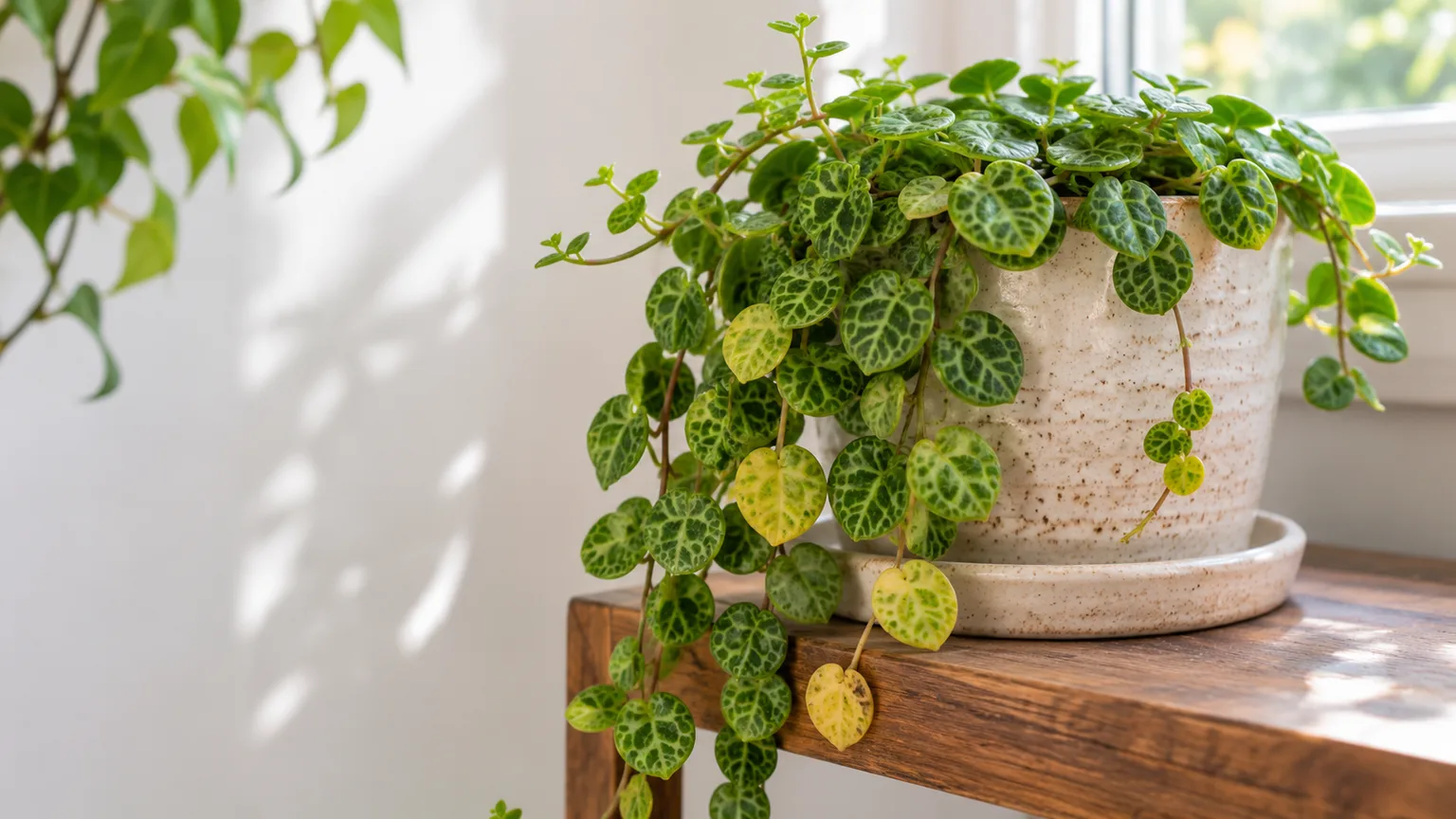
Yellow Leaves on String of Turtles: Causes and Checks
This guide covers yellow leaves on String of Turtles. See also the general Yellow Leaves guide, watering, and light pages for this plant.
Yellow Leaves on String of Turtles: Causes and Checks
Yellow Leaves on String of Turtles: Causes and Checks
Quick answer
Yellow leaves are a clue, not a diagnosis. Before changing care, check how long the potting mix stays damp, whether leaves feel soft or deflated, how much light reaches the plant, and whether the room has become colder. Look at the newest leaves too: one aging leaf low on a vine is different from yellowing that spreads through the center or new growth.
String of Turtles ( Peperomia prostrata ) has small, patterned leaves and fine trailing stems, so a few yellow leaves can be easy to miss until you inspect the vine closely. Excess moisture is a common possibility, but underwatering, low light, harsh direct sun, temperature stress, pests, and ordinary aging can look different and need different responses. Plant-specific care references associate overwatering with yellow, soft or drooping leaves, while also describing other possible stressors. (UK Houseplants on String of Turtles care; PlantIn’s Peperomia prostrata care guide)
Check the pattern before changing care
Start with four observations:
- Check the mix and pot. Feel below the surface and lift the pot. If it remains heavy and damp for days, check drainage and the watering interval. If the mix is dry and the pot feels light, prolonged dryness may be involved. A pot without an open drainage hole can hold water even when the surface looks dry.
- Feel the leaves and lower stems. Yellow leaves that are soft or translucent with a persistently wet mix suggest a different problem from thin, wrinkled leaves with dry mix. Softening at the stem base is a stronger reason to inspect the root zone.
- Look at where yellowing starts. A single older leaf may be shed as part of normal growth. Several leaves yellowing together, inner leaves changing while the pot stays damp, or yellowing that continues into new growth calls for a closer check.
- Recall recent changes. A move to a darker shelf, stronger direct sun, a cold window or draft, a recent repot, or a new nearby plant can help explain when the change began.
Yellowing is not automatic proof of overwatering. Plantgeh’s symptom guidance recommends comparing moisture, light, temperature, and stem condition; University of Maryland Extension also notes that excess moisture can cause yellowing or wilting that resembles drought stress. (Plantgeh’s yellow-leaf diagnosis; University of Maryland Extension on overwatered indoor plants)
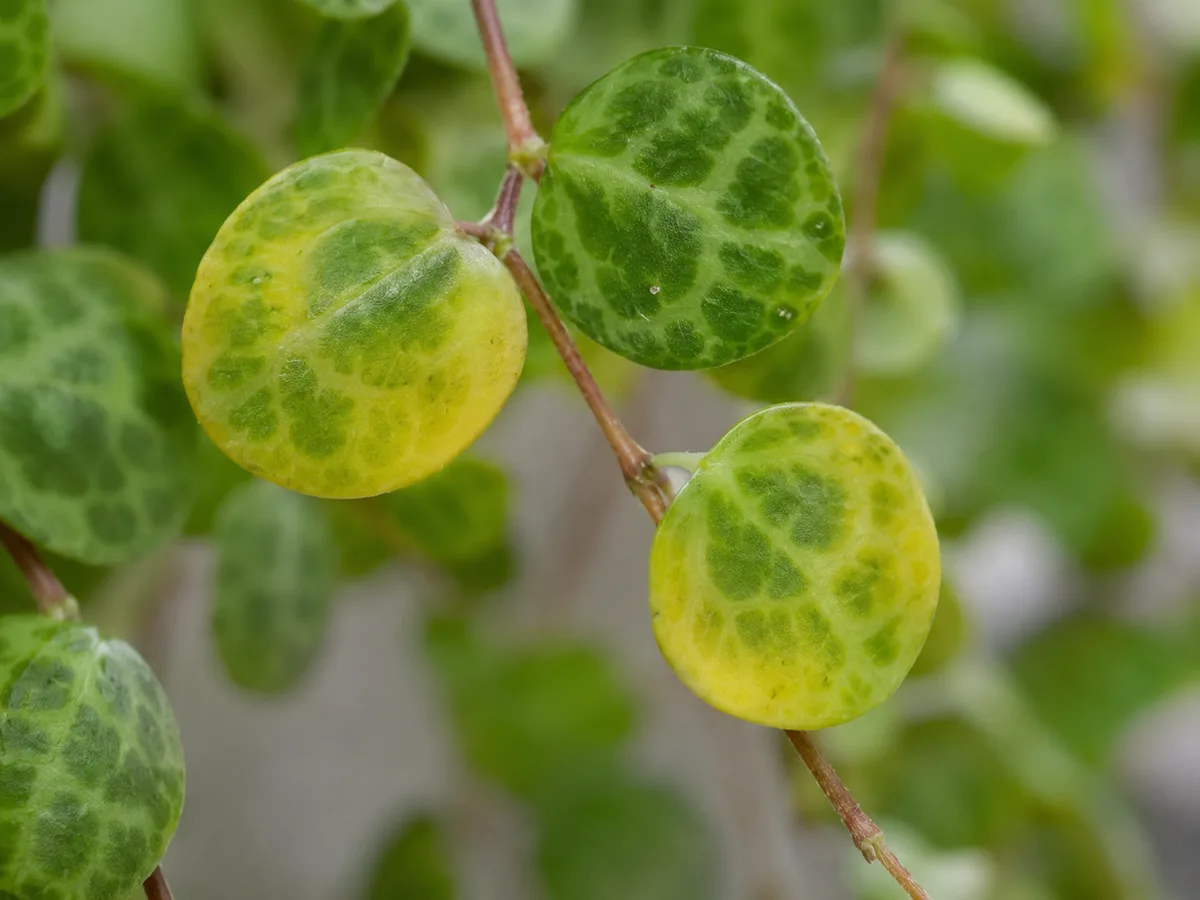
Compare leaf firmness and the potting mix; color alone cannot identify the cause.
Common causes and the clues to look for
Mix staying wet too long
If the pot stays heavy and damp, lower or inner leaves turn yellow, and leaves feel soft, check how water exits the pot and how quickly the mix dries. Dense or compacted soil, a pot without drainage, frequent watering, and low light can all slow drying. UK Houseplants describes rapid yellowing or shriveling and mushy foliage among overwatering symptoms on String of Turtles; PlantIn also connects yellowing and softening with overwatering and root-rot risk. (UK Houseplants on watering symptoms; PlantIn on watering and root rot)
If those clues fit, pause watering while the mix dries and make sure excess water can drain away. Do not leave the nursery pot standing in a full saucer or cachepot. If the stem base is soft, or yellowing continues while the mix remains wet, inspect the roots gently for dark, mushy tissue. Do not remove a healthy plant from its pot solely because one older leaf is yellow.
Mix drying out for too long
Dry, light mix together with less-plump or wrinkled leaves can indicate that the plant has gone too long without water. Water the mix evenly until excess drains through, then empty the saucer. Resume checking the pot rather than following a fixed calendar: the time between waterings changes with light, room temperature, pot size, and season. A plant that is severely dry may not recover its yellow leaves, so look for stable stems and healthier new growth.
Light or temperature changed
String of Turtles grows best in bright, indirect light. A dim location can slow growth and water use, while direct hot sun can fade or scorch leaves. Move a plant gradually if it needs a brighter place, and avoid a sudden shift from shade into strong sun. (UK Houseplants on light requirements; PlantIn on light and temperature)
Cold drafts, a chilly window, or a sudden temperature swing can also stress foliage. If yellowing began after a seasonal change or move, place the plant in a stable indoor spot away from cold glass and heating or cooling vents. Do not try to fix a temperature problem by watering more.
Pests, nutrient problems, or ordinary aging
Inspect the undersides of leaves and the stem joints for fine webbing, small insects, sticky residue, or cottony patches. Sap-feeding pests can weaken a plant and cause discoloration; treat only after you have identified evidence of a pest. If yellowing appears mostly on the oldest leaves and new growth remains healthy, monitor before intervening. Peperomia may lose an occasional leaf, but widespread or continuing yellowing deserves a care check. (Biology Insights on possible yellow-leaf causes; PlantIn on common Peperomia problems)
Avoid adding fertilizer as a first response. Yellowing alone does not establish a nutrient deficiency, and feeding a plant with stressed roots will not address persistently wet mix, poor drainage, unsuitable light, or pests. Reassess after correcting the best-supported cause.
A careful first fix
Make one change that matches the evidence:
- Wet mix with soft leaves: pause watering, drain the saucer, and check that the pot has drainage. Inspect roots only if decline continues or stems soften.
- Dry mix with less-plump leaves: water thoroughly once, let excess drain, and monitor the mix as it dries.
- A dark spot or direct sun: move the plant to bright, indirect light gradually.
- Cold or draft exposure: relocate it to a stable indoor position.
- Visible pests: isolate the plant and use a treatment suited to the pest, following its label and testing a small area first.
Keep a short note of the change and watch the next few leaves. A fully yellow leaf generally will not return to green; recovery means the yellowing stops spreading and later growth stays firm and patterned. For plant-specific baseline care, see the String of Turtles overview and its watering guide. If the cause is still unclear, try the Plant Problem Diagnosis Tool and compare other issues in the String of Turtles problem hub.
When to inspect roots or ask for help
Check the roots if wet mix persists, several leaves soften or drop, or the lower stems feel soft. Healthy roots are generally firm; dark, mushy roots and a sour smell can be signs of decay. If you find affected roots, trim only clearly damaged tissue with clean scissors and use a fresh, airy mix in a pot with drainage. If the roots are firm and only one older leaf has yellowed, leave the root ball undisturbed and monitor instead.
Seek local plant-care advice if the decline continues despite correcting a clear care issue, spreads rapidly, or includes extensive stem collapse. Keep the plant apart from other plants if you find pests or suspect a contagious disease.
Frequently asked questions
Why are my String of Turtles leaves turning yellow?
Check moisture first, then consider light, temperature, pests, and whether only an occasional old leaf is affected. Yellow color by itself is not enough to identify the cause.
Do yellow leaves mean my String of Turtles is overwatered?
No. Persistently wet mix plus soft leaves or stems supports that possibility. Dry mix and less-plump leaves suggest checking for prolonged dryness instead.
Should I remove yellow leaves?
Wait until a leaf is fully yellow or damaged, then remove it with clean hands or tools. Pruning does not fix the cause of new yellowing.
Can a yellow leaf turn green again?
A fully yellow leaf usually will not regain its pattern. Watch whether new yellowing stops and whether later growth looks firm and normally patterned.
When should I check the roots?
Inspect them if the mix remains wet, multiple leaves soften or fall, or the stem base becomes soft. Avoid disturbing the roots for one isolated yellow leaf on an otherwise healthy plant.