Overwatering String of Turtles: Signs and What to Do
Quick answer
Overwatering is likely when String of Turtles has persistently wet mix along with yellowing or translucent leaves, soft stems, or leaf drop. Check the moisture and drainage first; a single yellow leaf is not enough to diagnose it. Let the mix dry toward the plant’s normal threshold, empty standing water, and inspect roots only if decline continues or the base is soft.
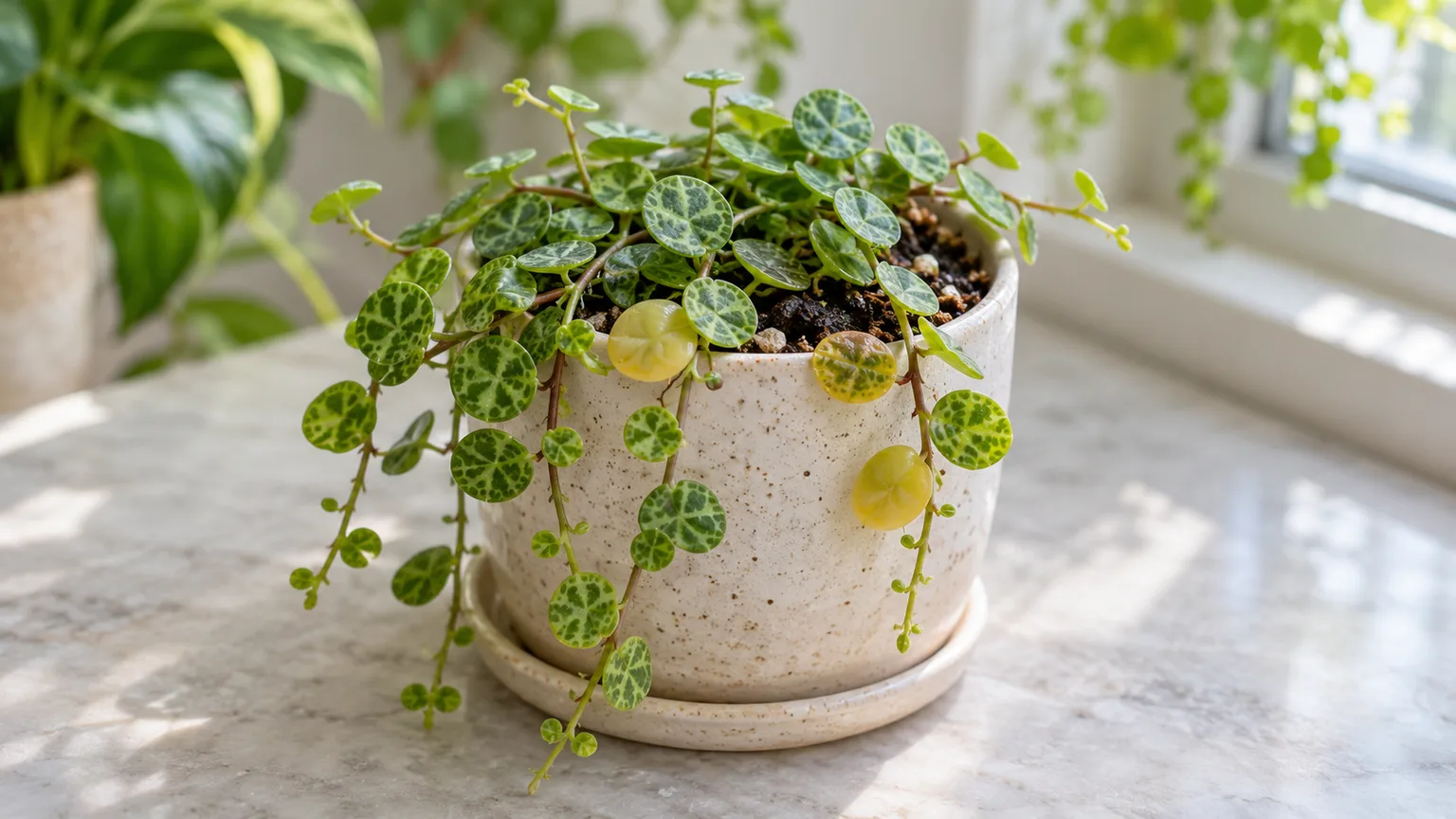
Overwatering String of Turtles: Symptoms, Checks, and Recovery
This guide covers overwatering on String of Turtles. See also the general Overwatering guide, watering, and light pages for this plant.
Overwatering String of Turtles: Symptoms, Checks, and Recovery
Quick answer
Overwatering is likely when the potting mix stays wet and the plant develops a matching pattern: yellowing or translucent leaves, soft stems, or increasing leaf drop. Check the mix and drainage before changing care. One yellow leaf by itself does not prove that the plant has been overwatered.
String of Turtles (Peperomia prostrata) has fleshy leaves and can be harmed by mix that stays wet around its roots. Plant-specific care references recommend letting the mix dry between waterings and avoiding standing water, but the right interval depends on the pot, mix, light, and room conditions. (Plantscryer’s String of Turtles guide; Happy Houseplants’ Peperomia prostrata care notes)
What overwatering looks like on String of Turtles
Check for several clues together rather than relying on leaf color alone:
- The mix is still damp well below the surface when you are about to water again.
- The pot remains heavy, or water is collecting in its saucer or cachepot.
- Leaves turn yellow or look unusually translucent and soft; stems may also become soft.
- Leaves continue to drop while the root zone stays wet.
Species-specific guides describe yellow or mushy leaves, stem rot, and leaf drop among possible signs of excess moisture. They also advise letting the soil dry before watering again and avoiding waterlogged mix. These signs are not exclusive to overwatering, so confirm them against the soil condition and watering history. (Plantscryer on String of Turtles symptoms; Healthy Houseplants on leaf and stem symptoms; Garden Composer on watering and soil)
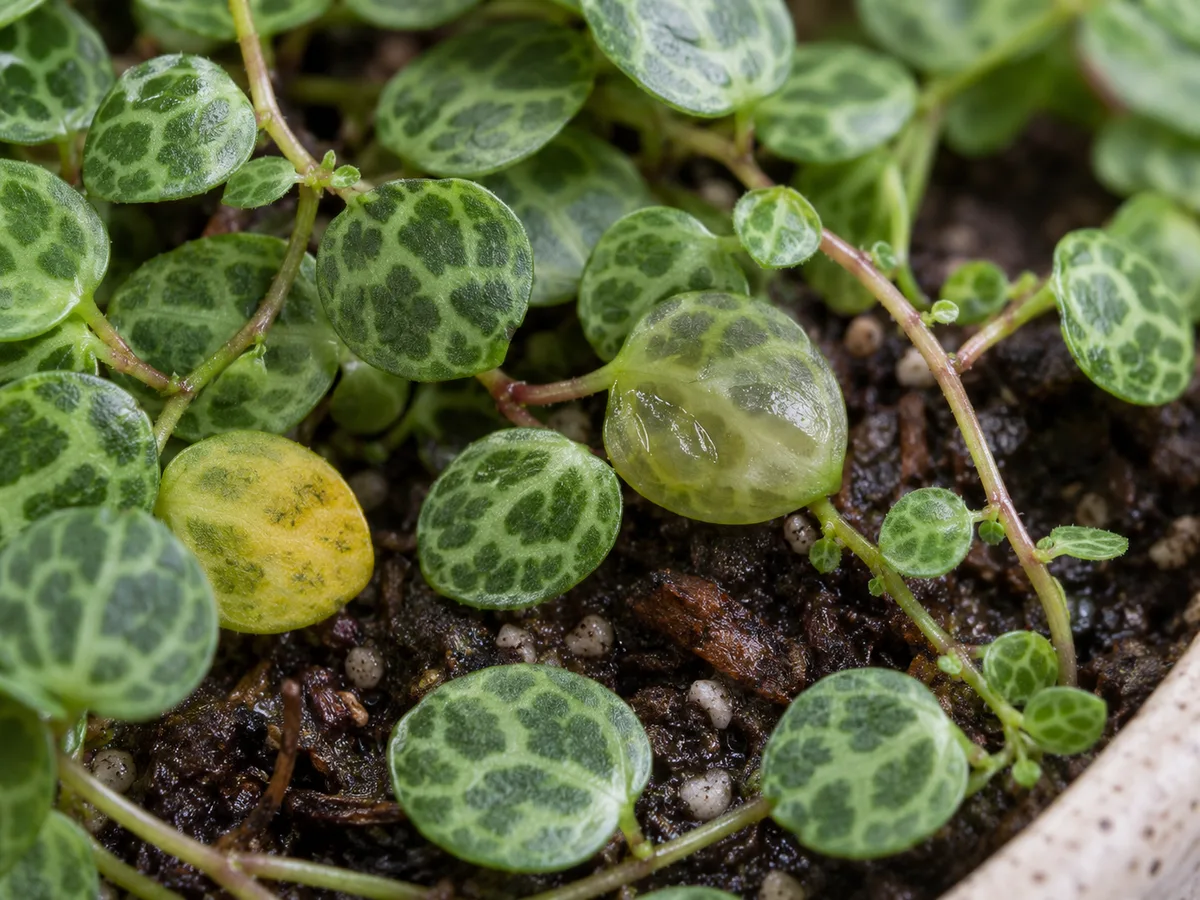
Soft, yellowing tissue alongside mix that stays wet deserves a closer root-zone check; the leaf symptom alone is not a diagnosis.
Check the pot before changing care
- Feel below the surface. Gently check the mix several centimeters down, or use a clean wooden stick if the vines cover the soil. A dry-looking surface can sit above wetter soil.
- Check the pot weight and drainage. Lift the pot if possible. Make sure it has an open drainage hole and is not standing in runoff inside a decorative cover.
- Review the recent pattern. Note when you watered, how much light the plant receives, and whether the room has recently become cooler or darker. Lower light or cooler conditions can slow drying, so the same watering interval may leave the mix wet for longer.
- Inspect the plant’s base. Look for soft or darkening stems at the soil line. If the plant is firm and the mix can dry, avoid disturbing its shallow root system just to confirm a mild suspicion.
Healthy Houseplants and Happy Houseplants both advise allowing the soil to dry between waterings and using a mix and container that drain freely. Café Planta also recommends an appropriately sized pot and a well-draining mix for this species. (Healthy Houseplants; Happy Houseplants; Café Planta on repotting)
What to do now
If the mix is wet but the plant’s stems and roots appear firm, pause watering and let the mix dry toward the plant’s usual watering point. Empty standing water from the saucer or cover pot, and keep the plant in its normal bright, indirect light. Do not try to speed drying with direct hot sun, a heater, or repeated handling.
For future watering, check the mix each time instead of following a weekly schedule. When it has dried enough, water the soil evenly and let excess drain away; do not leave the pot soaking in runoff. Specific care sources give slightly different surface-dryness thresholds, so use the condition of the whole root zone and the plant’s response rather than treating a calendar interval as a rule. (Plantscryer’s watering guidance; Happy Houseplants’ watering guidance)
Avoid fertilizing, pruning healthy vines, and repotting all at once. Those extra changes make it harder to see whether the wet mix was the cause. Do not mist the dense foliage as a way to compensate for watering less; keep water aimed at the soil and allow the leaves and stems to stay dry. (Plantscryer on wet foliage and stem rot)
When to inspect roots
Consider checking the root ball if the mix stays wet for a prolonged period despite a drainage hole, the plant keeps declining after you pause watering, or the base develops soft, dark tissue. Gently slide the root ball out only if the symptoms justify it. Healthy roots should be firm; roots that are dark, mushy, or foul-smelling are consistent with rot and need closer attention. Plant-specific troubleshooting guidance recommends checking for damaged roots when yellowing, mushy leaves, or persistent wet soil accompany decline. (Plantscryer’s troubleshooting section; Healthy Houseplants on wet soil and stem rot)
If you find extensive root damage, remove only roots that are clearly dead with clean scissors, and move the plant into fresh, airy mix in a pot with drainage. Choose a pot close to the size of the remaining root system; a much larger volume of mix can take longer to dry. Café Planta’s repotting guidance emphasizes an appropriately sized container and free-draining medium for Peperomia prostrata. (Café Planta on container and mix; Plantscryer on root checks and wet mix)
Do not unpot a stable plant simply because one leaf yellowed. Root inspection can add stress, so reserve it for a pattern that points to ongoing root-zone trouble. If the damage is mainly shriveled leaves and dry soil, compare the signs with underwatering on String of Turtles instead.
Prevent another wet-soil cycle
- Use a pot with a drainage hole and empty its saucer after watering.
- Keep the plant in bright, indirect light so the mix dries at a steady pace.
- Use an airy, well-draining mix suited to Peperomia prostrata, and avoid moving it into an oversized pot.
- Check moisture before watering, especially after seasonal changes in light and temperature.
- Keep a short note of watering dates and soil condition if the plant’s drying pattern is hard to read.
For the plant’s baseline care, see the String of Turtles overview and watering guide. Use the Root Rot Risk Checker if you find persistent wet soil and soft roots, and compare with the String of Turtles problems hub if the symptoms do not match this pattern.
Frequently asked questions
How can I tell if my String of Turtles is overwatered?
Look for persistently damp mix together with yellowing or translucent leaves, soft stems, or continuing leaf drop. Check watering history and drainage; a single yellow leaf is not enough to confirm overwatering.
Should I water it on a weekly schedule?
No fixed calendar works for every pot. Check the root-zone moisture and pot weight, then water when the mix reaches the appropriate dryness for your plant and let all excess drain away.
Can yellow leaves have another cause?
Yes. Compare soil moisture with the pattern of symptoms, recent light or temperature changes, and whether only an older leaf is affected. Check the roots if decline continues while the mix remains wet.
Should I repot right away?
Only if the mix is not draining or the plant shows persistent decline, soft stems, or other signs of root trouble. A stable plant can often be monitored while the mix dries.
Can the plant recover?
It may recover when healthy roots and stems remain and the wet conditions are corrected. Look for symptoms to stop spreading and for firm new growth; damaged old leaves may remain marked.
Related String of Turtles care guides
Compare similar symptoms in yellow leaves, drooping leaves, and root rot. Visit the plant problems hub for other diagnoses.