Drooping String of Turtles: Causes and What to Check
Quick answer
Drooping leaves are a symptom, not a diagnosis. Feel the mix below the surface and check whether the pot drains: dry mix points toward a missed or insufficient watering, while mix that stays wet with soft or yellowing growth raises concern about root stress. String of Turtles prefers evenly moist but well-drained soil and can develop root rot if overwatered.
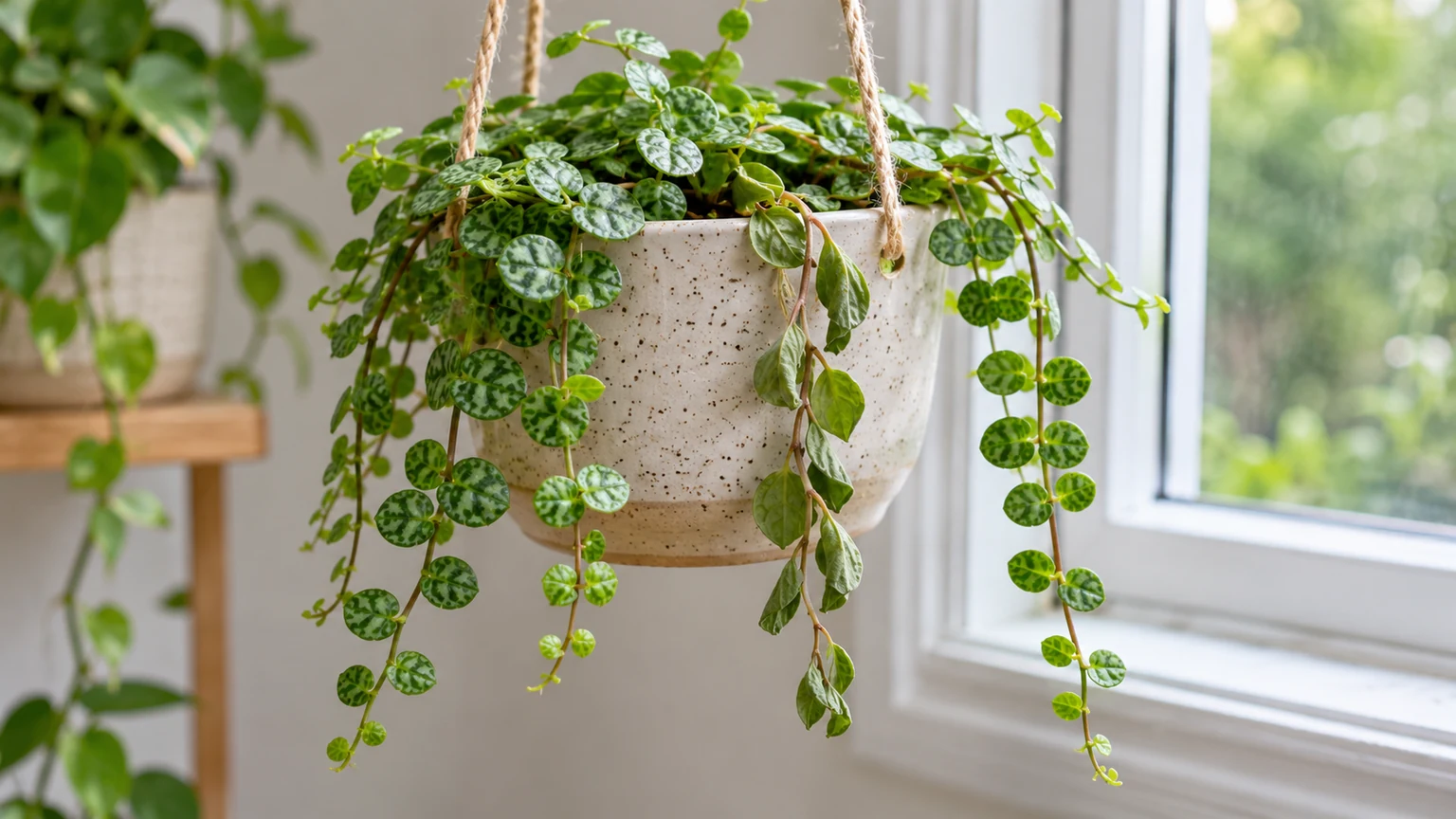
Drooping String of Turtles: Causes, Checks, and Care
This guide covers drooping leaves on String of Turtles. See also the general Drooping Leaves guide, watering, and light pages for this plant.
Drooping String of Turtles: Causes, Checks, and Care
Quick answer
Drooping leaves on String of Turtles (Peperomia prostrata) are a clue to investigate, not proof that the plant needs water. First check the mix below the surface, how heavy the pot feels, and whether excess water can escape. If the mix is dry, water thoroughly and let it drain. If it is wet and stays wet, pause watering and look for drainage or root trouble. NC State Extension describes this species as preferring evenly moist soil while warning that overwatering can cause root rot. (NC State Extension’s species profile)
What drooping looks like on String of Turtles
String of Turtles has small, rounded leaves patterned like miniature shells and trailing stems. Drooping means leaves or vine tips that were held outward now hang lower or feel less firm. One older leaf sitting lower may be ordinary; a whole vine or several new leaves changing together deserves a closer check. The plant naturally trails, so compare the same section of vine over time rather than treating its cascading shape as a problem. (NC State Extension on the species’ trailing habit and foliage; Happy Houseplants on String of Turtles growth)
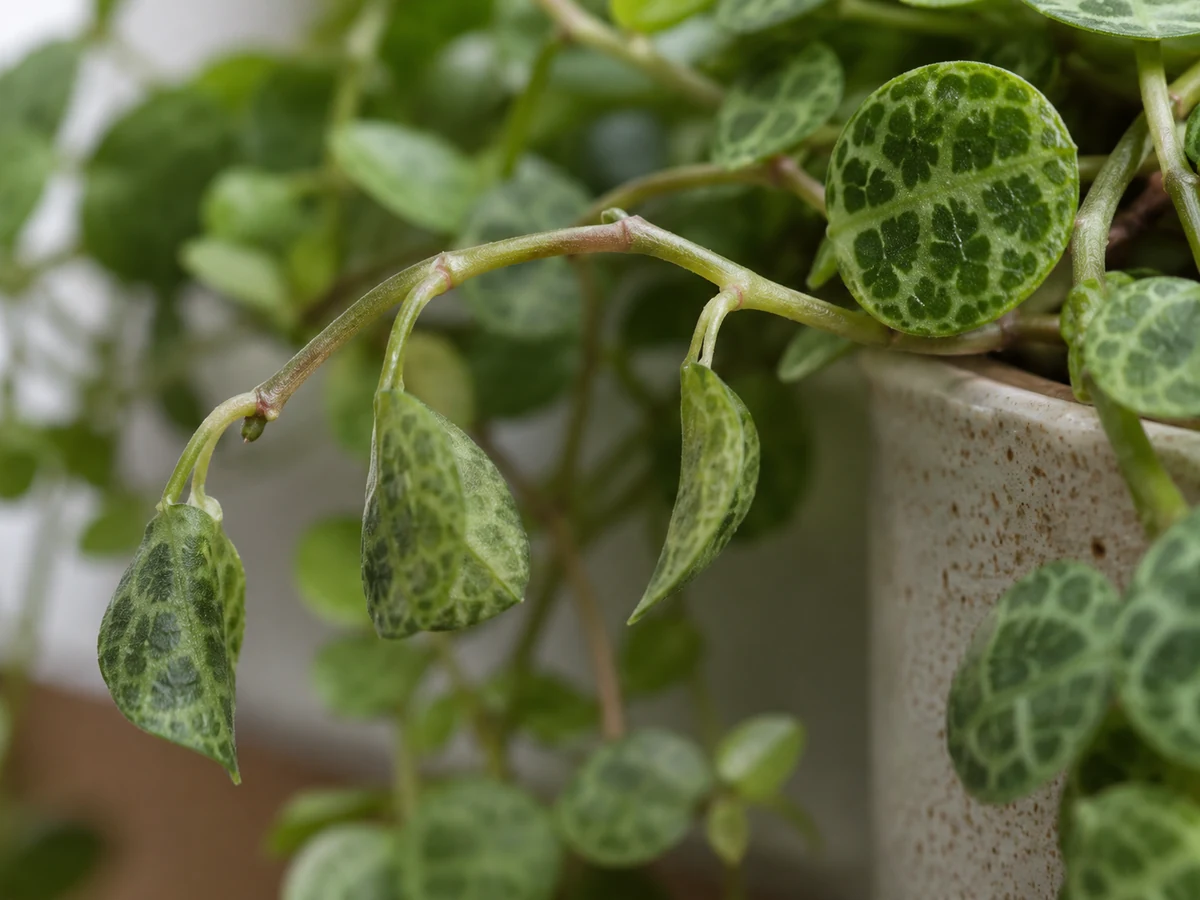
Compare the limp leaves with firmer foliage on the same plant; the substrate and roots help identify the cause.
Check moisture before changing care
Push a clean finger about an inch into the mix, or use a wooden skewer if the pot is too small. Check more than the surface: the top can look dry while the root zone remains damp. Lift the pot to compare its weight with how it feels after watering. Then confirm that the drainage holes are open and that the pot is not sitting in a saucer of runoff.
Watering frequency changes with temperature, light, pot size, and the mix, so a fixed weekly schedule can leave this small-rooted plant too wet or too dry. The Royal Horticultural Society recommends checking the compost and adapting watering to the plant’s conditions. (RHS houseplant watering guidance)
If the mix is dry
If the mix is dry through the root zone and the pot feels light, water it evenly until excess drains from the bottom. Empty the saucer, then let the plant use the available moisture before checking again. Don’t compensate by leaving the pot submerged or watering repeatedly over a short period. The species prefers evenly moist soil, so aim for a consistent check-and-water routine rather than prolonged dryness followed by a soak. (NC State Extension on String of Turtles moisture needs)
If the mix stays wet
If the mix is damp several days after watering, smells sour, or the pot has no drainage, hold off on watering. Persistent saturation can deprive roots of the conditions they need and is associated with root rot in this species. Remove standing water, make sure the drain holes are clear, and inspect the roots only if the plant continues to decline or stems are becoming soft. (NC State Extension on overwatering and root rot; Clemson Cooperative Extension on peperomia growing conditions)
Rule out light and recent changes
Review what changed just before drooping began: a move to a darker location, a cold draft, a sharp temperature shift, or a change in watering can all make the timing useful. String of Turtles grows best in bright, indirect light; low light may dull its leaf color. Move it toward brighter filtered light if it has been kept dim, but avoid placing it abruptly in harsh direct sun. (NC State Extension on light and temperature)
Look at the pattern as well as the posture. Dry, wrinkled leaves with dry mix support checking for insufficient water. Drooping accompanied by yellowing, soft stems, or wet mix raises concern about excess moisture and roots. Fine webbing or stippling suggests checking for spider mites; cottony clusters may indicate mealybugs. For those signs, compare the String of Turtles spider mite guide and mealybug guide.
A careful recovery plan
Make one correction based on what you found, then give the plant time to respond. If dry, water once and allow complete drainage. If wet, stop adding water, correct drainage, and let the mix begin drying; inspect roots if the decline continues. Keep the plant in stable bright, indirect light while it recovers. Avoid fertilizing, pruning healthy vines, and repotting all at once because those extra changes make it harder to see whether the original problem is improving.
If inspection reveals brown, mushy roots, trim only decayed tissue with clean scissors and repot into fresh, airy mix in a container with drainage. If roots look firm and pale, leave them undisturbed. The String of Turtles root rot guide covers those signs in more detail. General peperomia care guidance also emphasizes matching moisture and growing conditions to the plant rather than overcorrecting. (Clemson Cooperative Extension’s peperomia care guide)
How to prevent drooping from returning
Keep the plant in bright, indirect light and use a free-draining pot and mix. Check the root zone before watering instead of relying on the calendar, and pour away water that collects in the saucer. During cooler or darker periods, the mix may take longer to dry; check it again rather than assuming the same interval still applies. For routine care, see the String of Turtles overview and watering guide.
Seek more detailed help if stems collapse, roots are mushy, or the decline continues after the moisture and drainage problem has been addressed. Use the Plant Problem Diagnosis Tool to compare possible causes, and browse the String of Turtles problem hub for related symptoms.
Frequently asked questions
Why is my String of Turtles drooping?
Drooping can follow a dry root zone, roots stressed by persistently wet mix, or a recent change in conditions. Check the mix and drainage first; posture alone does not identify the cause. (NC State Extension on moisture and overwatering)
Should I water a drooping String of Turtles right away?
Only if the mix is dry below the surface and the pot drains freely. If it is still wet, wait and check the drainage rather than adding more water. (RHS houseplant watering guidance)
Can overwatering make String of Turtles droop?
Yes. Overwatering can cause root rot in Peperomia prostrata. Wet mix with soft stems or yellowing is a reason to investigate the root zone. (NC State Extension on the species)
Will the drooping leaves recover?
Some leaves may firm after the root-zone problem is corrected, but damaged leaves may stay limp or blemished. Look for the decline to stop and for new growth to remain firm.
When should I repot a drooping String of Turtles?
Repot when inspection shows a reason, such as decayed roots or mix that remains waterlogged. Use a pot with drainage and avoid disturbing healthy roots without cause. (Clemson Cooperative Extension peperomia guide)