Wilting String of Turtles: Causes and First Checks
Quick answer
Wilting on String of Turtles can come from a root zone that is too dry or one that stays wet and damaged. Feel the mix below the surface and lift the pot before watering: a light pot with dry mix points toward thirst, while wet mix with softening stems calls for a root and drainage check.
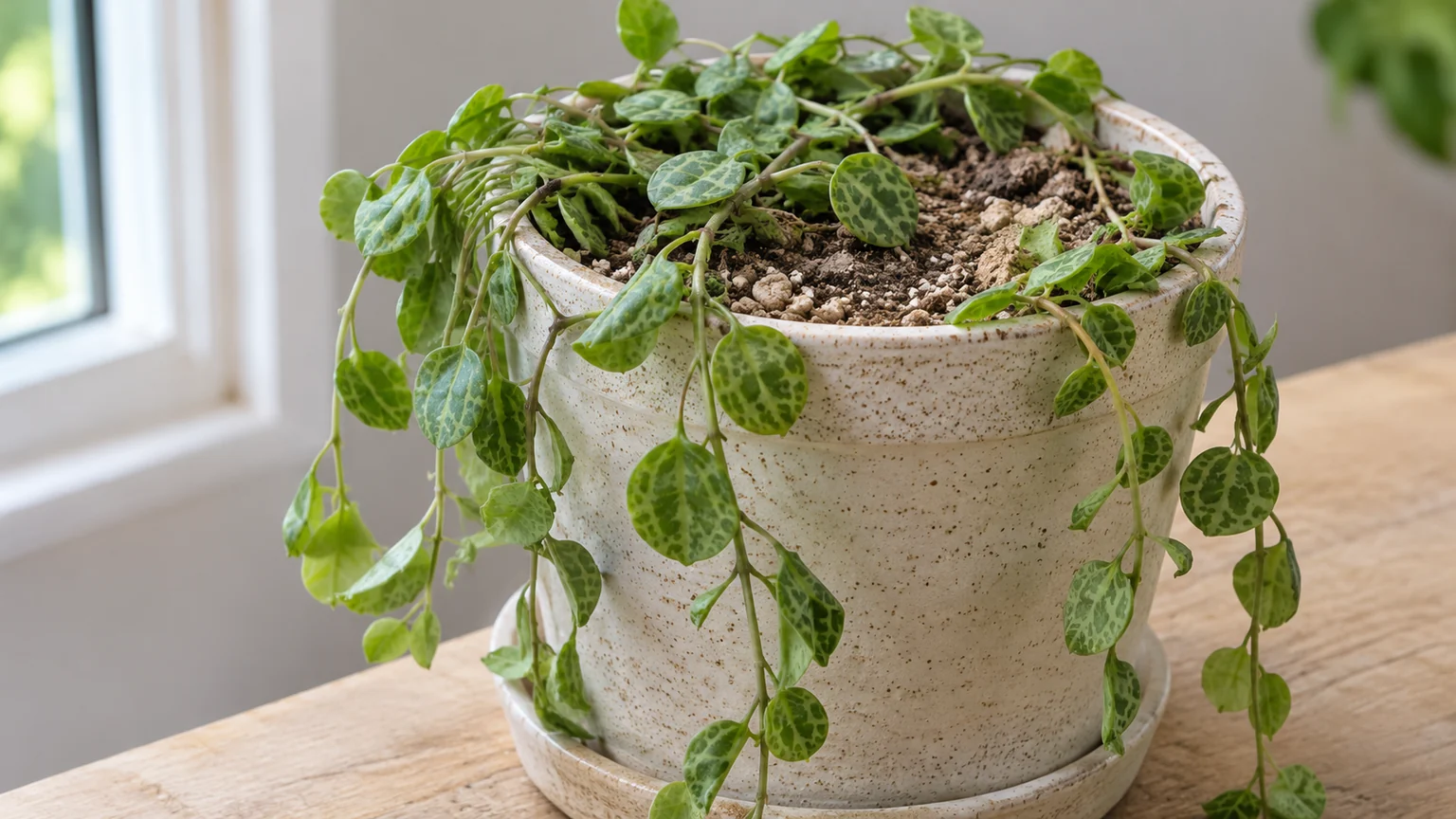
Wilting String of Turtles: Check Soil Before You Water
This guide covers wilting on String of Turtles. See also the general Wilting guide, watering, and light pages for this plant.
Wilting String of Turtles: Check Soil Before You Water
Quick answer
Wilting means the small, patterned leaves and trailing stems have lost their usual firmness. On String of Turtles (Peperomia prostrata), that can happen when the mix has become too dry, but wet soil can also lead to wilt if damaged roots cannot take up water. So check the root zone before reaching for the watering can.
Lift the pot and feel the mix below the surface. A very light pot and dry mix support a thirst diagnosis. A heavy pot with damp or soggy soil, especially alongside soft stems or continuing leaf loss, points toward root stress. Plant-care references for this species advise moderate watering and allowing the mix to dry between waterings. (Plantscryer’s String of Turtles guide; Happy Houseplants’ Peperomia prostrata care notes)
What wilting looks like on String of Turtles
Look for leaves that feel softer or less plump than usual and stems that hang limply instead of holding their normal drape. One older leaf or one long vine can sag without the whole plant being in trouble. Check whether several leaves across the pot have changed at once, whether the stems are still firm, and how quickly the change appeared.
Wilting is a symptom, not a diagnosis. Indoor plants can wilt in dry soil or in wet soil when roots are under stress, so leaf appearance alone cannot tell you to add water. (Missouri Botanical Garden’s indoor plant problem guide)
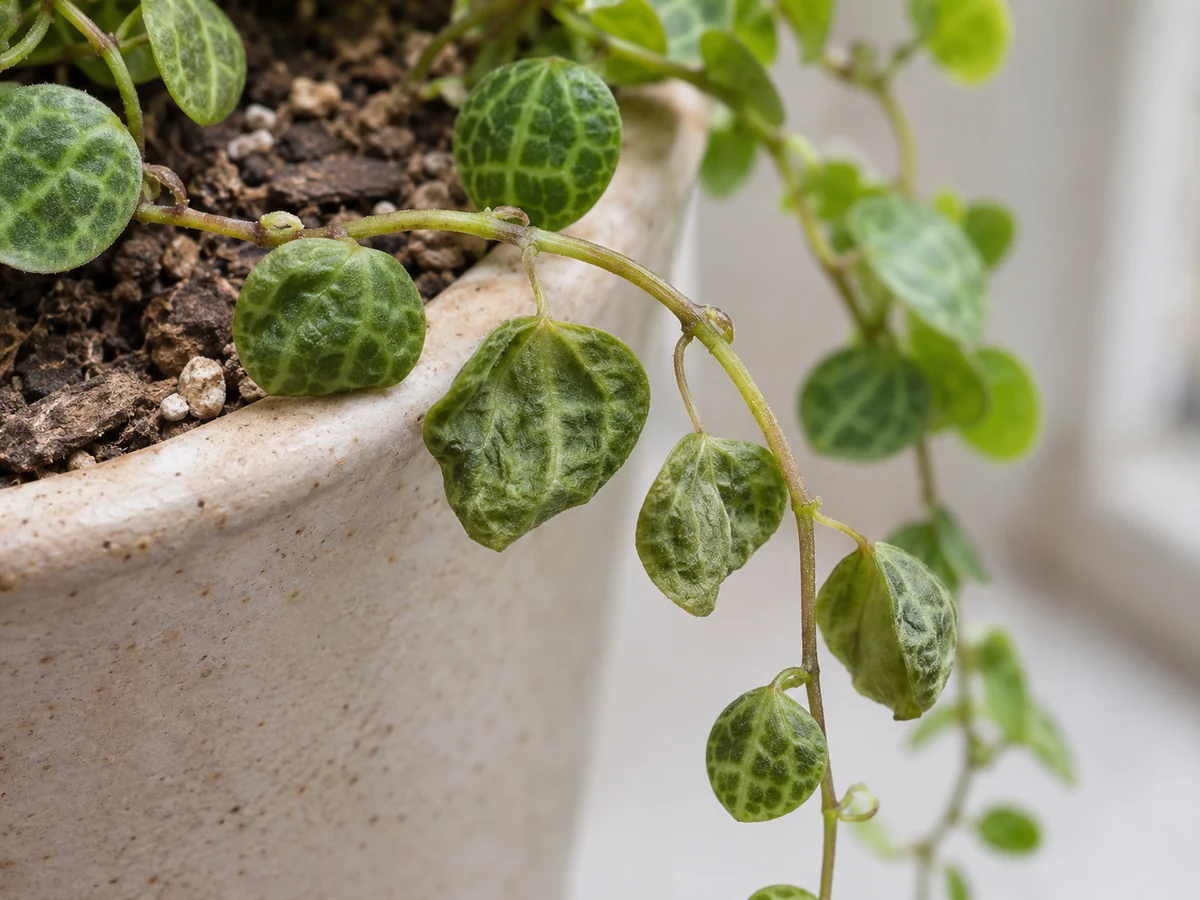
Soft, wrinkled leaves call for a soil and stem check; they do not by themselves prove the plant needs water.
Check the soil before watering
- Feel below the surface. Check a few centimeters down with a finger or a clean wooden stick. Dry surface soil can sit above a still-moist root zone.
- Lift the pot. Compare its weight with how it feels after watering and draining. A noticeably light pot supports underwatering; a heavy pot suggests the mix has not dried yet.
- Check drainage. Make sure the pot has an open drainage hole and is not sitting in runoff inside a cachepot or saucer.
- Inspect stems at the soil line. Firm stems with dry mix suggest a different problem from dark, soft, or mushy stems beside wet soil.
String of Turtles care sources recommend a freely draining mix and letting soil dry between waterings; they also warn that excess moisture can lead to root or stem problems. (Healthy Houseplants on Peperomia prostrata care; Happy Houseplants on watering and drainage)
What to do for dry-soil wilt
If the mix is dry through the root zone and the pot feels light, water the soil evenly until excess drains from the bottom. Let it drain fully, then empty the saucer. Avoid frequent small splashes that wet only the surface. Resume checking the soil and pot weight rather than following a fixed weekly schedule, because light, temperature, pot size, and mix affect how quickly it dries.
For the plant’s ongoing watering rhythm, see the String of Turtles watering guide. Do not water again just because the leaves still look limp immediately afterward; give the plant time to respond and avoid keeping the mix constantly wet.
What to do for wet-soil wilt
If the mix is wet, pause watering and remove standing runoff. Give the pot airflow and time to dry toward the plant’s normal watering threshold. Keep it in suitable bright, indirect light and avoid adding fertilizer or repotting solely because leaves are limp.
Persistent wetness can harm roots, and overwatering symptoms may occur even while the soil is damp. If decline continues, or stems become soft or dark at the base, inspect the roots and compare with root rot on String of Turtles and overwatering on String of Turtles. Missouri Botanical Garden notes that oversaturated soil can damage roots and contribute to aboveground decline. (Missouri Botanical Garden on overwatering)
Distinguish wilting from drooping
The trailing vines naturally hang over the pot, so a hanging shape alone is not wilt. Wilting is more likely when leaves lose firmness or wrinkle, especially across multiple stems. A few vines that slowly extend downward while leaves stay plump may simply reflect the plant’s growth habit. Check drooping leaves on String of Turtles if the leaves remain firm.
Yellowing, pests, low light, and recent temperature changes can also coincide with a limp appearance. Review the String of Turtles problem guide and care overview if the soil test does not explain the change.
When to inspect roots
Do not unpot a healthy, firm plant after one limp leaf. Inspect roots if the soil remains wet for an unusually long time, the plant keeps worsening, stems soften at the base, or the potting mix develops a sour smell. Healthy roots should not be slimy or collapsing; if you find extensive damage, use a clean tool to remove only clearly rotten tissue and repot into a clean container with drainage and fresh, airy mix. Compare symptoms with the String of Turtles root-rot guide.
If the whole plant collapses rapidly, stems turn mushy, or decline spreads despite correcting the watering conditions, isolate the pot from other plants and seek a local horticulture extension service or qualified plant clinic for diagnosis. Avoid stacking watering, repotting, pruning, and fertilizer changes all at once; one evidence-based correction at a time makes the plant’s response easier to read.
Frequently asked questions
Why is my String of Turtles wilting when the soil is wet?
Wet mix can leave roots stressed or damaged, so the plant may fail to take up water despite damp soil. Stop adding water and check drainage, stem firmness, and whether decline continues.
Should I water a wilted String of Turtles right away?
Only when the mix is dry below the surface and the pot is light. If the mix is still wet, more water can worsen root stress.
Can String of Turtles recover from wilting?
It may recover once the cause is corrected if stems and roots remain firm. Judge progress by stable stems and healthy new growth; old damaged leaves may not regain their original shape.
How do I tell wilting from normal drooping?
Wilting leaves often feel soft or wrinkled. Normal trailing growth may hang while the leaves stay plump and firm. Check soil moisture and leaf firmness together.
When should I check the roots?
Inspect roots if the plant continues to decline in wet soil, stems soften near the soil line, or the mix smells sour. Avoid disturbing a firm plant when the mix can dry normally.