How to Get Rid of Aphids on Roses With 6 Tips
Learn how to get rid of aphids on roses with water, selective pruning, predator protection, and label-led sprays—plus a simple follow-up plan.
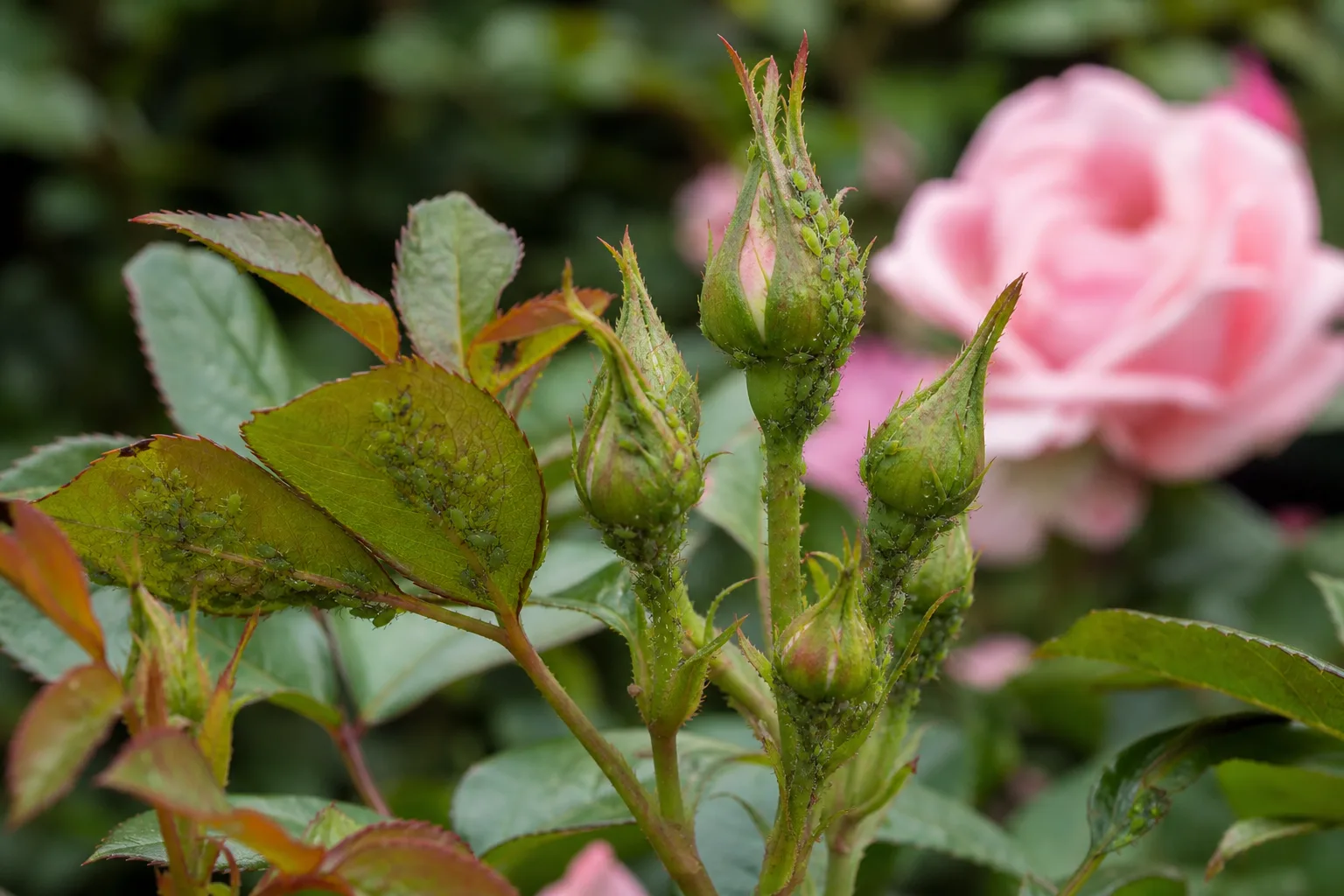
If you see tiny green or pink insects packed around a rose bud, the quickest useful move is usually a firm rinse with water—not a blanket pesticide spray. A small colony on a vigorous, established rose may cause little lasting harm, while a dense cluster that keeps curling new leaves or deforming buds deserves attention.
The best plan is a sequence: confirm the insects, remove reachable colonies, protect the predators already feeding on them, and use a labeled contact product only if damage continues. That approach gets aphids off the plant without turning one pest problem into a loss of lady beetles, pollinators, or healthy foliage.
Quick Answer: What to Do First
For a small, reachable colony, direct a steady but controlled stream of water at the soft shoots, buds, and leaf undersides where aphids gather. Check the rose again in two or three days; if live colonies are still expanding or new growth is distorting, pinch off a badly infested tip or use an insecticidal soap or horticultural oil labeled for roses and aphids.
You do not need to kill every aphid you find. Rose guidance from UC IPM and the University of Minnesota Extension notes that low to moderate numbers often do little harm; the concern is sustained feeding on tender growth and buds.
| What you see | First response | Why |
|---|---|---|
| A few aphids on an otherwise healthy shrub | Watch for predators or rinse the cluster | A small colony is not automatically a threat to the whole rose. |
| A visible group on reachable buds or shoots | Use a controlled hose spray, then inspect again | Water removes exposed insects without leaving a pesticide residue. |
| A tightly curled, heavily colonized tip | Pinch it off or selectively prune it | Water and contact sprays may not reach insects hidden inside curled leaves. |
| Colonies keep growing and new growth is distorted | Consider a labeled contact product | Persistent damage can justify escalation after lower-impact options. |
How to Identify Rose Aphids and Gauge the Damage
Rose aphids are soft-bodied, pear-shaped insects that may be green or pink. The species commonly called the rose aphid, Macrosiphum rosae, can reach about 1/8 inch long; other aphid species also feed on roses, so color by itself is not a reliable species test. They tend to cluster on succulent new shoots, unopened flower buds, and the undersides of young leaves.
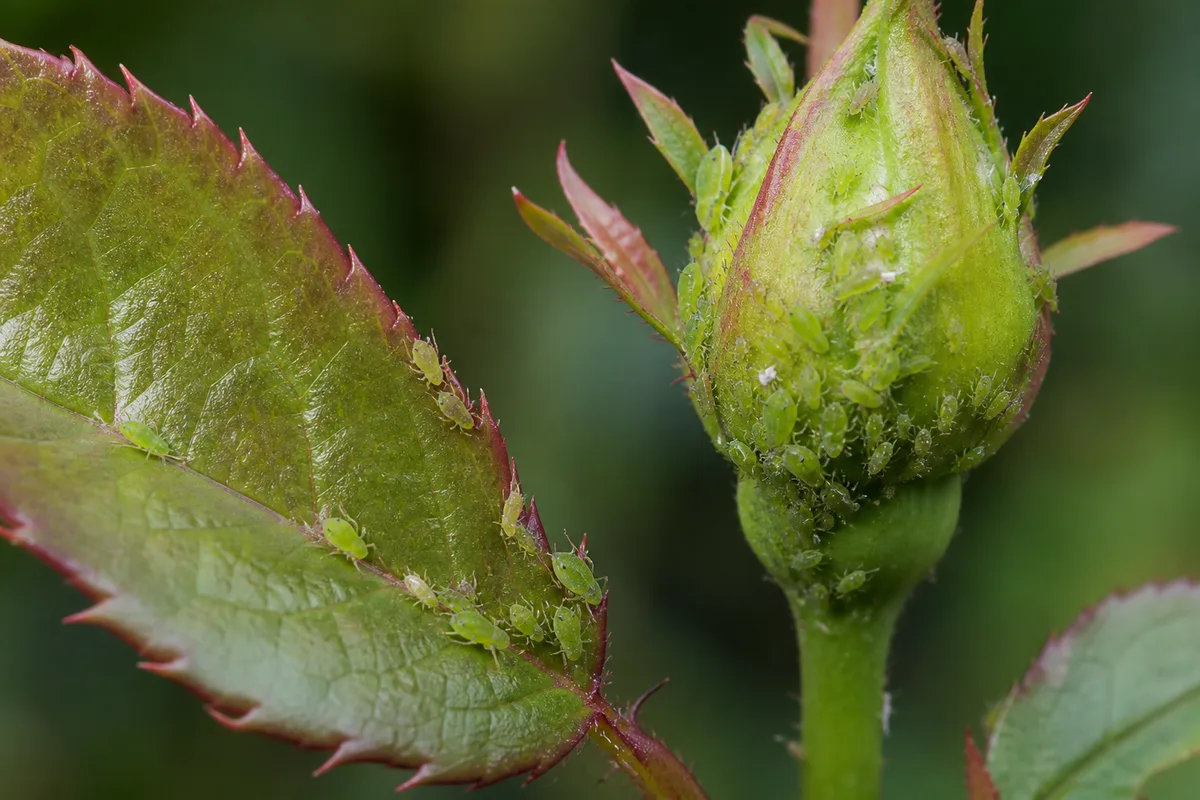
Look for a combination of clues: grouped insects, white shed skins, sticky honeydew, distorted tips, or buds that fail to open normally. Ants climbing the canes may be collecting honeydew, and dark sooty mold can grow on the sugary residue. Neither ants nor mold identifies the pest on its own, so look closely for live aphids before choosing a treatment.
Where to look and what the clues mean
Start at the newest growth rather than scanning the whole shrub from a distance. Turn over a few young leaves, inspect the bud bases and stem joints, and look for groups packed along soft tissue. A hand lens can help with very small insects, but a cluster on distorted growth is often easier to notice than an individual aphid.
The threshold is the plant’s response, not a universal aphid count. A few aphids on a mature rose with normal-looking leaves may be tolerated while predators catch up. A fast-growing colony that curls or stunts shoot tips, coats foliage with honeydew, or damages developing buds is a better reason to intervene. University of Minnesota Extension’s rose aphid profile describes low to moderate numbers as causing little or no damage, with heavier infestations distorting young leaves and stunting growth.
That distinction matters if you grow roses for flowers. A cluster on a spent bloom is less urgent than insects packed around several unopened buds, and old sticky residue is less important than what the newest leaves are doing. Take a quick photo of one affected shoot before treatment; when you compare it a few days later, you can tell whether the colony is shrinking or the damage is still moving outward.
Six Practical Tips to Get Rid of Aphids on Roses
Work from the least disruptive method toward more targeted treatment. You may only need the first one or two tips for a small colony; combine methods only when they solve different parts of the problem.
Tip 1: Rinse reachable colonies off with water
Use a hose nozzle that gives you control rather than the hardest jet available. Aim from beneath the canopy toward the undersides of leaves, the sides of buds, and soft shoot tips. The goal is to dislodge the aphids, not strip the rose of leaves or knock open flowers to the ground. Start gently, then increase pressure only enough to remove the insects.
Water works best when you can reach most of the colony and the leaf is not tightly folded around it. Treat early enough in the day that foliage can dry before evening, as UC IPM recommends for forceful water sprays on roses. A rinse may miss aphids tucked deep inside a curled tip, and it does not stop winged aphids from landing later, so think of it as a knockdown step followed by inspection rather than a permanent barrier.
On a container rose, turn the pot so you can reach the back of the plant, or move it to a spot where runoff will not splash onto nearby plants. A handheld sprayer or shower setting may be easier to control than a hose jet on a young rose with soft stems. The useful force is the lowest setting that removes the insects while leaving leaves attached and buds intact; Gardener’s Path’s rose guide similarly cautions gardeners to start gently and avoid repeatedly pummeling foliage.
Tip 2: Remove only the worst clusters by hand or pruning
On one or two small colonies, rub or pinch the aphids off with gloved fingers, then rinse the shoot. If a tip is crowded with insects and already curled, cut only that affected soft tip back to a healthy side shoot or leaf joint. Use clean, sharp pruners and avoid removing a long cane or a set of healthy buds simply because a few aphids are nearby.
Selective removal is especially useful when a contact spray would not reach the insects inside the fold. It also limits pesticide exposure to the rest of the shrub. The RHS rose aphid guidance includes squashing colonies where practical and checking roses frequently from spring; those small, targeted actions are often enough before a population becomes established.
Tip 3: Give beneficial insects time to work
Pause before spraying if you see lady beetle adults or larvae, hoverfly larvae, soldier beetles, or parasitized aphids on the same plant. These predators and parasitoids feed on aphids, and rose gardens often see their numbers rise after aphid colonies appear. The RHS lists several aphid predators, while UC IPM notes that natural enemies can rapidly reduce increasing populations on roses.
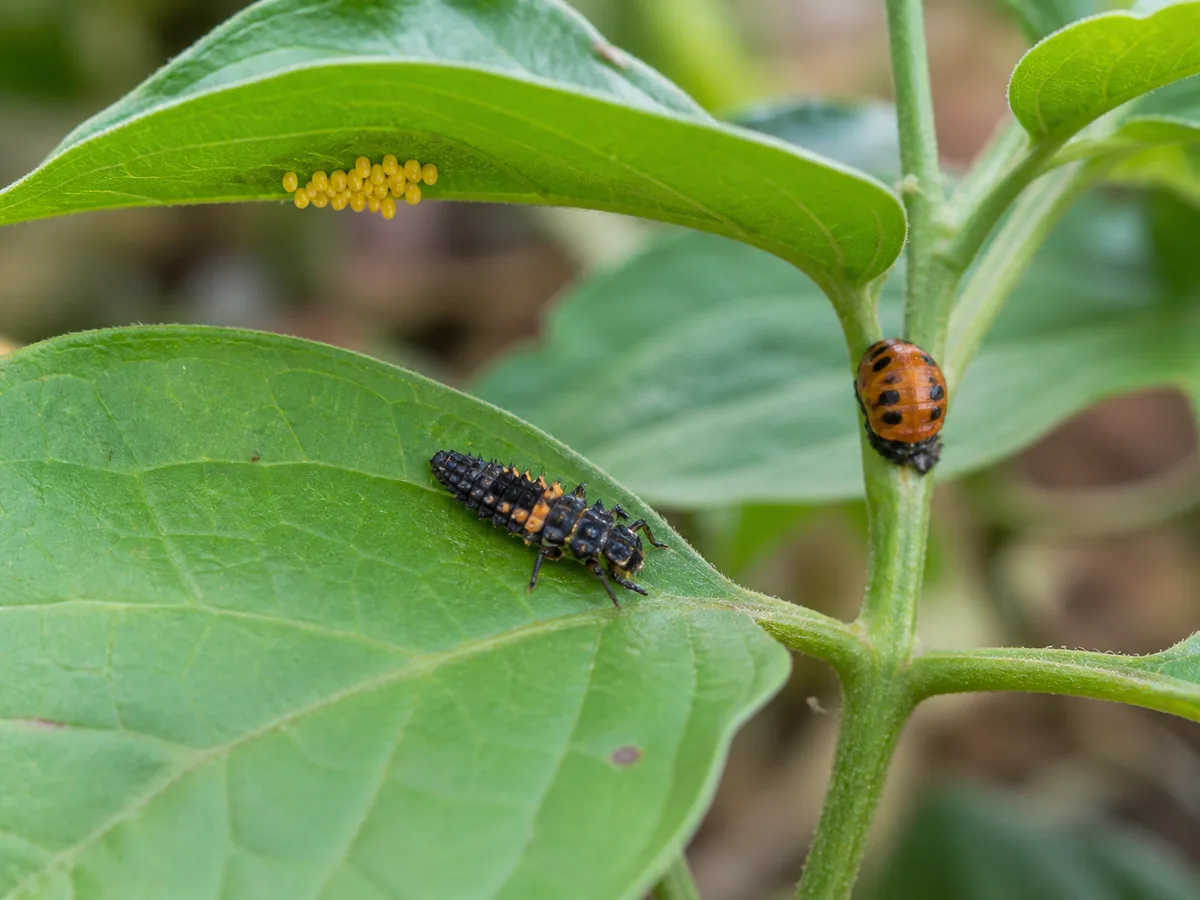
Aphid control is not the same as making a rose garden insect-free. If the plant is growing normally and predators are present, give them a few days and monitor the fresh tips. Avoid broad-spectrum products that can kill aphid predators and parasitoids; Washington State University Extension recommends washing aphids off and avoiding those sprays as first-line management.
Buying ladybugs is not a guaranteed shortcut. UC IPM says released convergent lady beetles may provide limited control when properly released, so preserve the predators already present and improve habitat over time instead of depending on a one-time release to clean the shrub overnight.
Tip 4: Disrupt ant trails instead of spraying the whole bush
Ants do not create aphids. They are often there because aphids excrete honeydew, and some ants protect those colonies from predators to keep the food supply. If ants are marching up the rose canes, trace the trail and check for contact with a wall, fence, stake, or neighboring branch; a bridge can make an ant barrier ineffective.
Start by rinsing off the aphids and removing bridges that let ants reach the plant. UC IPM notes that keeping ants out of rose bushes with barriers, baits, or traps can improve biological control. If you use a commercial ant bait, place it according to its label and away from children, pets, and non-target wildlife; do not spray the rose with a general ant killer that also reaches its flowers or aphid predators.
Tip 5: Escalate to a labeled contact product when needed
If fresh colonies keep expanding after water, selective removal, and a short period for predators to respond, consider an insecticidal soap or horticultural oil that is labeled for both roses and aphids. A contact product has to reach the insect. Follow the label’s application, temperature, protective-equipment, and repeat-use directions; thoroughly cover the aphids and the undersides of leaves without soaking open flowers or spraying bees and other beneficial insects.
Insecticidal soap is not a force field. Colorado State University Extension’s insecticidal soap guidance explains that soap sprays have no residual effect, so they must directly wet target insects, and aphids hidden in curled leaves can escape the spray. The same guidance warns that some plants can be injured and recommends testing a small area before extensive treatment. Do not spray a drought-stressed rose, a plant in extreme heat, or foliage in conditions the product label rules out.
“Soap” on a bottle is not enough. Use a product formulated and registered as an insecticide, not dishwashing liquid, laundry soap, or a kitchen recipe. A gardener-oriented overview from Gardening Know How discusses soap sprays, but its DIY recipes are not a substitute for local label directions; Colorado State Extension specifically advises against household-soap remedies because their mixtures are not consistently tested and can injure plants.
Tip 6: Recheck the rose and treat only live aphids
After a rinse or pruning, look again in two or three days. Check the same bud clusters and a few new shoots, and separate living insects from white cast skins or sticky residue left behind. Old honeydew can remain after the aphids are gone; judge success by live colonies and undamaged new growth, not by whether every leaf looks spotless that afternoon.
If you used a pesticide, do not repeat it automatically because the calendar says so. Apply again only if live aphids remain or return and the product label permits another treatment at that interval. Gardener’s Path’s practical rose guide likewise recommends regular checks and combining control methods rather than assuming one pass solves every infestation.
A Rose-Aphid Follow-Up Schedule
A simple schedule keeps you from either forgetting the plant or spraying it more than necessary. Adjust it for weather and the rose’s growth rate, and let the pesticide label—not a generic calendar—set any repeat interval.
| When | What to check or do |
|---|---|
| Today | Confirm live aphids; rinse reachable clusters or selectively remove one heavily infested tip. Note which shoots were affected. |
| In 2–3 days | Inspect the same shoots and leaf undersides. If the colony is smaller and growth is normal, keep monitoring without spraying. |
| At the next label-permitted interval | If live aphids are still causing damage, use only the labeled product and repeat instructions that apply to your situation. |
| Weekly while buds and tender growth continue | Scan new shoots, look for ants and predators, and stop active treatment when fresh growth stays clean. |
The recheck is not a cue to spray; it is a decision point. A few survivors can be removed by hand, while a tightly curled leaf full of aphids may need to be pruned away. If water knocks the insects off but a new colony appears nearby, look for other infested shoots and ant trails before escalating.
Aphid Remedies to Avoid on Roses
Skip vinegar, dish detergent, and improvised oil mixtures. Vinegar is acidic and can burn rose foliage; household detergents vary in surfactants, fragrances, degreasers, and other additives, so there is no dependable “one teaspoon per bottle” recipe that is safe for every rose and weather condition. Colorado State Extension says household soap solutions are not recommended for insect control because they are not consistently formulated or tested and can damage plants.
“Natural” does not mean harmless. Neem oil and horticultural oils are still pesticides: they can injure foliage under unsuitable conditions and may affect beneficial insects they contact. Use only a product labeled for the plant, pest, and site, and follow its pollinator and temperature restrictions. If the label does not cover the exact situation, choose water or hand removal instead.
Avoid broad-spectrum insecticides for a routine rose aphid colony. They can kill the insects that eat aphids and may create a harder-to-manage garden later. UC IPM also says systemic soil insecticides such as imidacloprid are usually unnecessary for roses in home gardens and may harm pollinators and natural enemies. A soil drench is not a sensible shortcut for a pest clustered on the shoots.
Prevent a Heavy Repeat Infestation
Inspect roses weekly while they are producing buds and tender growth, and more often if you are already treating an active colony. Check the undersides of new leaves and the stem joints instead of waiting for sticky leaves or distorted buds to advertise the problem. The RHS notes that rose aphids commonly build in spring and summer, when fresh growth is available.
Avoid pushing a rose into soft, excessive growth with too much nitrogen fertilizer. Washington State University Extension notes that high nitrogen can encourage aphid reproduction and recommends avoiding overfertilization. That does not mean withholding fertilizer from a rose that needs it; follow a soil test and product directions, and avoid extra feeding when the plant is already growing vigorously.
Keep roses vigorous with the cultivar-appropriate care, but do not interpret every aphid as a sign that the shrub is weak. A healthy rose may still host a small colony. The practical prevention goal is to catch expansion early, support predators, and remove the tender pockets that are visibly being damaged.
Do companion plants repel aphids?
Companion plants are not a dependable aphid shield. Flowering herbs and other plants can help provide nectar, pollen, or shelter for beneficial insects, but planting garlic, mint, marigolds, or another “repellent” beside a rose should not replace inspection or direct control. The effect depends on the local garden, bloom timing, pest species, and whether predators can reach the rose.
If you want more beneficial insects, choose plants suited to your climate that provide accessible flowers through the season, and avoid spraying those blooms with broad-spectrum products. Think of a diverse border as habitat support, not a treatment that will prevent aphids from landing on the rose.
When to Escalate or Get a Diagnosis
Get a closer diagnosis if the insects do not match aphids, the leaves are damaged without visible colonies, or new growth keeps deforming after the aphids are gone. Thrips, mites, disease, herbicide drift, and weather injury can also distort rose foliage or buds. A clear phone photo of the insects and the whole affected shoot can help a local cooperative extension office or Master Gardener program distinguish them.
Consider a labeled product when colonies continue to expand, multiple new shoots are curling, or buds are repeatedly failing because of feeding. Start with a spot test and treat only the affected rose or section when the label allows it. Do not escalate just because honeydew or sooty mold remains on older leaves: rinse residue off with water after the live aphids are controlled, then judge the plant by new growth.
Conclusion
For most rose aphid problems, start by rinsing the colonies away and selectively removing the worst infested tips. Give predators room to work, deal with ant trails if they are guarding aphids, and reserve labeled insecticidal soap or oil for colonies that keep damaging new growth.
The useful measure of success is a rose that keeps producing healthy shoots and buds—not a garden with no insects at all. Check the plant again in a few days, repeat a pesticide only when the label and the live aphids justify it, and let a small, harmless colony become food for the garden’s natural controls.