20 Basil Companion Plants for a Healthier Garden
Find 20 basil companion plants by garden job, with practical spacing, timing, container advice, and an honest look at which pest-control claims hold up.

The best basil companions are not necessarily plants that “repel pests.” They are neighbors that fit basil’s warm, sunny growing season, share a manageable watering routine, or add flowers that feed useful insects. If a plant takes too much space, shades the herb, or keeps its leaves wet, the pairing is a poor one even if a chart calls it a match.
The 20 choices below include space-sharing options, flowering plants, and conditional pairings. Companion planting adds variety to a bed; it does not replace healthy soil, airflow, rotation, or pest checks.
What companion planting can—and cannot—do
Companion planting covers different practices: fitting crops with similar needs into one bed, harvesting a quick crop before a larger one fills the space, growing flowers that feed beneficial insects, or using a trap crop. Those are distinct jobs. A radish can use open soil before basil spreads, while flowering dill offers nectar; neither proves basil’s scent protects carrots from pests.
Some combinations have specific evidence. Penn State Extension summarizes research in which basil near tomatoes was associated with reduced thrips and hornworm egg-laying, while cilantro and dill near lettuce can support aphid-eating insects. That does not make basil a universal insect repellent or prove a result for another crop-pest pair.
Recent tomato–basil research shows why careful wording matters: a controlled study found volatile signaling and a primed tomato wound response, not a consistent home-garden yield increase. Another intercropping study reported lower marketable yield and more late blight in its organic production system. Density, humidity, cultivar, timing, and airflow can change the result. Penn State Extension’s research-based companion guide, a controlled tomato–basil study, and a field study of tomato intercropping keep the claims specific to the evidence.
Name the job before planting: “I want this quick crop harvested before basil gets large,” “I want blooms near lettuce,” or “I want to compare pest damage with and without basil.” That gives you something observable to evaluate; “this plant will make everything grow better” does not.
Basil’s needs set the planting zone
Sweet basil is a warm-season annual in most gardens. Wait until frost danger has passed and nights are warm; cold slows it and frost can kill it. Give it at least six hours of direct sun, moist but well-drained soil, and airflow. Space plants about 12 inches apart, extending to 12–18 inches for larger cultivars or humid gardens. University of Maryland Extension covers sun, moisture, spacing, and downy mildew; Iowa State University Extension confirms basil is frost-sensitive.
Match the neighbor to the site, not a chart. Basil likes regular moisture but not waterlogged soil; tomato, pepper, lettuce, and cilantro can share a routine, while oregano and marjoram may prefer a drier edge. In humid weather, leave paths for air and water at soil level.
Basil grows in a large pot or sunny indoor setup, but a companion need not share its container. Separate pots are easier to water, move, and inspect. Utah State University’s basil guide notes heat and water stress can push basil to flower early.
20 basil companion plants, grouped by garden job
The clearest choices share summer care, support insects with flowers, or use open soil before basil spreads. A plant can be worthwhile as food or habitat even without a proven pest-control effect.
Warm-season fruiting crops and long-lived beds
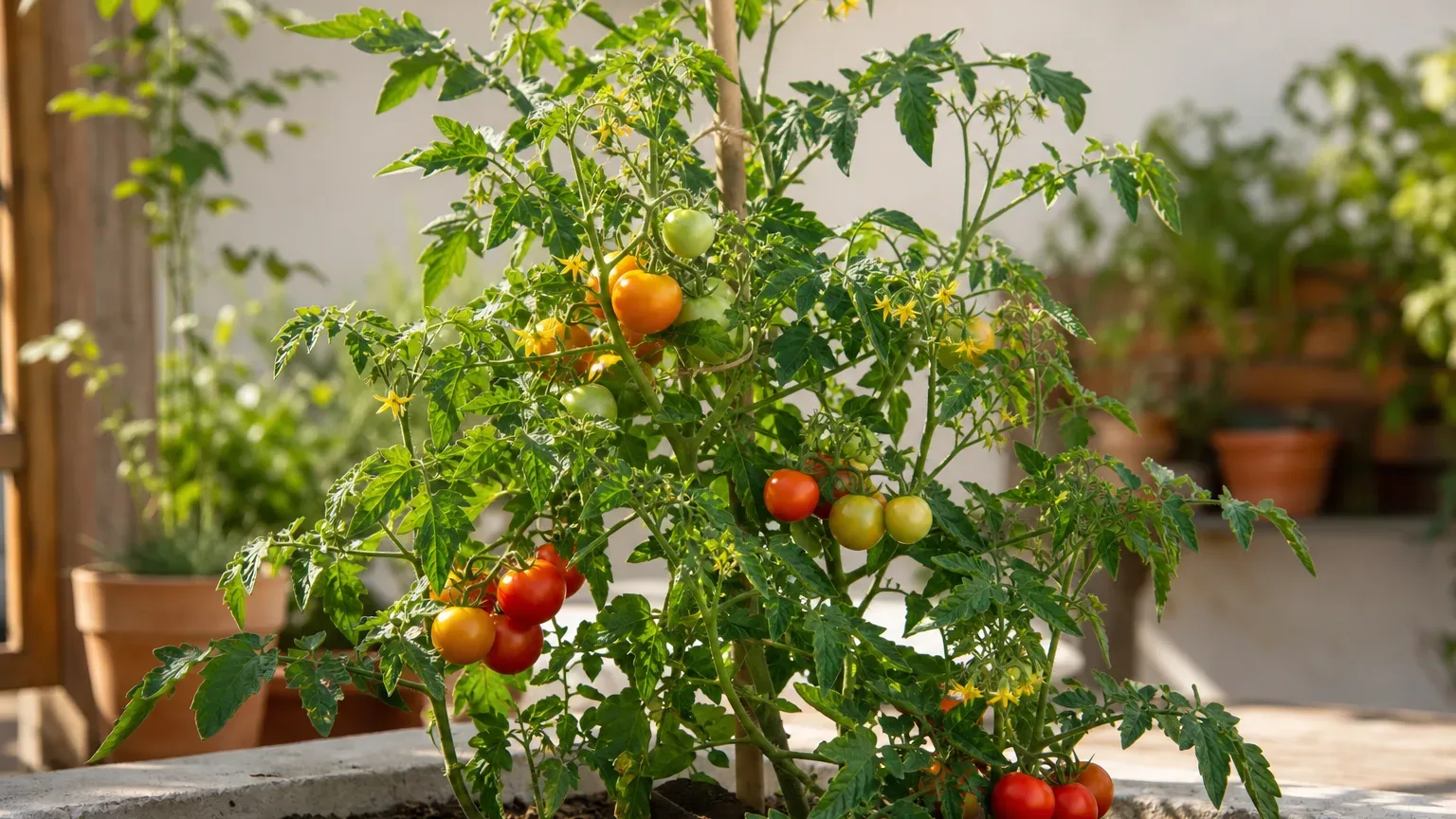
1. Tomatoes — a practical match, with mixed evidence. Tomato and basil share a warm-season calendar and both appreciate sun, fertile soil, and regular moisture, so they are easy to manage in the same bed. Research summarized by Penn State points to reduced egg-laying by certain tomato pests near basil, and a small controlled study found plant-to-plant signaling, but do not count on this pairing to stop hornworms or raise yields. Keep basil outside the tomato’s dense lower canopy, and prune or stake tomatoes so airflow reaches both plants.
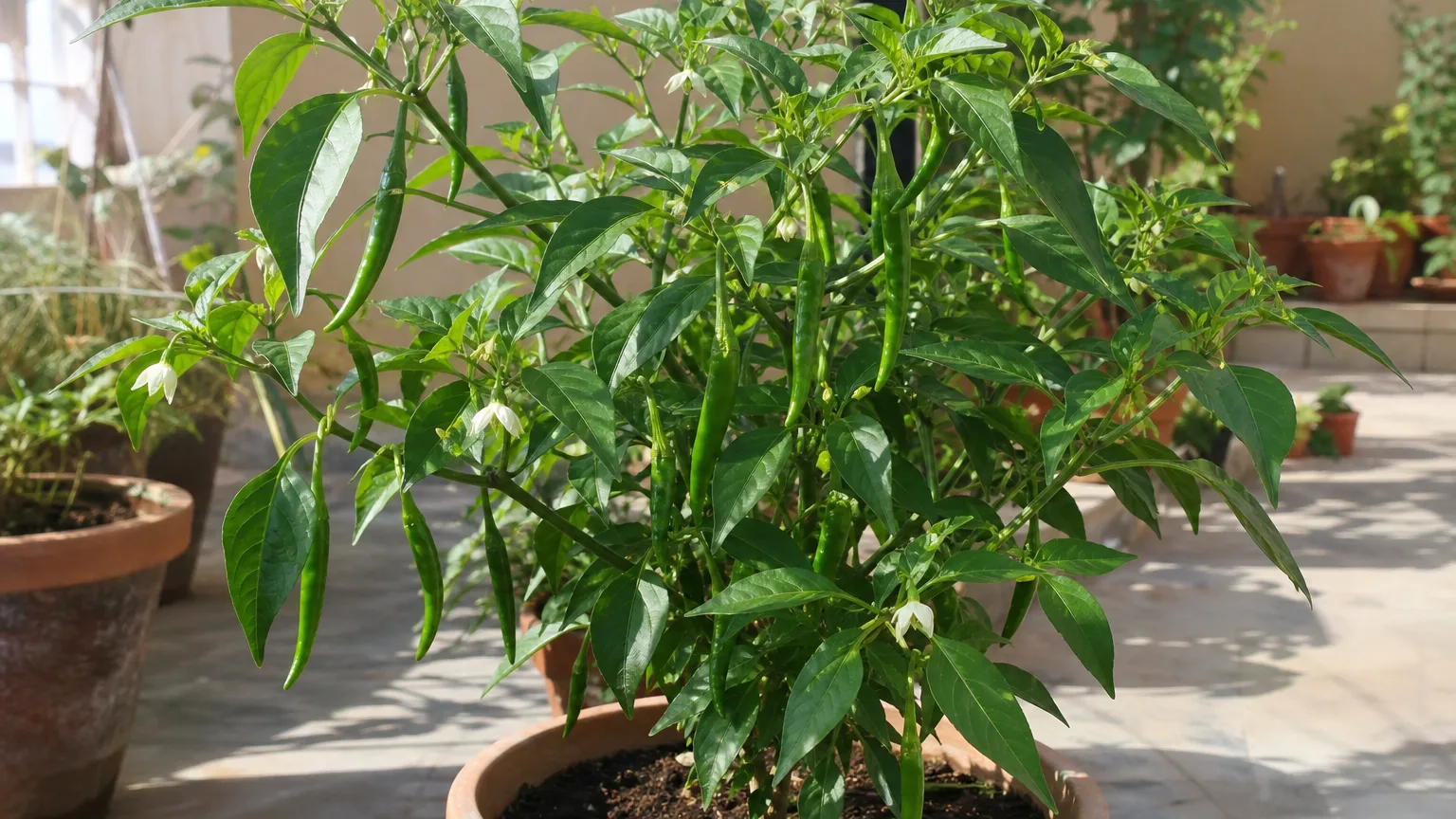
2. Peppers — good neighbors when neither is crowded. Sweet and hot peppers have a similar warm-season schedule to basil, and each can be harvested regularly without disturbing the other’s roots. Basil’s flowers may add nectar to the bed, but peppers do not need basil to set fruit and its scent is not a dependable shield against aphids or beetles. Put basil along a sunny edge rather than underneath a mature pepper canopy, and water the root zone consistently instead of splashing the leaves.
3. Eggplant — a space-sharing choice, not a hornworm cure. Eggplant and basil both need warmth, sun, and steady moisture, making the pairing straightforward in a large bed. The practical benefit is a second edible crop in the same warm-season area; the claim that basil will repel the pests that attack eggplant is much less certain. Eggplant leaves can form a broad canopy, so plant basil where it will not be shaded and leave enough room to inspect leaf undersides for flea beetles, aphids, and other damage.
4. Asparagus — plant at the edge, not inside the fern canopy. Asparagus is a perennial that returns for years, while basil is replanted as a warm-season annual. A basil plant can occupy a sunny bed edge near young asparagus, but mature asparagus ferns grow tall and dense after spear harvest and can shade basil. Treat this as a convenient edge planting rather than a proven way to repel asparagus beetles; do not dig into established crowns or crowd the perennial row.
Flowers and flowering herbs for useful insects
Flowers help when they are accessible and bloom while pests are active. They provide food and habitat for beneficial insects, not a guarantee that predators will arrive on demand. Stagger a few blooms rather than planting a dense block that competes with basil.
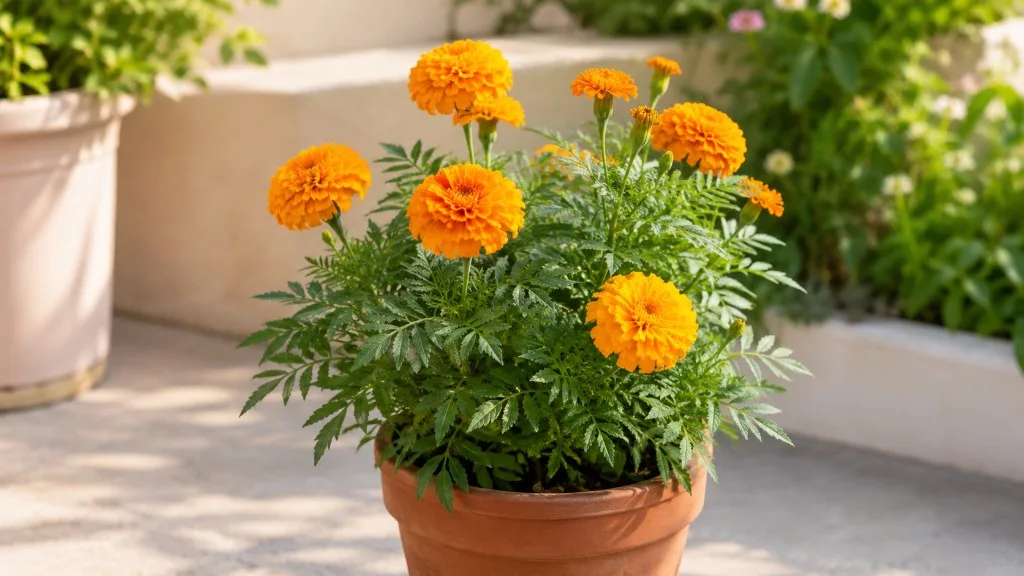
5. Marigolds — useful flowers, not a universal pesticide. Compact French marigolds can add color and accessible blooms along a bed edge, and flowers can support a more diverse garden. The better-documented nematode use is narrower: selected Tagetes varieties grown densely as a cover crop can suppress certain root-knot nematodes in the treated soil; a few marigolds beside basil will not repel every insect or protect roots across a bed. University of Florida IFAS explains the specific marigold-and-nematode use, including why species and planting method matter.
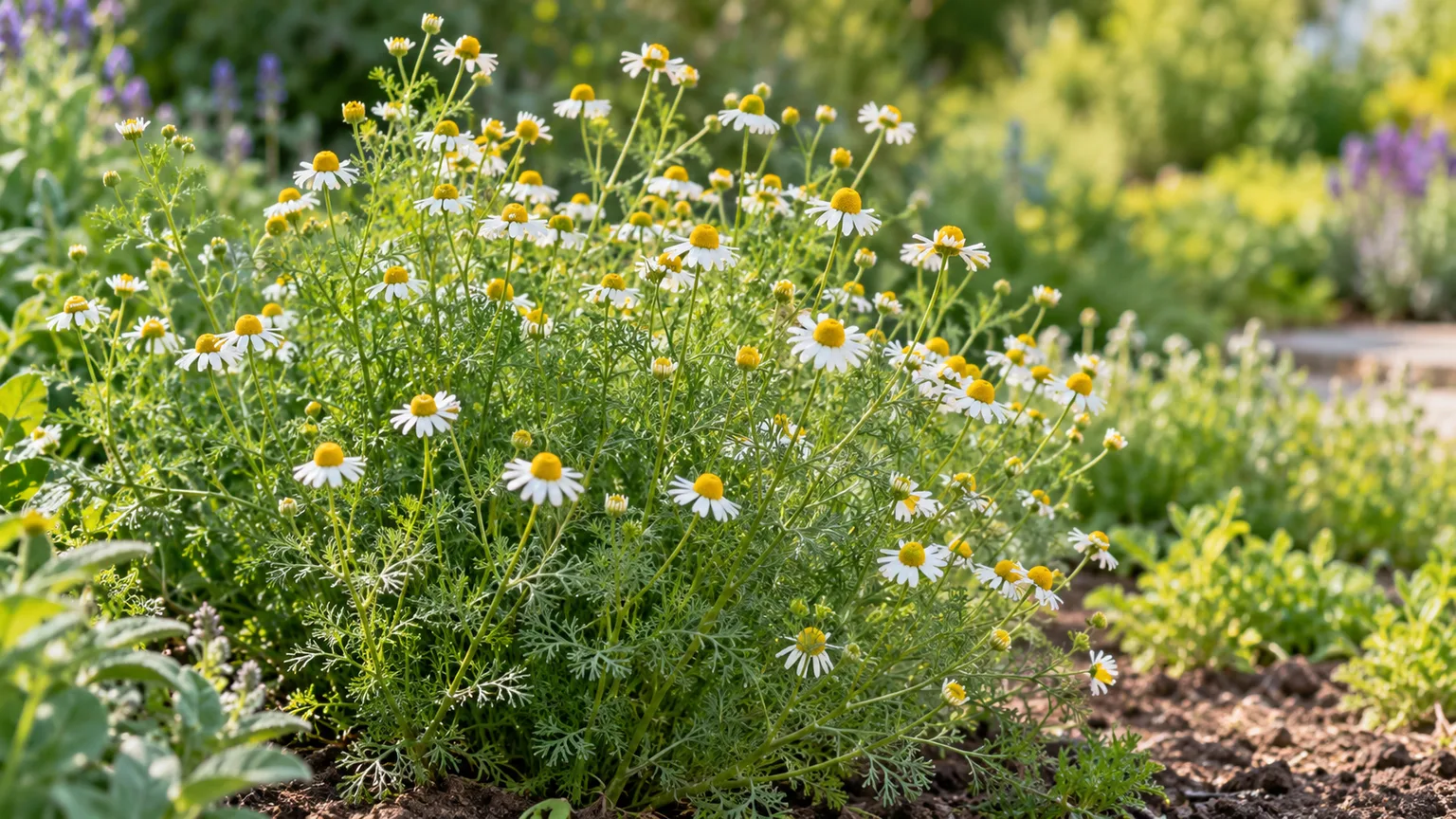
6. Chamomile — a small flowering herb for bed edges. German chamomile is an annual with daisy-like flowers that can bring pollinators and other flower-visiting insects into a vegetable garden. It is a useful choice if you want a low, harvestable flower near basil, but there is no strong basis for promising that chamomile fragrance improves basil’s flavor or makes it grow faster. Give it its own patch so it does not flop across basil stems, and note that Roman chamomile is a different, spreading perennial.
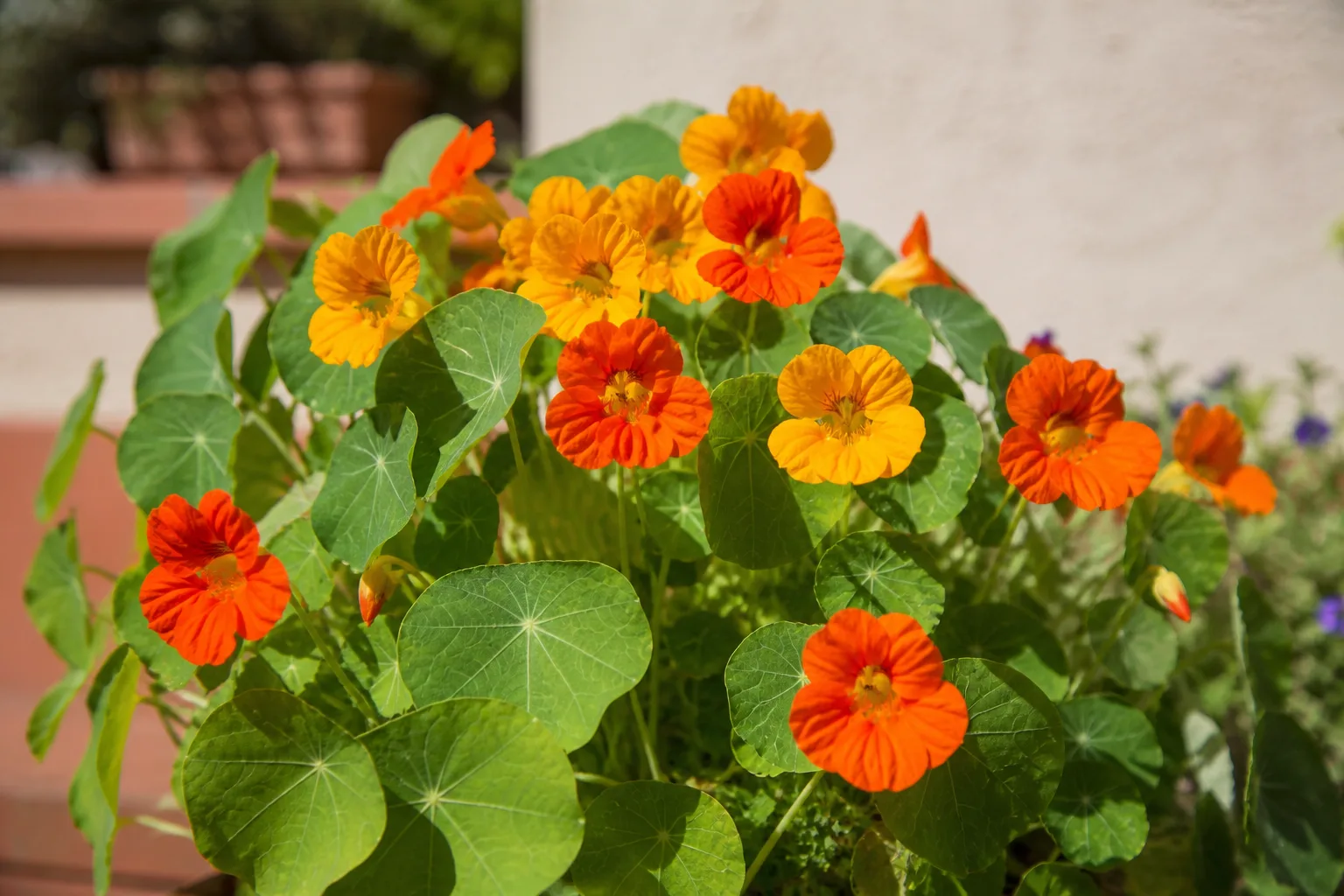
7. Nasturtiums — an intentional trap-crop experiment. Nasturtiums can attract aphids, which may make them useful as a sacrificial crop when you are willing to inspect and manage the aphid colony. They may also sprawl into basil and steal light, so grow them at the edge or in a nearby pot rather than letting vines cover the herb. A trap crop is not pest prevention by itself: remove or prune heavily infested growth if it starts producing more aphids than beneficial insects can handle. University of Vermont Extension advises placing aphid-magnet nasturtiums away from vulnerable crops.
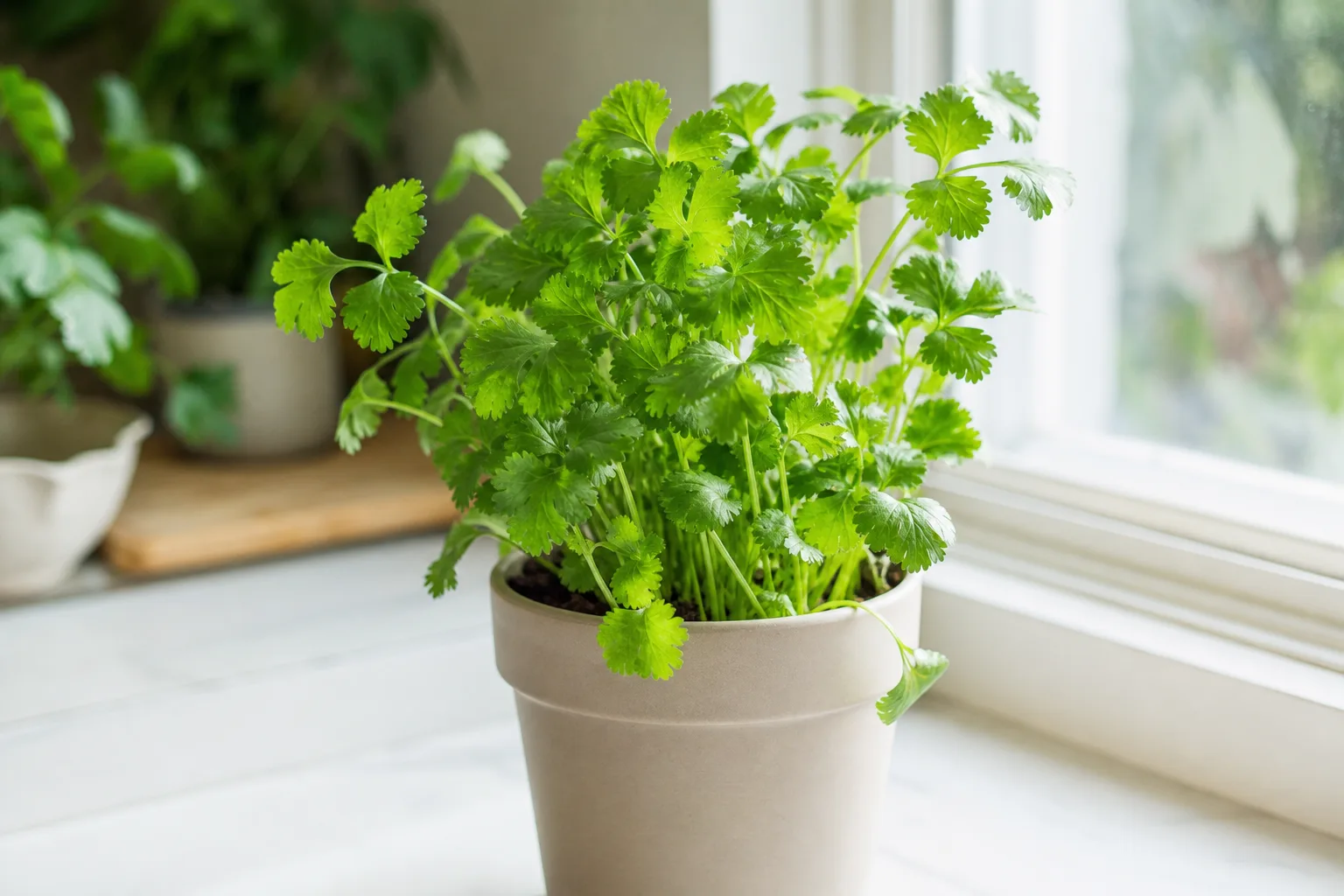
8. Cilantro — grow it for flowers as well as leaves. Cilantro is a useful cool-season herb before basil’s main summer growth takes off, and its small umbels can attract beneficial insects when it bolts and flowers. Heat makes it bolt quickly, so sow it early or in succession rather than expecting lush cilantro leaves beside basil all summer. Penn State’s companion-planting research summary recommends cilantro near lettuce and greens because it can support insects that prey on aphids; it does not claim that cilantro scent keeps every pest away.
9. Dill — a flowering insectary plant with a tall habit. Dill’s umbrella-shaped flower clusters provide nectar and pollen, and its foliage is a host for black swallowtail caterpillars, so decide whether you are comfortable sharing it with butterflies. Place tall dill behind or north of basil in a sunny bed so it does not shade the herb. Penn State lists dill among herbs that can support aphid predators near leafy greens, but it can also attract aphids itself, so monitor the stems and flower heads.
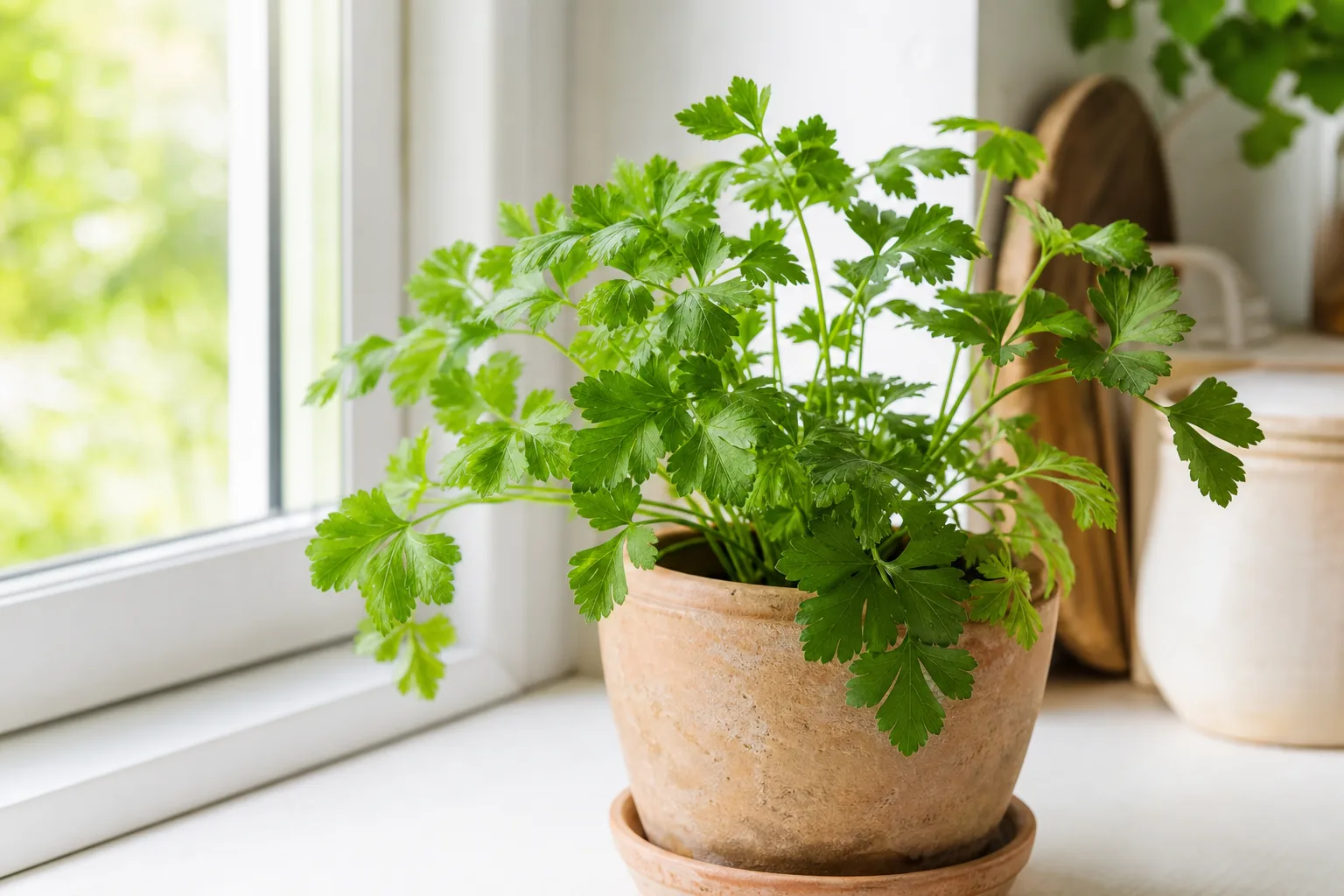
10. Parsley — a compact herb for a mixed bed. Parsley’s early-season foliage can share a sunny, consistently watered bed with basil without demanding a separate care routine. In its second year it flowers and can support beneficial insects, but it is also a host plant for black swallowtail caterpillars, which may eat the leaves. If leaf harvest is your priority, keep parsley flowers in a dedicated corner or accept some caterpillar feeding rather than spraying broadly near the herb patch.
Quick roots and leafy crops
Root crops make useful neighbors mainly because they use a different part of the bed and some mature quickly. They do not receive automatic protection from basil’s aroma; planting the two together is a layout decision, not a proven way to mask the root crop from its specific pests. Keep basil from shading young seedlings, and harvest short-season crops before foliage tangles.
11. Radishes — the simplest quick-fill crop. Radishes often mature quickly enough to use open soil while basil seedlings are still small. Sow a short row at the sunny edge, thin seedlings so roots can size up, and pull the crop before basil becomes a wide bush. This is a good example of a practical companion benefit—making better use of space—without claiming that basil repels flea beetles or protects radish tops.
12. Carrots — a compatible crop if the canopy stays open. Carrots develop underground while basil occupies the upper bed, but the seedlings need light and steady moisture to establish. Sow carrots in a nearby row or between widely spaced basil plants early in the season, then prevent mature basil from shading the feathery tops. Do not rely on basil to confuse carrot rust flies; fine mesh, crop rotation, and local pest timing are more dependable tools when that fly is a recurring problem.
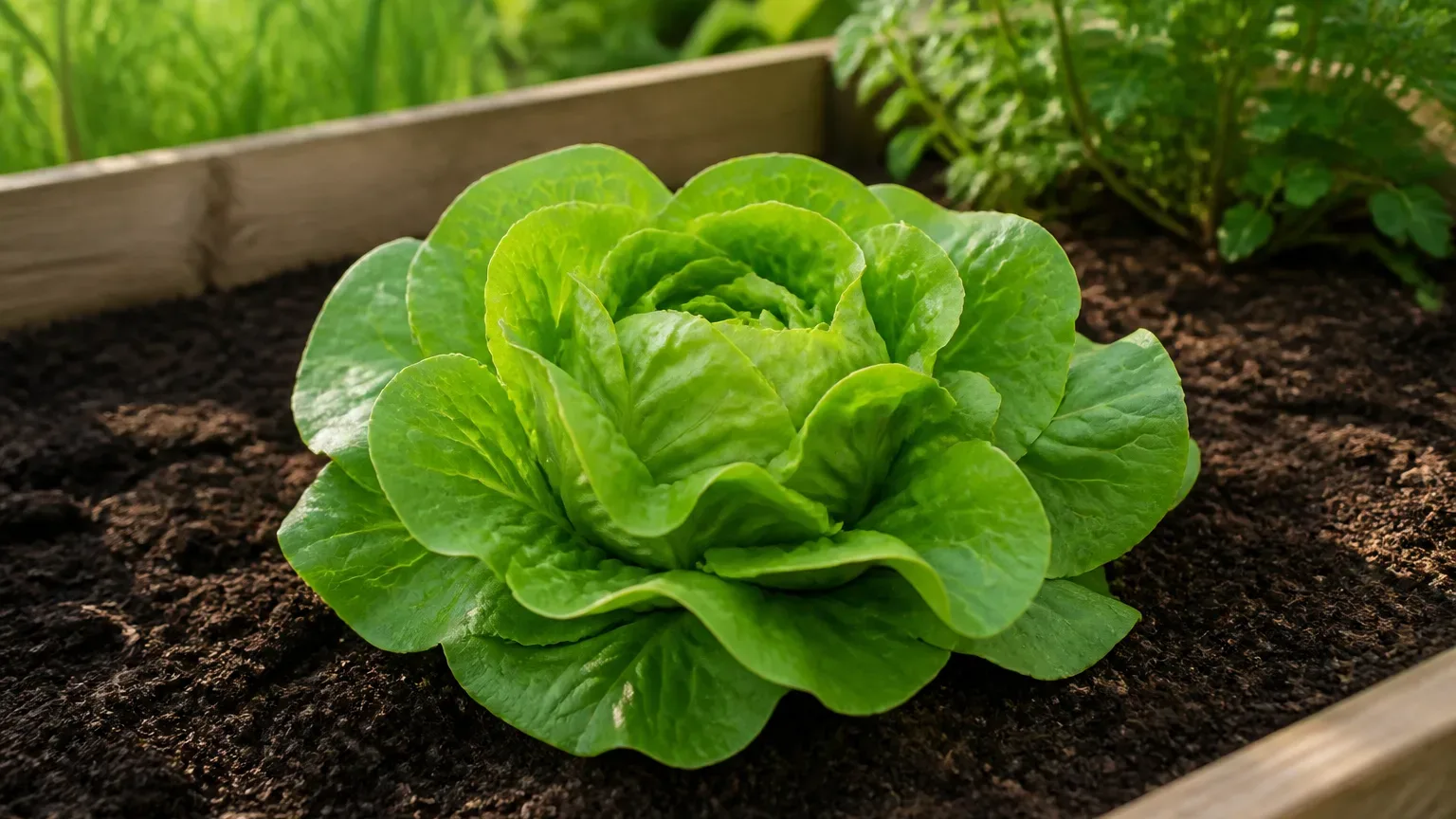
13. Lettuce — a strong fit for flower-supported pest management. Lettuce and basil can share a rich, evenly moist bed, and lettuce benefits from a nearby supply of nectar-producing flowers if aphids are a problem. The strongest reason to add cilantro, dill, or flowering basil nearby is to feed beneficial insects such as hoverflies and parasitic wasps, not because basil itself repels aphids. Plant lettuce where it still receives light, and use a spring or fall crop if summer heat makes it bolt.
14. Beets — a flexible root-and-leaf crop. Beets fit beside basil when there is enough room for both the roots and the leafy tops, and they can be harvested young to open space later. Their growing needs overlap reasonably well with basil’s preference for sun and moisture, but basil should not shade a beet row during root development. Use beets as a neighboring crop because of timing and bed efficiency, not on the assumption that basil fragrance deters leaf miners or other beet pests.
15. Turnips — a seasonal neighbor rather than an all-summer one. Turnips are generally grown in cooler parts of the season, while basil needs warmth, so they may not be at peak growth at the same time. In a long season, you can grow turnips before basil planting or after pulling basil, but do not squeeze a turnip row into the bed once basil’s canopy is full. This is a case where succession planting makes more sense than forcing two plants to share the same space simultaneously.
16. Potatoes — use a bed edge and watch the canopy. Potatoes and basil both want sun, but potatoes take substantial ground space and need hilling, so they are not a close-in companion for a small basil plant. Put basil at the outer edge of a large potato bed only if it will not block access or be buried by soil during hilling. There is no dependable basis for saying basil wards off Colorado potato beetles; scout potato leaves directly and rotate potato crops away from the same bed each year.
Culinary herbs and alliums
Several familiar herbs grow near basil, but “herbs belong together” is not a complete planting rule. Perennial herbs can occupy a spot for years, cilantro and dill may bolt in heat, and Mediterranean herbs can prefer drier conditions than basil. Use containers or bed edges to keep those different water and growth habits from competing.
17. Chives — a tidy perennial edge plant. Chives form clumps that are easier to contain than sprawling herbs, and their purple flowers are visited by pollinators. They can sit near basil as a culinary and visual pairing, but the claim that chives and basil strengthen each other’s flavor is not something to count on in the garden. Keep the clump from expanding into the basil’s allotted space, and divide it if it becomes congested.
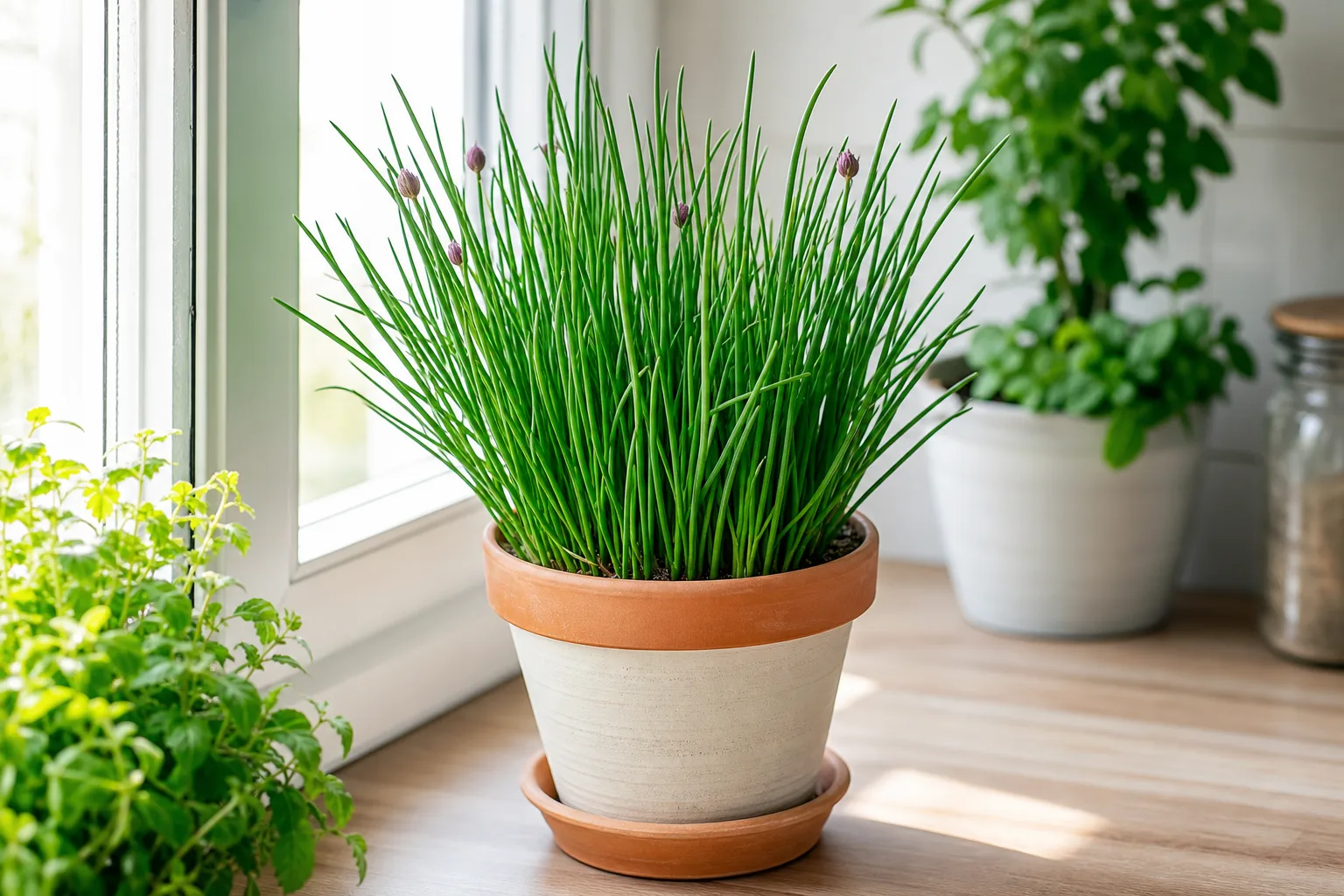
18. Garlic — plan the crop calendar first. Garlic is commonly planted in fall and harvested in early summer, while basil is planted after the last frost, so these crops can use the same ground in sequence rather than competing all season. Leave enough room to pull garlic without disturbing nearby basil roots, and avoid assuming that garlic reliably repels rabbits, squirrels, or insect pests. The aromatic foliage is not a substitute for fencing or targeted pest management.
19. Oregano — nearby is often better than interplanted. Oregano is a perennial that can spread into a sunny bed, and once established it often prefers drier soil than basil. Grow it in a pot or at the edge of the herb patch so you can water basil regularly without keeping oregano’s root zone too wet. Oregano flowers can provide pollen and nectar for insects, but they do not make basil more flavorful or prevent pests by themselves.
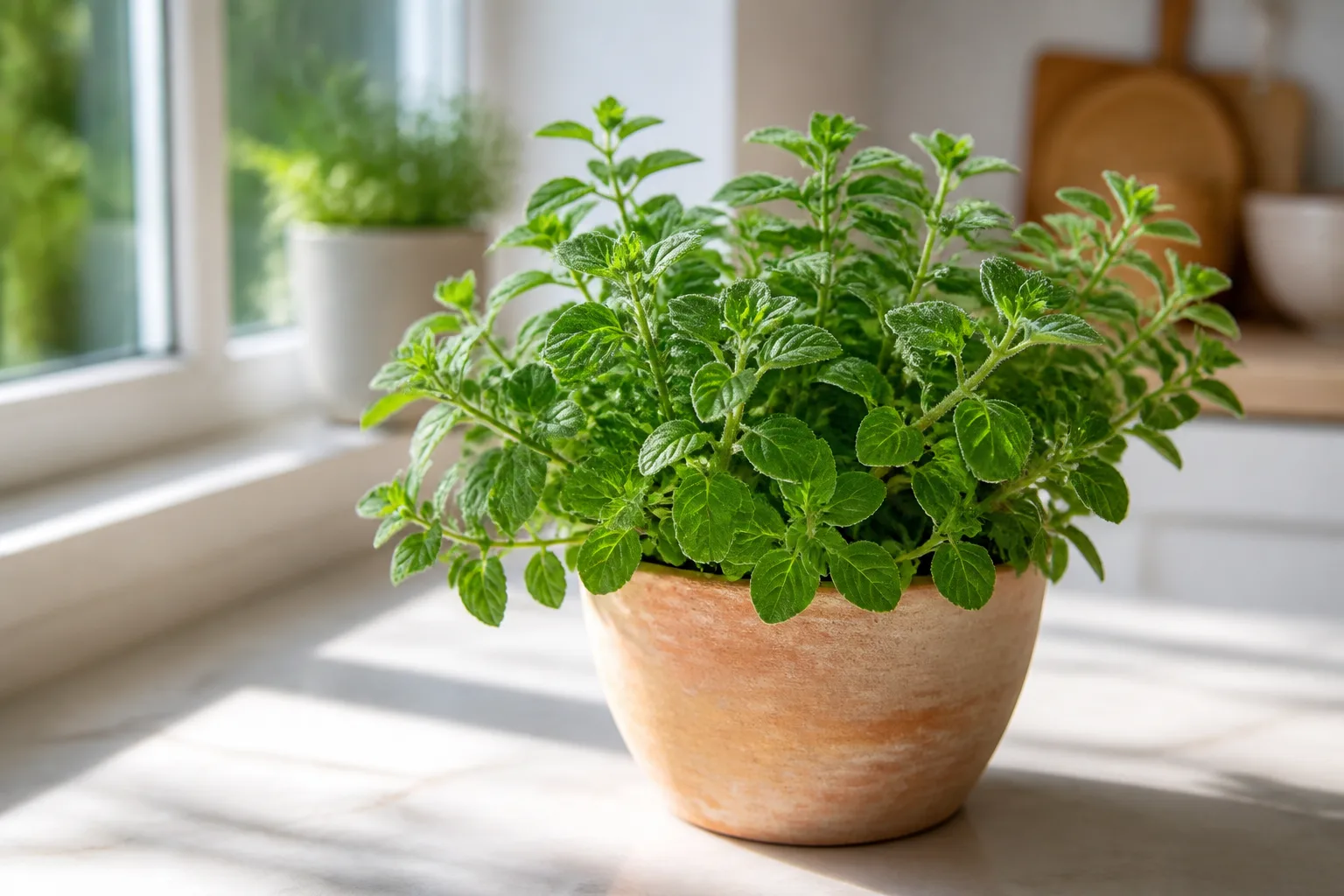
20. Marjoram — a compact herb with a different moisture rhythm. Sweet marjoram is a warm-season herb that can share basil’s sun, but it is generally more comfortable in well-drained soil that is not constantly damp. A small pot next to basil is a low-risk way to enjoy both without forcing the same watering schedule; avoid letting either plant shade the other. The claim that marjoram releases a growth-boosting chemical that makes harvested basil regrow faster is not established enough to guide a planting plan.
Decide whether to let basil flower
Pinching off flower buds keeps a basil plant producing tender leafy growth, which is useful if your main goal is frequent harvests. But letting one or two plants flower creates a longer-lasting nectar source for bees and other beneficial insects. Penn State Extension notes that basil flowers attract pollinators, while broader Extension guidance explains that flowers supply food for beneficial species whose immature stages may prey on pests.
You do not have to choose one outcome for the whole bed. Pinch the basil closest to the kitchen and leave a few stems on another plant to flower; with one plant, harvest until it is large, then let a branch bloom. A succession of flowers from basil, dill, cilantro, or chives supports insects better than expecting one plant to control an infestation. Penn State’s beneficial-insect guidance and a garden-level synthesis of basil pairings describe this habitat role.
Build a layout around space, not a shopping list
Choose two or three companions for your bed. A 4-by-8-foot bed needs a sunny basil spot, room for mature crops, and perhaps early radishes or flowers near lettuce—not all 20 plants. Put tall plants where they cast the least shade, then reserve the sunny edge for low herbs and flowers.
Raised beds and in-ground rows
Set basil about 12–18 inches apart, then account for the neighbor’s mature spread. Basil beside a staked tomato, pepper, or eggplant is easier to manage than one under a dense canopy. Place marigold or flowering herbs at the bed end, and use open space for radishes or lettuce while basil is small.
Plan water delivery before planting. Drip irrigation or a soaker hose wets roots without repeatedly wetting basil leaves, while a dense canopy can raise disease risk. University of Maryland Extension recommends airflow to reduce downy mildew; leave room to reach plants and remove diseased basil promptly.
Containers and small patios
On a small patio, group flowering herbs and vegetables, but separate pots when mature sizes or watering needs differ. A tomato can dominate a small pot, while basil in its own container can be moved into sunlight or away from a damp corner. This gives you a mixed planting without forcing one watering schedule.
If you combine basil with a pepper or compact tomato, use a container that fits both mature root systems and check it often. Pots dry faster, and basil can wilt before the larger crop shows stress. Keep basil out of a long-lasting shade and leave space around the foliage.
Match companions to the season and climate
In a frost-prone region, basil is the summer crop: plant it after warm weather arrives, and use early spring space for radishes, lettuce, cilantro, or nearly mature garlic. If basil is removed by cold or disease, a late turnip crop may use the space better. In a long, warm season, cilantro may bolt early, so plant it in a cooler window or keep some stems for flowers.
In hot, dry climates, monitor soil moisture and container drying rather than crowding plants to create humidity. Basil needs regular water but not soggy soil; mulch can reduce evaporation when kept away from stems. Check midday shade before planting basil beside tall crops.
In humid climates, prioritize airflow over filling every gap. Space basil, water at the base, and keep nasturtium or oregano from matting around stems; warm, wet conditions favor downy mildew. Hardiness zones help with perennial herbs, but basil’s planting date depends on frost and warm nights.
Indoors, companions are separate pots grouped near a bright window or grow light. Give basil strong light and airflow, and inspect outdoor plants for aphids or whiteflies before bringing them inside. A mixed indoor pot does not create meaningful pest control; inspect leaf undersides and water each pot by its own soil.
When a pairing becomes competition
A companion becomes a competitor when it takes light, water, root space, or access from basil or the main crop. Watch for stretching, leaves that stay wet into evening, or smaller basil leaves after a neighbor closes the canopy. Prune, harvest, move a pot, or remove the weaker plant instead of adding fertilizer to compensate.
Do not force plants with different calendars into one bed at once. Turnips and radishes may fit before or after basil; asparagus ferns can shade it; oregano spreads; dill grows tall. Follow plant size, local season, and what you can maintain.
What to do when pests persist
Identify the insect and damage before treating the plant. Holes, sticky residue, curled growth, and leaf mines point to different pests; the response may be a barrier, hand removal, or a crop-specific treatment rather than another flower. Check leaf undersides, look for eggs or larvae, and note whether damage is increasing.
Companion planting is one layer of integrated pest management. Remove badly infested leaves when practical, use row cover where it fits the crop, rotate crops with shared pests, and protect beneficial insects from broad-spectrum sprays. If using a pesticide, follow its crop and pest label and avoid spraying open flowers; consult local Extension for identification and treatment advice. For basil, maintain airflow and water near the soil.
Conclusion
Choose basil companions by function. Tomatoes, peppers, and eggplant fit its summer schedule; radishes and lettuce use open space; and flowering herbs can support beneficial insects. Marigolds, nasturtiums, asparagus, potatoes, and drier herbs have conditional uses, but none is a universal pest shield.
Start with basil’s basics—warmth, sun, moisture, and airflow—then add a few neighbors that solve a real layout or habitat problem. Leave room to reach plants, observe the results, and respond directly to pest damage. That gives you a diverse bed without promising that a pairing can deliver more than it can.



