Green Chilli Care Guide for Pots and Gardens
Capsicum annuum
Grow hot Green Chilli in full sun and fertile, well-drained soil. Learn even watering, container care, harvesting, and capsaicin safety for Capsicum annuum.
Green Chilli Care Guide for Pots and Gardens
Start with wateringThe most common care mistake for Green ChilliWatering guide →Green Chilli care essentials
Light
Water
Keep the root zone evenly moist while the plant is flowering and carrying fruit, but never saturated. Water deeply when the upper 2–3 cm of potting mix begins to dry and let excess drain completely.
Soil
Fertile, organically rich, moisture-retentive but well-drained loam or potting mix. Green chilli grows best in acidic to neutral soil and performs poorly in heavy, persistently wet ground.
Humidity
Temperature
Fertilizer
About Green Chilli
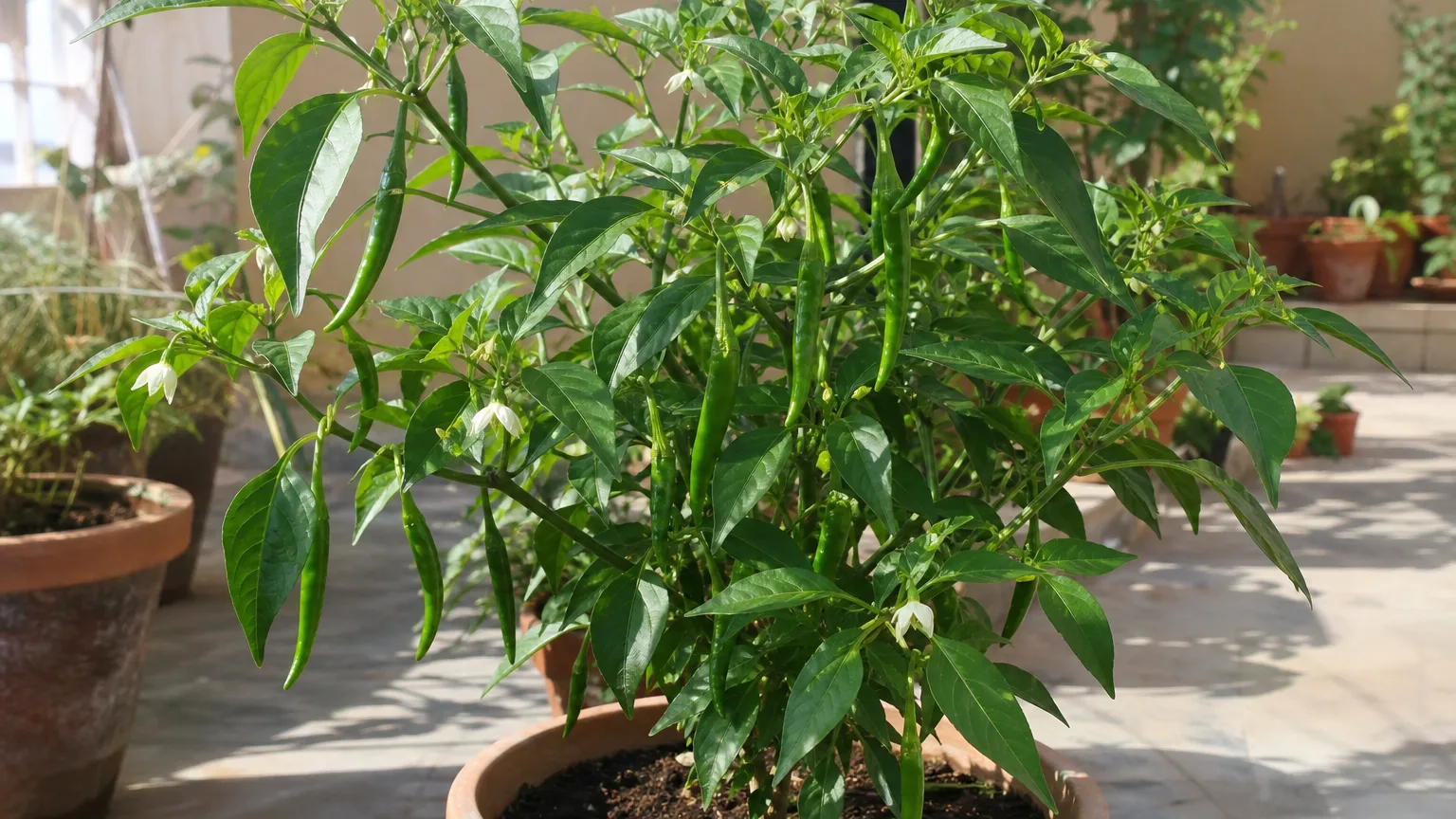
Green Chilli is native to Tropical and subtropical Americas, from the southern United States through the Caribbean and South America; domesticated peppers are now grown worldwide, typically reaches Usually 30–75 cm (1–2.5 ft) tall and 30–60 cm (1–2 ft) wide, though cultivar and growing conditions can extend the range indoors, with fast in warm weather; commonly reaches flowering and fruiting size within one growing season growth. Green Chilli has a frost tender, branching herbaceous to short lived woody perennial, usually grown as an annual growth habit and part of the Solanaceae family. It is also known as Hari Mirch, Green Chili Pepper, Hot Green Pepper, and Chilli Pepper.
| Detail | Information |
|---|---|
| Also known as | Hari Mirch, Green Chili Pepper, Hot Green Pepper, Chilli Pepper |
| Native region | Tropical and subtropical Americas, from the southern United States through the Caribbean and South America; domesticated peppers are now grown worldwide |
| Mature size | Usually 30–75 cm (1–2.5 ft) tall and 30–60 cm (1–2 ft) wide, though cultivar and growing conditions can extend the range |
| Growth rate | Fast in warm weather; commonly reaches flowering and fruiting size within one growing season |
| Growth habit | Frost Tender, Branching Herbaceous To Short Lived Woody Perennial, Usually Grown As An Annual |
| Scientific name | Capsicum annuum |
| Family | Solanaceae |
Green Chilli Care Guide for Pots and Gardens
Green Chilli, or Hari Mirch, is a hot-fruited Capsicum annuum grown for peppers picked while green. It is a warm-season edible crop for a sunny balcony, terrace, rooftop, courtyard or garden bed—not a foliage houseplant for a dim kitchen counter. Give it strong direct light, freely draining fertile soil and steady moisture, then adjust care as flowers and fruit change the plant’s demand.
The name needs one important boundary. Capsicum annuum includes both pungent chillies and sweet peppers, and pepper types vary widely in shape, colour and heat. The University of Minnesota Extension overview separates sweet and hot types within cultivated peppers, so a botanical label alone does not guarantee Hari Mirch. Choose seed or a transplant explicitly sold as a hot chilli cultivar.
Green chilli care at a glance
Put Green Chilli where it receives at least six hours of direct sun, with more useful daylight around it, and acclimate nursery plants before exposing tender leaves to harsh midday conditions. Peppers thrive in full sun and warm weather, according to Penn State Extension’s growing guide, but an enclosed glass balcony can become hot enough to disrupt flowers even when the leaves still look green.
Water deeply when the upper 2–3 cm of mix begins to dry, then let runoff leave the container. Keep moisture reasonably even once flowering starts; repeated drought-to-soak swings are harder on a fruiting plant than a short, controlled dry-down at the surface. Use a fertile, moisture-retentive but well-aerated mix, and begin measured feeding after the plant is established rather than pushing a small transplant with excess fertilizer.
Know what you are growing
Green Chilli is a member of the nightshade family, Solanaceae. The genus Capsicum is native to the Americas, and NC State describes peppers as warm-weather plants grown in many forms, sizes, colours and tastes in its Capsicum profile. In cultivation, a chilli may be treated as an annual crop even though a frost-free plant can persist longer as a short-lived perennial.
“Green” usually describes the harvest stage, not the final ripe colour. Depending on the named cultivar, fruit left on the plant may mature red, orange, yellow, brown or another colour, and its shape, wall thickness and pungency can differ. Do not use a photo of one cultivar to set rigid expectations for every Hari Mirch plant.
Hot green chilli is not sweet bell capsicum
In Indian shops and seed catalogues, capsicum often means sweet bell pepper, while green chilli means a narrower, pungent fruit. Both can belong to C. annuum. Penn State’s pepper-type comparison distinguishes sweet bell and pimento types from hot jalapeño and other pungent types, while noting that even long green peppers range from sweet to hot in its pepper varieties guide.
Cross-pollination does not turn the fruit already growing on a sweet pepper plant hot; it affects the genetics of seed saved for a later generation. For a predictable crop, buy a named hot cultivar suited to your growing season, and do not save seed from an unknown hybrid if uniform results matter.
Growth habit, size and lifespan
Most home-grown hot C. annuum plants form a branching, herbaceous shrub that becomes firmer near the base with age. A practical expectation is roughly 30–75 cm tall and 30–60 cm wide, but compact patio cultivars and vigorous long-fruited cultivars can fall outside that range. Sun, container volume, pruning, fertility and season all alter the final plant.
Green Chilli grows fastest in reliably warm weather and slows sharply in cool conditions. Penn State notes that peppers are a warm-season crop that languishes in cool weather in its hot-pepper guidance. In frost-free climates a healthy plant may survive beyond one crop, but pest load, disease, exhausted potting mix and declining productivity often make replacement from seed the cleaner option.
Choose an outdoor, sunny position
A sunny outdoor site is the default. Aim for at least six hours of unobstructed direct light, preferably with open sky for much of the day. A bright terrace or south- or west-exposed balcony can work well if air moves around the foliage; a room that merely looks bright to people is rarely bright enough for a heavy crop.
Move a nursery plant into stronger sun over several days. Start with morning light, then lengthen exposure while watching for pale, papery patches on the sun-facing leaves. For detailed placement and acclimation decisions, use the Green Chilli light guide rather than guessing from a compass direction alone.
Heat-loving does not mean heat-proof. Flower production can falter during extreme heat, especially when roots also dry quickly or the plant sits behind heat-trapping glass. Shade the container itself, improve airflow and keep soil moisture steady before shading the whole plant heavily; taking away too much light solves one stress by creating another.
Water for steady flowering and fruit growth
Check the root zone rather than watering by weekday. Push a finger 2–3 cm into the mix and lift the pot if possible. Water when that layer has just dried and the container feels lighter, soaking the whole root ball until excess leaves the drainage hole.
Containers may need checking every day in hot, windy weather, but a daily check is not an instruction to water a still-heavy pot. RHS advises that chilli containers can dry rapidly and may need daily watering in hot conditions in its chilli growing guide. The useful rule is check more often as demand rises, not “water every day” regardless of moisture.
Once buds open and fruit begins swelling, avoid long wilting episodes followed by flooding. A mulch layer can slow surface evaporation in garden beds, while a pot with an open drainage hole prevents rain or irrigation from trapping water. The Green Chilli watering guide explains how weather, pot size and fruit load change the interval.
Use fertile soil that drains freely
Green Chilli needs both moisture and oxygen around its roots. A practical container mix is about half quality peat-free potting mix or loam-based compost, one-quarter finished compost and one-quarter perlite, pumice or coarse bark. The exact ingredients can change; the test is whether a soaked pot drains promptly without the root ball turning hard and dry again within hours.
Peppers perform well in well-drained soil with good water-holding capacity, and Penn State gives a field-soil pH range of 5.8–6.6 in its pepper production guidance. For home containers, mildly acidic to neutral mix around pH 6–7 is a sensible working range. Do not chase a precise number unless a soil test shows a real problem.
Avoid dense garden clay in containers, blocked drainage holes and saucers left full of runoff. During monsoon weather, move pots out of repeated driving rain if the mix remains saturated. See the Green Chilli soil guide for mix adjustments and drainage diagnosis.
Feed for a crop, not just leaves
Start with compost-enriched soil, then feed established container plants during active growth. Once flowers form, a tomato or chilli fertilizer with proportionally more potassium than nitrogen is often suitable when used at the label rate. RHS recommends regular high-potassium liquid feeding after flowering begins for container chillies in its cultivation instructions.
More fertilizer does not guarantee more fruit. Excess nitrogen can produce a large, dark-green canopy while delaying flowers or fruit maturity, and salt accumulation can injure roots in containers. If growth is weak, check sunlight, root moisture, drainage and temperature before assuming hunger; the Green Chilli fertilizer guide covers timing and warning signs in depth.
Flowering, pollination and fruit set
Pepper flowers are capable of self-pollination, but vibration from wind and visiting insects helps move pollen. On a screened balcony with little airflow, gently tapping a support or brushing flowering branches can help. Do this lightly; flowers already stressed by heat or drought will not be rescued by aggressive shaking.
If flowers open and fall without setting fruit, inspect the whole growing system. Common contributors include temperature extremes, dry roots, saturated roots, abrupt transplant stress and excessive nitrogen. Change one likely cause at a time, beginning with moisture and heat, so you can tell what actually helped.
Fruit load is cultivar-dependent. A compact plant with many small chillies and a larger plant carrying fewer long fruits can both be healthy. Judge performance against the named cultivar and current season, not a universal fruit count.
Container size, transplanting and support
Use a final container large enough to buffer heat and moisture swings, with at least one unobstructed drainage hole. A single plant often performs more consistently in a substantial pot than several plants crowded into one shallow trough. The correct final size still depends on cultivar vigour, climate and how long you plan to keep the plant.
Peppers dislike rough root disturbance. Missouri Botanical Garden’s Hot Pepper Group profile recommends warm, fertile, well-drained conditions and notes their sensitivity during transplanting. Move the root ball intact, transplant during warm active growth and avoid combining repotting with hard pruning or an abrupt move into fierce sun.
Stake a tall or heavily laden plant before branches bend. Use soft ties with room for stem expansion, and place the support before the root system fills the pot. For pot sizing and aftercare, follow the Green Chilli repotting guide.
Harvesting green fruit
Pick fruit once it is firm, full-sized for the cultivar and at the green stage you prefer. Cut with clean scissors or secateurs while supporting the branch; pulling can tear brittle stems. Regular picking redirects the plant toward later flowers, although the size of that response varies with cultivar, weather and remaining leaf area.
Green fruit is not automatically mild. Pungency depends heavily on genetics and can also vary with growing conditions and fruit maturity. Illinois Extension explains that capsaicin is concentrated in the internal placental membrane rather than produced by the seeds themselves in its pepper guide. Taste cautiously instead of predicting heat from fruit colour alone.
Diagnose common care problems
Read symptoms together with soil and weather. Yellow lower leaves while the mix stays wet, a sour smell and continued wilting suggest poor root aeration. Limp leaves in a light pot and dry mix point toward water deficit; water thoroughly, then reassess after the root ball has rehydrated.
Few flowers on lush growth often point to insufficient direct light or too much nitrogen. Flowers dropping during a heatwave are more likely a temperature-and-moisture problem than a need for extra fertilizer. Pale patches appearing immediately after a move into strong sun suggest scorch, while gradual weak, stretched growth suggests inadequate light.
Aphids, whiteflies, mites, caterpillars and several wilt, leaf-spot, virus and root-disease problems can affect peppers; NC State lists both insect and disease issues for Capsicum annuum. Inspect leaf undersides, isolate badly affected potted plants and avoid repeatedly growing chillies, tomatoes and brinjals in the same tired soil.
Seasonal care in India and similar climates
Match planting to a reliably warm, bright period in your region rather than a single nationwide calendar. India’s elevation, latitude, monsoon timing and winter temperatures vary too much for one sowing month to fit every grower. Protect seedlings from chilly nights, and expect slower growth whenever conditions turn cool.
During hot, dry periods, check containers early each day, protect dark pots from baking and water before severe wilt. During humid monsoon periods, prioritize drainage, airflow and rain protection if soil stays wet. A plant kept through a mild winter needs less water and fertilizer while growth is slow, even if it remains evergreen.
Handling hot fruit safely
Capsaicin from pungent fruit can cause intense skin and eye irritation. Wear gloves when cutting or processing a hot harvest, avoid touching your face, and wash hands, tools and work surfaces afterward. Do not let children handle an unknown chilli as if “green” means mild.
Keep pets away from the plant, fallen fruit and kitchen scraps. The RHS species profile flags Capsicum annuum as irritating if eaten and a potential skin and eye irritant. This precaution concerns hot-fruit exposure; it does not turn an edible human crop into a universal veterinary toxicity claim.
When to use this page vs other Green Chilli guides
Use this overview to understand the complete growing system and identify which variable needs attention first. Use the light guide when placement, acclimation or weak flowering is the main issue, and the watering guide when wilt, yellowing or a fast-drying pot is confusing the diagnosis.
Open the soil guide for drainage and mix choices, the fertilizer guide for feeding decisions, and the repotting guide before changing container size. The propagation guide is for starting new plants, while the pruning guide covers branch removal and end-of-season cleanup.
Related Green Chilli guides
- Green Chilli light — direct sun, balcony placement and acclimation.
- Green Chilli watering — soil checks, weather changes and fruiting demand.
- Green Chilli soil — container mixes, pH and drainage.
- Green Chilli fertilizer — when to feed without driving leafy growth.
- Green Chilli repotting — pot size, transplant timing and aftercare.
- Green Chilli propagation — seed starting and young-plant care.
Conclusion
Successful Green Chilli care starts with the correct plant: a named hot-fruited Capsicum annuum, not an unspecified sweet capsicum. Give it outdoor direct sun, warm conditions, fertile free-draining soil and even moisture, then feed moderately once flowers begin. Let the cultivar set expectations for fruit shape, number, final colour and heat.
When the plant stalls, inspect light, root moisture, drainage and recent temperature before adding fertilizer or spraying. That order catches the most common care errors and keeps Hari Mirch productive in a pot or garden bed without pretending every chilli cultivar follows the same script.
How to care for Green Chilli?
When should you water Green Chilli?
Keep the root zone evenly moist while the plant is flowering and carrying fruit, but never saturated. Water deeply when the upper 2–3 cm of potting mix begins to dry and let excess drain completely.
- Feel 2–3 cm below the surface and lift the pot - Water deeply when the upper 2–3 cm of potting mix begins to dry and let excess drain completely.
- water when that layer is just dry and the container feels noticeably lighter - Water deeply when the upper 2–3 cm of potting mix begins to dry and let excess drain completely.
- Drain excess water - Water deeply when the upper 2–3 cm of potting mix begins to dry and let excess drain completely.
What soil works best for Green Chilli?
Fertile, organically rich, moisture-retentive but well-drained loam or potting mix. Green chilli grows best in acidic to neutral soil and performs poorly in heavy, persistently wet ground.
- 50% quality peat-free potting mix or loam-based compost - Fertile, organically rich, moisture-retentive but well-drained loam or potting mix.
- 25% finished compost
- 25% perlite, pumice, or coarse bark - Fertile, organically rich, moisture-retentive but well-drained loam or potting mix.
Grower notes for Green Chilli
What Green Chilli means here
This hub covers hot-fruited Capsicum annuum harvested green, not the sweet bell pepper type often sold in India as capsicum. Both belong to the same variable species, so a label that says only C. annuum cannot guarantee fruit shape, final colour, or heat. Buy seed or a transplant explicitly described as a hot chilli when pungent fruit is the goal.
Best placement in a real home
Give Green Chilli at least six hours of direct sun in a sheltered garden, terrace, rooftop, or sunny balcony. Heat and strong light support flowering, but enclosed spaces still need airflow; extreme heat around flower development can cause blossoms and tiny fruit to abort. This is an outdoor edible crop, not a low-light kitchen-counter plant.
Water evenly once flowers appear
Chillies need steady moisture to crop well. Check containers often because they may need daily watering in hot, dry weather, but always test the mix first. Repeated swings from dry to soaked can trigger flower drop and blossom-end rot, while a constantly wet root ball invites root and stem disease. Water the soil deeply and keep foliage dry late in the day.
Before you buy a Green Chilli
Choose a named hot-fruited cultivar suited to your season rather than assuming every Capsicum annuum will be pungent. Select a compact, well-branched plant with clean leaf undersides, firm stems, and no sticky honeydew, mottling, or sour-smelling mix. Avoid badly root-bound plants: peppers can resent rough root disturbance.
First month after bringing it home
Acclimate nursery foliage to strong sun over several days, then keep watering consistent while roots establish. If the plant needs a larger pot, disturb the root ball as little as possible. Wait for active new growth before feeding heavily, and avoid combining transplanting, hard pruning, and a sudden move into harsh sun.
Harvest green fruit without guessing heat
Pick firm fruits at the usable green stage to encourage more flowers; fruit left to mature may change colour and can reduce later production. Heat varies with genetics and conditions, so taste cautiously. Capsaicin can irritate skin and eyes—wear gloves when handling hot fruit, wash tools and hands, and keep harvested chillies away from children and pets.
Is Green Chilli safe for pets?
Do not let pets chew Green Chilli plants or fruit. RHS flags Capsicum annuum as irritating if eaten and as a skin and eye irritant. Capsaicin-rich hot fruit can cause painful exposure even though it is edible to people.
Green Chilli is an edible human crop, but hot fruit is not a pet treat. Capsaicin can irritate the mouth, eyes, skin, and digestive tract. Prevent access to plants, fallen fruit, and kitchen scraps; rinse exposed skin or eyes with clean water and contact a veterinarian if a pet develops persistent distress.
Watering Green Chilli
For Green Chilli, feel 2–3 cm below the surface and lift the pot; water when that layer is just dry and the container feels noticeably lighter and water check containers daily in hot, dry weather and water when the surface starts to dry; in-ground plants generally need deep, less frequent irrigation rather than small daily splashes. Increase checks during hot, windy weather and heavy fruiting; water sparingly if overwintering a plant in a warm, bright place.
| Detail | Information |
|---|---|
| How often | Check containers daily in hot, dry weather and water when the surface starts to dry; in-ground plants generally need deep, less frequent irrigation rather than small daily splashes |
| How to check | Feel 2–3 cm below the surface and lift the pot; water when that layer is just dry and the container feels noticeably lighter |
| Seasonal changes | Increase checks during hot, windy weather and heavy fruiting; water sparingly if overwintering a plant in a warm, bright place |
Signs of overwatering
- yellow lower leaves while the mix remains wet
- wilt despite damp soil
- dark, soft roots or a sour smell from the pot
- flower drop and stalled growth in a poorly aerated root zone
Signs of underwatering
- persistent leaf droop that does not recover after evening
- dry mix pulling from the sides of the pot
- flower or young fruit drop
- dry brown leaf margins
Soil & potting for Green Chilli
Use a mix of 50% quality peat-free potting mix or loam-based compost, 25% finished compost, 25% perlite, pumice, or coarse bark for Green Chilli. Moist but freely draining; use an unobstructed drainage hole and never leave a container standing in runoff. Target soil pH around Acidic to neutral, approximately 6.0–7.0. Repot pot seedlings on progressively, then move the final plant into a container large enough for the season; overwintered plants may need a spring root check and fresh mix, ideally in spring or the start of reliably warm active growth.
| Detail | Information |
|---|---|
| Recommended mix | 50% quality peat-free potting mix or loam-based compost, 25% finished compost, 25% perlite, pumice, or coarse bark |
| Drainage | Moist but freely draining; use an unobstructed drainage hole and never leave a container standing in runoff |
| Soil pH | Acidic to neutral, approximately 6.0–7.0 |
| Repotting frequency | Pot seedlings on progressively, then move the final plant into a container large enough for the season; overwintered plants may need a spring root check and fresh mix |
| Best season to repot | Spring or the start of reliably warm active growth |
Signs it needs repotting
- roots densely circling or emerging from drainage holes
- the pot drying again within a day in moderate weather
- water running around rather than soaking the root ball
- growth stalling before flowering despite adequate sun and feeding
Humidity & temperature for Green Chilli
Fertilizer & pruning for Green Chilli
Common problems on Green Chilli
Yellow Leaves
MediumLikely cause: Common on this plant type; confirm with recent watering, light, and root checks.
Quick fix: Inspect the plant and correct the most likely care stressor before stacking treatments.
Full fix guide →Brown Tips
MediumLikely cause: Common on this plant type; confirm with recent watering, light, and root checks.
Quick fix: Inspect the plant and correct the most likely care stressor before stacking treatments.
Full fix guide →Root Rot
MediumLikely cause: Common on this plant type; confirm with recent watering, light, and root checks.
Quick fix: Inspect the plant and correct the most likely care stressor before stacking treatments.
Full fix guide →Overwatering
MediumLikely cause: Common on this plant type; confirm with recent watering, light, and root checks.
Quick fix: Inspect the plant and correct the most likely care stressor before stacking treatments.
Full fix guide →Underwatering
MediumLikely cause: Common on this plant type; confirm with recent watering, light, and root checks.
Quick fix: Inspect the plant and correct the most likely care stressor before stacking treatments.
Full fix guide →Spider Mites
MediumLikely cause: Common on this plant type; confirm with recent watering, light, and root checks.
Quick fix: Inspect the plant and correct the most likely care stressor before stacking treatments.
Full fix guide →Mealybugs
MediumLikely cause: Common on this plant type; confirm with recent watering, light, and root checks.
Quick fix: Inspect the plant and correct the most likely care stressor before stacking treatments.
Full fix guide →Aphids
MediumLikely cause: Common on this plant type; confirm with recent watering, light, and root checks.
Quick fix: Inspect the plant and correct the most likely care stressor before stacking treatments.
Full fix guide →Leggy Growth
MediumLikely cause: Common on this plant type; confirm with recent watering, light, and root checks.
Quick fix: Inspect the plant and correct the most likely care stressor before stacking treatments.
Full fix guide →Slow Growth
MediumLikely cause: Common on this plant type; confirm with recent watering, light, and root checks.
Quick fix: Inspect the plant and correct the most likely care stressor before stacking treatments.
Full fix guide →Wilting
MediumLikely cause: Common on this plant type; confirm with recent watering, light, and root checks.
Quick fix: Inspect the plant and correct the most likely care stressor before stacking treatments.
Full fix guide →Drooping Leaves
MediumLikely cause: Common on this plant type; confirm with recent watering, light, and root checks.
Quick fix: Inspect the plant and correct the most likely care stressor before stacking treatments.
Full fix guide →Low Humidity
MediumLikely cause: Common on this plant type; confirm with recent watering, light, and root checks.
Quick fix: Inspect the plant and correct the most likely care stressor before stacking treatments.
Full fix guide →Not Enough Light
MediumLikely cause: Common on this plant type; confirm with recent watering, light, and root checks.
Quick fix: Inspect the plant and correct the most likely care stressor before stacking treatments.
Full fix guide →Fungus Gnats
MediumLikely cause: Common on this plant type; confirm with recent watering, light, and root checks.
Quick fix: Inspect the plant and correct the most likely care stressor before stacking treatments.
Full fix guide →Mold on Soil
MediumLikely cause: Common on this plant type; confirm with recent watering, light, and root checks.
Quick fix: Inspect the plant and correct the most likely care stressor before stacking treatments.
Full fix guide →