Brown Tips on Green Chilli: Causes, Checks & Fixes
Quick answer
Before watering Green Chilli for brown tips, feel the mix 2–3 cm below the surface and lift the pot. If that layer is dry and the pot is light, water slowly until excess drains; if the mix is still damp, do not add water. Brown tissue will not turn green again, so judge recovery by whether fresh leaves stay healthy.
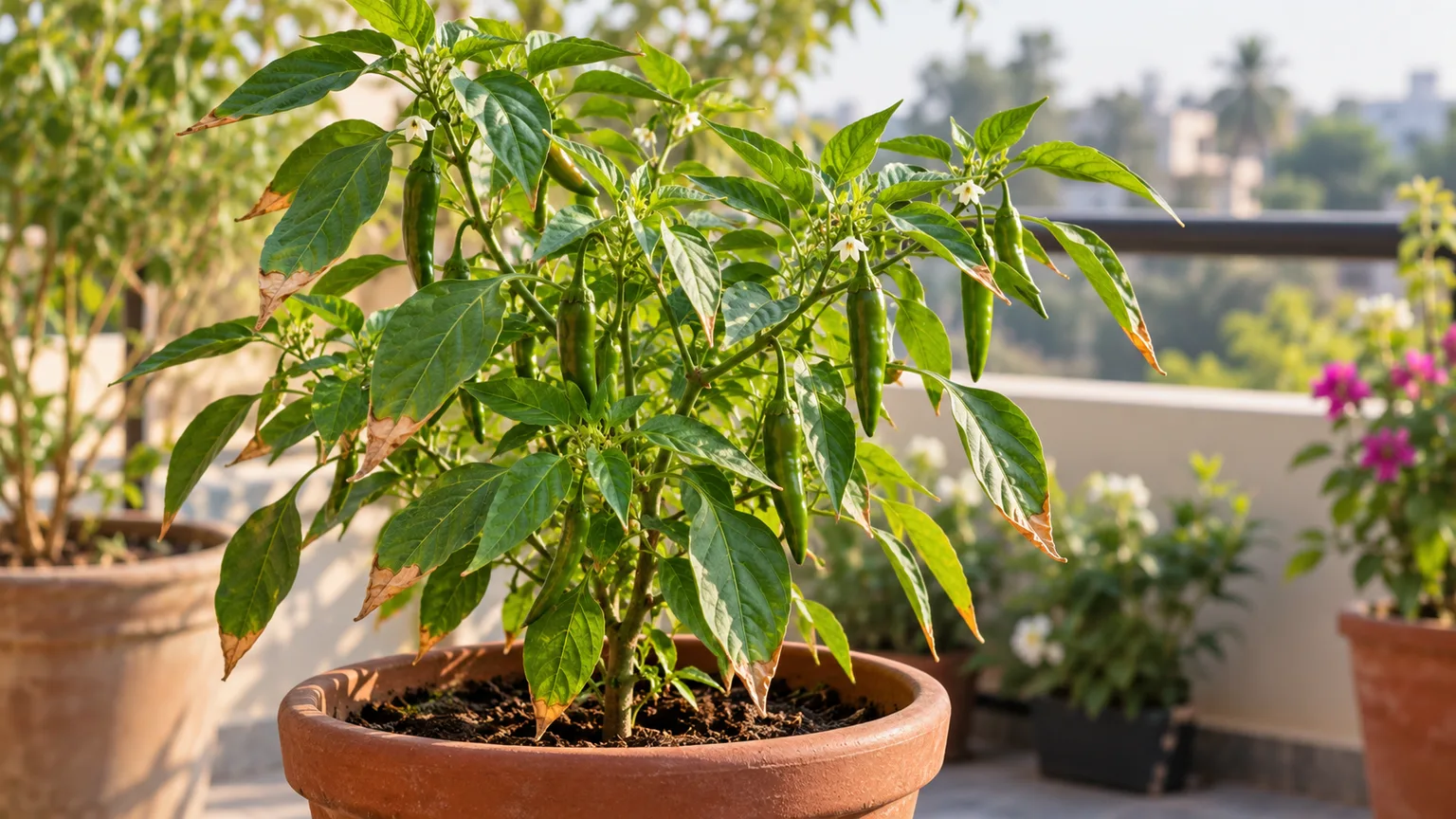
Brown Tips on Green Chilli: Causes, Checks & Fixes
This guide covers brown tips on Green Chilli. See also the general Brown Tips guide, watering, and light pages for this plant.
Brown Tips on Green Chilli: Causes, Checks & Fixes
Quick answer
Before you water a Green Chilli with brown tips, feel the mix 2–3 cm below the surface and lift the pot. If that layer is dry and the container feels light, water slowly at the soil line until excess drains; then empty the saucer. If the mix is still moist, do not add more water. Brown tissue will not turn green again, so use the next leaves and whether the damage continues as your recovery markers.
Green Chilli here means a hot-fruited Capsicum annuum grown outdoors or in a sunny container, rather than a low-light foliage houseplant. Pepper species profiles describe a full-sun crop that prefers rich, moist but well-drained soil; hot and sweet cultivars share the species but their growing details and fruit traits vary. That crop context is why brown tips need a moisture check first, followed by a look at heat, recent feeding, and the actual leaf pattern—not a reflex misting or fertilizer treatment. NC State Extension’s species profile covers peppers grown as hot and sweet forms.
What brown tips look like on Green Chilli
A dry tip usually starts at the outer point or edge of a leaf, then forms a tan or brown patch with a crisp boundary against green tissue. It may stay limited to a few leaves after one dry spell, or repeat on several leaves when the same stress keeps returning. Note whether the affected leaves are old and low on the plant or whether the newest leaves are also marked; that pattern helps distinguish an old blemish from a stress that is still active.
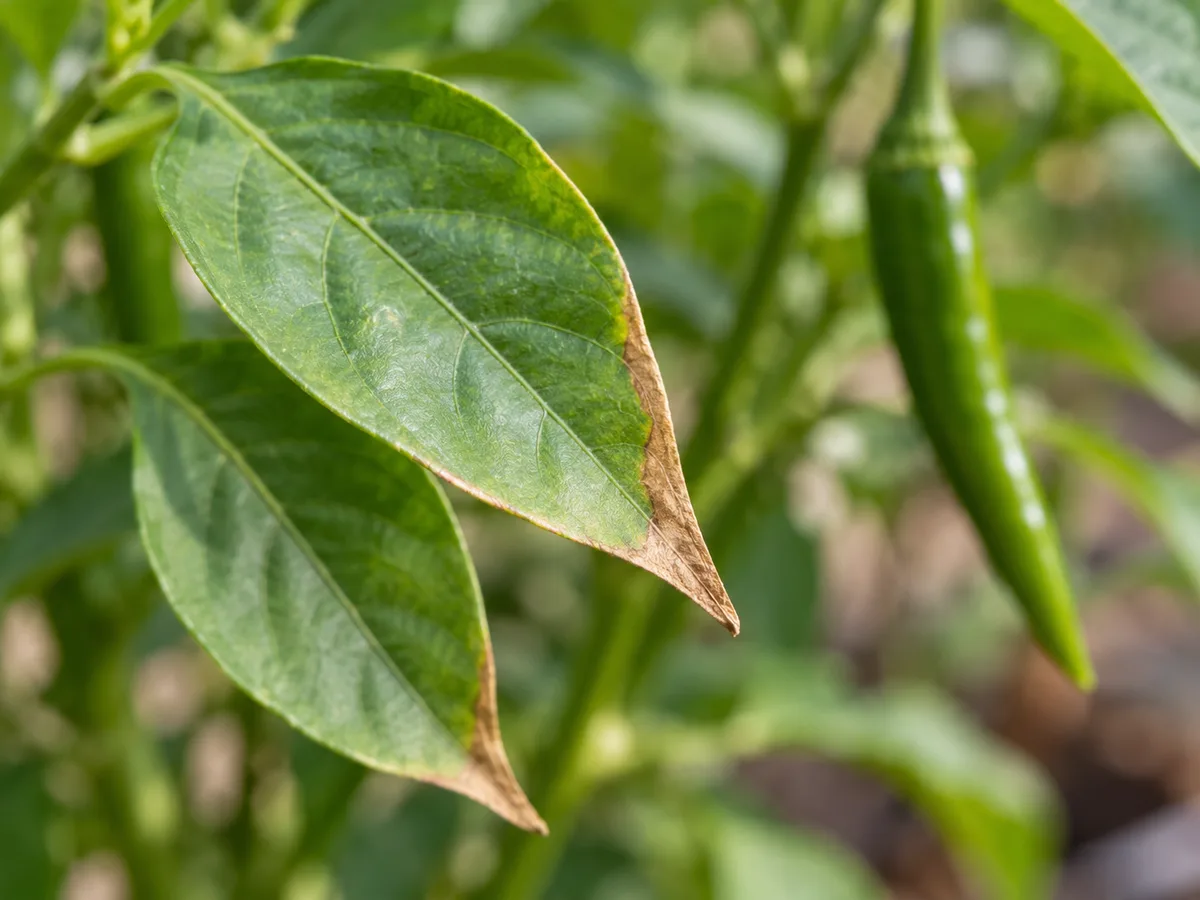
Dry, crisp tissue at the tip is a symptom to investigate; the moisture condition of the root ball helps choose the first correction.
A small, stable brown edge on one older leaf is less urgent than fresh damage appearing on several leaves in a few days. Brown tips are a symptom, not a diagnosis: they do not prove the plant is thirsty, and they do not identify one disease. Use the feel of the mix, recent weather, watering history, and the position of the damage together. For a general overview of the symptom, see brown leaf tips; the checks below apply them to a fruiting chilli plant.
Why a fruiting Green Chilli can show dry edges
Green Chilli grows quickly in warm weather and may flower and carry fruit in the same season. When a container dries quickly in direct sun or wind, the leaf surface can lose water faster than roots replace it. This does not mean every brown tip is caused by drought, but repeated dry-downs are a credible first suspect when the pot is light and the mix is dry below its surface. The plant profile for Green Chilli records dry brown leaf margins among its underwatering signs, alongside persistent droop and flower or young-fruit drop.
Pepper guidance recommends a steady supply of moisture while keeping soil freely draining. The RHS notes that chilli pots can dry quickly in warm weather and need regular checks; UF/IFAS likewise describes pepper soil as moist, not wet. The RHS chilli guide and UF/IFAS pepper guidance support that balance, but neither claims that brown tips alone identify underwatering. For this plant’s watering trigger and container routine, use the Green Chilli watering guide.
This is an edible crop, not a tropical houseplant that needs daily leaf misting. Outdoor heat, a breezy terrace, a small pot, and a plant carrying flowers and fruit can all change how quickly the pot dries. During hot, dry weather, the RHS advises checking chilli containers regularly and being prepared to water daily; that is a prompt to inspect, not a fixed daily schedule. Do not borrow a calendar from another climate or pot size. A deep, less frequent watering rhythm may suit in-ground plants, while a sun-exposed container may need a closer check. GrowVeg’s pepper guide also recommends adjusting watering to dry weather and the plant’s growing conditions.
Check Green Chilli’s root zone before watering
Push a finger into the mix at the edge of the pot, not right against the stem, to about 2–3 cm. If it feels dry there and the pot is noticeably lighter than it feels after watering, the root ball may be drying between checks. If the surface is dry but the mix below is cool and damp, wait and check again later. A dry crust on top does not prove that the whole container needs water.
If water runs down the gap between the pot wall and mix, check whether the root ball has shrunk away from the sides or become hard to wet. Water slowly in two or three passes, allowing each pass to soak in, instead of flooding the top once. Confirm that water can leave through the drainage holes and that the pot is not standing in runoff. Green Chilli is better kept evenly moist than swung from bone dry to saturated; its soil guide explains the well-drained mix and drainage setup this crop needs.
Do not rely on drooping alone. Peppers can wilt when the root zone is too wet as well as too dry, so a limp plant in damp mix is not a signal to add water. Epic Gardening’s pepper-growing guide makes the same diagnostic distinction for pepper plants. Compare the moisture below the surface with the pot’s weight and recent weather before you act.
Read the pattern before naming a cause
Dry mix after a hot or windy spell
Underwatering moves to the top of the list when the mix is dry at the test depth, the pot feels light, and the plant droops during the day or stays limp after the evening cools. Brown margins may follow as the stress repeats. Water once thoroughly if these checks agree, then give the plant time to respond; do not compensate with several small splashes that wet only the surface. If other Green Chilli care conditions look right, compare your routine with the plant overview and its watering notes.
Moist mix with yellowing or persistent wilt
If the mix remains damp for days, do not call the brown tips drought damage. Check that the drainage hole is open and that the pot is not sitting in water. A plant that wilts despite wet soil, has yellowing lower leaves, or develops soft, dark roots or a sour smell may have a root-zone problem rather than a need for more irrigation; those are listed as overwatering warning signs for Green Chilli in the plant profile. Pause watering until the mix begins to dry, and follow the Green Chilli soil guide to check whether the medium and drainage suit a fruiting pepper. Avoid unpotting a stable plant solely because one leaf tip is brown.
Recent move into stronger sun or reflected heat
Green Chilli is a full-sun crop, but nursery leaves still benefit from gradual acclimation before a sudden move into stronger outdoor light. Pepper-growing guidance recommends acclimating plants before setting them outside by increasing exposure gradually; GrowVeg’s pepper guide describes that transition. If browning began soon after a plant was moved from a shaded shop or indoors onto a hot balcony, note that timing and check whether damage is concentrated on the exposed side. Do not solve a light-transition problem by keeping a fruiting chilli in deep shade; first protect it from the harshest reflected heat while it adjusts, then restore the bright placement gradually. Use the Green Chilli light guide when you need to review exposure and acclimation.
Pepper fruit sunscald is a separate problem from dry tips on leaves. Utah State Extension describes sunscald as damage on fruit exposed to direct sunlight in hot, dry weather, while its pepper guide describes leaf blights or spots as distinct dark lesions on leaves, stems, or fruit. A few crisp leaf tips do not establish either diagnosis. If the damage is made up of expanding dark spots rather than dry ends, compare the whole pattern with extension guidance and avoid treating the plant as simply thirsty. Utah State’s pepper guide covers these pepper-specific lookalikes.
Recent feeding or fertilizer buildup
Think about fertilizer only if the timing fits: brown margins appeared after a feed, the product was mixed stronger than its label, or fertilizer has been applied repeatedly while the pot has had little drainage. Colorado State Extension describes marginal scorch as one general result of drought, root stress, excess moisture, or fertilizer injury across a range of plants in its leaf-scorch guidance. That evidence is not specific to Green Chilli, so treat it as a reason to review recent inputs rather than proof of salt injury. If the plant was recently fed, pause additional fertilizer while you check the mix, drainage, and fresh growth; do not add a stronger feed to “green up” the tips. See the Green Chilli fertilizer guide before restarting a routine.
Insects or disease make a different pattern
Inspect the undersides of leaves and the growing tips for small insects, sticky residue, or distorted new growth. Utah State Extension describes aphids as soft-bodied insects that feed on leaf undersides and can leave leaves curled or sticky with honeydew; its pepper guide shows why that pattern differs from a clean, dry brown edge. If you find insects, identify them before selecting a treatment rather than spraying because one tip is brown. The RHS chilli guide recommends regular checks around shoot tips and leaf undersides for aphids.
Look for separate dark spots, spreading lesions, mosaic mottling, or wilt from the bottom of the plant. Utah State’s pepper guide distinguishes leaf spots and blights from aphid feeding and from fruit disorders; the guide’s disease notes describe mottled, malformed leaves and bottom-up wilt as different pepper problems. Do not assume a leaf disease from a dry tip alone, but take spreading lesions or rapid wilt seriously, especially when neighboring pepper plants show the same issue. For other problems on this crop, use the Green Chilli problems hub to choose the matching diagnosis.
Do not confuse leaf tips with blossom-end rot
Blossom-end rot affects the blossom end of a pepper fruit: the damaged area is on the fruit, not at the end of a leaf. NC State Extension explains that moisture fluctuations can contribute to the condition by disrupting calcium movement to developing fruit; the dark, sunken fruit lesion is not evidence that every brown leaf tip needs more water. Maintain steady soil moisture for the crop, but do not add calcium or fertilizer without a separate diagnosis. NC State’s blossom-end rot guide describes the fruit symptom and its relationship to water supply.
First fix: water only when the root ball is dry
The first action is a moisture check, not a spray, repot, or feed. If the mix is dry 2–3 cm down and the pot feels light, water slowly at the soil line until the full root ball is wet and excess drains out. Empty the saucer or cachepot after it drains. Then let the upper layer begin to dry before checking again; use the plant and the weather, not a rigid interval, to decide when the next watering is due.
If the mix is damp at test depth, skip that watering. Check drainage and wait until the root zone begins to dry before making another decision. Do not water in response to wilt when the soil is already wet, and do not mist the leaves as a substitute for watering the roots. For a Green Chilli with brown tips and confirmed damp mix, correcting the diagnosis matters more than giving it “a little extra” water.
Keep the correction narrow for several days. Do not simultaneously repot, prune healthy branches, increase fertilizer, and move the plant into new light; changing several variables makes it harder to know whether the original problem has stopped. Repot only if you find a real container or mix failure, such as blocked drainage or roots densely circling and the pot drying unusually fast. The Green Chilli repotting guide covers when a container change is warranted.
What recovery looks like
Brown tips are dead tissue; they will not become green again. Colorado State Extension explains this limit for leaf scorch generally in its scorch guidance, and it applies here as a useful expectation rather than a promise about every pepper injury. You can leave a small dry tip in place while the plant stabilizes. If you trim for appearance, remove only the dead portion with clean scissors and keep the cut outside healthy green tissue; pruning cannot repair the cause.
Look for the damage to stop advancing and for later leaves to open with normal green edges. If the plant is flowering, fewer dropped buds and steady new growth are useful signs that its water balance is improving, but a single week is not a guarantee of recovery. The timing depends on warmth, plant vigor, root condition, and whether the original stress is still present. Do not expect a brown patch on an old leaf to disappear, and do not repeatedly change care because that patch remains visible.
Escalate the diagnosis if fresh leaves keep browning despite an evenly moist, freely draining root zone, if the stem softens, if wilting continues while the mix is wet, or if multiple plants develop expanding dark lesions. Those signs point beyond a one-time dry-down and may need a close examination for roots, disease, pests, or chemical exposure. A plant with a firm main stem and healthy new growth is more promising than one with progressive stem collapse, but no article can guarantee that a severely damaged plant will recover.
Prevent brown tips through Green Chilli’s season
During flowering and fruiting, aim for a root zone that stays evenly moist without remaining saturated. Check a container more often during hot, dry, or windy weather, and water deeply enough to wet the root ball rather than giving repeated surface sips. In-ground plants and containers dry at different rates, so adapt the check to the growing setup. This is more reliable than repeating “water every day” or “water every three days” regardless of weather.
Set the plant in full sun after gradual acclimation, with enough airflow around it and a pot with open drainage. The species profile and the Green Chilli overview describe this as a warm, sunny edible crop; that placement supports growth while the moisture check protects against a hot container drying too far. If a terrace reflects intense afternoon heat, move the pot a short distance from the hottest wall during the most severe conditions rather than keeping it in a dim room.
Keep fertilizer measured and consistent with active growth. Extra feed cannot reverse a brown edge and may create another stress if the product is overapplied or salts accumulate. Do not fertilize simply because a leaf tip looks damaged; check the plant’s growth and the Green Chilli fertilizer guide before resuming after a stress event. Also avoid combining a hard prune or repot with a sudden increase in sun while the plant is already struggling.
Use a brief weekly inspection as a pattern check, not as a diagnosis by checklist. Notice whether the pot is drying faster than usual, whether the oldest or newest leaves are affected, whether flowers are dropping, and whether the leaf undersides are clean. If tips recur after the same dry-hot pattern, adjust the watering check frequency for that container. If they recur while the mix stays moist, stop adding water and investigate drainage or another cause instead.
Related Green Chilli guides
- Green Chilli overview: use for the crop’s overall growing conditions and cultivar context.
- Green Chilli watering: use when the root ball dries too far or watering varies with weather.
- Green Chilli soil: use when mix structure, drainage, or a wet root zone is in question.
- Green Chilli light: use when symptoms began after a move into stronger sun or a change in exposure.
- Green Chilli fertilizer: use when feeding history or fertilizer timing needs a separate review.
- Green Chilli problems hub: use to route symptoms that do not match a dry leaf tip.
Related tool
Use the Brown Tips Diagnosis Tool to compare the leaf pattern and care conditions before changing more than one variable.