Overwatering Green Chilli: Signs, Root Checks & First Fixes
Quick answer
If Green Chilli wilts while its mix is still damp, do not water again yet. Check moisture below the surface and confirm that runoff can escape; yellowing or drooping alone does not prove overwatering.
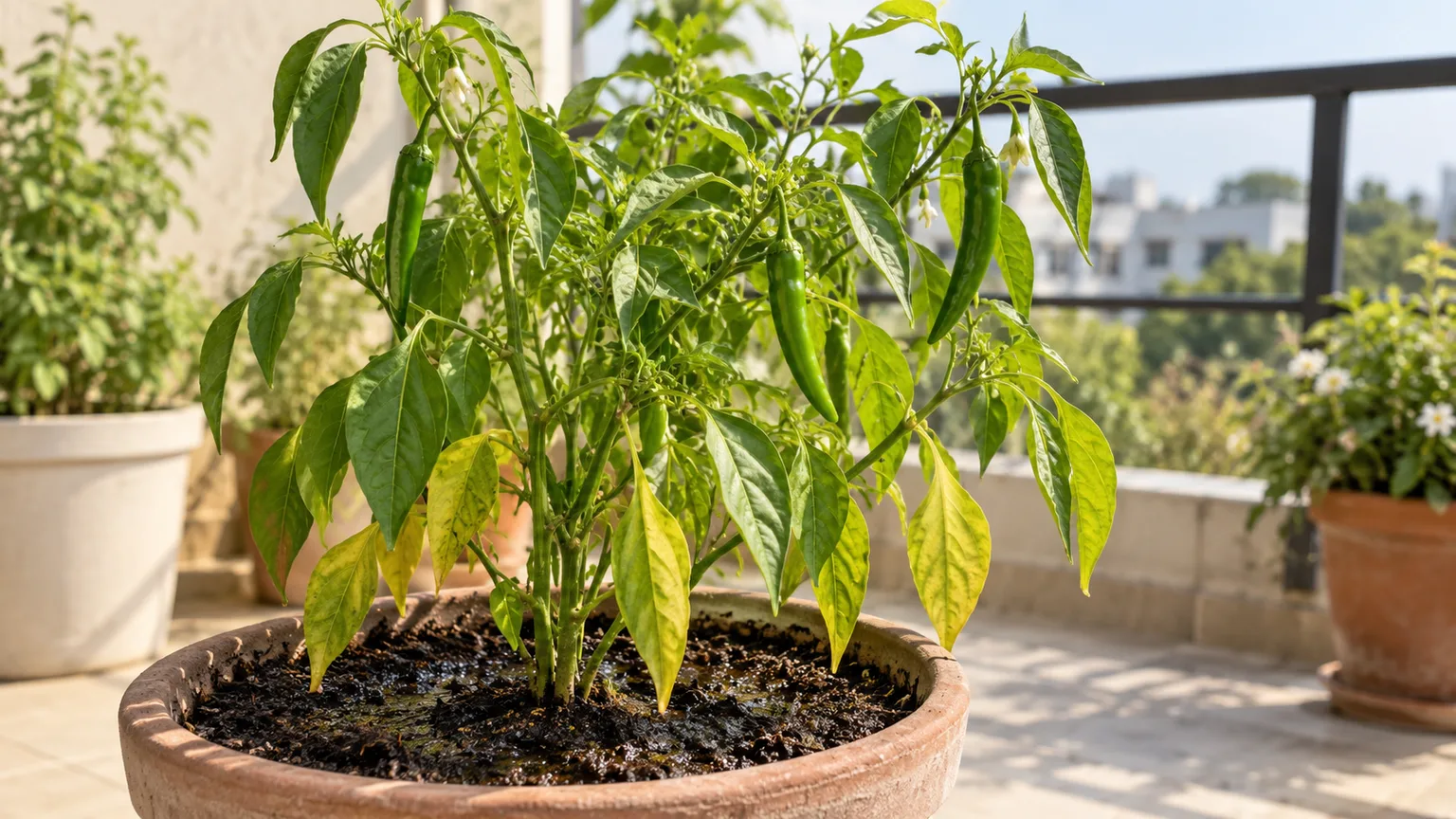
Overwatering on Green Chilli: Causes, Checks & Fixes
This guide covers overwatering on Green Chilli. See also the general Overwatering guide, watering, and light pages for this plant.
Overwatering on Green Chilli: Causes, Checks & Fixes
Quick answer
If a Green Chilli is drooping while its potting mix is still damp, pause the next watering and check the root zone before doing anything more. Overwatering is most convincing when persistent wetness appears together with declining leaves or growth; one yellow leaf, a wilt during hot sun, or a fallen flower is not enough to diagnose it.
Green Chilli is a hot-fruited Capsicum annuum grown in sun and warm conditions. It needs moisture while it flowers and carries pods, but roots also need a mix that drains freely. For the general signs and mechanism, see our overwatering guide; this page explains how to make the diagnosis on a fruiting pepper and when a wet root zone may signal a separate disease.
What overwatering looks like on Green Chilli
On this pepper, suspect excessive wetness when the lower leaves turn yellow or soften while the mix remains cool and damp below the surface. The plant may look thirsty because the leaves droop, yet watering again can keep already-stressed roots in poorly aerated soil. Persistent wetness, slow or stalled growth, and a pot that stays heavy strengthen the case. Missouri Botanical Garden describes yellowing, reduced vigor, and wilting among overwatering signs, while stressing that the root-zone condition needs to be checked rather than inferred from the canopy alone (Missouri Botanical Garden’s overwatering guide).

A yellowing lower leaf with damp mix is a reason to check the root zone; it is not proof of root rot by itself.
Do not use flower or young-fruit drop as the deciding clue. The RHS notes that chilli flower buds may fall when plants become too dry, and Oklahoma State Extension reports that extreme heat can interfere with pepper fruit set, so inspect moisture and recent weather before changing the watering routine (RHS chilli guidance; Oklahoma State pepper production). A pattern of several symptoms plus a persistently wet root zone is more useful than any single leaf or pod.
Why a Green Chilli can wilt in wet soil
Pepper roots use oxygen in the spaces between soil particles. When a mix stays saturated, those spaces fill with water; roots can become damaged and less able to move water to the canopy, so leaves can droop even when the pot feels heavy (Missouri Botanical Garden’s explanation of waterlogged roots). The NC State Extension profile for Capsicum annuum recommends evenly moist but well-drained soil, which captures the balance this crop needs.
For a Green Chilli, the risk is not the fact that you watered yesterday; it is a root zone that repeatedly remains wet without draining or drying at a useful pace. Oklahoma State Extension notes that pepper irrigation should maintain uniform soil moisture, while over-irrigation promotes Phytophthora and other root-rotting organisms (pepper irrigation guidance). That field-crop advice supports the principle, but it does not set a fixed schedule for a home pot: container size, mix, weather, fruit load, and exposure all change how quickly this plant uses water.
Check the chilli’s root zone before diagnosing its leaves
Start with the container or bed, not a watering calendar. On a potted Green Chilli, feel the mix about 2–3 cm below the surface near the edge of the root ball, then lift the pot if you can. A dry crust with a cool, wet center means the surface was misleading; a pot that remains heavy after watering has drained is still holding substantial moisture. The Green Chilli watering guide explains the same depth-and-weight check for deciding when this plant needs its next drink.
Check these points in order:
- Moisture below the surface: Is the mix damp at root depth, not only on top? If so, wait before watering again.
- Drainage: Does the container have an unobstructed hole? Pouring water into a cachepot or letting a saucer remain full can leave the lower root ball wet even when the surface looks dry.
- Dry-down pattern: Has the pot stayed heavy between waterings, or is it repeatedly being watered because the top layer dries quickly in sun and wind? The soil guide for Green Chilli helps when the mix is dense, compacted, or slow to drain.
- Recent conditions: Count rain, a move into shade, cooler nights, or a change to a much larger container. Each can slow dry-down, so a schedule that worked in hotter weather may now be too frequent.
In an in-ground bed, check soil a few centimetres down near—but not directly against—the stem. A wet surface after rain is not the same as a persistently saturated root zone. If water pools or the bed stays soggy, the site may drain too slowly for peppers; UConn Extension recommends well-drained soil for peppers and suggests raised beds when soggy soil is an ongoing problem (UConn’s pepper growing guide).
Separate wet-root wilt from a hot-day chilli droop
Green Chilli is grown in full sun, and a plant on a hot balcony can briefly lose leaf firmness during the harshest part of the day. That observation does not tell you whether the roots are wet or dry. Check the mix and look again after the exposure eases; avoid adding water solely because the leaves sag at noon. The Green Chilli light guide covers how sun and heat affect this crop.
| What you observe | More consistent with | What to do next |
|---|---|---|
| Wilt with damp, heavy mix that stays wet between checks | Root stress from excess moisture or drainage trouble | Pause watering; inspect drainage and root-zone moisture |
| Wilt with a light pot and dry mix below the surface | Underwatering or a root ball that has dried too far | Confirm the root ball has dried before watering; use the Green Chilli watering guide’s moisture check above |
| Leaves sag mainly in strong afternoon sun, then firm up as conditions cool | Temporary heat-related water demand | Recheck the mix before watering; review sun and heat exposure |
| Wilt continues while wet soil is paired with a dark stem lesion at soil level | Possible pepper crown or root disease | Isolate the diagnosis from simple watering stress and seek local extension advice |
Yellowing is also a broad response, not a diagnosis. If the soil is not persistently wet, compare the affected leaf’s age and pattern with the plant’s overall growth, and inspect for pests, nutrient stress, or normal ageing before treating the problem as overwatering. The Green Chilli overview provides the crop context if you need to reset the whole care picture.
Inspect the pepper stem base if decline continues
Do not unpot a stable plant just to confirm an early suspicion. First correct the watering pause and see whether the mix begins to drain and dry. If the plant continues to wilt while wet, or if the soil smells sour and the lower stem softens or darkens, slide the root ball out carefully and inspect only what is needed. Look for roots or stem tissue that is visibly decayed or collapsing; avoid tearing apart firm roots just to obtain a perfect-looking root ball.
Pepper disease can overlap with waterlogging. NC State Extension reports that Phytophthora blight on peppers commonly begins around the roots and crown at the soil line; under wet conditions plants may wilt, and dark-brown crown lesions can extend up the stem. Saturated soils and excessive rainfall or overhead irrigation favor disease development (NC State’s pepper blight fact sheet). A wet pot alone does not prove Phytophthora, and yellow leaves alone do not identify a pathogen. If a lesion is girdling the stem, wilt is sudden and persistent, or multiple plants in a bed are affected, contact a local extension service or plant clinic for diagnosis rather than applying a fungicide by guesswork.
Use the root-zone and stem-base evidence to decide whether this is simple overwatering or a disease problem. A mildly overwatered pot may improve with a corrected watering interval, but a collapsing crown or extensive root decay needs a closer assessment of the plant and its growing site. If the container or mix needs changing, the Green Chilli repotting guide covers how to disturb this crop’s roots carefully.
First fix: pause the next watering
If the root zone is damp, do not add more water yet. This is the first correction; it gives the mix a chance to drain and lets you see whether the plant’s condition stabilizes. If the container is sitting in runoff, empty the saucer after the water has drained. If rain is continuing to soak a movable pot, place it under cover while preserving the light the chilli normally needs.
Do not move the plant into deep shade to force the mix to dry. Green Chilli is a sun-loving crop, and a sudden change in light can create another stress at the same time as the root-zone problem. Keep conditions steady, then check the same soil depth and pot weight again before deciding whether water is needed. The RHS chilli guide recommends a steady supply of moisture and regular compost checks, with more frequent watering possible in hot, dry container conditions; that is a reminder to adjust by conditions rather than to keep a pot wet on a fixed schedule (RHS guidance for growing chilli peppers).
If the mix drains and the plant has only mild symptoms, avoid immediate repotting, root washing, pruning, and fertilizing. A change to all four at once adds stress and makes it hard to tell whether the watering correction helped. When the mix is dry enough for the normal Green Chilli depth check, water thoroughly and let the excess leave through the drainage hole rather than giving frequent small splashes. For longer-term setup adjustments, use the Green Chilli repotting guide only if the pot or root ball actually needs attention.
When a wet pot needs more than a watering pause
Escalate from waiting to inspection when one of these patterns persists:
- the mix stays wet well beyond the plant’s usual dry-down and the pot remains heavy;
- water cannot escape because a hole is blocked, the container has no outlet, or a dense mix has collapsed;
- sour or rotten odor comes from the root zone;
- lower leaves continue yellowing, new growth stalls, or the plant wilts while the mix remains damp;
- the stem at the soil line is dark, soft, or visibly constricted.
For the first three container issues, check the drainage path and inspect the root ball before choosing a new pot or mix. If the root ball is sound and the container can drain, a change in watering timing may solve the problem. If roots are breaking down or the mix has become dense and airless, a careful move into fresh, freely draining mix may be justified. Do not automatically size up; choose a container based on the root ball and the plant’s seasonal growth rather than adding unused wet mix.
For a bed that repeatedly floods, changing how often you water cannot repair poor site drainage. UConn’s advice to consider a raised bed in persistently soggy ground is more relevant than adding a treatment to one affected pepper. If disease signs are present, keep suspect soil and plant debris from being carried to clean pots or beds, and ask an extension specialist to help distinguish pathogen damage from general waterlogging.
Recovery on a Green Chilli that is flowering or fruiting
Expect recovery to be measured by the next growth and the root-zone pattern, not by instant repair of old leaves. Record which lower leaves were yellow before you changed the routine, then watch for new yellowing or softening rather than removing every marked leaf. Look for the spread to stop, stems to remain firm, and new leaves to develop normally while the pot begins drying at a more predictable pace.
Keep the plant’s light, support, and feeding routine stable while roots resume normal water use. Do not compensate for lost leaves with a heavy fertilizer dose: fertilizer does not restore oxygen to saturated soil. If active growth resumes, use the Green Chilli fertilizer guide to return to routine feeding rather than adding extra fertilizer as a rescue. If a chilli is carrying pods, avoid letting the root ball swing from saturated to bone-dry; assess recovery by continued healthy growth and the next flowers rather than promising a specific date.
If a Green Chilli was overwintered indoors, check the mix before watering instead of carrying over its summer frequency. A returning plant that stays wet in a cool, dim room should be moved back toward a bright position as conditions permit; use the Green Chilli overview to review the whole-season needs and the watering guide to reset the check routine.
Prevent overwatering in a Green Chilli container or bed
Use a moisture check, not a calendar rule. The plant’s normal needs change as it grows, flowers, carries pods, and experiences hot or rainy weather. The RHS notes that chilli containers may dry quickly in hot, dry summer conditions, while GrowVeg’s practical pepper guide also recommends adjusting water to dry weather rather than watering on a rigid interval (GrowVeg’s pepper-growing guide). Those sources support more frequent checks in heat, not automatic daily watering in every climate.
For a container Green Chilli, use a pot with an open drainage hole and do not leave the base standing in runoff. Choose a mix that holds moisture while allowing excess water and air to move through it; the Green Chilli soil guide has the plant-specific mix and drainage details. A pot on a rain-exposed balcony may need a different routine from one sheltered under a roof, even if the plants are the same cultivar and size.
For a bed, avoid frequent shallow watering that leaves the surface wet while the deeper root zone fluctuates. Check soil after rainfall before irrigating, and consider a raised bed or a better-draining site if the ground stays saturated. Oklahoma State’s pepper guidance emphasizes maintaining uniform soil moisture and warns that excess irrigation can promote root-rotting organisms; apply that principle to the conditions you can actually observe rather than copying a field schedule into a home pot.
Keep a simple note for a week: date, mix moisture at the check depth, pot weight or recent rain, and whether the plant was flowering or fruiting. That record shows whether the problem follows a repeated watering interval, heavy rain, a slow-draining setup, or a seasonal change. Once the pattern is clear, adjust one part of the routine and continue checking instead of alternating between heavy watering and prolonged drought.
Related tool
If the pot stays wet and you cannot tell whether the roots may be affected, try the Root Rot Risk Checker with Green Chilli preselected. Treat its result as a triage prompt; inspect the plant and seek local disease diagnosis if a dark, soft lesion is spreading at the stem base.
Related Green Chilli guides
Use this page when the mix stays wet and Green Chilli declines while damp. If the soil is dry and the pot is light, follow the watering guide’s dry-root-ball checks instead; if roots or the crown are breaking down, treat it as a possible disease issue and seek a closer diagnosis. If yellowing persists without a wet root zone, compare sun and heat exposure in the Green Chilli light guide. The Green Chilli problems hub gives the broader list of plant-specific diagnoses.
References
- NC State Extension Gardener Plant Toolbox: Capsicum annuum
- Oklahoma State University Extension: Pepper Production
- UConn Extension: Peppers
- Missouri Botanical Garden: Overwatering
- NC State Extension: Phytophthora Blight of Peppers
- Royal Horticultural Society: How to Grow Chilli Peppers
- GrowVeg: Growing Peppers from Sowing to Harvest