Mealybugs on Green Chilli: How to Identify and Remove Them
Quick answer
Mealybugs are sap-feeding insects, not a symptom caused by watering or light. Look for white cottony clusters in Green Chilli leaf axils and branch joints, sticky honeydew, or ants; isolate the pot, remove visible colonies, then inspect nearby growth regularly.
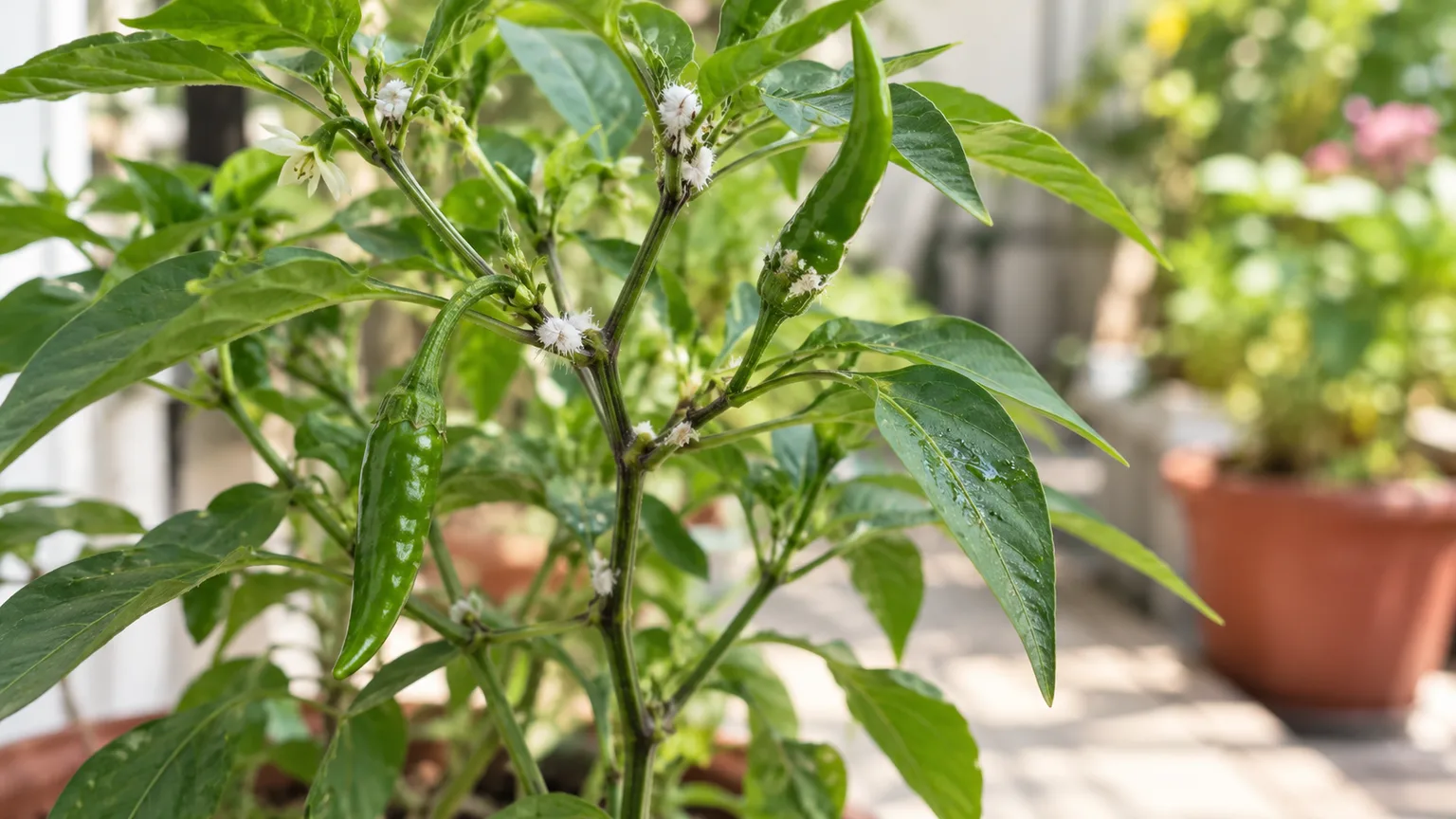
Mealybugs on Green Chilli: Causes, Checks & Fixes
This guide covers mealybugs on Green Chilli. See also the general Mealybugs guide, watering, and light pages for this plant.
Mealybugs on Green Chilli: Causes, Checks & Fixes
Quick answer
Mealybugs are sap-feeding insects, not a watering or light symptom (UC IPM overview). On Green Chilli, inspect the sheltered joints first: where leaf stalks meet the stem, where branches divide, and around tender new growth. A white cotton-like patch may cover the insects or an egg mass. Sticky leaves, ants, or dark sooty growth are supporting clues, but look for the insects themselves before deciding that mealybugs are the cause.
Move a potted plant away from neighboring plants, remove the visible colony with a damp cotton swab or careful hand-picking, and check the plant again. If you are not sure what the white material is, compare it with the mealybugs symptom guide before applying a treatment. Do not try to correct the pest by changing watering, pruning healthy growth, and spraying several products at once; those changes make it harder to tell what worked and may add stress.
What mealybugs look like on Green Chilli
Mealybugs are small, soft-bodied, oval insects with a segmented appearance. Many adult females and older nymphs carry a white waxy coating, so a colony may look like cotton lint caught at a stem junction. Younger crawlers can be yellowish, orange, or pink and may move before they settle and form more wax (UC IPM identification guide). In a close inspection, part the white material gently and look for insect bodies underneath rather than treating any white fleck as a pest.

A cottony patch in a protected joint is a reason to inspect closely; confirm insects beneath the wax before treating.
As the insects feed, they can leave sticky honeydew on stems, leaves, or fruit. Black or brown sooty growth may develop on honeydew, and ants may visit the sticky deposits. These signs point toward sap-feeding insects but do not identify mealybugs by themselves; wax, honeydew, and lookalikes are described by UC IPM, while the Royal Horticultural Society’s mealybug guide explains why honeydew and sooty mould can appear together.
An early colony may be easy to miss because mealybugs can settle in sheltered joints and other protected parts of a plant. A quick glance at the top of the Green Chilli is not a full inspection; check the structure of the plant rather than relying only on an overall wilted or yellow appearance (UC IPM identification guide).
Where to inspect a Green Chilli plant
Start with places that are difficult to see without moving a leaf. Turn the plant slowly and use a bright light. On a Green Chilli, inspect:
- the underside of leaves, especially near the central vein and where the leaf stalk attaches;
- the fork where the main stem divides into branches;
- the bases of flower stalks and the sheltered space around new buds;
- the stem below a cluster of leaves, including the lower section near the potting mix;
- the calyx and sheltered contact points where fruit or leaves touch one another;
- the rim of the pot, stakes, ties, and nearby surfaces where honeydew or crawling insects may be noticed.
The reason to check those spots is that mealybugs often settle in protected places such as plant crowns, branch crotches, touching leaves, and stems near soil. Look for a cluster, not just one loose fiber. A clean cotton swab can help lift a small piece of wax without scraping the plant; if the material is dirt, dried sap, or lint, the swab will not reveal the oval insects or crawlers expected under a real colony (UC IPM identification notes).
Inspect neighboring plants too, especially those that recently shared a windowsill, balcony shelf, greenhouse bench, watering tray, or pruning tool. Mealybugs do not need to be visible on every nearby plant for an inspection to be worthwhile. If you find a second colony, treat each affected pot as a separate plant to inspect and monitor rather than assuming the first plant was the only source.
Mealybugs or a lookalike?
White fuzz is a clue, not a diagnosis. A mealybug colony usually contains small oval insects under the wax or cottony mass. Crawlers are more mobile and may have little or no wax at first. The UC IPM guide lists wax-producing scales, woolly aphids, and whiteflies among possible lookalikes; do not choose a treatment based only on a sticky leaf or a white patch.
If you see small insects but cannot identify them, take a sharp close-up that includes the plant part and the colony, then compare it with a trusted extension or plant clinic reference. A phone photo of the whole plant can help show whether colonies are isolated or spread across multiple branches. Avoid crushing every sample before identification; a clear close-up of the insects and wax is more useful than a photo of residue alone.
Sap-feeding pests can overlap in the symptoms they leave. Honeydew may be present even when the insects are hidden, and black sooty growth can develop on the honeydew rather than directly from a leaf infection. If you find exposed clusters of insects without the characteristic white wax, use the Green Chilli aphids guide as a separate comparison. If you cannot find insects at all, check the plant’s recent care and growing conditions instead of assuming that distorted or drooping growth proves a pest infestation.
Why mealybugs appear on Green Chilli
Mealybugs are insects that arrive on a plant or move from a nearby host; they are not created by dry soil, saturated soil, low humidity, or a lack of sunlight. A new plant, a plant brought in from outdoors, or a shared growing area can be a plausible route. The RHS notes that female glasshouse mealybugs do not fly or travel far and are often introduced on an affected plant; it recommends careful inspection and a period of isolation for new plants in protected growing spaces (RHS guidance).
This distinction matters because changing care is not a pest treatment. Water Green Chilli according to the mix and conditions it is growing in, and do not keep the pot saturated in an attempt to drown insects in the foliage. If watering has also been irregular, use the plant’s watering guide to reset the root-zone routine separately. A healthy root zone supports recovery, but a better watering pattern does not remove insects already feeding on leaves and stems.
Mealybugs feed on many kinds of plants, and indoor or warm growing conditions can let them persist where cold weather would interrupt outdoor activity (UC IPM overview). The presence of a colony does not prove that the chilli is weak or that you have made a particular care mistake. Focus first on the pest’s location, how many live insects you can find, and whether fresh cottony masses appear after removal.
First response: isolate, remove, and recheck
1. Separate the plant
If Green Chilli is in a movable pot, set it apart from other plants while you inspect and remove the colony. Keep leaves from touching neighboring plants, and avoid sharing a tray or brushing tools against untreated pots. Separation reduces the chance of moving insects during routine care; it does not kill insects already on the chilli. For plants in a garden bed or a fixed greenhouse row, mark the affected plant and inspect plants that touch it rather than uprooting it immediately.
2. Remove the insects you can see
For a small colony, gently lift away the cottony material and insects with a damp cotton swab or gloved fingers. Drop the material into a waste bag and seal it before putting it in household trash. Do not rub hard enough to break tender stems or strip the waxy leaf surface. If a short shoot is heavily covered and can be removed without cutting away most of the plant, prune that one section and bag it. UC IPM recommends hand-picking or pruning mealybugs out and removing a whole plant only when the infestation is serious (UC IPM management guidance).
For a sturdy container plant with only a light infestation, a careful rinse may help dislodge insects from foliage that you can reach. Support the plant and direct a moderate stream at the affected leaf undersides and branch forks; do not use a forceful jet on flowers, soft shoots, or a plant that is already stressed. The Spruce’s practical mealybug guide notes that washing can help with light infestations and warns that some fragile plants do not tolerate vigorous treatment (The Spruce). A rinse is an aid to physical removal, not proof that every crawler or egg mass is gone.
3. Clean the immediate area
Wipe sticky honeydew from the pot rim, stake, and nearby shelf after you have removed the insects. Wash reusable tools before using them on another plant. If leaves or pruned sections fell onto the floor or bench, collect them rather than leaving plant debris next to the pot. Do not add a pesticide to a watering can or apply a homemade spray just because the leaves are sticky; first confirm that the insects are still present and that a treatment is appropriate for an edible pepper.
4. Repeat focused inspections
Check the same sheltered locations again after the first cleanup and continue inspecting regularly. Move leaves gently so the branch forks, leaf joints, and the undersides of new growth are visible. Look for a newly forming cottony patch, a crawler, or a fresh sticky deposit. UC IPM advises monitoring plants, pots, and stakes after mealybugs are found. Continue the separation while you are still finding live insects or new colonies; one clean-looking surface is not enough to establish that the rest of the plant is clear.
If the colony returns, remove the new group and record which part of the plant it came from. A note such as “two colonies under the lower leaf stalks” is more useful than “the plant still looks bad,” because older marks can remain after the insects have been removed. Keep following the same inspection route so that each check covers the same risk areas.
If colonies return or cover much of the plant
When colonies are widespread, repeatedly return, or reach flowers and fruit, stop treating the plant as a one-time spot-cleaning task. Inspect the full plant and nearby hosts, including the undersides of leaves and the pot supports. A few mealybug species can feed around roots (RHS mealybug guide), but root inspection is not the first response to a small visible colony. Consider that possibility only if the plant continues to decline despite careful aboveground removal, or if cottony material appears at the mix surface or drainage holes; avoid stripping healthy roots without a reason.
If physical removal is not enough, ask a local extension service or a qualified garden professional to confirm the pest and discuss options that are appropriate for Green Chilli in your region. Mealybug wax and their tendency to hide can make contact treatments less effective (UC IPM management notes). Do not rely on an online recipe or an assumed “natural” spray rate for a plant bearing food. Check product directions and local guidance before applying any treatment, especially when flowers or pods are present.
For a heavily infested container plant that keeps spreading pests to nearby plants, disposal may be the most practical choice. Seal the plant and pot debris before discarding it; do not compost live colonies. UC IPM includes removing the whole plant as an option when the infestation is serious. Decide based on the amount of live infestation and the value of protecting other plants, not simply because some leaves look marked after the pest is gone.
Care while Green Chilli recovers
Keep the chilli’s normal conditions stable while you monitor for new pests. Do not move it from bright light into deep shade, flood the pot, prune every affected branch, and apply a spray on the same day. A single change at a time lets you see whether the colony is shrinking and whether the plant is continuing normal growth. If the plant has been exposed to a heat wave or a major light change, review the Green Chilli light guide and soil guide independently of pest removal.
Avoid a sudden high-nitrogen feed as a shortcut to recovery. UC IPM notes that excess nitrogen and regular irrigation can stimulate tender growth that mealybugs prefer for laying eggs. Follow the plant’s usual feeding plan rather than adding fertilizer each time you see old leaf damage; the Green Chilli fertilizer guide covers routine feeding. This is a reason to avoid overfeeding, not a reason to starve an actively growing plant.
The leaf or stem that was already marked may remain discolored, sticky, or misshapen after the insects are gone. Judge recovery by whether live insects and fresh cottony masses stop appearing, whether sticky deposits stop spreading, and whether new leaves emerge without a new colony. Avoid promising a fixed recovery time: colony size, species, growing conditions, and how thoroughly the plant was inspected all change how long monitoring takes.
If you removed a branch, keep an eye on the cut area and nearby new growth. Do not keep cutting healthy stems just to remove a stain left by honeydew. If growth is still limp after the pest is cleared, check soil moisture and root health through the Green Chilli repotting guide before making a larger change. The Green Chilli care overview can help you review the plant’s full routine without confusing a separate care issue with the mealybug diagnosis.
Prevent another infestation
Inspect new Green Chilli starts and other plants before placing them beside an established collection. Look under leaves, around the stem base, and in branch joints rather than scanning only the upper foliage. If practical, keep new arrivals separated for about a month and recheck during that period; the RHS recommends quarantine for new plants in greenhouses and conservatories because mealybugs can be introduced on infested plants (RHS advice). If a new plant already has cottony masses or sticky leaves, do not add it to the group until it has been identified and addressed.
Make the inspection quick enough to repeat. When watering or pruning, look at one branch fork and the underside of several leaves, then check the plant’s stake and pot rim. Pay extra attention after bringing a pot indoors, moving plants between a terrace and room, or placing a new plant on a shared shelf. These checks do not guarantee that a pest will never arrive, but they can help catch a small colony before it spreads across the plant.
Use fertilizer according to the chilli’s active growth and container conditions rather than pushing soft growth with repeated doses. Keep normal airflow around the plant and remove fallen leaves, but do not treat changes in humidity or watering as a substitute for pest inspection. If you want to compare another Green Chilli sap-feeding pest, read the aphids guide and check that the insects match before choosing a response.
When to use the Pest Identifier Tool
If you can see insects but cannot tell whether they are mealybugs, aphids, scale, or another pest, use the Pest Identifier Tool to narrow the possibilities before choosing a treatment. A close photo of the insect and the plant part it is on will be more useful than a photo of a damaged leaf alone. Keep the pot separated while you identify the pest, and use the inspection steps above to check whether more than one colony is present.