Green Chilli Root Rot: Signs, Fixes & Prevention
Quick answer
On Green Chilli, persistent wilt while the mix stays wet is a reason to check the roots, not proof of rot by itself. If a potted plant is declining and its mix stays saturated, inspect the rootball once; remove only roots that are soft and decayed, then restore free drainage and resume even, moisture-checked watering.

Green Chilli Root Rot: How to Diagnose and Recover
This guide covers root rot on Green Chilli. See also the general Root Rot guide, watering, and light pages for this plant.
Green Chilli Root Rot: How to Diagnose and Recover
Quick answer
A Green Chilli that droops in the afternoon is showing stress, but wilting alone does not confirm root rot. Root rot becomes more likely when the plant remains limp while the mix is still wet, water sits in the pot, or decline keeps spreading. Those clues justify a closer check; they do not identify a pathogen or prove that every root is lost. BHG’s wilted-but-wet check also calls for inspecting roots before confirming rot.
If your plant is in a container and the mix has stayed soggy, lift it from any outer pot or tray and check that the drainage hole is open. When the plant is still declining, inspect the rootball once. Keep firm roots and act only on tissue that is clearly soft and decayed. Green Chilli is a fruiting Capsicum annuum that grows in full sun and evenly moist, well-drained soil; recovery means correcting persistent saturation without leaving the crop bone-dry. NC State’s pepper profile describes those growing conditions and warns that pepper roots can be sensitive to disturbance.
What root rot looks like on Green Chilli
The leaves show stress, but the roots decide whether rot is actually present. Lower leaves may yellow, the plant may wilt even though the soil feels wet, and growth may stall. These signs overlap with heat, underwatering, transplant stress, and other root-zone problems, so do not diagnose root rot from leaf color alone. Root-rot symptoms can overlap across different causes, which is why the hidden root tissue matters more than a single leaf.
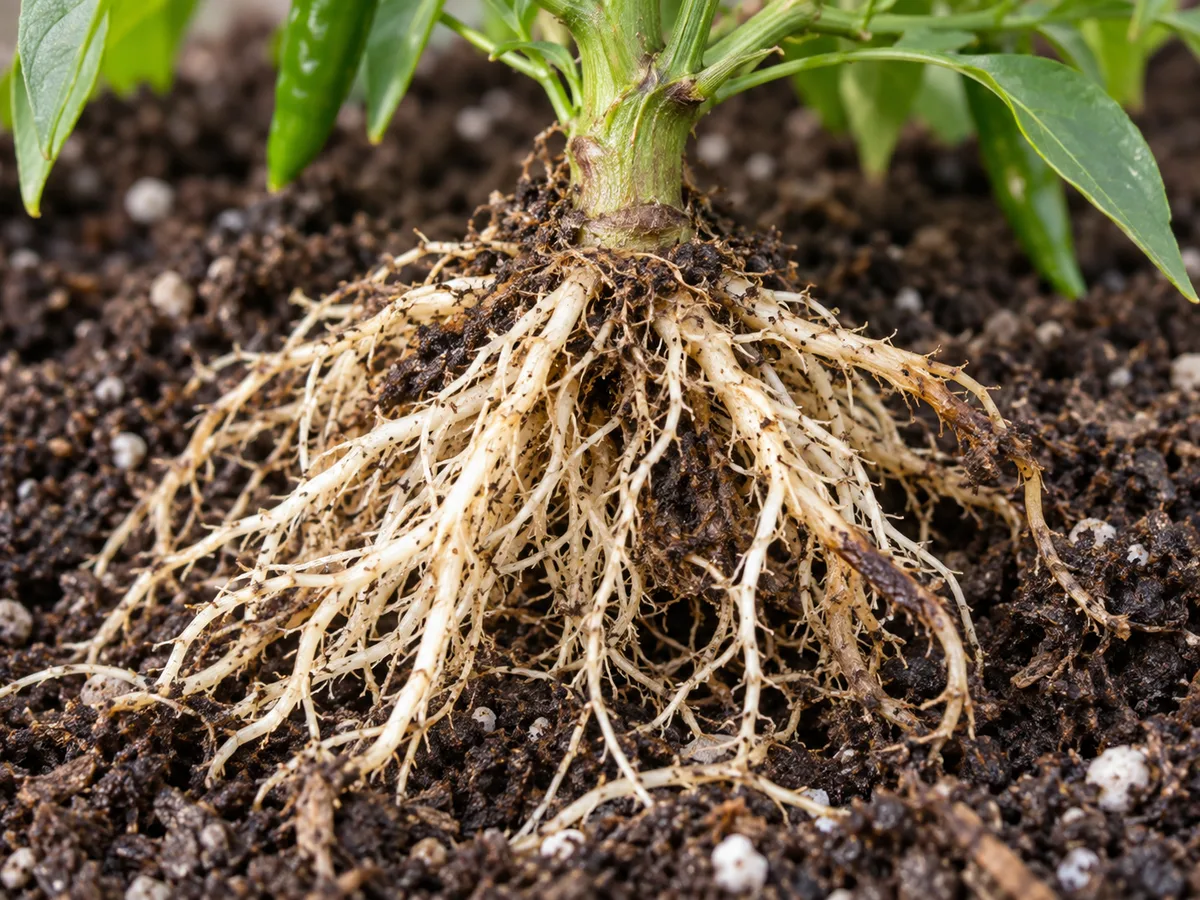
On a Green Chilli, compare texture as well as color: intact roots remain firm, while decayed sections soften or slip apart. A photo cannot identify the pathogen.
For a potted chilli, slide the rootball out gently only when the pot stays wet and the plant continues to decline. Healthy roots should feel firm; brown or black tissue that is mushy, stringy, or sloughing away is stronger evidence of decay than a tan stain on otherwise solid roots. A sour smell can add to the concern, but smell and color are not a lab diagnosis. The Spruce’s root inspection guide describes the difference between firm roots and soft, dark, decayed roots.
A pepper growing in a garden bed cannot be checked by sliding out a rootball. Look at the plant’s base instead. Dark lesions at the soil line, rapid wilt after warm rain, and similar decline in neighboring peppers raise concern for a pepper disease such as Phytophthora blight. NC State reports that Phytophthora capsici infects hot and bell peppers, often starts at the roots or crown, and develops more readily in saturated soil and warm conditions. Its pepper disease factsheet is a reason to take spreading crown symptoms seriously, not a way to confirm the pathogen from a photograph.
Why Green Chilli’s root zone can stay too wet
Green Chilli needs steady moisture while flowering and carrying fruit, but steady moisture is not the same as saturated soil. In a pot, a heavy mix, a blocked drainage hole, a decorative cover pot that holds runoff, or frequent watering before the root zone has begun to dry can leave roots short of air. Roots weakened by prolonged wetness may decay, and root-infecting organisms can take advantage of those conditions. Epic Gardening’s root-rot overview describes the link between excess moisture and root disease. For the general mechanics, see the root rot guide; this page focuses on the checks that fit a fruiting pepper.
Outdoor chilli beds face a different pattern. Heavy rain, low spots, and water that moves across already wet soil can leave the crown saturated even when you have not watered. In peppers, P. capsici can spread with water or infested soil, and Phytophthora blight is favored by excessive rain or overhead irrigation, saturated ground, and warm conditions; the NC State pepper factsheet describes these risks. The pathogen is only one possibility, so a wet week alone does not mean your plant is infected.
Do not try to “fix” a wet root zone by withholding all water for a long calendar stretch. Pepper plants still need even moisture to flower and set fruit, and a container that swings from saturated to completely dry can add water stress to root injury. Check the mix itself and whether water drains freely, then change the cause you can see: empty retained runoff, clear the hole, or plan an improvement to a poorly drained bed after you remove the affected plant.
Check a Green Chilli before unpotting it
Use the plant’s recent conditions to decide whether a root inspection is justified. First note how long the mix has remained wet, whether the pot feels heavy, whether water exits the hole, and whether the plant is declining despite that moisture. Compare that pattern with the chilli’s normal watering check: feel a little below the surface and lift the pot rather than watering by the weekday. The Green Chilli watering guide explains the plant’s moisture check; the soil guide covers the free-draining mix that keeps that moisture usable.
| What you notice | More likely direction | What to do next |
|---|---|---|
| Leaves droop in heat, but the mix is dry and the plant firms up after watering | Underwatering or heat load, rather than confirmed rot | Check the mix and watering pattern before inspecting roots. |
| The plant wilts while the root zone stays wet, and decline continues | Root injury is possible | Check drainage first; if it is a pot and the plant is still worsening, inspect the rootball once. |
| Roots are firm even though some are naturally tan or soil-stained | Rot is not confirmed | Replace the plant gently and correct the moisture or light issue; avoid cutting healthy roots. |
| The crown turns dark or soft, especially after warm, saturated weather | A root/crown disease such as Phytophthora blight is possible | Remove the plant from shared runoff and get local extension advice if nearby peppers are affected. |
| Wilt follows a move, repot, or abrupt change in sun | Transplant or light stress may be involved | Stabilize conditions and check the Green Chilli repotting guide and light guide before disturbing roots again. |
The leaf pattern can help you choose the next check, but it is not enough to name the cause. Yellowing across older leaves with wet mix can point below the soil; sun scorch and water stress can also yellow foliage. If leaves yellow while the roots remain firm, check whether care changed with the season in the Green Chilli overview. If the plant is limp but the mix is not wet, return to the moisture check before treating it as root rot.
A careful container rescue for a fruiting Green Chilli
Once you have found soft, decaying roots, do the smallest repair that removes the ongoing source of damage. Set the pot on a surface where runoff can drain. Ease the rootball out without yanking the stem, and let loose saturated mix fall away. The rootball is easy to damage, so do not wash or tease every strand clean just to make it look tidy. Preserve each root that is still firm.
With clean, sharp snips, trim only the roots that are clearly mushy or collapsing. If damage is limited, avoid cutting far into solid tissue. Discard the old wet mix rather than packing it back around the roots, then use a clean pot with an open drainage hole and fresh, free-draining potting mix. Choose a pot that fits the remaining root mass; a much larger planter is not an automatic improvement after root loss. Better Homes & Gardens’ container guidance likewise emphasizes removing decayed material and using fresh mix in a pot that drains.
Water once to settle the fresh mix, let the excess drain fully, and do not leave the pot sitting in that runoff. After that, use the mix and pot weight to decide when to water again. The goal is an even, measured return to moisture, not either daily saturation or an extended drought. Keep the chilli in a warm, bright position that matches its established growing conditions. If it has been outdoors in strong sun, avoid an abrupt move to deep shade simply to make the pot dry faster.
Do not add fertilizer while the root system is still visibly deteriorating. A damaged root system needs a stable moisture and drainage pattern first; extra feed will not repair soft roots. Once the plant is holding its leaves and producing healthy new growth, resume the usual light feeding rhythm for a fruiting chilli. If the stem base is soft or most roots have collapsed, salvage is uncertain. A healthy upper stem may still be worth keeping as a cutting, but only use clean, firm material and a fresh rooting medium; follow the Green Chilli propagation guide for the cutting method. Resume feeding only after the plant is growing steadily, using the Green Chilli fertilizer guide for its usual schedule.
If an outdoor Green Chilli wilts in a wet bed
Do not apply the container rescue steps to a rooted garden plant. If one chilli wilts after repeated rain but nearby plants remain healthy, check whether that individual plant sits in a low or compacted patch. If several peppers decline together, or the stem at the soil line develops a dark lesion that spreads upward, treat a soilborne disease as a possibility and ask a local extension plant clinic about diagnosis.
NC State notes that P. capsici has a broad host range, spreads with water and infested soil, and can survive in soil for many years. That means a simple crop rotation to another nearby vegetable may not solve a confirmed Phytophthora problem. Avoid carrying wet soil on tools or shoes into clean beds, do not redirect runoff through healthy peppers, and remove a clearly diseased plant from the planting area. The same factsheet recommends good drainage, avoiding prolonged standing water, monitoring plants, and removing diseased pepper plants and fruit from the field; it also says home gardeners do not have effective chemical control options for this blight; NC State’s disease-management factsheet supports these precautions. Do not improvise a fungicide treatment based on leaf symptoms.
Recovery signs and what to change next
Do not wait for every yellow or wilted leaf to look perfect before you judge recovery. Check whether the stem stays firm, the wet-dry pattern becomes predictable, and new leaves or flowers develop steadily. If some older leaves remain marked or drop, look at the overall trend rather than treating that alone as proof that rot is still active. If decline continues after the root-zone correction, reassess the crown, drainage, heat exposure, and whether the bed or pot remains saturated rather than repeating root pruning.
Avoid repeated unpotting. Another inspection adds disturbance to the pepper roots you are trying to preserve; check again only if decline continues. If the potting mix remains wet for many days, the next correction may be the mix or drainage setup rather than another trim. If the plant is in a heavy garden bed that puddles after rain, focus on bed drainage and runoff before replanting a chilli there.
Prevent root rot without drought-stressing the crop
Maintain the sunny placement and open drainage described above. In containers, use a pot with an unobstructed drainage hole and empty the saucer or cachepot after water drains. Do not assume that a fixed weekly schedule will fit a small balcony pot in a hot spell and a large pot during cool, cloudy weather.
While the plant is flowering and carrying fruit, check the upper layer of mix and feel how heavy the pot is. Water thoroughly when that layer is just drying, then allow runoff to leave the container. In a garden bed, water at the root zone rather than routinely wetting the whole canopy, and avoid irrigating a patch that is already saturated. If you are adjusting placement or sun after a move, acclimate the plant gradually rather than trading wet soil for sudden exposure stress.
Inspect drainage after repotting, a heavy storm, or a period of rapid watering demand. If the plant repeatedly wilts in wet soil, do not keep adding water because the leaves look thirsty: return to the moisture check in this guide and check below the surface. That distinction protects a fruiting chilli from both repeated saturation and unnecessary drought.
Related Green Chilli guides
- Green Chilli overview: use for the crop’s growth habit, seasonal placement, and general care.
- Watering Green Chilli: use when you need a repeatable moisture check for a container or bed.
- Green Chilli soil: use when mix texture, drainage, or a persistently heavy pot is the likely cause.
- Green Chilli repotting: use when the rootball needs an intentional move into a suitable container.
- Green Chilli light guide: use if the decline followed a move, shade, or abrupt sun exposure.
- Green Chilli fertilizer guide: use when new growth returns and you are ready to resume feeding.
- Green Chilli propagation guide: use if a healthy stem is being kept as a backup cutting.
- Green Chilli problems index: use to choose another plant-specific symptom guide when the root check points elsewhere.
Related tool
Use the Root Rot Risk Checker to organize the symptoms and care clues before changing more than one part of the root zone.