Green Chilli Fertilizer Guide for Pots and Beds
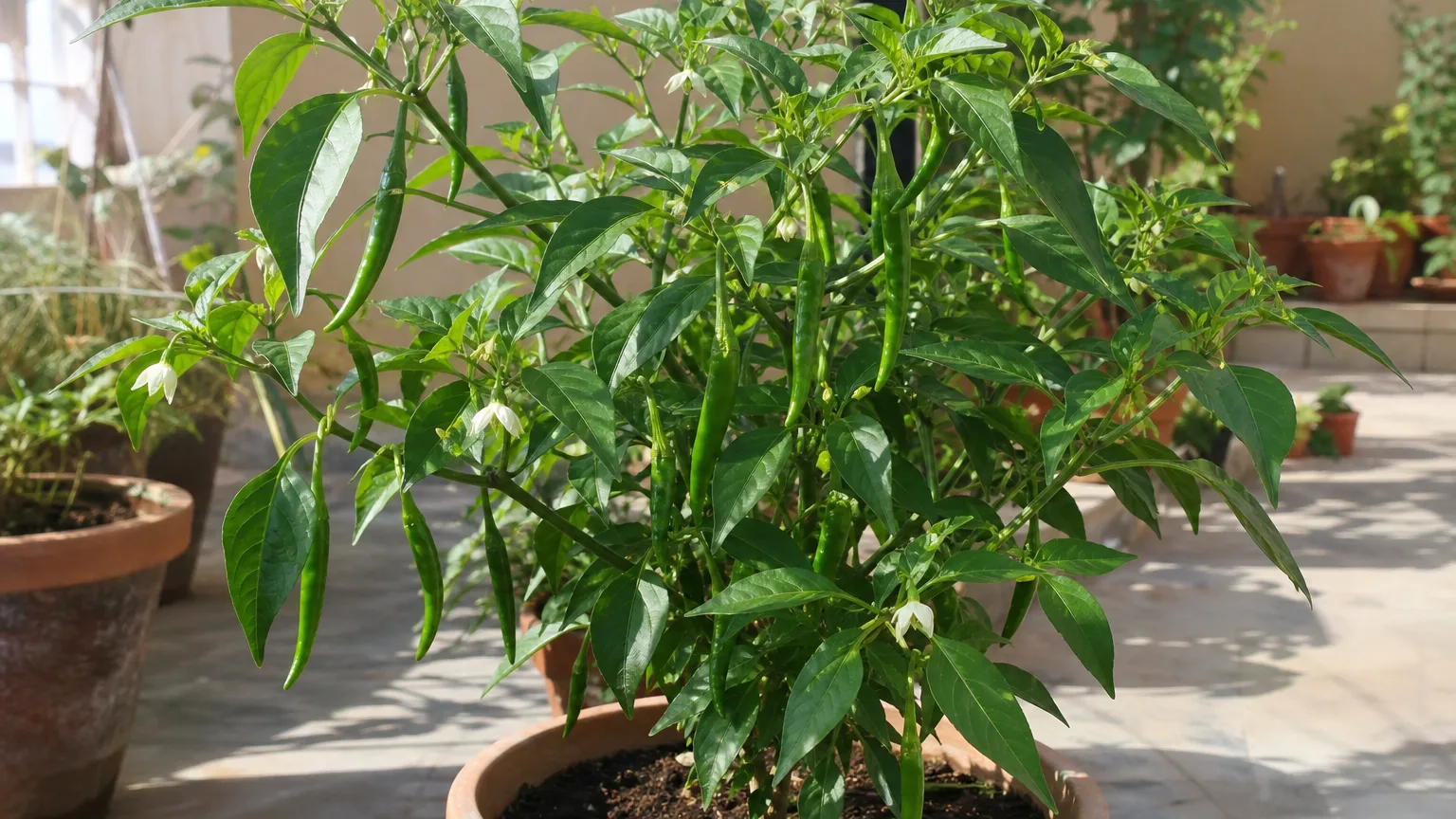
Green Chilli Fertilizer Guide for Pots and Beds
Green Chilli Fertilizer Guide for Pots and Beds
A Green Chilli plant does not need the same feed from seedling to harvest. Young Capsicum annuum needs modest, complete nutrition while it builds roots and leaves; an established container plant carrying flowers and fruit needs nutrients replaced as watering and cropping remove them. A plant in fertile garden soil may need much less intervention than one confined to potting mix.
The useful question is therefore not “Which NPK makes the most chillies?” It is “What stage is the plant in, what nutrition is already available, and is anything else limiting growth?” Start with those three checks. Fertilizer supports a well-lit, evenly watered chilli; it cannot compensate for a dim balcony, saturated roots, extreme flowering temperatures or a pot that has become almost entirely roots.
The quick answer: feed the stage, not the calendar
For a seedling, use a complete soluble fertilizer only when the seed-starting mix is exhausted, and keep it weaker than the full label rate. After transplanting, allow the roots to resume active growth before adding a strong feed. During leafy establishment, a balanced product can support the canopy, but once buds and flowers appear, stop pushing high-nitrogen growth.
For a flowering chilli in a container, a fertilizer formulated for fruiting crops, with potassium prominent relative to nitrogen, is a practical choice. The RHS specifically recommends a high-potassium liquid feed weekly for container chillies from the start of flowering. Treat that as a product-label framework, not permission to improvise a stronger home dose: concentrations differ widely, and a weekly product is formulated differently from a slow-release granular feed.
In a garden bed, do not copy the container routine automatically. Use a soil test, account for compost and previous fertilizer, and side-dress only if the test and plant performance indicate a need. Utah State University Extension advises growers to determine fertilizer needs with a soil test before planting.
What Green Chilli needs from fertilizer
Green Chilli uses nitrogen to build chlorophyll, shoots and the leaf area that powers fruit development. Phosphorus and potassium are also essential, but the numbers on a fertilizer label show nutrient concentration, not a guarantee of flowering. Roots must be healthy and the growing conditions suitable before the plant can use what you apply.
This species is a warm-season, sun-demanding edible crop. NC State describes Capsicum annuum as preferring full sun and moist, well-drained, rich soil. If the plant receives less than roughly six hours of direct sun, consult the Green Chilli light guide before increasing fertilizer. Weak light plus extra nitrogen often produces softer, stretched foliage rather than a stronger crop.
The target is not maximum foliage or the darkest possible leaf colour. It is a compact, branching plant with enough healthy leaves to support repeated flowering, then steady growth of firm green fruit. That balance changes over time, which is why one aggressive feeding formula from transplant to harvest is a poor strategy.
Prepare soil before planting
Begin with fertile, freely draining soil rather than trying to correct an inert or compacted root zone through liquid feeding. In beds, incorporate only mature compost and use local soil-test recommendations for phosphorus, potassium and lime. Penn State Extension likewise bases phosphorus and potassium rates on annual soil tests, although its field-scale fertilizer quantities should not be converted into spoonfuls for a balcony pot.
Compost improves organic matter and can contribute nutrients, but it is not chemically identical from batch to batch. More is not automatically better. Heavy compost or manure applications can add excess salts and nutrients, so a bed that has been enriched for several seasons may need little additional fertilizer.
For pots, start with fresh, quality potting mix rather than garden soil. See the Green Chilli soil guide for drainage and mix structure. Many commercial mixes contain a starter nutrient charge; feeding immediately on top of it may be unnecessary unless the label says the mix is unfertilized.
Seedling feeding: keep it gentle
A seed contains enough reserves to begin germination, so fertilizer is not needed before true leaves appear. Once a seedling has true leaves and is growing in a low-nutrient medium, a dilute complete fertilizer can support steady growth. Utah State’s pepper guidance uses a half-strength soluble complete fertilizer for developing transplants, which is a sensible upper framework when the product label also permits seedling use.
Do not feed a stalled seedling merely because it is small. First check warmth, light, drainage and root condition. Pale new growth in a wet, cold medium may reflect damaged roots and poor uptake, while a lanky seedling usually needs stronger light rather than more nitrogen.
Apply seedling fertilizer to already moist mix and ensure drainage. If a white crust forms, leaf tips brown soon after feeding, or growth becomes unusually soft and dark, stop feeding and water normally until the excess has moved out of the root zone.
After transplanting: establish roots first
Transplanting interrupts root contact with the medium even when the root ball stays intact. Give the plant time to rehydrate and produce visible new growth before starting a routine liquid feed, especially if fresh mix already contains nutrients. The Green Chilli repotting guide covers pot choice and post-transplant recovery.
Do not combine a strong fertilizer dose, harsh midday sun and root disturbance on the same day. Water the transplant in, keep its moisture even, and watch the growing tip. When new leaves begin expanding normally, the root system is active enough for stage-appropriate feeding.
A product labelled as a transplant or starter fertilizer can be used according to its directions, but it is optional in fertile mix. There is no need for an improvised phosphorus-heavy “root booster” when soil testing has not shown a deficiency.
Vegetative growth: build a useful canopy
Before buds appear, Green Chilli needs enough leaf area and branching to support the coming crop. A balanced complete fertilizer is reasonable for a container plant that has used the nutrients in its potting mix. Feed conservatively and assess the response over new leaves, not within hours.
In beds, a side-dressing recommendation must fit the soil and product. Utah State’s field guidance includes timed nitrogen side-dressing, but it also warns that over-fertilizing encourages excessive foliage and delays fruit set and maturity. That exact agricultural rate is not a universal home recipe, particularly outside Utah soils and for products with different analysis.
Aim for firm green leaves, short-to-moderate spacing between nodes and steady branching. Very dark oversized leaves, long soft shoots and few buds suggest that nitrogen supply may already be generous. Pause rather than adding a “bloom booster” on top of an unresolved excess.
Flowering: shift attention from leaves to crop
When buds become visible, reduce the emphasis on nitrogen. For a potted plant, transition to a fruiting-crop fertilizer whose label supports chillies, peppers or tomatoes, and follow its stated dilution and interval. High potassium is useful at this stage, but it does not cancel excess nitrogen already in the medium.
Flower drop is not proof of a fertilizer deficiency. Chilli flowers may abort when conditions are too hot, too cool or too dry; the RHS notes that temperatures above 30°C can reduce fruiting, a common issue on enclosed Indian balconies and terraces. Check temperature, direct sun, moisture and pollination conditions before changing feed.
Keep the root zone evenly moist while feeding. The Green Chilli watering guide explains how to avoid dry-to-soaked swings. Fertilizing a severely dry pot can create a concentrated salt solution around stressed roots, so rehydrate first and feed at a later watering.
Fruiting and repeat harvests
A fruiting plant still needs leaves and nitrogen; “low nitrogen” does not mean “zero nitrogen.” Continue the label-directed fruiting feed while the plant is actively making flowers and enlarging chillies, provided leaves remain healthy and drainage is good. Stop or reduce feeding when growth stalls because of cold, low light, root disease or intentional overwintering.
Green fruit can be harvested at usable size before it changes colour. The RHS notes that picking chillies green can support continued flowering, while leaving early fruit to ripen on the plant can reduce the overall harvest. Regular harvest therefore changes nutrient demand: a plant repeatedly replacing picked fruit remains active longer than one carrying a few pods to full ripeness.
Do not increase concentration to make fruit grow faster. Product label rate, healthy roots and consistent care set the safe boundary. If fruit remains small, consider cultivar, pot volume, heat and crop load before assuming potassium is missing.
Feeding Green Chilli in containers
Containers lose nutrients through plant uptake and drainage, and their small root volume makes both deficiency and overfeeding appear faster. The RHS confirms that chillies grow well in containers, but potting mix, pot size, watering frequency and fertilizer formulation determine how often replenishment is needed.
Use one feeding system at a time. If the mix contains controlled-release fertilizer, do not add a full liquid routine automatically. If you use a label-directed weekly liquid fruiting feed, do not also scatter an unmeasured granular product and add manure tea. Stacking inputs makes the total dose unknowable.
Hot-weather watering can leach a container more quickly, but it can also leave salts behind when water evaporates from the surface. Watch the plant and the pot: white crust, browned margins, sudden wilt in moist mix or slowed roots call for a feeding pause.
A safe container-feeding routine
- Check that the pot drains and the plant is actively growing.
- Confirm whether the potting mix or slow-release granules already supply fertilizer.
- Water dry mix normally; never pour concentrated feed onto a drought-stressed root ball.
- Mix one suitable product exactly to its label for container vegetables.
- Apply enough to wet the root zone, allow free drainage and discard runoff.
- Reassess new leaves, flowers and salt residue before the next scheduled feed.
This routine deliberately omits a universal teaspoon measure. A 2-4-6 liquid concentrate, a 19-19-19 soluble powder and a controlled-release pellet cannot safely share one home dose, and pot volumes vary too much for a credible one-size recipe.
Feeding Green Chilli in garden beds
Garden soil stores nutrients differently from potting mix. Start with a soil test, then account for compost, manure, prior crops and local recommendations. The goal is to replace a demonstrated need, not to keep adding fertilizer because the plant is fruiting.
When side-dressing is warranted, place the measured product away from direct stem contact and water it into the root zone according to its label. Avoid piling fertilizer in one spot or leaving granules against the crown. Split applications can be safer than one large application where local extension advice supports them; commercial pepper systems also commonly divide nitrogen through the growing season rather than applying it all at once.
Beds with fertile soil may need no regular high-potassium liquid feed. The RHS explicitly notes that chillies in enriched soil may not need regular feeding. Use growth and soil evidence rather than importing a container schedule into the ground.
How to choose a fertilizer without chasing one NPK
Choose by use case first. Seedlings need a complete product labelled for seedlings at reduced strength. An actively growing pre-flowering pot can use a balanced complete feed. A flowering and fruiting container can use a high-potassium tomato, chilli or fruiting-vegetable liquid feed. A garden bed should follow its soil report and local product labels.
The NPK numbers are percentages by weight, so a product with larger numbers is more concentrated, not automatically better. Also check whether the label supplies micronutrients and whether it is designed for soil, containers or hydroponics. Do not compare ratios while ignoring application concentration and frequency.
Organic and mineral fertilizers can both work. Organic products generally depend more on microbial breakdown and temperature, while soluble mineral feeds act more predictably in a container. Whichever you choose, use a product approved for edible crops and follow its harvest and handling directions.
Diagnose before adding fertilizer
Uniform paling that begins on older leaves can be consistent with inadequate nitrogen, but it can also follow waterlogged roots or a depleted, root-bound pot. Yellowing between veins, distorted new leaves and marginal scorch have multiple possible causes. A photograph alone rarely identifies the missing nutrient with confidence.
Check the sequence: Is new growth active? Is the plant receiving full sun? Does the mix drain? Has fertilizer already been applied? Is the pot mostly roots? Are pests feeding under leaves? Correct the limiting condition first. The Green Chilli overview helps place nutrition in the whole care system.
If several plants in one bed show the same pattern, use a soil or growing-media test before adding a single nutrient. If only one container plant is affected, inspect roots and compare its recent watering and feeding history with healthy plants.
Excess nitrogen, fertilizer burn and salt build-up
Excess nitrogen can produce lush foliage and delay fruit set, but it is not the only reason a leafy chilli lacks fruit. Illinois Extension cautions that peppers benefit little from excess fertilizer and points growers back to recommended amounts; heat, light, water and pollination still need separate diagnosis.
Fertilizer burn more often appears soon after an application as browned tips or margins, wilting despite moist mix, or surface salt crust. Stop all fertilizer. Remove visible granules from the surface, let clean water pass through a freely draining container, discard runoff and then wait for healthy new growth before resuming at the product label rate. Do not repeatedly flush a pot that drains poorly; fix drainage first.
In beds, do not attempt to “neutralize” excess fertilizer with another amendment. Water appropriately, prevent further application and obtain a soil test if the amount was substantial. Damaged leaves will not turn green again, so judge recovery by new foliage and resumed flowering.
When to use this page vs other Green Chilli guides
- Use the Green Chilli overview for whole-plant care and cultivar context.
- Use the Green Chilli light guide when growth is weak, stretched or flower production is poor in a shaded position.
- Use the Green Chilli watering guide when leaves wilt, flowers drop or fertilizer is concentrating in repeatedly dry mix.
- Use the Green Chilli soil guide when drainage, pH or potting-mix structure may be limiting nutrient uptake.
- Use the Green Chilli repotting guide when roots fill the pot or water passes around a compacted root ball.
Related Green Chilli guides
- Green Chilli care overview — identity, seasonal care and whole-plant priorities.
- Green Chilli light — direct-sun needs and flowering limitations.
- Green Chilli watering — moisture checks during flowering and fruiting.
- Green Chilli soil — fertile, well-drained mixes and bed preparation.
- Green Chilli repotting — root space, transplant timing and fresh mix.
- Green Chilli propagation — raising the next crop from seed or cuttings.
- Green Chilli pruning — shaping growth without sacrificing the crop.
Conclusion
The best Green Chilli fertilizer plan changes with the plant. Feed seedlings gently only after true leaves and nutrient-poor mix justify it; let transplants establish; use balanced nutrition for useful vegetative growth; then move container plants to a label-directed, high-potassium fruiting feed once flowering starts. In garden beds, make soil testing and existing fertility the starting point rather than copying a weekly pot schedule.
More fertilizer is not a shortcut to more chillies. Excess nitrogen can delay the crop, excess salts can injure roots, and neither problem is fixed by adding another product. Match one edible-crop fertilizer to the growth stage, keep moisture and drainage steady, and use new leaves, flowers and fruit—not an arbitrary home dose—as the feedback.