Underwatering on Green Chilli: Signs and First Fixes
Quick answer
If the upper 2–3 cm of Green Chilli potting mix is dry and the pot feels light, water the root ball slowly until the mix is evenly moist and excess drains. Do not water a wilted plant on appearance alone: a pepper drooping in hot sun can also have wet, damaged, or diseased roots.
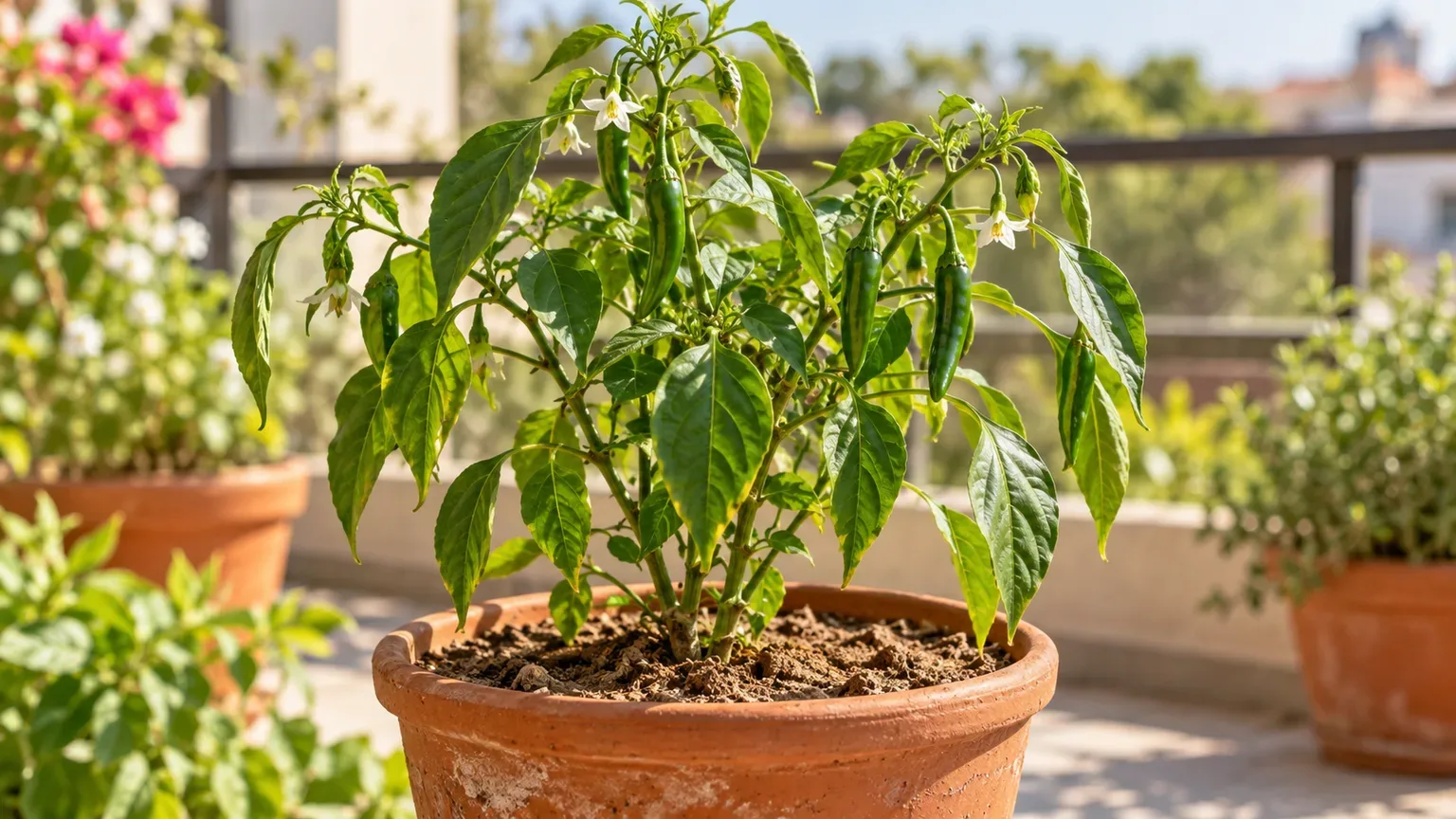
Underwatering on Green Chilli: How to Confirm and Fix It
This guide covers underwatering on Green Chilli. See also the general Underwatering guide, watering, and light pages for this plant.
Underwatering on Green Chilli: How to Confirm and Fix It
Quick answer
If the upper 2–3 cm of mix is dry and a potted Green Chilli feels light, water the root ball slowly until it is evenly moist and excess water drains. Check first: a chilli can droop during afternoon heat even when its soil is wet, and adding water to an already-wet root zone can make the real problem worse. For the general mechanics of a dry root zone, see our underwatering guide; this page focuses on how the problem shows up on a fruiting Green Chilli.
What underwatering looks like on Green Chilli
An underwatered Green Chilli usually loses leaf firmness across the plant, with leaves and tender shoot tips hanging rather than holding their usual angle. The strongest clue is not the droop by itself: the mix is dry several centimetres down, the pot is much lighter than after watering, or dry mix has pulled away from the container wall. GrowVeg advises watering peppers often in dry weather so the foliage does not wilt. Flower buds or very young fruit may also drop after a dry spell.
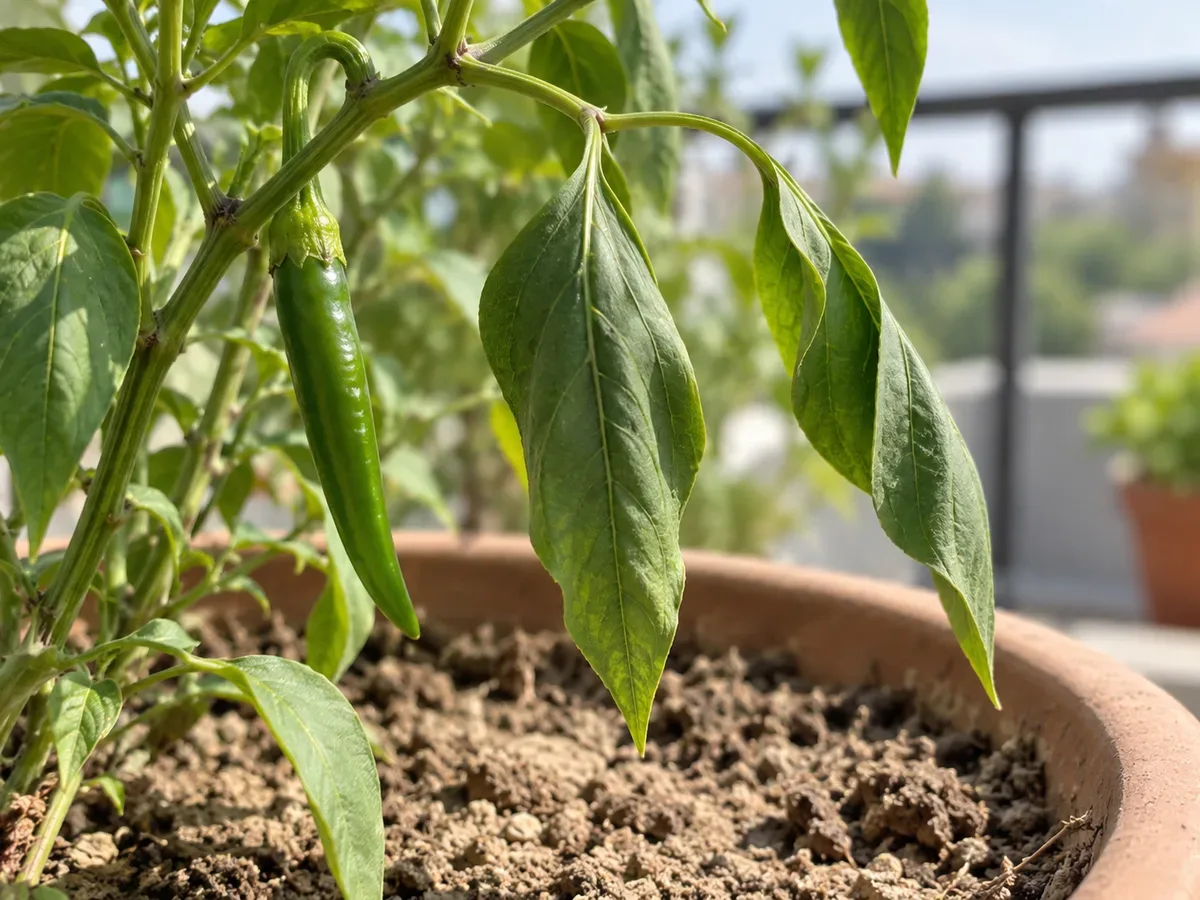
Dry root-zone mix and soft leaves support an underwatering diagnosis; check moisture below the surface before watering.
Green Chilli is a hot-fruited Capsicum annuum grown for its edible green pods. As the plant branches, flowers, and carries fruit, a small container can dry much faster than garden soil, especially in a sunny, windy spot. RHS guidance for chillies says they need a steady supply of moisture and notes that container compost can dry quickly in summer, sometimes requiring daily checks and watering in hot, dry weather.
Why a fruiting Green Chilli dries down faster
Green Chilli is grown in warm, sunny conditions, and a container holds a limited volume of mix around its roots. A small or root-filled pot can therefore go from moist to dry quickly when the weather is hot, breezy, or unusually sunny. Once the plant is flowering and expanding pods, a missed watering is more consequential than it was for a small seedling: the plant must keep leaves and reproductive growth supplied at the same time.
Do not translate that into “water every day.” University of Connecticut Extension describes pepper soil as consistently moist but well-drained. The pot, weather, and plant size determine how quickly it needs water; the moisture check determines whether it needs it now. The Green Chilli overview explains its warm-season, fruiting growth habit, while the Green Chilli watering guide gives the regular check for containers and in-ground plants.
The watering interval can change as one Green Chilli grows. A recently transplanted plant with a small canopy does not use water at the same pace as a mature, branching plant carrying pods. Utah State’s pepper irrigation guidance says to increase irrigation as temperatures rise and plants grow; for a home grower, that means checking the root zone more frequently as the canopy and fruit load build, not automatically pouring in more water. If the plant is setting flowers or expanding green pods, keep the moisture check in your routine even when the weather has been mild for several days.
Containers on a sunny Green Chilli balcony need closer checks
A chilli in a small dark pot on a sunlit terrace can dry much faster than one planted in a deep garden bed. Check the mix before the hottest part of the day during heat waves, and check again later only if the container is small or the plant is carrying many fruits.
If a pot begins wilting again soon after a thorough watering, check whether roots fill the container or whether the mix has shrunk from its sides. Repeated shallow sips can wet only the top layer. Use the Green Chilli repotting guide if roots are crowded, and the Green Chilli soil guide if the mix no longer wets evenly or drains freely.
Flower and young-fruit drop after a dry spell
Dry soil can stress a Green Chilli while flowers are open and pods are beginning to form. Irregular moisture is one possible contributor to flower loss and blossom-end rot, but neither symptom proves that the plant was underwatered. Utah State University Extension recommends regular, uniform watering for peppers and explains that inconsistent water availability can contribute to flower drop, sunburn, and blossom-end rot.
Compare the root-zone check with recent heat before changing care. If soil stays evenly moist, heat may still be responsible: University of Connecticut Extension notes that high daytime or nighttime temperatures can inhibit pepper fruit set. A Green Chilli beside a hot wall may need relief from reflected heat as well as consistent moisture. See the Green Chilli light guide if the plant droops only during peak sun or sheds flowers while the soil remains evenly moist.
Confirm the root ball is dry before watering
Test the mix about 2–3 cm below the surface rather than judging by its colour or by dry topsoil alone. Lift the pot and compare its weight with how it feels after a full watering. If the top layer is dry but the root zone is still cool and moist, wait and check again; if the whole pot is light and dry, underwatering is more likely. A gap between the mix and pot wall can mean the root ball has shrunk and may need slow re-wetting.
Take more than one reading in a container. Check near the stem and near the pot edge, since one dry patch does not tell you whether the entire Green Chilli root ball needs water. After watering, note how heavy the pot feels and whether water drains from the bottom; that gives you a useful comparison for the next check. If one spot is wet and another is powder-dry, apply water slowly over the dry section and recheck rather than soaking the whole pot repeatedly. For a garden-bed plant, pull mulch aside and test the soil below the surface near the outer canopy, where rain or a hose may not have reached evenly.
Also look at the distribution of symptoms. A plant that droops throughout after a missed watering, with dry mix and no soft stem lesions, fits dehydration better than a plant that wilts despite wet soil. A one-sided yellowing pattern, a yellow wedge with a brown centre, or lower leaves wilting first can point toward Verticillium wilt; whole-plant collapse with water-soaked stem or fruit lesions is more concerning for Phytophthora blight. The University of Minnesota Extension pepper diagnosis guide documents these distinct pepper-wilt patterns. If Green Chilli has damp soil and symptoms are spreading quickly, do not use another watering as a test; get a local extension diagnosis.
First fix: re-wet the dry Green Chilli root ball slowly
When the root zone is dry, apply water slowly across the whole soil surface until the mix is evenly moist and a little drains from the bottom. If water races down the pot edge while the centre stays dry, pause and make a second slow pass after a few minutes. You can briefly stand the inner pot in shallow water to help a shrunken root ball take up moisture, then remove it and let it drain fully. Do not leave it standing in water.
For an in-ground Green Chilli, water the soil around the root zone deeply rather than wetting only the stem base. Utah State’s pepper guide advises deep, infrequent irrigation and explains that uneven watering can contribute to flower drop and blossom-end rot. Once the plant has recovered, return to checking the soil instead of repeating an extra-large “rescue” watering on a schedule.
Lookalikes: heat wilt, overwatering, and pepper disease
Green Chilli leaves can droop in intense afternoon heat as water leaves the foliage faster than roots replace it. If the potting mix is still moist and leaves lift again as the evening cools, do not add water solely because of the midday posture. Improve airflow or give temporary afternoon shade during extreme heat, then review the plant’s light and reflected-heat exposure.
Wilt in wet mix points away from simple underwatering. Check that drainage holes are open and empty standing runoff; compare with overwatering on Green Chilli and Green Chilli root rot if yellow leaves, a sour smell, or dark soft roots accompany the wilt. New Mexico State University Extension’s chile disease guide describes Phytophthora root rot as a problem associated with excessively wet soil that can lead to severe wilting, collapse, and rotted roots within days. If a chilli collapses rapidly while the soil is wet, isolate the pot from other plants and seek a local extension diagnosis instead of watering again.
Recovery: what can and cannot bounce back
Leaves that are limp but still green may regain firmness after the root ball is rehydrated and the plant is out of peak heat. Crispy margins and fully brown leaves are dead tissue; watering will not restore them. Flower buds already shed will not reattach, and damaged or aborted fruit should not be expected to resume normal growth. Let the plant settle before removing only fully dead leaves or fruit.
Check again the next morning. If the mix is moist but the whole plant is still collapsing, or if dark lesions, a sour smell, or soft stems appear, reconsider root damage or disease rather than adding more water. Recovery means the wilt stops spreading and new leaves, flowers, or fruit develop normally; badly damaged tissue does not need to look new again.
Keep a short care note for the next week: when you watered, whether the mix was dry at depth, how heavy the pot felt, and whether the plant was in peak sun or carrying flowers and fruit. This is especially useful for Green Chilli in a movable container because a shift from a sheltered wall to a windy balcony can change how quickly the mix dries. If the same droop returns while the root ball is still moist, the note helps separate a watering problem from repeated heat exposure, poor drainage, or a root-bound pot. Change one condition at a time so the plant’s response remains interpretable.
Prevent repeat underwatering on Green Chilli
During flowering and fruit expansion, check container mix more often in hot, windy weather, but water only when the upper root zone is beginning to dry. In-ground plants usually need a slower, deeper watering pattern than small pots. Mulch can reduce moisture loss in a bed, but move it aside when checking the soil so a damp surface does not hide a dry layer below—or mask soil that is still wet after rain.
Use a pot with open drainage and enough volume for the mature plant. If the mix dries within hours in moderate weather, inspect the root ball and container size rather than compensating with constant shallow watering. Keep the mix freely draining and maintain a moisture-check routine through flowering and fruit growth. During a heat wave, also check whether reflected afternoon heat is driving flower drop; water cannot correct heat stress by itself.
Do not use the summer schedule for an overwintered Green Chilli
Some growers keep a potted chilli through winter in a warm, bright place instead of treating it as a one-season crop. In that slower period, copying the summer balcony schedule can leave the mix wet for too long. The RHS advises watering overwintered chillies sparingly. For a Green Chilli you are keeping indoors, use the same root-zone check but allow the pot to tell you when it needs water; do not water merely because the usual number of days has passed. When the plant returns to active growth and flowering, increase the frequency of checks gradually as light, warmth, and canopy growth change.
When to use this page vs other Green Chilli guides
Use this page when dry mix, a light pot, and persistent droop point to too little water. If Green Chilli wilts in damp soil, compare overwatering and root-rot guidance instead. For problems with pot size or mix that dries unevenly, consult the repotting or soil guides; for midday-only droop with moist soil, review light and heat placement.
Related tool
Use the Plant Watering Calculator to estimate a watering pattern for Green Chilli in your pot and conditions.
Related Green Chilli guides
- Green Chilli overview — use for the plant’s growing habit and seasonal care.
- Green Chilli watering — use to set a repeatable moisture-check routine.
- Green Chilli soil — use when the root ball drains poorly or will not re-wet evenly.
- Green Chilli light — use when afternoon heat or exposure may be driving wilt or flower loss.
- Green Chilli repotting — use when roots fill the pot or the mix dries unusually fast.
- Green Chilli overwatering — use when the root zone is damp but the plant still wilts.
- Green Chilli root rot — use when there are soft roots, sour mix, or rapid collapse.
- Green Chilli problems hub — use to compare this issue with other Green Chilli symptoms.